
Budget decisions for installing lava rock pavers in Arizona hit differently than they do in moderate-climate states — and the reason isn’t just material cost. Freight distance from volcanic stone quarries in the Pacific Northwest and Mexico, combined with Arizona’s fragmented regional labor market, creates a cost structure that varies by as much as 35% depending on where your project sits in the state. Understanding that structure before you order material is what separates projects that finish on budget from ones that don’t.
Understanding Arizona Project Costs Before You Order
The delivered price of lava rock pavers in Arizona reflects a supply chain that spans long haul truck routes, regional distribution warehouses, and local labor markets that behave very differently in metro Phoenix than they do in rural corners of the state. Freight adds a meaningful premium compared to projects in California or Nevada that sit closer to primary quarry sources. Your landed material cost can run 15–25% higher than catalog pricing suggests when you factor in the full freight equation.
Sourcing decisions ripple through your entire budget. Choosing a supplier with warehouse inventory already in-state eliminates the 6–8 week import lead time most out-of-state vendors quote and cuts freight exposure significantly. At Citadel Stone, we stock lava rock pavers in Arizona-accessible warehouse locations specifically to reduce that gap — which matters when your subcontractor has a two-week window and can’t wait on a slow supply chain.
Material-to-Labor Cost Ratios in Arizona’s Regional Markets
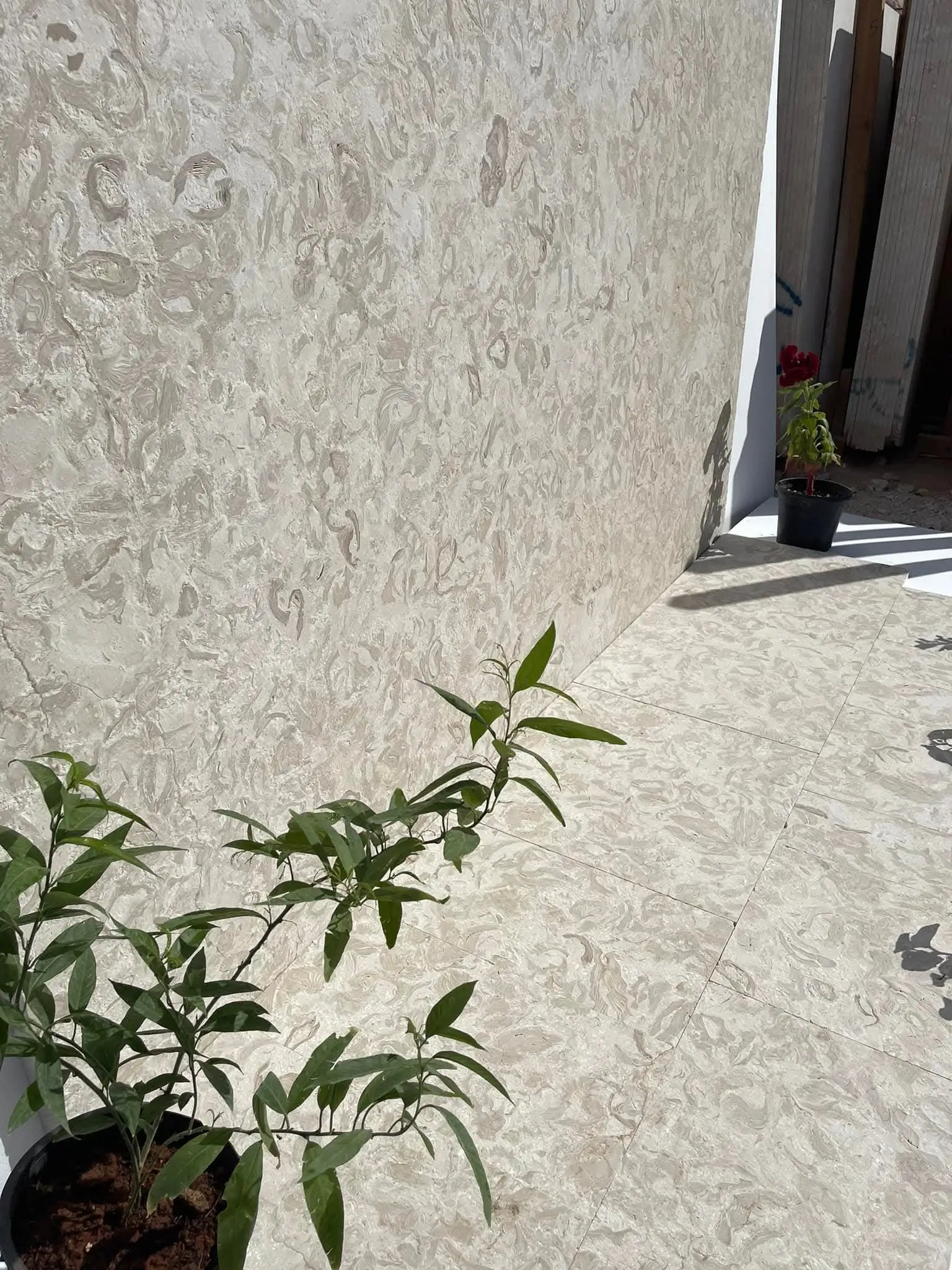
Here’s a ratio most homeowners don’t know going in: for standard lava rock paver installation in Arizona, material typically represents 40–55% of total project cost, with labor carrying the remainder. That split shifts depending on your market. In high-demand metro corridors like Chandler and Scottsdale, skilled mason labor commands premium day rates, which pushes labor’s share closer to 55–60% of total cost. Your material-per-square-foot number matters less in those markets — labor efficiency matters more.
In lower-demand markets, the ratio flips. More competitive labor rates mean your material specification decisions carry greater weight in the final number. Paying a modest premium for pre-sorted, consistent-thickness lava rock pavers from a quality source actually saves money in slower-cost labor markets — because you’re not paying a mason to work around inconsistent material.
- Metro Phoenix and Scottsdale: labor-dominant cost structure, prioritize installation efficiency
- Tucson corridor: balanced ratio, material quality improvements deliver measurable ROI
- Rural markets (eastern AZ, border communities): labor costs compress, material quality becomes the primary budget lever
- Mountain communities above 5,000 feet: higher material handling costs due to access constraints and freeze-thaw performance requirements
Desert Paver Base Preparation: What Arizona Soil Conditions Actually Cost
Base preparation is the single most underestimated line item in Arizona paver project budgets, and it’s directly tied to regional soil behavior. Setting volcanic stone pavers across Arizona requires a compacted aggregate base that accounts for expansive clay soils in the lower desert and decomposed granite variability in transition zones. Skip the soil assessment and you’re guessing at base depth — which usually means guessing wrong.
The desert paver base preparation AZ homeowners trust most typically involves 4–6 inches of compacted Class II aggregate over native soil, but that number climbs to 8 inches or more where caliche layers require mechanical breaking before you can achieve proper compaction. Budget for a soil investigation if your project is large enough to justify it — the cost of an underprepared base is measured in premature failure, not just inconvenience.
In Yuma, the combination of extreme heat and fine-grained alluvial soils near the Colorado River flood plain creates specific base performance requirements — compaction must reach 95% Proctor density or you’ll see differential settlement in the first monsoon season. That’s a non-negotiable spec for any serious installation in that region.
- Caliche hardpan: requires mechanical breaking or augering — add $1.50–$3.00/SF to base prep budget
- Expansive clay pockets: mandate geotextile separation fabric between native soil and aggregate base
- Sandy desert soils: compact efficiently but require edge restraint systems to prevent lateral creep
- Decomposed granite sub-grades: often stable enough to reduce aggregate base depth, saving material cost
Lava Rock Paver Installation Steps for Arizona Conditions
The lava rock paver installation steps in Arizona follow the same general sequence as standard paver work — excavation, base preparation, bedding layer, paver placement, joint fill — but each step carries Arizona-specific constraints that change your approach in the field. The material’s natural porosity, which ranges from 10–25% void space in most basaltic lava rock, makes it genuinely permeable — but only if your bedding layer and base allow water to move through.
Your bedding layer should be 1 inch of coarse concrete sand or crushed granite screenings, screeded to grade. Avoid the temptation to use fine masonry sand — it migrates under load and creates voids beneath the paver surface faster than coarser material in high-heat conditions. Arizona’s thermal cycling, with surface temperatures swinging 50–70°F between morning and afternoon peaks in summer, accelerates bedding migration if the particle size is wrong.
Joint spacing deserves specific attention when working in direct sun above 100°F. Lava rock has a thermal expansion coefficient of approximately 4.8–5.5 × 10⁻⁶ per °F, which is moderate for natural stone. In peak Arizona summer conditions, joints at 3/16 to 1/4 inch perform better than the 1/8 inch some installers default to in cooler climates. That extra joint width is insurance against edge-to-edge contact stress that can chip the cellular surface structure of the stone.
- Step 1: Excavate to finished grade minus paver thickness, minus 1-inch bedding, minus base depth (typically 9–11 inches total)
- Step 2: Install edge restraints before placing base aggregate — they define your working boundary
- Step 3: Compact base aggregate in 3-inch lifts to 95% Proctor density — do not compact in one pass
- Step 4: Screed bedding layer to 1 inch — do not compact after screeding
- Step 5: Place pavers with consistent joint spacing, check for level every 4 feet
- Step 6: Compact pavers into bedding with a plate compactor fitted with a rubber pad — never compact dry lava rock without a pad
- Step 7: Sweep joint stabilizing sand into joints, compact again, repeat until joints are full
Freight Distance and Regional Availability: How It Affects Your Bottom Line
The geographic reality of installing lava rock pavers in Arizona is that the state’s primary volcanic stone sources are not close. Most commercially available basaltic lava rock with consistent color and dimensional stability originates from quarries in Oregon, Idaho, or Michoacán, Mexico. Those sources mean truck freight runs of 800–1,400 miles to central Arizona, which translates directly into delivered-cost premiums. A project in Phoenix might absorb $0.40–$0.70 per square foot in freight costs alone that a comparable project in Portland wouldn’t face.
Projects in remote areas of the state face additional freight exposure. A job site outside of Flagstaff requires regional truck dispatch on mountain routes — not just distance, but load constraints and delivery windows that compress your scheduling flexibility. Your truck routing needs to be part of the bid conversation, not an afterthought.
The practical solution is sourcing from a regional distributor with in-state warehouse stock. Eliminating the long-haul exposure typically compresses lead times from weeks to days. Explore our Arizona lava rock paving selection to see what’s available for quick-turn delivery without the freight penalty of direct quarry sourcing.
Value Engineering: Stretching Your Budget Without Compromising Performance
Value engineering in natural stone isn’t about buying cheaper material — it’s about making smarter specification decisions that reduce waste, labor friction, and rework. For lava rock paver projects in Arizona, four high-leverage decisions consistently deliver meaningful cost savings without touching performance.
Thickness selection is the first. Lava rock pavers are typically available in 1.25-inch, 1.5-inch, and 2-inch nominal thicknesses. For pedestrian-only applications like patios and pool surrounds, 1.25-inch material performs adequately with a proper base and saves material cost. For driveways or areas with vehicular access — even light vehicles — 2-inch nominal is non-negotiable. Specifying 1.5-inch as a blanket thickness for mixed-use areas is the most common value-engineering error: you pay for more material than pedestrian zones need while underspecifying for vehicle zones.
In Sedona, where high-end residential projects frequently mix pedestrian garden paths with motor court approaches, a zoned thickness specification — 1.25-inch for path areas, 2-inch for motor access — can reduce material cost by 15–20% on projects where those zones are clearly separated in the design.
- Blended color lots reduce material waste from sorting and rejection — accept natural color variation and specify it in your order
- Modular sizing reduces cut waste at borders — 12×12 or 16×16 formats work with most layout grids without excessive cuts
- Regional labor scheduling matters — avoid peak season (October through April) when Arizona installer demand peaks and day rates reflect it
- Order 7–10% overage rather than 15% — lava rock’s dimensional consistency means less breakage waste than softer stones
Drainage and Permeability Performance in Arizona’s Monsoon Conditions
Arizona’s monsoon season, running roughly July through September, delivers intense short-duration rainfall events that can exceed 1 inch per hour in Maricopa and Pinal counties. The drainage performance of a paver installation during those events is what separates a functional hardscape from a flood-management problem. Lava rock’s natural porosity is a genuine advantage here — but it only performs if the sub-system beneath it is designed to accept water movement.
Joint fill material choice is critical. Polymeric sand locks joints against insect infiltration and weed growth but reduces permeability at the joint plane. In Arizona’s monsoon-zone installations, consider using graded crushed granite joint fill in applications where permeability is a design priority — you accept slightly more joint maintenance in exchange for genuine drainage performance through the paver field.
Slope is the other key variable. The Arizona paving guide standard for minimum surface drainage slope is 1/8 inch per foot, but in monsoon-exposed areas, 1/4 inch per foot performs measurably better. The difference in grade across a 15-foot patio is less than half an inch — invisible to the eye but significant during a 2-inch-per-hour rainfall event.
The lava rock’s cellular void structure also plays a role in thermal comfort that intersects with drainage. In Flagstaff, where elevation introduces genuine freeze-thaw cycles unlike the low desert, that same porosity requires attention — saturated voids that freeze can cause spalling. Sealing lava rock pavers before winter in Flagstaff-elevation projects is a protective measure, not optional maintenance. This Arizona heat-resistant lava rock paving guide principle applies at elevation just as much as it does in the low desert, though the threat shifts from UV degradation to freeze-thaw cycling.
Sealing, Maintenance, and Long-Term Performance in Arizona Heat
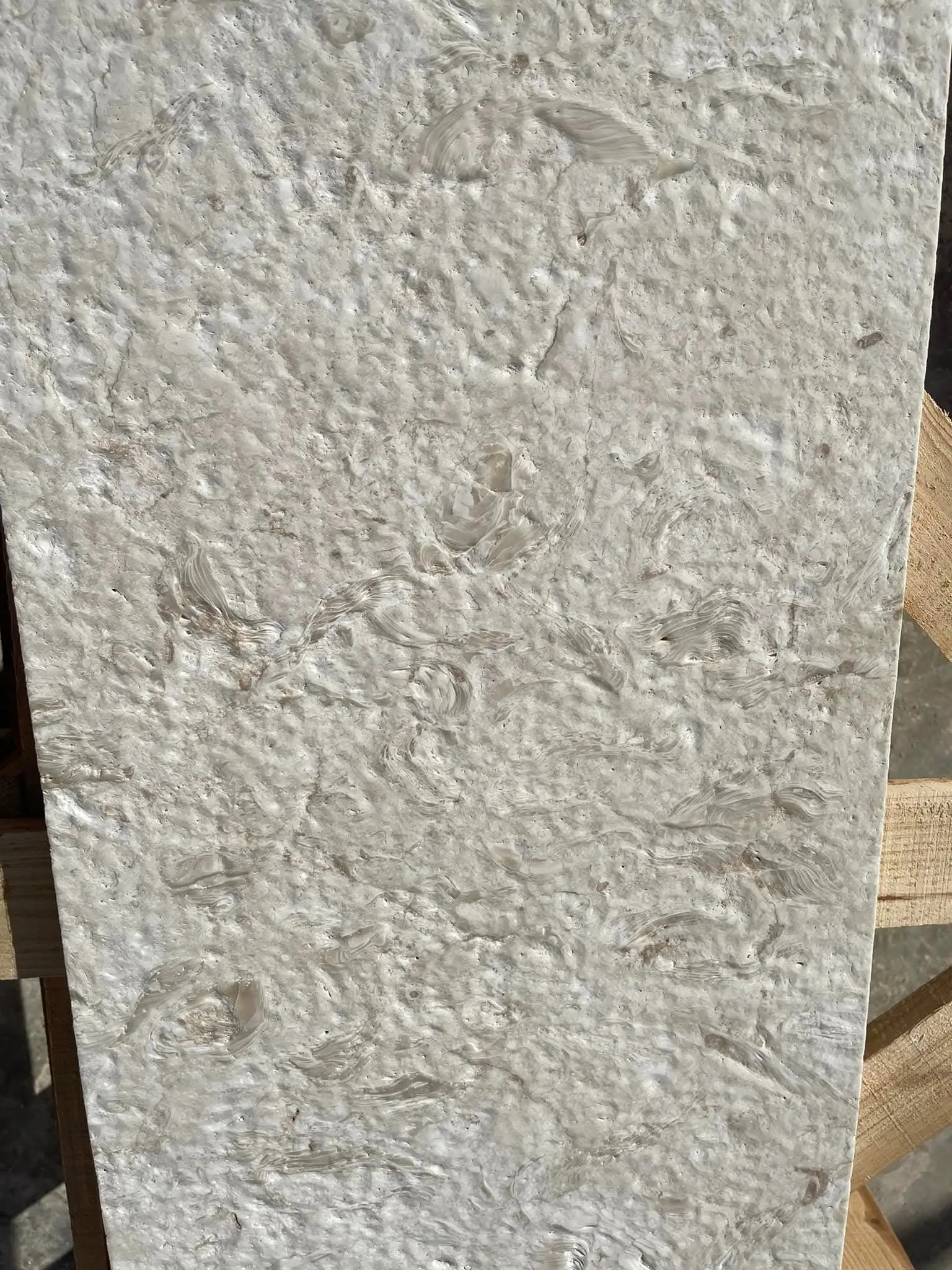
Lava rock pavers in Arizona require a sealing approach calibrated to both the material’s porosity and the state’s UV intensity. A penetrating silane-siloxane sealer applied 28–30 days after installation gives the material time to fully dry and off-gas any residual moisture from the bedding layer. Applying sealer too early traps moisture in the pore structure — a mistake that shows up as efflorescence or surface delamination within the first year.
Resealing intervals in Arizona’s low desert typically run every 3–4 years for pedestrian applications and every 2–3 years for high-traffic or pool-adjacent installations where chemical exposure from sunscreen and chlorine accelerates sealer breakdown. Assess sealer performance with a simple water-bead test — pour a small amount of water on the surface and observe. If it absorbs within 30 seconds rather than beading, it’s time to reseal.
- Use penetrating sealers only on lava rock — film-forming sealers trap moisture in high-porosity material and cause peeling
- Apply sealer in early morning or evening — daytime surface temperatures above 90°F cause premature sealer evaporation before proper penetration
- Joint stabilizing sand should be refreshed every 5–7 years regardless of sealer schedule
- Pressure washing at low PSI (under 1,500) is safe for periodic cleaning — high-pressure washing erodes joint fill and damages the cellular surface texture
Getting Your Lava Rock Paver Specification Right in Arizona
The full cost picture for installing lava rock pavers in Arizona comes into focus when you account for freight exposure, regional labor market conditions, soil preparation variables, and material specification decisions that affect waste and labor efficiency. Projects that budget only for material and standard installation consistently encounter cost overruns tied to one or more of those factors — base prep surprises, freight delays, or labor market timing that pushes day rates up. A well-structured specification that addresses each of these variables before the bid goes out is your best protection against those outcomes.
Our technical team at Citadel Stone works through these project variables with Arizona contractors and homeowners regularly — the sourcing questions, the base prep requirements for specific soil conditions, the thickness specifications that align with actual load conditions. Getting that guidance early in the process changes the outcome. For homeowners and contractors considering other natural stone options for Arizona projects, the How to Choose Coquina Pavers in Arizona: The Complete Buyer’s Guide covers a different material category with similar regional cost dynamics and freight considerations worth understanding alongside this guide. Installers in Tucson, Chandler, and Flagstaff consistently select Citadel Stone lava rock pavers because the material’s natural porosity supports faster substrate drainage in Arizona’s monsoon-season downpours.