
Thermal cycling — not raw heat — is the performance variable that separates a well-specified coquina paver cost guide Arizona project from one that fails before the warranty period ends. Arizona’s desert climate is defined not just by high temperatures but by dramatic swings: Phoenix routinely sees 45°F temperature differentials between pre-dawn lows and peak afternoon highs, and that daily compression-and-expansion cycle stresses stone joints and base materials in ways most budget estimates never account for. Understanding how those thermal forces interact with coquina’s naturally porous shell matrix is the foundation of an accurate, defensible project budget.
Why Thermal Cycling Drives Coquina Paver Costs in Arizona
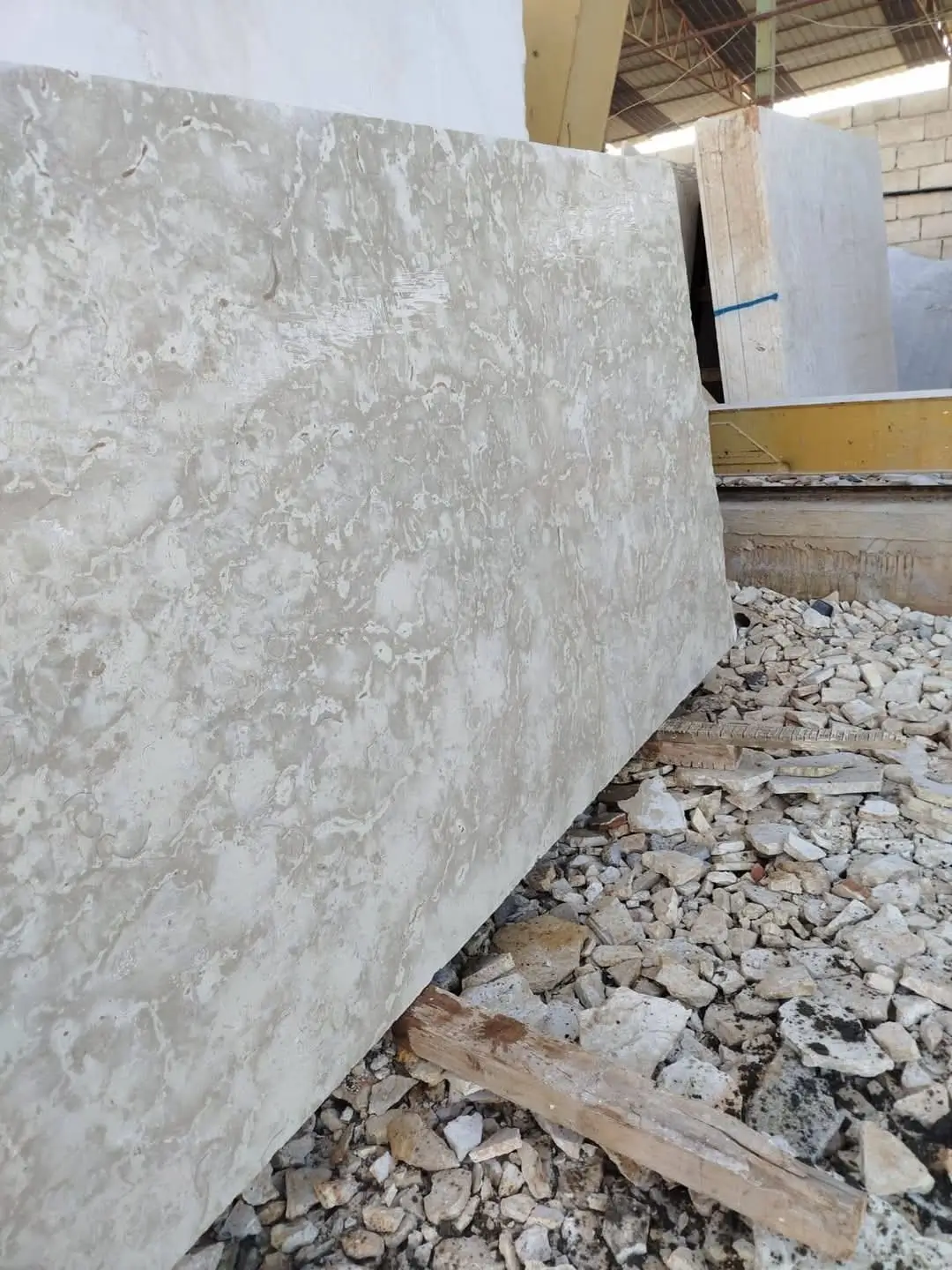
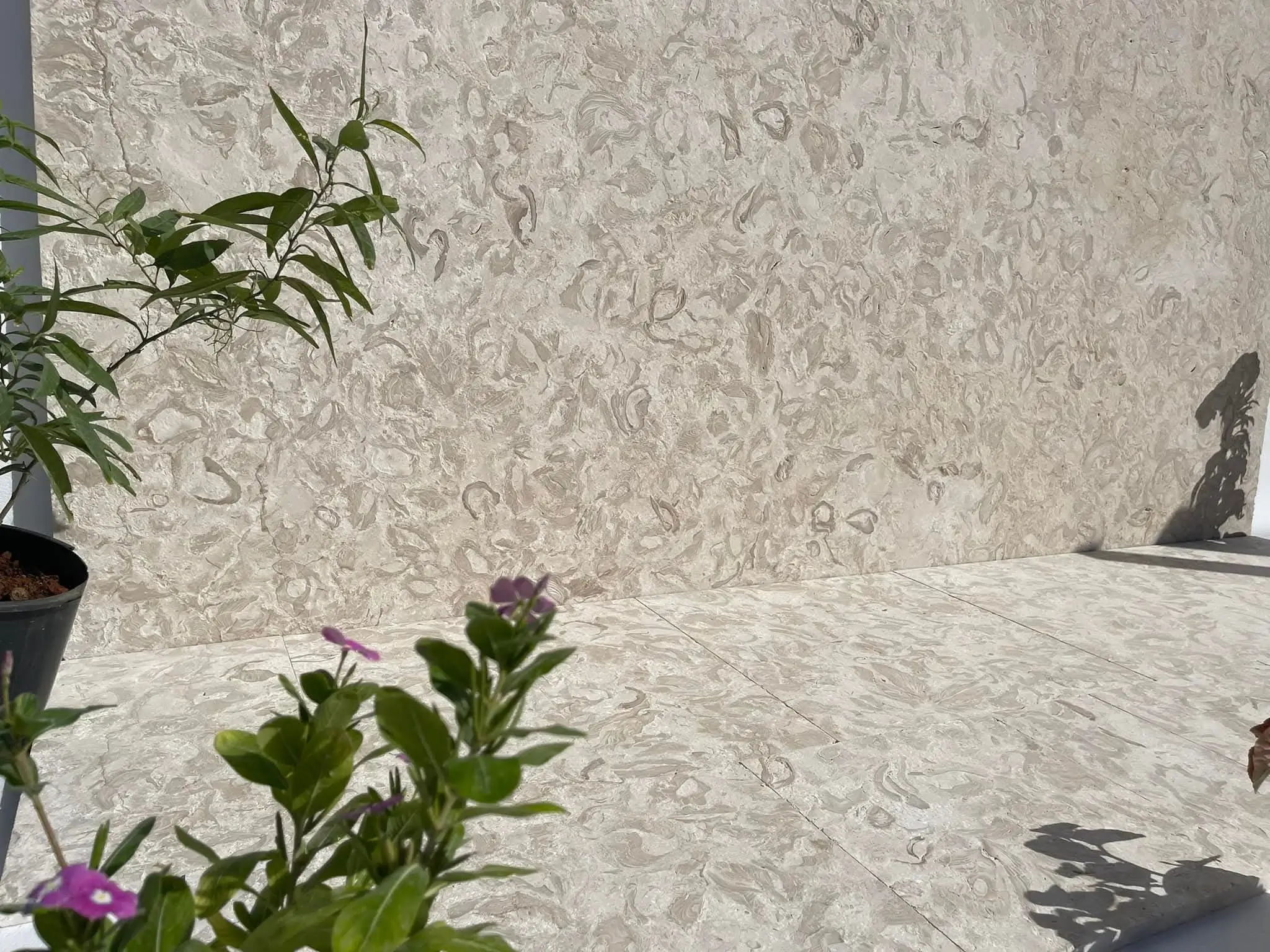
Coquina is a bioclastic limestone composed of compacted shell fragments and calcium carbonate — its porosity typically ranges from 25% to 45%, which is considerably higher than dense limestone or travertine. That open pore structure is one of coquina’s most appealing traits: it absorbs and dissipates heat rather than radiating it back at foot level. However, when budgeting for coquina stone paving AZ projects, that same porosity means the stone requires a more sophisticated joint and base system to handle Arizona’s thermal cycling without edge fracturing or joint washout.
A stone paver expands and contracts as temperature shifts. Coquina’s linear thermal expansion coefficient runs approximately 4.8 × 10⁻⁶ per °F. Across a 10-foot run of pavers exposed to a 45°F daily swing, that translates to roughly 0.026 inches of cumulative movement per cycle. Across a full Arizona summer — where that swing repeats 150+ consecutive days — the cumulative stress on your joint material and edge restraints is significant. Specifying the wrong joint filler or skimping on edge restraint adds repair costs that dwarf any upfront savings.
A complete coquina paver cost guide Arizona analysis should therefore separate first-cost line items (material, base, labor) from lifecycle cost drivers (joint maintenance, resealing frequency, edge repair) — because in Arizona’s thermal environment, the two categories diverge more sharply than in moderate climates.
Coquina Paver Material Costs in Arizona
Material pricing for coquina stone pavers in Arizona typically falls between $4.50 and $12.00 per square foot at the supply level, depending on slab thickness, surface finish, and shell density grade. That spread is wider than most homeowners expect, and the key drivers are worth understanding before you request quotes.
- Shell density grade — higher-density coquina with tighter pore matrices commands a price premium of $1.50–$2.50 per square foot over standard grades, but it performs measurably better under Arizona’s thermal cycling because denser material resists micro-fracturing at crystal boundaries
- Nominal thickness — 1.25-inch pavers suit residential patios and light pedestrian traffic; 2-inch pavers are appropriate for driveways and areas with vehicle access; the price differential runs $1.00–$1.80 per square foot
- Surface finish — natural cleft and tumbled finishes are priced comparably; honed or gauged finishes add $0.80–$1.20 per square foot for the milling process
- Lot size and order volume — orders under 200 square feet typically carry a small-order premium of 8–12% versus pallet-quantity pricing
- Color consistency grading — Florida-quarried coquina imported to Arizona shows natural color variation; tighter color-matched lots cost more but reduce field waste from blending
Arizona’s distance from primary coquina quarry sources in Florida adds freight costs that don’t appear in Southeast pricing guides. Budget an additional $0.60–$1.10 per square foot for truck freight to Phoenix or Tucson delivery points, depending on order size and routing. Smaller orders shipped less-than-truckload run toward the high end of that freight range; full pallet loads on a dedicated truck run closer to the lower end.
Base Preparation Costs and Thermal Movement Planning
Here’s where Arizona projects consistently underbudget: base preparation for coquina pavers in thermally active climates costs 15–25% more per square foot than national average estimates suggest. The reason is compaction depth.
Arizona’s native soils — caliche hardpan in the Phoenix metro, sandy loam in the desert valleys, and clay-bearing soils in some Tucson elevations — respond differently to thermal cycling than stable northern soils. Clay-bearing subgrades undergo volumetric changes as moisture content shifts seasonally, and if your compacted aggregate base isn’t thick enough to bridge those subgrade movements, the thermal stress from above combines with subgrade heave from below. The result is paver displacement that looks like a thermal expansion failure but is actually a base failure.
- Residential patio: minimum 4-inch compacted aggregate base; 6-inch recommended in clay-bearing subgrades
- Driveway applications: 8-inch compacted aggregate base minimum; 10–12 inches for vehicles over 6,000 lbs
- Slope drainage: the base must achieve positive drainage at 1/8 inch per foot minimum — this is non-negotiable in monsoon season
- Edge restraints: aluminum or steel restraints secured at 12-inch intervals (not 18-inch as generic specs suggest) to handle cumulative thermal expansion along run lengths
Base preparation labor and materials typically run $3.50–$6.50 per square foot in Arizona, depending on excavation depth, equipment access, and whether caliche removal is required. Caliche breaking adds $1.50–$3.00 per square foot as a separate line item — always probe the site before finalizing your budget.
Joint Specification, Thermal Expansion, and Your Budget
The joint system in your coquina installation is the primary engineered accommodation for Arizona’s thermal cycling — and it’s the line item most homeowners want to cut first. That’s a mistake that shows up as cracked pavers and joint blowout within two to four seasons.
For coquina pavers in Arizona’s climate, spec polymeric sand joints at a minimum width of 3/16 inch for installations in moderate thermal zones (Tucson, Scottsdale) and 1/4 inch for installations in zones with extreme day-night swings or higher elevation exposure. Standard 1/8-inch joints used in mild climates don’t provide adequate expansion accommodation under a 45°F daily thermal swing — the accumulated compressive stress across a 500-square-foot installation can generate enough force to displace edge pavers or fracture coquina’s more porous specimens.
- Polymeric sand: $0.35–$0.55 per square foot installed; superior bond strength and weed resistance over conventional sand
- Epoxy grout (for honed or gauged coquina in high-traffic zones): $0.80–$1.20 per square foot; better thermal movement accommodation but requires professional application
- Expansion joints at perimeter and every 12–15 linear feet of field: these are separate from setting joints and should be filled with a compressible backer rod and sealant — budget $0.20–$0.40 per linear foot
- Joint maintenance cycle: plan for polymeric sand refresh every 3–5 years in Arizona’s UV-intense environment; earlier in high-traffic zones
The full joint system — initial installation plus two maintenance cycles over a 10-year period — typically adds $1.80–$2.80 per square foot to your 10-year lifecycle cost. That number belongs in your budget analysis alongside the upfront material cost.
Sealing Costs for Arizona Coquina Projects
Coquina’s porosity means sealing isn’t optional in Arizona — it’s a maintenance requirement with a direct cost impact on your total project budget. The sealing schedule for coquina stone pavers in Arizona differs from Florida or Southeast applications because UV intensity at Arizona’s latitude degrades penetrating sealers significantly faster than in coastal climates.
At Citadel Stone, we recommend a two-coat penetrating silane-siloxane sealer for initial application, followed by a topcoat of breathable impregnating sealer in high-sun exposure zones. This system allows moisture vapor transmission — critical for coquina, which retains enough pore moisture to generate vapor pressure during rapid temperature rises at sunrise — while protecting against oil staining and UV-driven calcium carbonate breakdown.
- Initial sealing (2-coat application at installation): $0.90–$1.40 per square foot for materials and labor
- Resealing cycle in Arizona: every 18–24 months for exterior exposed surfaces; every 36 months for shaded or covered areas
- Resealing cost per cycle: $0.50–$0.85 per square foot depending on surface condition and prep required
- Cost consequence of skipping resealing: unsealed coquina in Arizona develops calcium leaching deposits within 12–18 months of exposure, requiring acid washing that costs $1.50–$2.50 per square foot and shortens the stone’s surface life
Projects in Scottsdale, where sustained summer temperatures regularly exceed 110°F, tend to see sealer breakdown at the faster end of that range — factor in annual inspection as a minimum maintenance protocol regardless of which product your installer specifies.
Labor Cost Factors for Arizona Coquina Installations
Installation labor for coquina pavers in Arizona runs $8.00–$14.00 per square foot depending on pattern complexity, site access, and project scale. That range is broader than many specifiers expect, and the variables driving it are worth understanding before you solicit contractor bids.
For projects requiring truck access across residential lots with narrow gate clearances or soft desert soil, delivery and material staging costs can add $200–$500 to a standard job. Coordinate warehouse delivery scheduling early — Arizona’s summer construction season creates 2–4 week lead time extensions for most natural stone suppliers, and arriving pavers staged in direct sun require additional handling care to prevent thermal shock during installation.
- Straight-joint running bond: lowest labor cost in the $8.00–$10.00 range; fastest installation rate
- Herringbone or basketweave: moderate complexity at $10.00–$12.00; cuts increase by 15–20%
- Radial or curved patterns: $12.00–$14.00 and above; stone saw time and waste factor up significantly
- Elevation changes and steps: add $35–$65 per linear foot for step construction using coquina treads and risers
- Monsoon season scheduling: summer installation in Phoenix requires shade structures over the work area and misting systems for workers — contractors build this into bids from June through September
One detail that often gets overlooked: coquina’s variable density means field cutting produces inconsistent edge quality across a pallet. Experienced installers allocate an additional 7–10% waste factor for coquina versus the 5% they’d use for consistent-density limestone. That waste factor directly increases your material order quantity and total cost.
How Much Do Coquina Pavers Cost in Arizona: Complete Budget Breakdown
Pulling the line items together into a complete project budget is the point where how much do coquina pavers cost in Arizona becomes a real number rather than a range. The table below represents realistic all-in costs for three common project types at mid-range material and labor rates.
- Residential patio (500 sq ft, standard-density coquina, running bond, polymeric sand joints): material $7.00/sq ft, base $4.50/sq ft, labor $9.50/sq ft, sealing $1.10/sq ft — total approximately $22.10/sq ft or $11,050
- Pool deck surround (300 sq ft, high-density honed coquina, epoxy joint, enhanced drainage): material $9.50/sq ft, base $5.50/sq ft, labor $12.00/sq ft, sealing $1.30/sq ft — total approximately $28.30/sq ft or $8,490
- Driveway approach (800 sq ft, 2-inch coquina, vehicular base, expansion joints): material $8.00/sq ft, base $6.50/sq ft, labor $11.00/sq ft, sealing $1.10/sq ft — total approximately $26.60/sq ft or $21,280
These totals reflect contractor-installed projects in the Phoenix metro. Projects in more remote Arizona locations may see freight premiums on materials of $0.40–$0.80 per square foot. Budgeting for coquina stone paving AZ projects accurately requires you to add a 10–15% contingency line for unforeseen site conditions — caliche, irrigation conflicts, and grade corrections are common enough that treating contingency as optional is a consistent source of project overruns.
For a detailed breakdown of supplier options and product grades, Citadel Stone shell stone paving Arizona provides current inventory specifications and pricing tiers organized by project application.
Arizona Coquina Paver Price Factors Homeowners Consider Before Committing
Beyond material unit cost, the Arizona coquina paver price factors homeowners consider most significantly involve long-term performance risk and maintenance commitment. The upfront price per square foot is rarely the deciding variable for homeowners who’ve done their research — the deciding variables are lifecycle cost, resale value impact, and maintenance complexity.
Thermal cycling durability is the honest differentiator between coquina and lower-cost paver options. Concrete pavers at $4.00–$6.00 per square foot installed seem significantly cheaper until you account for the fact that concrete’s higher thermal expansion coefficient (approximately 6.0 × 10⁻⁶ per °F versus coquina’s 4.8 × 10⁻⁶) generates more cumulative joint stress under Arizona’s daily thermal swings. Concrete also retains and radiates more surface heat, creating a comfort performance gap that becomes meaningful across a full Arizona summer.
- Material durability: high-density coquina rated above 4,500 PSI compressive strength handles residential traffic for 25+ years with proper maintenance; standard grades are appropriate for light pedestrian use only
- UV resistance: coquina’s natural calcium carbonate matrix doesn’t UV-degrade structurally, though surface color softens over time in unshaded Arizona exposures — this is aesthetic, not structural
- Slip resistance: natural cleft coquina achieves a coefficient of friction above 0.60 wet (exceeding ADA’s 0.60 minimum for accessible routes), but honed finishes can drop to 0.42–0.48 wet, which requires anti-slip additive treatment at additional cost
- Resale value: natural stone paving consistently returns 80–100% of installation cost in Arizona luxury residential markets according to remodeling value reports, outperforming concrete alternatives
Sourcing, Scheduling, and Delivery Planning
Affordable shell stone pavers across Arizona outdoor spaces start with sourcing decisions made 6–8 weeks before your installation date. Coquina is not stocked in the same volumes as domestic limestone or travertine at most Arizona distributors, which means lead time planning is a real cost variable — rush orders and partial shipments carry premiums that add 8–15% to your material line item.
At Citadel Stone, our warehouse inventory for coquina is maintained in pallet quantities organized by density grade and thickness, which typically allows us to fulfill standard residential orders within 7–10 business days from stock. For larger commercial projects or custom lot matching, we coordinate directly with our Florida quarry partners, and those orders run 3–5 weeks. Confirming warehouse availability before finalizing your project schedule prevents the cascading delays that occur when a contractor’s crew is mobilized but material hasn’t arrived.
- Order quantity precision: measure your project area and add 10% for coquina (vs. 5% for denser stone) to account for cutting waste and color matching selection
- Delivery access: confirm your site can accommodate a flatbed or standard truck — coquina pallets typically run 2,800–3,200 lbs; residential driveways may require tailgate delivery with hand-truck staging
- Seasonal timing: avoid scheduling delivery during peak monsoon weeks (mid-July through mid-August) if outdoor staging is your only option; wet coquina staged on soil will wick moisture into the pallet base layer
- Sample ordering: request a physical sample of your selected lot before committing to the full order — color and shell density variation between lots is genuine, and comparing samples prevents field surprises
Projects in Phoenix benefit from the most direct freight routing from Florida’s primary coquina quarries, which keeps freight costs at the lower end of the Arizona range. More remote project sites should factor in an additional delivery coordination conversation before locking in material costs.
Getting Your Coquina Paver Cost Guide Arizona Specifications Right
A well-executed coquina paver cost guide Arizona analysis isn’t a single number — it’s a structured breakdown that separates material selection, base engineering, joint specification, and lifecycle maintenance into defensible line items. Arizona’s thermal cycling environment demands that approach because every shortcut in the base or joint system creates a failure mode that costs more to repair than it would have cost to specify correctly the first time.
The thermal swing between an Arizona winter night and a summer afternoon represents a genuine engineering load on your paver system — not a background condition. Designing for that load with appropriate expansion accommodations, sealer selection, and joint material is what separates a 25-year coquina installation from one that requires remediation in year five. Once you’ve worked through the budget structure outlined here, the next step is understanding how each of those specification decisions translates to fieldwork — How to Install Coquina Pavers in Arizona: Step-by-Step Guide walks through the installation sequence with the same level of specification detail your budget planning deserves.
Buyers in Tucson, Flagstaff, and Yuma working with Citadel Stone can request sample cuts from internationally sourced quarries to compare shell density and surface texture before committing to a full coquina stone paver order.