

Why Coquina’s Aesthetic Makes It a Natural Fit for Arizona Landscapes
Installing coquina pavers in Arizona rewards designers who understand how material character interacts with desert environment — the stone’s naturally warm, cream-to-tan shell matrix reads almost like a continuation of the Sonoran Desert itself, and that aesthetic alignment is exactly why designers across the state keep reaching for it. The base preparation window is something most installation guides gloss over, but in Arizona, that window is everything: substrate behavior in desert soils shifts the entire performance trajectory of the installation. You’re not forcing a foreign material into an environment; you’re echoing what’s already there in color, texture, and geological character.
The regional design vocabulary in Arizona — particularly the blend of Territorial adobe, Southwestern ranch vernacular, and contemporary desert-modern — rewards materials that carry visual warmth without visual noise. Coquina does precisely that. Its surface variation comes from genuine biological structure, not manufactured pattern repetition, which means no two slabs read the same way. For designers working on high-end residential projects in the Phoenix metropolitan area, that organic unpredictability is a selling point, not a liability.
Landscape Styles That Pair Best with Coquina Stone Paving
Desert xeriscaping is the dominant landscape framework across Arizona, and coquina pavers integrate into it with very little compositional conflict. The stone’s muted, sandy palette anchors a xeriscape palette without competing against agaves, ocotillo, or desert willow plantings. You’ll find that the warm undertones in coquina pull out the amber hues in decomposed granite borders, creating a continuous visual rhythm across hardscape and softscape zones.
Contemporary desert-modern design — the style most prevalent in new construction across Chandler, where summer heat and expansive clay soils demand durable surface materials — typically relies on clean geometry, restricted plant palettes, and materials with controlled texture. Coquina responds well to this approach when you specify it in larger format cuts, 24×24 or 18×36, with tight, uniform joints. The shell fossil detail registers as refined detail work at that scale rather than rustic roughness.
- Territorial and hacienda-style courtyards benefit from coquina’s historical texture — it reads authentically alongside hand-plastered stucco and wrought-iron detailing
- Xeriscaped front yards gain a genuine stone quality that concrete pavers can’t replicate, particularly when you allow the natural edge variation to remain visible at borders
- Modern minimalist pools and outdoor living spaces work well with tumbled or honed coquina finishes, which soften the fossil texture into a more controlled aesthetic
- Native-plant garden paths pair with the stone’s geological narrative — coquina literally is composed of ancient shell material, giving it an authentic place in natural shell stone paving for AZ outdoor projects that honor natural history
Site Assessment Before You Begin Installing Coquina Pavers in Arizona
Your first task isn’t pulling materials — it’s reading the site. Arizona soils vary dramatically across short distances, and the difference between sandy loam and expansive clay determines how aggressively you need to engineer your base. In the east Valley, caliche hardpan is a common encounter at 12 to 24 inches below grade, and while it creates a firm substrate, it also restricts drainage. Confirm whether your caliche layer is continuous or fractured, because fractured caliche allows water pooling that eventually migrates into the base aggregate.
Slope and drainage geometry matter more with coquina than with denser stone types. Coquina’s interconnected pore structure means it absorbs surface moisture readily — which is generally an asset in wet climates but requires more deliberate drainage planning in Arizona’s monsoon season. A 1.5% minimum cross-slope keeps surface water moving efficiently without creating drainage channels that erode your joint sand. In Peoria and the northwest Valley, where summer monsoon events frequently exceed one inch per hour and sandy loam soils accelerate subsurface migration, getting that slope geometry right before you set a single paver is critical.
- Probe or excavate to confirm base soil type — sandy loam, caliche, or expansive clay each require different base depth specifications
- Verify utility locations before any excavation — Arizona’s infrastructure density in established neighborhoods makes unmarked utilities a genuine field hazard
- Document sun exposure hours across the installation area — coquina’s light color reflects heat effectively, but shaded sections under covered patios may need different sealing approaches
- Measure existing grade and establish your finished surface elevation before ordering — truck delivery access and sequencing depend on accurate quantity calculations
Base Preparation and Aggregate Depth for Arizona Conditions
For most residential patio and walkway applications, a 6-inch compacted aggregate base handles Arizona’s conditions appropriately. Driveway or vehicular applications push that to 8 inches minimum, and you should spec Class II road base — crushed aggregate with enough fines to compact densely — rather than washed gravel, which bridges rather than locks. The compaction target is 95% modified Proctor density. That number matters: anything below 92% allows settlement that breaks joint alignment over the first two to three monsoon cycles.
The bedding layer above your compacted base is where coquina installation diverges slightly from standard concrete paver practice. Coquina’s variable thickness — typically 1.25 to 1.5 inches nominal, with genuine variation across a pallet — means your bedding sand layer needs to absorb some of that dimensional inconsistency. A 1-inch screeded bedding layer of coarse concrete sand gives you enough adjustment range without introducing compressibility problems. Don’t go thicker than 1.25 inches in the bedding layer; excess sand compresses unevenly under foot traffic and creates rocking pavers within the first season.
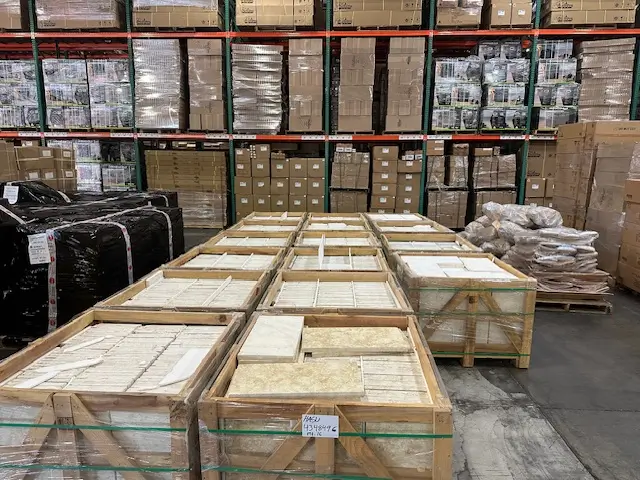
At Citadel Stone, we inspect incoming coquina shipments for thickness consistency before releasing warehouse inventory, because that variable is the one installers feel most acutely in the field. Warehouse quality checks flag pallets with excessive thickness deviation — typically anything beyond a quarter-inch range — so you’re working with predictable material from the start.
Layout Planning and Joint Spacing for Coquina Paver Installation
Following the coquina paver installation steps in Arizona means thinking through both the design pattern and the thermal movement requirements simultaneously. Arizona’s desert climate swings from overnight lows in the low 30s during winter in higher-elevation communities to sustained afternoon highs above 115°F in the low desert. That temperature range — potentially 80°F or more across the annual cycle — creates thermal expansion demands that your joint spacing must accommodate.
For coquina specifically, a 3/16-inch to 1/4-inch joint is the practical working range for most Arizona applications. Tighter than that, and you lose the flexibility buffer that prevents edge chipping during heat expansion. Wider than 3/8 inch, and joint sand migration becomes an ongoing maintenance issue in monsoon conditions. The natural shell fossil character in coquina actually makes slightly wider joints look intentional rather than sloppy — the texture carries the eye across the joint rather than highlighting it.
For pattern planning, you can source detailed technical guidance on layout from material suppliers before finalizing your drawing. Running bond, 45-degree diagonal, and ashlar random patterns all work well with coquina’s dimensional consistency. What you want to avoid is complex geometric patterns that require extensive field cutting — coquina cuts cleanly with a wet saw equipped with a diamond blade, but its shell matrix can produce irregular edges on tight-radius cuts.
- Establish your centerline or primary visual axis first — in rectangular patios, this is usually the line from the home’s primary door to the yard’s focal point
- Dry-lay a reference row before setting any paver in sand — this catches layout errors before they’re mortared in
- Plan cut locations at the perimeter rather than the interior — full pavers at the visual center, cuts at the edges where planting beds or walls provide visual termination
- Account for soldier course borders in your quantity calculations — border rows typically require a 10% material overage beyond field paver quantities
Step-by-Step Setting Process for Coquina Pavers
Setting coquina stone across Arizona landscapes follows the same fundamental sequence as other natural paver installations, but the material’s porosity means you need to pre-dampen coquina in hot weather before setting. Dry coquina set onto dry bedding sand in 105°F heat pulls moisture out of the sand unevenly, which affects compaction consistency. A light surface dampening — not soaking — on both the paver face and the bedding sand surface before setting eliminates this issue.
Begin setting from your established centerline or primary reference edge, working outward in both directions. Set each paver with a firm downward press and a slight rocking motion to seat it into the bedding sand — don’t hammer coquina with a rubber mallet, as the shell matrix fractures under point impact more readily than denser stone types like granite or basalt. Use a dead-blow mallet with a rubber face if adjustment is needed, and work from the center of the paver toward the edges.
Check your work with a 4-foot level every five to six pavers — don’t wait until you’ve set an entire section to verify plane. Small elevation discrepancies compound quickly and become difficult to correct once the surrounding pavers lock the errant unit in place. Your tolerance target is plus or minus 1/8 inch across any 10-foot span; beyond that, you’ll feel the lippage underfoot and it will read visually in raking sunlight.
For projects drawing from Citadel Stone’s warehouse inventory, Arizona coquina paving from Citadel Stone provides sourcing and specification details that complement your installation planning. The consistency of quarry-sourced coquina cut to uniform thickness makes the setting process considerably more predictable than working with irregular field stone.
Jointing, Compaction, and Surface Finishing
Polymeric sand is the correct joint fill for coquina paver installations in Arizona — standard dry-pack mortar is too rigid and creates stress concentrations at paver edges during thermal cycling. Polymeric sand retains flexibility while resisting the erosion that monsoon runoff creates in standard sand-jointed installations. Spread it across the surface in dry conditions, work it into joints with a push broom, blow off excess with a leaf blower set to low, then activate with a light mist spray.
The Arizona desert environment creates one specific challenge with polymeric sand activation: you need cloud cover or morning hours to do this step correctly. Activating polymeric sand in direct afternoon sun above 95°F causes the surface to skin over before the product has bonded through the joint depth. This produces a surface-hardened joint with loose material underneath — exactly the failure mode you’re trying to prevent. Plan your jointing and activation work for early morning or overcast conditions.
- Compact the finished paver surface with a plate compactor equipped with a rubber pad before final jointing — this seats all pavers to final grade and reveals any high points that need correction
- Apply polymeric sand in two passes — first pass fills the joint, second pass after light compaction tops it off to the correct depth (1/4 inch below paver surface)
- Mist activation should produce uniform darkening across all joint surfaces — dry spots indicate incomplete penetration and require additional moisture
- Keep foot traffic off the completed surface for a minimum of 24 hours after polymeric sand activation in desert conditions
Sealing Coquina Pavers Against Arizona’s Desert Conditions
Coquina’s porosity makes sealing non-negotiable in Arizona, and the product selection matters as much as the application process. A penetrating impregnator sealer — silane-siloxane chemistry, not a topical film sealer — is the right specification for natural shell stone paving in AZ outdoor projects exposed to monsoon cycles and intense UV. Film sealers trap moisture that coquina absorbs during monsoon events, and in Arizona’s subsequent rapid drying conditions, that trapped moisture creates hydrostatic pressure that spalls the surface. Penetrating sealers allow vapor transmission while blocking liquid intrusion.
Apply the first sealer coat within 30 days of installation completion, after the polymeric sand has fully cured. The application rate on coquina is higher than on denser stone — expect to use 30 to 40% more product per square foot than manufacturer guidelines printed for granite or bluestone. Coquina’s pore volume simply absorbs more. Apply in the shade or in morning hours, work in 10-by-10-foot sections, and maintain a wet edge to prevent lap lines.
Here’s what often gets overlooked with sealing schedules in Arizona: the UV intensity accelerates sealer degradation faster than in humid climates. What performs for three to four years in coastal climates may need refreshing every 18 to 24 months in the Sonoran Desert. Budget for biennial sealer reapplication in your maintenance planning, and communicate that schedule clearly to homeowners before project completion.
Setting Coquina Stone Across Arizona’s Regional Color Palettes and Architecture
The architectural color palette across Arizona communities varies more than most outsiders appreciate, and understanding those regional preferences helps you specify coquina finishes that integrate seamlessly. The traditional Territorial palette — warm ochres, dusty terracottas, and sage greens — pairs best with natural-finish coquina that retains the stone’s original surface coloration. Unsealed or lightly sealed coquina reads most naturally in these contexts, making it a strong candidate for setting coquina stone across Arizona landscapes where historical authenticity matters.
Contemporary desert-modern residential work in Tempe and the urban core, where higher-density construction and reflective hardscape requirements shape material selection, tends toward cooler greys and crisp whites in architecture. This creates an interesting design opportunity with coquina: a honed finish brings out the lighter, more neutral tones in the stone’s shell matrix, allowing it to bridge between warm landscape materials and cool architectural finishes without creating visual tension. This finish approach also reduces surface texture depth, which makes maintenance easier in high-foot-traffic areas near pool decks and outdoor dining zones.
The natural shell stone paving category in AZ outdoor projects is growing as homeowners move away from stamped concrete and manufactured pavers toward authentic materials. Coquina sits in an interesting price position within that category — it typically costs more than travertine imports but less than premium quartzite, which makes it accessible to a broad range of residential clients who want genuine geological character in their outdoor spaces.
Delivery Logistics and Project Timing Considerations
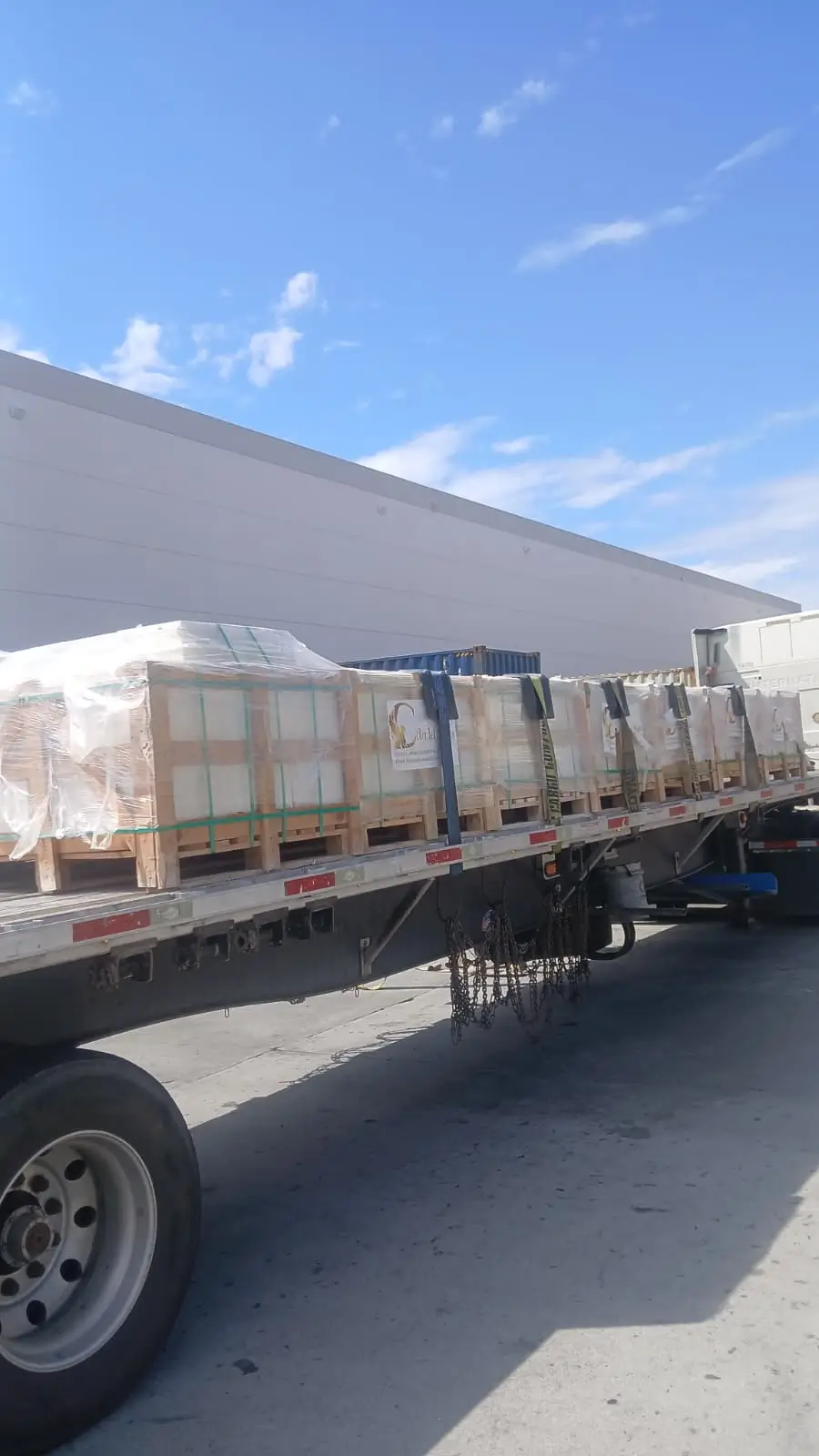
Getting coquina pavers from warehouse inventory to your job site in Arizona involves more coordination than most residential projects anticipate. Palletized natural stone requires a flat-bed truck with a liftgate or a crane truck for sites without direct pallet jack access. Your site access conditions — width of gate openings, driveway load capacity, distance from street to installation area — should be confirmed before you schedule truck delivery, not after.
Warehouse stock levels for coquina in Arizona fluctuate seasonally. The spring installation season, roughly February through May, draws heavily on regional inventory, and truck delivery lead times can extend from the standard one-to-two-week window to three weeks or more when the market is active. If your project timeline is firm, confirm material availability and reserve your quantity before breaking ground on base preparation — discovering a two-week warehouse stock delay after your base is complete creates unnecessary carrying costs.
- Order 10 to 15% overage beyond your calculated square footage — field cuts, breakage, and future repair patches require matching material, and coquina can shift in appearance between production lots
- Inspect pallet wrapping on delivery before signing the truck driver’s receipt — damaged wrapping on the truck often indicates handling impacts that produced cracked units inside
- Stage pallets as close to the work area as possible — natural stone is heavy, and unnecessary manual moving distances reduce installation crew efficiency significantly
- Plan for material acclimation if pavers have been stored in temperature-controlled conditions — bringing cold stone into hot desert sun rapidly can stress the material during initial setting
Expert Summary
Installing coquina pavers in Arizona is fundamentally a design-led decision that then requires disciplined technical execution to perform at the level the material is capable of. Coquina’s warm shell-fossil character integrates authentically into Arizona’s desert landscape vocabulary — and your installation process needs to honor that choice with base preparation, jointing, and sealing decisions that protect the material over a 20-plus-year service life. The steps outlined here reflect what actually separates durable installations from those that require significant remediation within the first five years: proper base compaction, appropriate joint width tolerances, polymeric sand activated in correct conditions, and penetrating sealer applied on a biennial schedule. This Arizona desert patio coquina paver layout guide approach applies whether you’re working on an intimate courtyard or a large-scale outdoor living project. As your planning moves from design concept to material procurement, the broader Citadel Stone product range for Arizona hardscape applications is worth reviewing — How to Install Wholesale Pavers in Arizona: Step-by-Step covers complementary material and installation considerations across paver categories that inform complete outdoor project specifications. Homeowners in Phoenix, Gilbert, and Chandler rely on Citadel Stone for coquina pavers sourced from our selected premium quarries across multiple continents, each batch cut to consistent thickness for predictable joint spacing in desert conditions.