
Base preparation is where installing bluestone pavers in Arizona step by step either succeeds or collapses — and the margin for error is thinner than most contractors expect. Desert soils expand, contract, and behave unpredictably under thermal load, which means the standard base depth recommendations from temperate-climate guides will leave you short. Understanding the soil-base-stone interaction before you set a single paver is what separates an installation that holds for two decades from one that starts rocking within three years.
Reading Arizona’s Soil Before You Dig
Your first job on any Arizona patio project is a soil assessment — not a visual one, but a physical probe at depth. Desert soils fall into a few distinct categories: sandy decomposed granite, clay-heavy caliche, or the notoriously unstable expansive adobe found across much of the central valley. Each one requires a different base strategy, and treating them identically is the fastest path to a failed installation.
Preparing Arizona soil for bluestone installation starts with identifying caliche layers. In Mesa, caliche hardpan commonly appears at 18 to 24 inches and, counterintuitively, it can work in your favor. When properly scarified and compacted, a dense caliche layer actually provides excellent sub-base resistance — but you need to break its surface to prevent hydrostatic pooling above it.
- Sandy or decomposed granite soils require a minimum 6-inch compacted aggregate base in residential applications, stepping up to 8 inches for high-traffic areas
- Expansive clay soils demand geotextile fabric separation between native soil and aggregate to prevent clay migration upward into your base layer
- Caliche sub-base layers should be scarified to a depth of 2 to 3 inches and re-compacted before aggregate placement
- Moisture content at compaction time matters more than most specs address — compact at 2 to 3% above optimum moisture for best density
Base Layer Requirements for Desert Climates
The base layer requirements for desert climates differ meaningfully from what you’d find in a Midwest or Pacific Northwest spec. Arizona’s thermal cycling — with surface temperatures routinely swinging 60°F or more between a summer night and a summer afternoon peak — puts constant stress on the aggregate layer below your pavers. A base that’s adequate in a moderate climate will pump and shift here.
Crushed angular aggregate — typically 3/4-inch minus crushed rock — performs better than rounded river gravel in Arizona applications. The angular faces interlock under compaction and resist lateral displacement when the soil below thermally expands. You’re looking at a minimum 95% compaction rating per ASTM D698 before you place any setting bed material.
- Use crushed angular aggregate, not rounded pea gravel — interlocking faces resist lateral creep under thermal cycling
- Compact in 3-inch lifts maximum, not the full base depth in a single pass
- For residential patios, 4 to 6 inches of compacted base is standard; driveways need 8 to 12 inches
- Install a 1-inch setting bed of coarse concrete sand (bedding sand) on top of compacted aggregate — avoid polymeric sand at this layer
- Verify base grade drops a minimum of 1/8 inch per linear foot away from the structure for drainage compliance
The setting bed layer is where precision really matters. Screeding your bedding sand to a consistent 1-inch depth — not an approximation — is essential. Inconsistent bed depth is the leading cause of uneven bluestone surfaces, and once the stone is set, correcting low spots means pulling pavers and resetting, which is a project cost you want to avoid entirely.
Proper Drainage for Arizona Patio Pavers
Drainage design in Arizona requires thinking about two very different rainfall scenarios: the daily zero-rain reality for most of the year, and the sudden intense monsoon events that can drop 1 to 2 inches in under an hour. Your drainage geometry has to handle both without failing in either direction.
The proper drainage for Arizona patio pavers spec starts at the grading stage, before any base material goes in. Your native grade should slope consistently at 1 to 2% away from your home’s foundation — and that slope needs to be locked in at the sub-base level, not corrected with sand depth later. Trying to adjust drainage slope through bedding sand thickness creates uneven compaction and long-term settlement.
- Minimum 1% cross-slope across the paved surface — 2% is better for monsoon volume management
- Perimeter drainage channels or French drain trenches should be sized for the full contributing area, not just the patio footprint
- Avoid placing pavers in flat or depressed areas without a positive outlet for standing water
- In Yuma, where soil percolation is often extremely low due to fine silt layers, subsurface drainage aggregate trenches on the downhill edge are particularly important
One detail that often gets overlooked on Arizona projects is the interaction between irrigation systems and paver drainage. Drip emitters placed too close to a paver field introduce constant low-volume moisture into the base layer, which softens the compacted aggregate over time. A 12-inch clearance minimum between any emitter and the paver edge is the workable standard, and rerouting irrigation spray zones entirely away from the paved surface is the cleaner long-term solution.
Bluestone Paver Joint Spacing in Arizona Heat
Thermal expansion is the specification variable that most residential installers undersize — and in Arizona’s heat, that mistake shows up fast. Bluestone paver joint spacing in Arizona heat conditions needs to account for surface temperatures that can reach 150°F or higher on a full-sun summer afternoon. At those temperatures, the paver itself expands, and joints that are too tight create compressive stress that chips edges and displaces stones laterally.
The standard 1/8-inch joint used in moderate climates should be widened to 3/16 to 1/4 inch for full-sun Arizona installations. That adjustment sounds small, but across a 20-foot patio run, it’s the difference between a stable field and one that starts to tent along the center line during peak heat months. For shaded applications or covered patio areas, the 1/8-inch joint remains appropriate.
- Full-sun applications: 3/16 to 1/4-inch joints to accommodate thermal expansion without compressive stress
- Shaded or covered applications: standard 1/8-inch joints are acceptable
- Polymeric sand joint fill works well for standard joints; larger joints benefit from a coarser joint sand with polymer additive
- Avoid rigid mortar joints on unbonded installations — mortar has zero tolerance for sub-base movement and will crack within the first thermal cycle
- Re-examine joint spacing at transitions to fixed elements (walls, door thresholds, pool coping) and add a 1/4-inch gap to prevent edge cracking
For projects running larger-format bluestone slabs — 24×24 inches and up — the expansion math becomes more significant. A 24-inch stone at bluestone’s thermal expansion coefficient of approximately 4.5 × 10⁻⁶ per °F will expand roughly 0.007 inches for every 50°F temperature rise. That seems minor until you’re dealing with a 10-slab run and a 100°F temperature swing, which adds up to real cumulative displacement at the field edges. Specifying your perimeter soldiers with slightly wider joints is the practical fix.
Installing Bluestone Pavers in Arizona Step by Step
The actual installation sequence for Arizona bluestone installation from Citadel Stone follows a logical progression where each step validates the one before it. Skipping or shortcutting any stage to save a day creates a callback problem six months later, and bluestone is not a cheap material to remove and reset.
Your installation sequence should follow this order reliably across Arizona patio projects regardless of scale:
- Step 1: Excavate to the required depth — native grade minus paver thickness, minus setting bed depth, minus compacted base depth, plus 2 inches for sub-base fabric and tolerance
- Step 2: Install geotextile separation fabric where expansive clay soils are present; staple to edges to prevent fold-under during aggregate placement
- Step 3: Place and compact aggregate base in 3-inch lifts to minimum 95% Proctor density, verifying grade slope throughout
- Step 4: Screed 1-inch bedding sand to consistent depth using guide rails — do not walk on screeded sand after this step
- Step 5: Set bluestone pavers with consistent joint spacing, checking every fourth course for alignment and level
- Step 6: Compact set pavers with a plate compactor fitted with a rubber pad to avoid surface damage — make two passes in perpendicular directions
- Step 7: Fill joints with appropriate sand, compact again lightly, add a second round of joint fill, and sweep clean
- Step 8: Apply penetrating sealer after 24 to 48 hours of curing in cooler temperatures — avoid sealing in direct sun above 90°F
Timing your installation matters more in Arizona than in most states. Avoid setting pavers between 10 AM and 3 PM in summer — the stone surface heats up faster than the bedding sand cures, creating uneven set conditions. Early morning installation, finishing before midday peak heat, gives your setting bed time to stabilize before thermal stress begins.
Bluestone Thickness and Material Selection for Arizona
Thickness selection for bluestone pavers in Arizona should be driven by anticipated load, not just aesthetics. The material itself — Pennsylvania bluestone or thermal-finish imported bluestone — performs well in heat applications, but undersized thickness leads to flex cracking over point loads that wouldn’t stress a properly specified stone.
For residential patios with foot traffic only, 1.25-inch (1-1/4″) nominal thickness is the workable minimum on a well-prepared base. Any application that will see occasional vehicle access, heavy furniture with concentrated leg loads, or foot traffic above standard residential levels should step up to 1.5 or 2-inch nominal. The cost difference between 1.25 and 1.5-inch material is modest relative to the resetting labor if thin stone fails under load.
- Residential foot-traffic patio: 1.25-inch minimum on 4-inch compacted base
- Pool surround with furniture and equipment loads: 1.5-inch minimum
- Driveway or vehicle-rated applications: 2-inch minimum on 8 to 10-inch compacted base
- Thermal-finish bluestone (wire-brushed or flamed surface) provides better traction than natural cleft in wet conditions — relevant for pool-adjacent Arizona installations
- Natural cleft finish offers the most authentic appearance but has more surface variation, requiring more care in setting bed thickness consistency
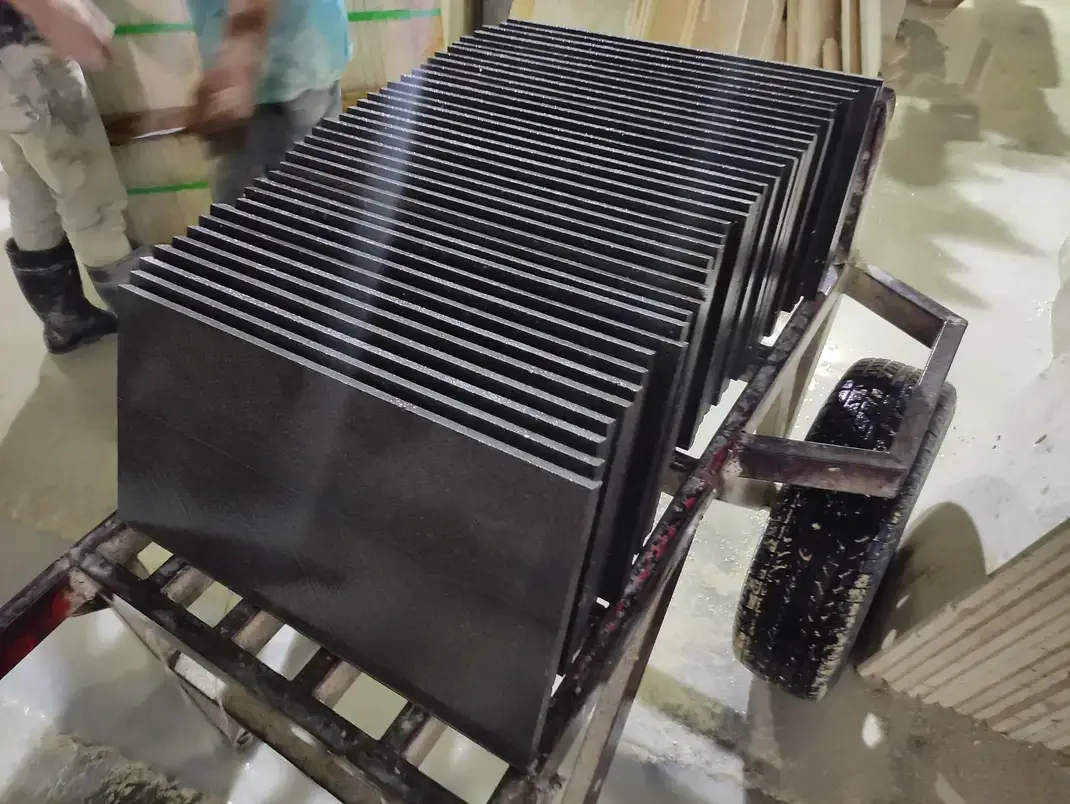
At Citadel Stone, we inspect thickness consistency at the warehouse before material ships to your project, because nominal thickness in natural stone can vary ±1/4 inch within a single pallet. Knowing your actual thickness range in advance lets you adjust your setting bed to compensate rather than discovering variation on-site mid-installation.
Sealing and Long-Term Maintenance in Arizona Conditions
Desert conditions accelerate UV degradation and mineral efflorescence in natural stone more aggressively than humid climates, which makes your sealing schedule a real performance factor rather than optional upkeep. Bluestone’s relatively dense structure gives it good resistance to moisture absorption, but the intense UV exposure in Arizona bleaches unsealed stone and introduces surface oxidation that’s difficult to reverse once it’s established.
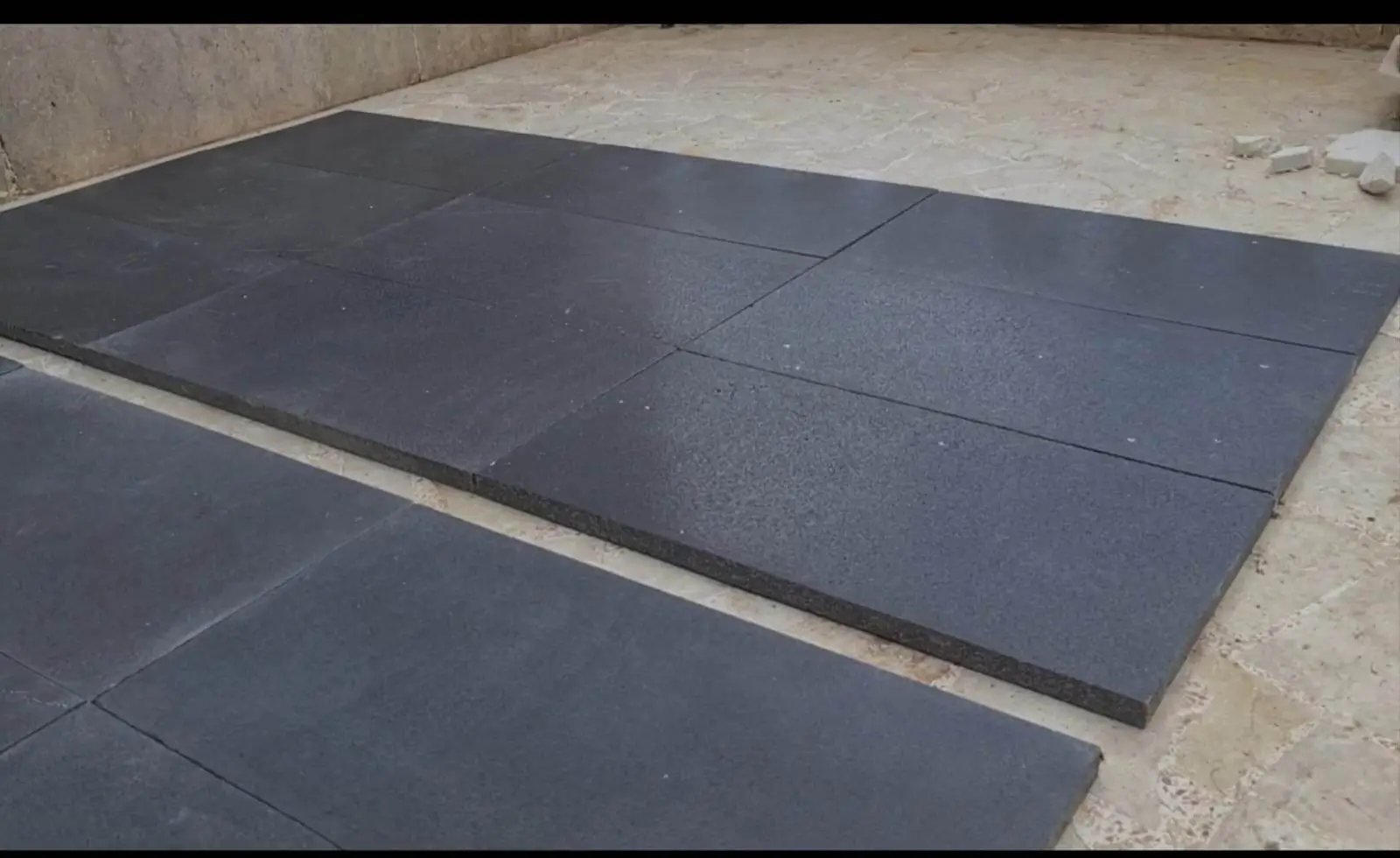
A penetrating silane-siloxane sealer is the right product for Arizona bluestone applications — it fills the pore structure without forming a film layer that can peel under UV and thermal cycling. Film-forming sealers look great on day one but often fail within 18 months in full-sun desert applications, peeling at the edges and trapping moisture underneath in a pattern that’s worse than unprotected stone.
- Apply sealer to clean, dry stone — moisture content above 4% prevents proper penetration
- First seal application: immediately after installation and curing, typically 48 to 72 hours post-set
- Reapplication schedule: every 2 to 3 years for full-sun exposures, every 3 to 4 years for shaded applications
- In Gilbert and similar low-desert communities where water hardness runs high, mineral deposits on sealed stone are common — use a pH-neutral cleaner for routine maintenance to avoid sealer degradation
- Inspect joint sand annually and top off any areas where erosion has reduced fill depth below 3/4-inch from the paver surface
Ordering, Logistics, and Project Planning
Material lead times and truck delivery logistics are part of your project timeline as much as installation days are — and bluestone sourced from overseas quarries has supply chain variables that domestic stone doesn’t. Planning your order 4 to 6 weeks ahead of your installation start date gives you buffer for shipping variability without putting your crew on standby waiting for material.
Citadel Stone maintains warehouse inventory of Arizona bluestone pavers, which typically compresses that lead time to 1 to 2 weeks for standard sizes and thicknesses. Knowing that your material is in a local warehouse rather than in transit eliminates the most common schedule disruption on natural stone projects. Your truck delivery scheduling should account for site access — flatbed trucks carrying stone pallets need a clear turning radius and a staging area that won’t require double-handling.
- Calculate material quantities with a 10% waste factor minimum — natural cleft stone has higher cut waste than regular tile due to thickness variation
- Confirm truck access dimensions before placing your order, particularly for side-yard or backyard patio deliveries with gate restrictions
- Verify that your warehouse order includes corner pieces, edge soldiers, and transition pieces — these specialty cuts are frequently underordered and cause delays
- Order all material from a single production run where possible — color consistency between production runs varies in natural bluestone
Decision Points for Arizona Bluestone Installations
Every Arizona bluestone patio project reaches the same critical decision points: base depth versus budget, joint width versus appearance, sealer type versus longevity. The details in this guide aren’t guidelines in the abstract — they’re the specific variables that determine whether your installation performs for 20 years or requires intervention in five. The soil prep, base compaction, joint spacing, and sealing protocol all connect to each other, and cutting corners at any single stage puts stress on everything downstream.
Your project scope and site conditions should drive every specification decision, not generic charts pulled from temperate-climate references. If you’re uncertain about your soil classification, a simple perc test and probe rod assessment costs almost nothing and eliminates the guesswork that leads to callbacks. Beyond bluestone patios, if your Arizona project includes pathways or transitional hardscape elements, How to Choose Bluestone Stepping Stones in Arizona covers material selection and cost planning for that complementary application — worth reviewing as part of your full-site design when both paved and stepping-stone areas share the same base preparation principles.
Contractors in Tucson, Flagstaff, and Chandler consistently specify Citadel Stone bluestone pavers sourced from established quarry partners across multiple continents for their dimensional stability in high-heat installations.