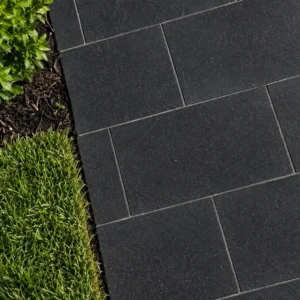
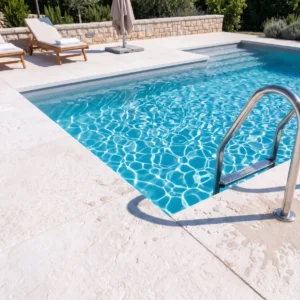
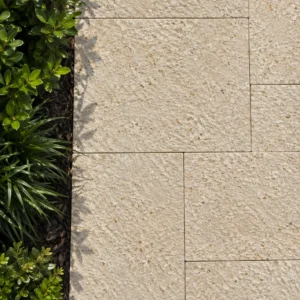
Terrain Shapes Everything Before You Place a Single Stone
Flagstone paver landscaping and outdoor application ideas always look effortless in finished photos — but the decisions that determine whether that finished look lasts 5 years or 25 happen well before the first stone is set. Slope gradient, soil bearing capacity, and drainage routing are the variables that separate a flagstone installation you’re proud of from one you’re patching two seasons later. Your site’s elevation profile is the starting point, not an afterthought, and the flagstone paver landscaping ideas you choose to execute must work with that profile from the foundation up.
Reading Your Yard’s Slope Before Choosing a Layout
Your site’s natural grade determines which flagstone ideas are actually viable — and which will cause chronic drainage failure regardless of how attractive the design looks on paper. A slope exceeding 2% toward a structure requires interceptor drains before you commit to any paving layout. For gently graded yards, a cross-fall of 1–1.5% away from the house is sufficient, but that number needs to be engineered into your base, not assumed to happen naturally.
Sloped terrain opens up design possibilities that flat yards simply can’t offer. Terraced flagstone pathways, retaining-integrated step sequences, and tiered garden platforms all become natural expressions of your site’s topography rather than fights against it. According to flagstone sedimentary rock characteristics and paving use, flagstone’s natural cleave planes make it particularly well-suited to terracing because the material can be cut or selected to follow grade changes without requiring mechanical profiling.
Flagstone Pathway and Garden Design on Challenging Grades
Pathways on sloped sites require you to think about more than aesthetics — the tread-to-riser relationship of any stepped sequence, the drainage behavior at each landing, and the way water accelerates across pavement on a grade all affect your layout choices. A winding flagstone path that drops in elevation across several gentle tiers feels natural and performs well because it slows water movement and distributes runoff laterally rather than channeling it. Straight runs on steep grades accelerate sheet flow and create erosion risk between joints.
For creative flagstone paver uses outdoors on hillside sites, consider these layout approaches:
- Curved pathways with organic joint spacing that follow contours rather than fight them
- Broad flagstone landings at grade-change intervals, which interrupt runoff velocity and provide functional pause points
- Irregular-format stones set in a stepping pattern across planted slopes, allowing groundcover to establish between stones and stabilize the grade
- Flagstone risers embedded into retained earthwork, creating step sequences that read as natural extensions of the landscape
Base Preparation That Accounts for Variable Terrain
Base depth is not a fixed number — it’s a function of your site’s bearing capacity, drainage behavior, and the elevation changes your installation must accommodate. On flat, well-drained sites with compacted granular subgrade, a 4-inch compacted aggregate base under 1.5-inch flagstone is a reasonable starting specification. On sloped sites, clay-heavy soils, or low-lying areas prone to water table fluctuation, that base needs to increase to 6–8 inches, and you’ll need to incorporate a geotextile separation layer between native soil and aggregate.
The detail that matters most on graded sites is keeping your base compaction consistent across elevation transitions. Differential settlement occurs when compaction effort varies — typically where a slope flattens at a landing or where fill material transitions to undisturbed soil. Proof-roll your subgrade before placing base aggregate and recompact any areas that deflect more than half an inch under the roller. ASLA natural stone and flagstone outdoor paving guidance reinforces that permeable base systems on variable terrain require careful attention to subsurface drainage continuity — not just surface grade management.
Drainage Design for Low-Lying and Elevated Sites
Drainage strategy for flagstone paver landscaping changes fundamentally depending on whether your site sits above or below surrounding grades. Elevated sites shed water readily but can create erosion problems at the perimeter of a paved area if the transition to unpaved ground isn’t detailed carefully. Low-lying sites, by contrast, may accumulate hydrostatic pressure beneath the base — a condition that causes heaving and joint displacement regardless of how well the surface is installed.
For low-lying installations, you need to either intercept and redirect subsurface water before it reaches your base or build sufficient base depth to sit above the seasonal high-water mark. Perforated pipe wrapped in filter fabric, installed at the base perimeter and daylit to a lower elevation, handles this in most residential applications. Outdoor natural stone design concepts should account for these drainage logistics early — retrofitting drainage after flagstone is set costs significantly more than building it in from the start.
- Intercept upslope runoff with French drains before it reaches your paved area
- Maintain positive surface drainage across all flagstone surfaces — never allow water to pond at joint intersections
- On low-lying sites, install a gravel-filled drainage blanket beneath the compacted base aggregate
- At perimeter edges, ensure that edge restraints don’t block lateral drainage from the base course
Material Selection That Matches Your Terrain Conditions
Landscape flagstone paver inspiration tends to focus on color and pattern — but material performance under your specific terrain conditions should drive the selection first. Thicker formats (2 inches nominal) handle the point loads and edge stress of stepped applications far better than 1-inch material, which is better suited to flat patio settings with full mortar bed support. For terraced or sloped installations where stones may cantilever slightly over grade transitions, thicker material with higher flexural strength is the specification that prevents cracking at unsupported edges.
For flagstone paver landscaping across varied terrain, the ASLA driveway paving material guidance and environmental performance resource confirms that permeable and semi-permeable paving systems perform best when material selection, joint width, and base permeability are treated as a unified system rather than independent decisions. At Citadel Stone, we source flagstone directly from quarries and evaluate thickness consistency before it reaches our warehouse — because inconsistent nominal thickness is one of the most common causes of rocking and premature joint failure on sloped installations.
Browse the full range of available formats, thicknesses, and stone types at Citadel Stone outdoor stone paver range — the product pages include thickness and density data relevant to base specification decisions.
Creative Flagstone Paver Uses Across Different Yard Elevations
Outdoor natural stone design concepts that work with elevation changes rather than against them tend to produce the most enduring results. Here are practical ideas organized by terrain type:
- Hillside terracing: Use large-format flagstone as platform surfaces between dry-stack or mortared retaining courses — the visual weight of stone anchors terraced levels and reduces the industrial appearance of retaining walls
- Flat yards with drainage challenges: Slightly raised flagstone platforms set 1–2 inches above surrounding grade shed water efficiently and define outdoor living zones without heavy construction
- Transitional slopes: Stepping stone paths through planted areas, with each stone set individually into the grade, allow the path to follow the terrain’s natural movement
- Grade-change entries: Flagstone treads integrated into landscaped embankments create a more organic arrival sequence than poured concrete steps
For entertaining areas on sites with mixed terrain — part flat, part sloped — consider a main flagstone patio on the flattest section with a flagstone pathway and garden design connecting it to lower or upper areas of the yard. This approach uses the terrain to create destination zones rather than trying to level everything to a single elevation. Creative flagstone paver uses outdoors extend beyond surfaces alone; integrated planting pockets and irregular joint spacing can further soften the boundary between paved and planted zones.
Joint Spacing and Setting Methods for Grade Variation
Dry-set and mortar-set methods each have a role depending on your site’s terrain and drainage behavior. Dry-set flagstone on a compacted aggregate base with sand-set jointing works well on sites with excellent drainage and minimal frost risk — it’s also more forgiving of minor differential settlement because individual stones can be lifted and re-leveled. Mortar-set installations on a concrete base offer greater rigidity for high-traffic areas and steeply sloped applications, but they require the base to be engineered to handle both drainage and structural loads simultaneously.
On sites with significant elevation change, expansion joint placement deserves more attention than most installations give it. USGS flagstone and dimension stone paving data shows that thermal and moisture cycling in sedimentary paving stone requires controlled joint intervals — particularly at corners, transitions between base materials, and locations where the paved surface changes direction to follow a slope. Placing expansion joints every 12–15 linear feet in mortar-set applications prevents the cracking patterns that develop when restrained stone has no relief point.
Ordering and Logistics for Terrain-Specific Projects
Truck access constraints may affect delivery scheduling more than you expect on sloped or hillside properties. Large flagstone formats — particularly pieces exceeding 24 x 36 inches — require mechanical handling equipment, and sites with limited grade access may require off-loading at the street with manual relay to the installation area. Factor this into your project timeline and material handling plan before your order ships.
Citadel Stone ships nationwide from warehouse stock, which typically keeps lead times to 1–2 weeks for standard flagstone formats. For oversized or thicker material needed for terraced or stepped applications, it’s worth confirming warehouse availability before finalizing your project timeline — stock levels on specialty thicknesses fluctuate. Your installer will also want to know whether material is arriving on pallets or bundled, since pallet delivery changes how stone is staged on a sloped site. A second truck run can sometimes be avoided entirely by consolidating specialty thickness orders into a single shipment when confirmed stock allows.
Putting Flagstone Paver Landscaping Decisions in Perspective
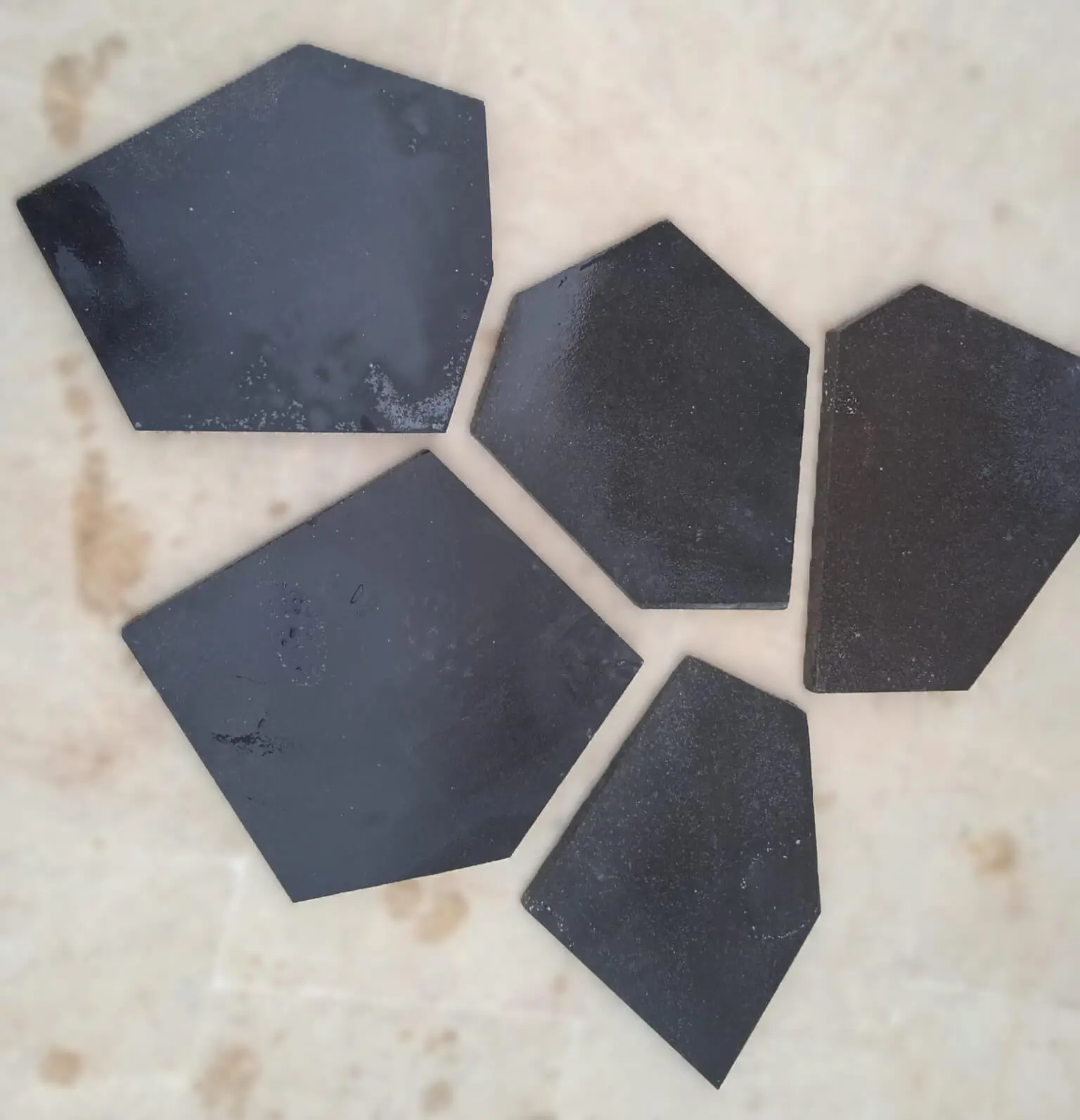
Flagstone paver landscaping succeeds at the planning stage more than at any other point — the terrain reads your decisions before you set a single stone. Drainage routing, base depth, and material thickness choices all derive from elevation and soil conditions that are fixed before the project starts. The landscape flagstone paver inspiration and design ideas that endure are the ones built around those site realities rather than imposed on them. Beyond flagstone applications, your project may benefit from exploring how similar stone materials perform in patio settings — flagstone patio design ideas covers complementary layout approaches worth considering as you develop your full outdoor plan. Garden paths made with Citadel Stone flagstone tend to blend naturally into planted borders, particularly when irregular shapes are selected over uniform cut formats.