A Bajan driveway is the property’s handshake — and its most abused surface: turning tires, delivery trucks, sudden downpours, and sun every day of the year. Here is how the material options really compare, and how to detail stone so the handshake stays firm for decades.
The material honest-comparison
The honest comparison, material by material:
- Poured or stamped concrete wins on day-one price and loses the decade — tint fades, cracks telegraph, repairs mismatch
- Asphalt softens in tropical heat and reads utilitarian
- Loose gravel migrates in rain and follows tires onto the road
- Dense stone pavers cost more up front and then simply keep working — individually replaceable, colorfast, and better looking at year ten than at day one
Stone choice: density and light
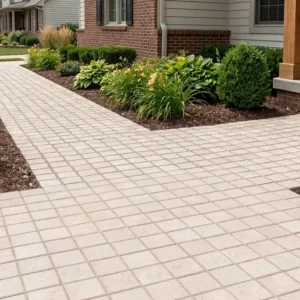
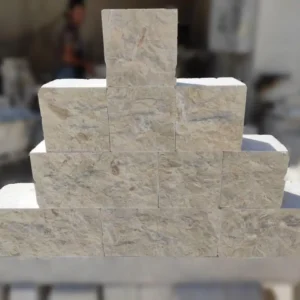
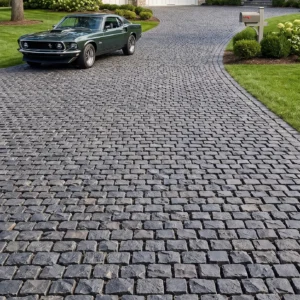
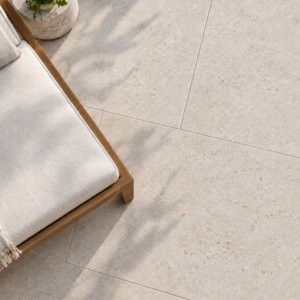
Black basalt pavers is the density benchmark and the drama choice — a graphite plane that flatters white architecture. Dense light limestone keeps the surface cooler and brightens shaded entries; many of the island’s best drives band the two: limestone field, basalt borders and aprons. Whatever the palette, driveway stone is 5 cm minimum on a proper base — pedestrian 3 cm has no place under vehicles.
The build-up nobody sees
Driveways fail from below: the compacted sub-base is the structure, the stone is the wearing course. Insist the contractor’s quote details base depth and compaction for your soil, falls of 1.5–2%, and perimeter restraint — a concrete haunch or curbstone edging — because turning forces migrate unrestrained edges within a few seasons.
Rain and grip
Bajan downpours arrive fast: crossfalls shed water to planted verges or channels, permeable joints (wider, open-graded aggregate) can drink a surprising share of a shower, and sloped drives want a bush-hammered or coarse-brushed finish so tires and sandals grip when water sheets. Herringbone laying interlocks against braking forces better than any straight bond.
Absorption is the number that separates one limestone from another. The Natural Stone Institute records a range running from under one percent to over ten across the family, and notes that dolomitic stones generally carry higher density, lower absorption and better abrasion resistance — the industry variety data sets this out. That spread is why two stones sold under the same broad name can behave nothing alike underfoot.
The entrance moves
Aprons, gate thresholds and name-wall bases in contrasting stone frame arrival; a basalt soldier course either side of a limestone field draws the eye down the drive. These details spend little and register daily.
Send dimensions, slope and soil notes for a cut-to-order quote with thickness and quantities — freight to Bridgetown, escrow and samples in 3 working days via the Barbados supplier guide.
Worked example: a 40-meter West Coast drive
Make the abstractions concrete. A 40 m long, 3.5 m wide drive is 140 m²:
- In 5 cm dense stone that is roughly 18–19 metric tons of surface — palletized-to-small-container territory
- Over a build-up of perhaps 200 mm compacted granular base on Bajan marl
- At 2 percent crossfall the surface sheds a 50 mm/hour squall, about 7 m³ of water per hour, into a planted swale running the drive’s length
Add a basalt banding course and the arithmetic becomes a specification.
The gate zone: heaviest duty, smallest area
Everything difficult concentrates at the entrance: turning geometry, gate tracks or swing clearances, the meeting with public asphalt, and every visitor’s first impression. Detail it deliberately — dead-level threshold band for the gate, full-thickness stone or stone-dressed apron in herringbone, restraint on both flanks, and falls that keep road water out. Money spent on the first five meters repays daily; it is the handshake of the handshake.
Installation method matters as much as the stone itself. Industry guidance separates mortar-set work, sand-set exterior paving and pedestal systems, and stresses that drainage, movement and substrate condition drive long-term performance more than the material name does — the detailing guidance is worth reading before you specify.
Parking courts and turning heads
Where a drive widens into a parking court, two details preserve it:
- Keep the field pattern running continuously — a court laid as a separate patch always reads as an afterthought
- Mark bays, if needed, with flush basalt lines rather than paint
For turning heads, radius the borders honestly: curved soldier courses cut to the arc, exactly as with radius coping, because mitred straight pieces on a curve advertise economy in the least flattering way.
Coexisting with coral-stone walls
Many Bajan drives run between coral-stone boundary walls, and the pairing is handsome when the roles are respected: coral character above, dense stone below. Practical notes — wall wash-off carries fines onto the drive after heavy rain (a flush drainage slot at the wall base intercepts it), and any wall repointing project should happen before a new drive surface, not after, for obvious mortar-splash reasons. The full material logic sits in the coral-versus-imported comparison.
Commissioning and the first wet season
A new stone drive earns a short shakedown:
- After the first weeks of traffic, top up jointing sand where tires have seated it
- After the first proper squall, walk the drainage line and confirm water goes where the drawings said
- Diary a restraint-edge check at month six
Three small visits convert installation into permanence, and the Barbados guide covers spares and attic stock so even a future utility-trench repair disappears into the field.
Harvesting the drive: stone and the cistern culture
Barbados has caught rainwater for centuries, and a stone driveway can join the system:
- Sealed-joint sections laid to falls make clean catchment, feeding filters and storage
- Permeable-joint sections recharge the ground instead
- A single drive can do both, zone by zone
Design decision one is simply where the water should go: tank, garden or ground.
Night arrival: lighting the drive
A drive is used blind twice a day, and lighting design decides how it feels: low bollards or wall-mounted washes at the gate and turns, step-downs marked where levels change, and the pale field doing half the work by returning every lumen. Wiring runs in the service trench from the build (sleeves again — the theme never retires), fixtures sit in borders rather than the driving line, and warm color temperatures flatter both limestone and arriving guests. The measure: headlights off at the gate, and the drive still reads.
Future loads: EVs, solar and the next decade’s drive
Drives built now will host the next decade’s habits:
- Electric vehicles arrive with charging points, and a sleeve plus a pad location decided today costs nothing
- Solar carports want footing positions considered early
- Delivery traffic keeps growing everywhere on the island
None of this changes the stone specification — 5 cm dense stone already carries it all — but it rewards the drawing that marks where power crosses and where posts might land.
Choosing driveway stone in Barbados with open eyes
Bajan properties carry names, and the drive presents them: a name wall or pier base in the accent stone, the curb line turning through the gate geometry, the apron’s contrast announcing the threshold. These arrival meters justify their detailing budget on every visitor and every listing photograph — and because they are specials cut with the main order, their cost is measured in design attention more than money. The drive begins the property’s story; stone tells it in the right voice.