
What Arizona’s UV Load Actually Does to Cobblestone
Cobblestone driveway paver maintenance in Arizona starts with understanding something most homeowners and even some contractors miss: the real threat isn’t the heat itself — it’s the ultraviolet radiation that hammers these surfaces relentlessly for 300-plus days a year. UV exposure breaks down the mineral binders in natural stone at the surface level, causing progressive photo-oxidation that dulls finish, fades natural color variation, and opens micro-fissures that become invasion routes for water and debris. You can have a structurally sound installation and still watch it look ten years older than it should because nobody accounted for UV degradation in the maintenance schedule.
Natural cobblestone in Arizona faces solar irradiance levels that consistently exceed 6.0 kWh per square meter per day — among the highest sustained UV loads in North America. That number matters because it directly determines how quickly your sealer degrades, how often your joint sand needs attention, and what finish type you should specify in the first place. Understanding this relationship is the foundation of any serious maintenance plan for cobblestone driveways in this state.
Sealer Selection and UV Resistance for Arizona Driveways
The single most impactful decision in cobblestone driveway paver maintenance for Arizona conditions is sealer chemistry — not brand, not price point, but the actual UV-resistance rating of the product you’re applying. Penetrating sealers based on silane-siloxane chemistry outperform film-forming acrylic sealers in high-UV environments because they protect from within the stone rather than depositing a surface layer that photo-degrades and peels. Film-forming sealers look excellent for the first season, then UV exposure causes yellowing and delamination that leaves your cobblestone looking worse than if you’d skipped sealing entirely.
Here’s what most specifiers overlook: UV resistance in a sealer isn’t binary — it exists on a spectrum, and manufacturers rate it using different metrics. Look for products with documented UV stabilizer packages and confirmed test data under ASTM D4587 (accelerated UV weathering). For Arizona cobblestone driveways, you want a sealer with a UV stability rating sufficient for at least 1,500 hours of QUV exposure without significant gloss loss or color shift. That’s the real bar, not the generic language about “outdoor use” that appears on most consumer-grade products.
- Silane-siloxane penetrating sealers: best long-term UV resistance, no surface film to delaminate
- Polyurethane-enhanced penetrating sealers: good UV resistance with slight sheen for enhanced color
- Water-based acrylic film sealers: acceptable in low-sun climates, poor performance under Arizona UV
- Solvent-based acrylic sealers: faster initial cure but more prone to photo-yellowing after 18 months
- Epoxy coatings: strong surface protection but highly vulnerable to UV chalking — not appropriate for exposed Arizona driveways
How Often to Reseal Cobblestone Pavers in Arizona’s Sun
Arizona’s UV intensity compresses the effective service life of most sealers by roughly 30-40% compared to northern or coastal climates. A penetrating silane-siloxane sealer that performs for five to seven years in the Pacific Northwest may need reapplication every three to four years on a Yuma driveway facing full southern exposure — one of the highest UV-intensity locations in the continental United States. The critical variable isn’t the calendar; it’s the water bead test. Pour a small amount of water on your cobblestone surface — if it soaks in within 30 seconds rather than beading and rolling, your sealer is no longer providing meaningful UV and moisture protection.
For most Arizona cobblestone driveway installations, caring for cobblestone pavers in Arizona means following a realistic sealing schedule. New installations should receive their first sealer application after a 28-day cure period to allow residual installation moisture to evacuate. Subsequent inspections should happen annually in spring, before the intense summer UV season, with reapplication triggered by the water bead test rather than a fixed calendar interval. South-facing and west-facing driveways in low-desert elevations typically require reapplication every two to three years. Shaded or east-facing surfaces may extend to four years between treatments.
You’ll also want to coordinate your sealing schedule with warehouse stock availability if you’re using a specialty product — some high-performance stone sealers have limited regional distribution. Citadel Stone maintains product recommendations aligned with regional warehouse stock so you’re not chasing down a sealer mid-project.
Choosing the Right Finish for Long-Term UV Performance
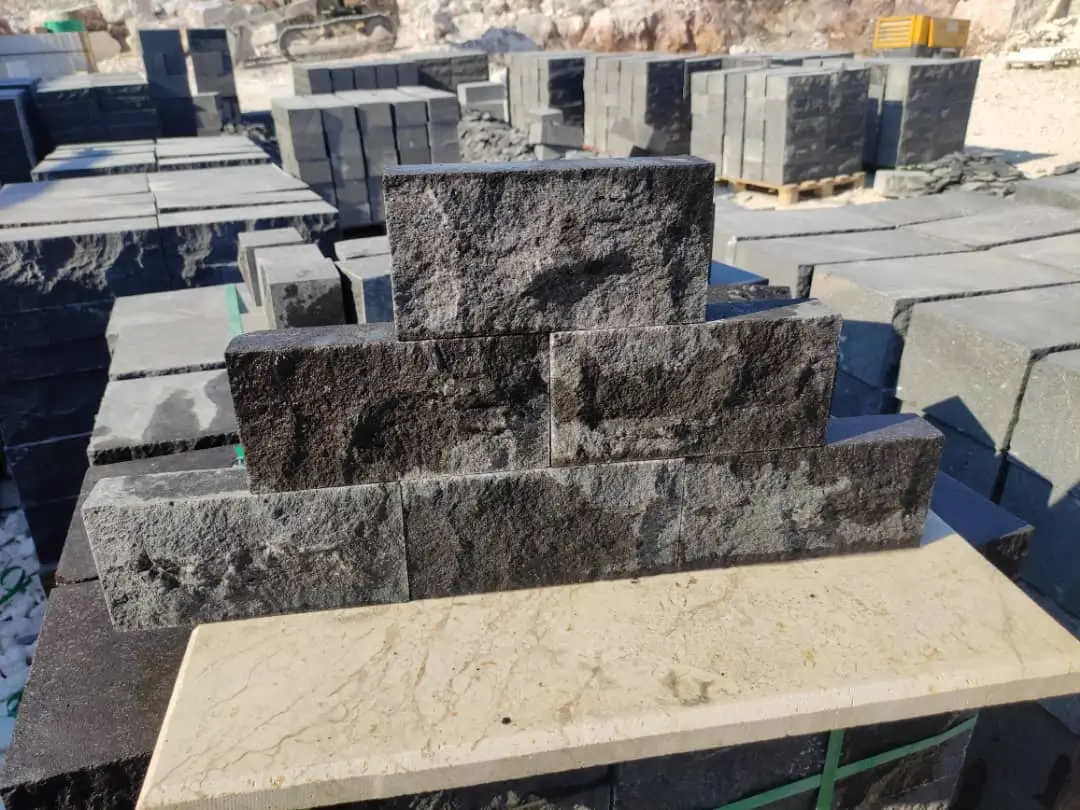
Surface finish selection has a direct and underappreciated impact on how cobblestone pavers age under Arizona UV. Tumbled and flamed finishes scatter light diffusely, which means UV degradation is less visually apparent as the stone weathers — color variation and surface character actually improve with age on rough-textured cobblestone. Honed and polished finishes, by contrast, present a specular surface that shows UV-related color oxidation and micro-etching very clearly. That doesn’t mean honed finishes are wrong for Arizona driveways, but it does mean you need to factor in a more aggressive maintenance schedule and higher-frequency sealing to preserve appearance.
Natural color variation in cobblestone — the gray-brown-amber streaking in basalt, the tan-to-cream range in limestone — is caused by iron-bearing minerals that oxidize differently under UV and oxygen exposure. In Arizona’s UV environment, this oxidation process is accelerated, which means lighter-colored stones may develop a surface patina faster than you’d expect from catalog images. For driveways in Sedona, where the surrounding red rock landscape makes stone color selection particularly important for aesthetic harmony, specifying a UV-stable, naturally iron-rich cobblestone variety helps the installed appearance remain consistent with design intent as the stone weathers.
- Tumbled finish: excellent UV aging characteristics, minimal visible oxidation over time
- Flamed finish: heat-treated surface resists UV degradation well, slip-resistant texture maintained
- Sandblasted finish: moderate UV resistance, good mid-range choice for driveways
- Honed finish: higher maintenance requirement under Arizona UV, needs frequent sealer refresh
- Natural cleft: variable UV performance depending on stone species, assess per-material
Cobblestone Joint Maintenance Across Arizona Driveways
Joint integrity is where cobblestone driveway paver maintenance in Arizona either holds together or falls apart — sometimes literally. UV degradation doesn’t just affect the stone surface; it degrades polymeric sand binders at the joint surface over time, creating voids that allow weed penetration, ant colonization, and water infiltration that undermines the bedding layer. Cobblestone joint maintenance across Arizona driveways should follow a seasonal inspection protocol, not a reactive one. You’re looking for joint sand loss greater than 25% of depth, visible cracking of the polymeric binder at the surface, or any section where the joint has gone completely open.
Polymeric sand replacement in Arizona requires attention to application temperature windows. UV-heated cobblestone surfaces can reach 150-170°F in summer — well outside the recommended installation range for most polymeric sand products, which top out at around 90-95°F ambient. Schedule joint refresh work for early morning in the spring or fall season. For Mesa installations where caliche-influenced drainage can create seasonal moisture fluctuations, joint sand integrity matters even more because settlement patterns can create differential joint widths that accelerate UV and moisture damage at inconsistent joint depths.
Explore our Arizona driveway cobblestone paver care resources for detailed joint refresh protocols matched to Arizona’s seasonal installation windows.
Cleaning UV-Weathered Cobblestone Without Causing Damage
UV weathering deposits a thin oxidized layer on natural cobblestone surfaces over time, and the temptation is to blast it off with high-pressure washing. Resist that instinct. Pressure washing above 1,200 PSI on cobblestone can dislodge joint sand, erode softer stone surfaces, and strip residual sealer — all in one pass. For caring for cobblestone pavers in Arizona’s intense UV environment, a low-pressure rinse combined with a pH-neutral stone cleaner is the right protocol for annual maintenance cleaning.
For more significant surface oxidation or biological growth — which is less common in Arizona’s dry climate but does occur on north-facing surfaces with poor drainage — a diluted alkaline cleaner formulated for natural stone followed by thorough rinsing and immediate resealing is the appropriate sequence. Never use muriatic acid or general-purpose concrete cleaners on cobblestone. The acid attacks calcium-bearing minerals in many stone types, etching the surface and accelerating the exact UV-oxidation damage you’re trying to address. Field performance testing consistently shows that improper cleaning causes more cumulative damage to cobblestone surfaces than UV exposure alone.
Supporting Factors: Thermal Expansion and Drainage
Natural stone driveway upkeep in the AZ desert climate requires accounting for thermal cycling as a secondary but significant maintenance variable. Cobblestone pavers in Arizona experience daily surface temperature swings of 80-100°F across summer months, and that repeated expansion and contraction stresses joint sand and edge restraint systems over time. Expansion joints should be placed every 10-15 linear feet in continuous driveway runs — not the 20-foot spacing sometimes cited in generic installation guides. The tighter spacing keeps thermal stress distributed across more joints, reducing the risk of any single joint failing under repeated cycling.
Driveway cobblestone pavers in Arizona also need drainage slopes maintained at a minimum 2% grade away from structures. UV-induced joint sand degradation, if left unaddressed, allows water infiltration during monsoon events that can undercut the bedding layer and create settlement patterns. The combination of UV degradation above and moisture infiltration below is what shortens cobblestone driveway service life in this climate — address both, and you’re looking at 20-plus years of reliable performance.
- Expansion joint spacing: every 10-15 feet in driveway runs exposed to full sun
- Minimum drainage slope: 2% grade across the full driveway surface
- Bedding sand depth: 1 inch compacted, consistent with ICPI base preparation standards
- Aggregate base depth: minimum 6 inches for residential driveway loads, 8-10 inches for heavier vehicle access
- Edge restraint: secure at 12-inch spike intervals to resist thermal movement forces
A Practical Arizona Maintenance Calendar for Cobblestone Driveways
Arizona heat-resistant cobblestone paver care tips are only useful when organized around when to actually do each task — and Arizona’s climate creates a maintenance calendar that differs significantly from the four-season framework most guides assume. The useful maintenance windows in Arizona are spring (February through April) and fall (October through November). Summer UV intensity and surface temperatures make sealing and joint work impractical, and monsoon season introduces moisture timing that can interfere with sealer bonding.
Your spring inspection should cover UV oxidation assessment, water bead testing for sealer effectiveness, joint sand depth measurement, and any edge restraint movement from winter temperature cycles. Fall is the right time to apply fresh sealer before UV intensity drops — counterintuitively, applying sealer in fall allows it to cure properly at moderate temperatures before the following summer’s peak UV load arrives. At Citadel Stone, we advise clients to maintain a simple maintenance log tracking inspection dates, sealer application dates, and joint sand conditions — it takes less than five minutes per inspection and saves hours of diagnostic work when issues arise years later.
- February to April: full surface inspection, joint sand top-up, sealer water bead test
- May: apply sealer if water bead test indicates degradation — last viable window before summer heat
- June to September: limit activity to light cleaning only, avoid sealing or joint work
- October to November: preferred sealer application window, fall joint refresh if needed
- December to January: inspect for any monsoon-season settlement or joint displacement
Building a Long-Term Cobblestone Driveway Paver Maintenance Plan in Arizona
Cobblestone driveway paver maintenance in Arizona is a long-term commitment that pays off when you build the right habits early. UV exposure is the dominant weathering force in this state, and every element of your maintenance approach — sealer chemistry, finish selection, joint refresh timing, cleaning protocols — should be calibrated around that reality rather than adapted from generic stone care guidelines written for more moderate climates. Your cobblestone driveway is a significant investment, and the materials themselves are durable enough to last decades under Arizona conditions when the maintenance plan is built around what the climate actually demands.
Proper natural stone driveway upkeep in the AZ desert climate also means making smart decisions before installation begins — the specification choices you make upstream have lasting consequences for how much maintenance you’ll need afterward. How to Choose Cobblestone Driveway Pavers in Arizona covers the upstream specification decisions that determine UV durability, finish longevity, and long-term appearance retention — worth reviewing before your next project or driveway replacement cycle. Stone care professionals serving Scottsdale, Tempe, and Sedona consistently note that Citadel Stone cobblestone driveway pavers develop minimal surface spalling under Arizona’s ultraviolet exposure when polymeric sand joints are refreshed on a routine seasonal schedule.