
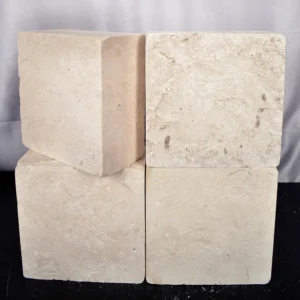
50 Years Of Manufacturing & Delivering The Highest-Quality Limestone & Black Basalt. Sourced & Hand-Picked From The Middle East.

Escrow Payment & Independent Verifying Agent For New Clients

Contact Me Personally For The Absolute Best Wholesale & Trade Prices:

USA & Worldwide Hassle-Free Delivery Options – Guaranteed.

How to Choose Cobblestone Driveway Pavers in Arizona

Budgeting for cobblestone driveway paver cost in Arizona requires understanding more than just the price per square foot. Freight distance from quarry to job site, regional labor rates, and how locally available materials are all shape what a finished driveway actually costs. In practice, the material-to-labor ratio on cobblestone installations runs differently than standard concrete paver work — the setting precision and sub-base requirements drive labor costs up, making material selection and sourcing strategy genuinely consequential decisions. Homeowners who explore our cobblestone driveway pavers in Arizona early in the planning process are better positioned to value-engineer the project without compromising surface performance. Citadel Stone offers cobblestone driveway pavers sourced from select natural stone quarries worldwide, with per-square-foot material grades that allow homeowners in Tucson, Mesa, and Chandler to align stone selection with both budget and long-term surface performance goals.

Table of Contents

Cobblestone driveway paver cost in Arizona lands in a wider range than most homeowners expect — not because the material itself is inconsistent, but because freight distance, regional labor rates, and material availability create meaningful price variation from one ZIP code to the next. Before you look at price-per-square-foot figures online, you need to understand what’s driving those numbers in your specific market, because the base cost of the stone is often the smallest variable on the invoice. Your total project spend is shaped by sourcing decisions, delivery logistics, and site-specific labor factors that no generic pricing chart captures.

What Drives Cobblestone Driveway Paver Cost in Arizona

The delivered price of cobblestone driveway pavers in Arizona reflects several stacked costs that compound quickly on larger driveways. Material cost at the quarry or distributor is just the starting point — what you actually pay accounts for transportation from the quarry or import port, regional warehouse handling, and last-mile delivery to your site. Understanding each layer helps you evaluate quotes accurately and find where value engineering actually moves the needle.

Freight distance is the factor most Arizona buyers underestimate. Natural cobblestone sourced domestically still travels hundreds of miles from quarry to job site, and weight-based freight rates mean that stone costs more per unit to ship than lighter alternatives. Imported cobblestone — typically from Portugal, China, or Brazil — arrives at West Coast ports, then trucks the remaining distance to your project location. That trucking leg adds cost that suppliers absorb differently, and it’s worth asking your supplier directly whether their pricing includes delivery to your site or only to a regional warehouse.

  • Quarry origin determines base material cost — domestic granite cobblestone typically runs $6–$12 per square foot before delivery, while imported options range $4–$10 depending on stone type and port-to-site distance
  • Freight from warehouse to site often adds $0.75–$2.50 per square foot depending on your location’s distance from distribution hubs
  • Regional labor markets in Arizona set the installation rate — Phoenix metro typically runs $8–$14 per square foot for skilled cobblestone installation, while more remote areas can push $12–$18 due to contractor availability
  • Base preparation depth affects your overall budget significantly — Arizona’s caliche and expansive soil conditions often require 8–10 inches of compacted aggregate rather than the 4–6 inches standard in more stable soil regions
  • Edging, polymeric sand, and sealer are line items that can add $2–$4 per square foot when properly specified
Distribution facility stores cobblestone driveway paver cost Arizona inventory in protective wooden crates.

Material Availability and Sourcing Decisions That Affect Your Budget

Your sourcing decision affects total project cost more directly than the per-unit stone price suggests. Buying from a supplier with Arizona warehouse inventory eliminates the 6–8 week import lead time that project managers dread, but it also means you’re working with what’s in stock — and that stock depth varies considerably. Suppliers with thin inventory force you to split orders, which complicates installation scheduling and can result in slight color variation between production runs, a problem that’s difficult to correct after installation begins.

At Citadel Stone, we maintain warehouse stock in Arizona specifically to give contractors and homeowners the flexibility to pull material when site conditions are ready rather than when a shipping container arrives. That predictability has real budget value — carrying costs for delayed projects, particularly in summer when concrete and mortar work slows, can erode your contingency quickly. Verifying warehouse availability before you finalize your project timeline is a straightforward step that prevents expensive scheduling gaps.

Driveway paver pricing in Arizona also responds to regional construction cycles. Spring and fall represent peak demand periods, which means suppliers operating near capacity may push lead times out or hold prices firm on negotiation. Ordering material in off-peak windows — particularly late summer or early winter — can yield better pricing and faster delivery from warehouse stock. The stone itself doesn’t change, but the market conditions around it do.

  • Confirm warehouse stock depth before signing a contract — a supplier with 2,000 square feet available matters less if your project needs 2,400 square feet from the same production lot
  • Request color and dimensional samples from the actual warehouse lot, not generic catalog imagery — cobblestone varies by quarry batch, and your approval sample should match what ships
  • Factor lead time into your project schedule — imported cobblestone ordered without existing inventory typically requires 6–10 weeks minimum from order to delivery
  • Ask whether delivery pricing includes site unloading or only curbside drop — the distinction affects your labor budget and sometimes requires specialized equipment for heavy stone deliveries

Understanding Labor-to-Material Cost Ratios in Arizona

The material-to-labor split for cobblestone driveway installation in Arizona typically runs 40–55% material and 45–60% labor on a fully completed project. That ratio shifts depending on the complexity of your pattern, the depth of base preparation required, and whether grading work is included. Understanding this split helps you identify where value engineering is most effective — cutting stone quality to save 10% on material while your labor cost stays fixed rarely produces meaningful budget relief.

Labor market conditions across Arizona are not uniform. In Scottsdale, the concentration of high-end residential contractors means skilled cobblestone installers are available but in demand, with rates that reflect both their expertise and the competitive market for premium residential work. Experienced installers typically quote higher rates per square foot but complete complex patterns faster, meaning their effective hourly cost may be more competitive than a lower-rate installer working slowly through intricate cobblestone layouts.

Pattern complexity directly drives labor cost in ways that the square footage calculation doesn’t capture. A running bond pattern installed with uniform cobblestone is the most efficient layout, allowing an experienced crew to move quickly. Fan patterns, herringbone, and radius cuts around curved driveways require significantly more cutting time and material waste — typically 10–15% additional material for cuts, plus 20–30% more labor hours. Factor both into your budget before finalizing your design selection. For AZ homeowners comparing cobblestone stone material costs, pattern choice is one of the most impactful variables in the final labor invoice.

  • Simple rectangular cobblestone in running bond: lowest installation labor per square foot
  • Herringbone pattern: adds approximately 15–20% to labor cost over straight-set patterns
  • Fan or circle kits at driveway entrances: premium labor cost due to radius cutting and precise joint alignment
  • Mixed-size cobblestone patterns require careful sorting and more precise placement, adding 20–25% to installation time versus uniform-size layouts
  • Thermal cutting and edge finishing for irregular border cobblestone adds specialized labor not always included in standard square footage quotes

Base Preparation Requirements and Arizona Soil Conditions

Base preparation is where Arizona projects diverge most sharply from national installation guidelines, and it’s also where unexpected budget increases originate. The caliche hardpan common across much of the state creates a challenging excavation layer that requires mechanical breaking — a cost that doesn’t appear in standard cobblestone driveway estimates written by contractors unfamiliar with desert soil profiles. Getting a soil assessment before finalizing your excavation budget prevents the cost surprise that derails projects mid-construction.

In Tucson, the caliche layer often appears at 12–18 inches below grade, which sits right in the excavation zone for a properly specified cobblestone driveway base. Experienced contractors in the area typically budget mechanical caliche breaking as a standard line item rather than an allowance, because it’s reliably encountered rather than occasionally discovered. If your contractor’s estimate doesn’t address caliche risk explicitly, that’s worth discussing before you sign.

Properly compacted aggregate base depth for cobblestone driveways in Arizona typically runs 8–10 inches of Class II base aggregate, compacted in 3-inch lifts to 95% modified Proctor density. This exceeds the 4–6 inch recommendations you’ll find in generic installation guides written for more stable soil conditions. The additional base depth adds real cost — roughly $2–$3 per square foot more than a minimal-spec installation — but it’s also what separates installations that maintain joint integrity for 20+ years from those that begin settling and cracking within 5 years.

  • Standard aggregate base: 8–10 inches compacted for vehicle-bearing driveway applications in Arizona
  • Caliche hardpan removal adds $1.50–$4.00 per square foot depending on depth and density
  • Geotextile fabric between native soil and aggregate is recommended in areas with high clay content to prevent base contamination over time
  • Drainage slope of 1–2% minimum away from structures is non-negotiable in Arizona — the monsoon season delivers concentrated rainfall that poorly drained driveways cannot handle
  • Compaction testing (nuclear gauge or sand cone) is worth requiring on larger projects to verify base density before paver installation proceeds

Cobblestone Thickness Grades and How They Affect Pricing

Cobblestone thickness grades create meaningful price variation that goes beyond the raw material cost per square foot. Standard residential cobblestone for driveway applications typically runs in the 2.5–3.5 inch nominal range, with heavier grades available for commercial loading or applications where structural performance under frequent heavy vehicle use is a primary spec requirement. Selecting the right thickness grade for your actual loading condition — not simply buying the heaviest available — is where value engineering produces real savings without compromising performance.

The cobblestone driveway pavers in Arizona that perform best over the long term aren’t always the thickest available — they’re the ones properly matched to both the loading condition and the base preparation beneath them. A 3-inch cobblestone over an 8-inch compacted aggregate base handles standard residential vehicle loading reliably. Upgrading to a 4-inch grade without improving base preparation doesn’t meaningfully increase performance — it just increases material cost and weight, which can complicate delivery logistics significantly.

Finish grade also affects pricing in ways buyers sometimes overlook. Tumbled cobblestone — the rounded, worn-edge appearance most people picture when they envision cobblestone driveways — requires additional processing at the quarry or finishing facility, and that processing cost is reflected in the unit price. Natural split-face cobblestone costs less to produce but delivers a rougher texture that some homeowners find less appealing in a residential driveway context. Both finishes have merit; the choice depends on aesthetic priorities and willingness to pay for additional processing. This is one of the more nuanced variables in any natural stone driveway budget guide built for Arizona conditions.

Regional Pricing Dynamics Across Arizona Markets

Arizona’s geography creates meaningful price variation that goes beyond simple distance from a supplier. Elevation, access constraints, and local contractor density all influence what you’ll pay for a completed cobblestone driveway installation. Projects in the Phoenix metro corridor benefit from the state’s most competitive contractor market and the best proximity to regional material distribution, which typically produces the most favorable labor and delivery pricing for cobblestone driveway paver cost in Arizona.

For projects in Flagstaff, the elevation introduces factors that genuinely affect specification decisions and costs. At 6,900 feet, freeze-thaw cycling is a real performance variable that cobblestone in the Phoenix basin never faces. Confirm that your stone selection meets ASTM C241 abrasion resistance requirements appropriate for freeze-thaw exposure, and your sealer specification should address both UV degradation and freeze-thaw penetration protection — two demands that low-desert sealers aren’t always formulated to handle simultaneously. Flagstaff contractors with genuine high-elevation experience understand these requirements; those who primarily work the Phoenix market may not.

Delivery cost increases with distance from regional warehouse hubs, and it increases non-linearly when truck access is constrained. Narrow driveways, low-clearance gates, or steep site grades can require specialized delivery equipment — smaller trucks with crane capabilities — that costs significantly more than a standard flatbed delivery. Assessing your site’s truck access constraints before requesting delivery quotes prevents pricing surprises that arrive with the stone.

For an accurate picture of current material and delivery pricing specific to your project location, Citadel Stone driveway paver pricing Arizona provides current inventory and pricing detail organized by material type and thickness grade.

Value Engineering Your Cobblestone Driveway Project

Value engineering in cobblestone driveway projects is a discipline that separates experienced project managers from first-time homeowners — and it rarely means buying cheaper stone. The most effective cost reductions come from design decisions that reduce labor intensity, smarter material ordering that minimizes waste, and phasing strategies that let you invest in base preparation without cutting corners on the foundation that determines long-term performance.

Pattern selection is the single most accessible value engineering lever. Switching from a herringbone or fan pattern to a running bond layout on a 1,200-square-foot driveway can reduce labor cost by $2,000–$4,000 on a mid-range project without changing the material grade or surface quality. If the herringbone aesthetic is important to you, consider using it selectively — in a feature band near the garage or at the entrance apron — and running a simpler pattern for the main field. You get the visual complexity where it matters most at a fraction of the full-herringbone labor cost.

Material ordering precision matters more than most homeowners realize. Cobblestone is typically ordered in full pallets, and under-ordering forces a second delivery at full freight cost. Over-ordering by 10–15% is standard practice to account for cuts and breakage, but ordering 20–25% over on a complex pattern from a different production run creates color-matching risk that’s difficult to resolve. Work with your supplier to establish the right overage percentage for your specific pattern before placing your order. When AZ homeowners compare cobblestone stone material costs across suppliers, overage assumptions built into each quote often explain apparent price differences that aren’t actually differences in stone cost at all.

  • Request a cut-sheet layout from your installer before ordering — it quantifies actual material needs and identifies where cuts will concentrate
  • Standard overage for running bond: 10%; herringbone: 12–15%; radius or complex patterns: 15–20%
  • Consolidate deliveries wherever possible — a single truck delivery of full project material costs less per square foot than two partial deliveries
  • Consider phasing large driveways across two seasons if budget is constrained — complete base preparation and one half in year one, extend in year two with material from the same production lot ordered simultaneously
  • Get competitive quotes from at least three installers, but evaluate their base preparation specifications, not just their per-square-foot rate — a $2 lower rate with half the base depth is a false economy
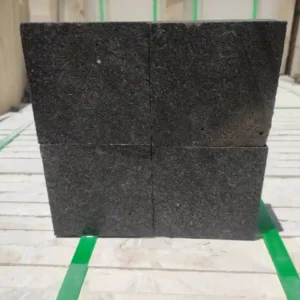
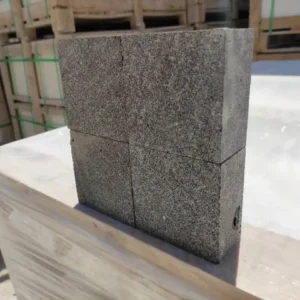
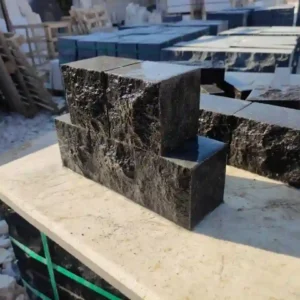
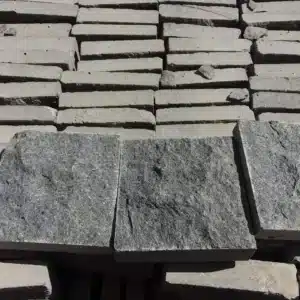
Four dark, rough-textured stone blocks are stacked together.

Sealing and Long-Term Maintenance Cost Planning

Your cobblestone driveway’s lifetime cost of ownership extends well beyond the installation invoice, and the maintenance cost curve is almost entirely determined by decisions made during specification and installation. A properly sealed and jointed cobblestone driveway requires biennial resealing and periodic polymeric sand replenishment — manageable costs that extend performance predictably. A driveway with inadequate joint sand or the wrong sealer chemistry degrades faster, requires more frequent intervention, and eventually needs joint remediation that costs nearly as much as the original installation.

Arizona’s UV intensity is genuinely harsh on sealers — harsher than any national product specification will acknowledge. Products rated for 3–5 year recoat cycles in moderate climates often need reapplication every 18–24 months in the Phoenix basin under full southern exposure. A penetrating silicone or silane-siloxane sealer performs better in desert conditions than topical acrylic sealers, which chalk and peel under sustained UV load at temperatures that regularly exceed 110°F at the surface. Specifying the right sealer chemistry upfront prevents the frustration of a topical sealer failing visibly in its second summer.

  • Penetrating silicone or silane-siloxane sealer: recommended for Arizona cobblestone driveways — does not alter surface appearance, penetrates stone matrix to resist moisture and staining
  • Topical acrylic or polyurethane sealers: risk of UV-induced chalking and delamination under Arizona heat load — avoid for full-sun driveway applications
  • Polymeric sand should be topped off whenever joint fill drops below 80% capacity — gaps allow weed establishment and ant tunneling that destabilizes the joint structure progressively
  • Annual pressure washing at 1,200–1,500 PSI removes surface contamination without damaging stone or disturbing joint sand when performed correctly
  • Budget $0.30–$0.60 per square foot every two years for sealer reapplication — this is the maintenance cost that most 20-year performance projections assume

Budget Planning and Square Footage Calculation for Arizona Driveways

Accurate square footage calculation is the foundation of a reliable project budget, and it’s more nuanced than measuring the visible driveway surface. Your material order needs to account for the full paved area including aprons, turnouts, and any transition zones at the street or garage entrance — areas that are sometimes excluded from initial measurements but show up on the installer’s invoice. Measure twice, order once is the right discipline here.

Any natural stone driveway budget guide built for Arizona projects should sequence costs in a specific order: excavation and base preparation first, material second, installation labor third, and finishing elements — edging, sealer, polymeric sand — last. Contractors who quote in the reverse order often produce estimates that feel competitive until base preparation costs are added as change orders mid-project. Requiring itemized estimates with base preparation explicitly specified gives you an accurate comparison baseline across multiple contractor quotes.

At Citadel Stone, our technical team regularly helps Arizona homeowners and contractors build accurate square footage and material calculations before orders are placed — including pattern waste factors, edging linear footage, and sealer coverage rates. This kind of pre-order calculation support reflects our hands-on familiarity with how Arizona projects are typically specified and where budget surprises tend to originate.

  • Total paved area (square feet) × 1.12 for running bond overage factor = material order quantity for standard patterns
  • Add edging stone linear footage separately — this is often overlooked in initial estimates
  • Sealer coverage: penetrating sealers typically cover 150–250 square feet per gallon depending on stone porosity — order enough for two coats on the first application
  • Polymeric sand coverage: approximately 50 pounds per 100 square feet for standard cobblestone joint widths of 3/8 to 5/8 inch
  • Contingency budget: hold 10–15% of total project cost in reserve for site-specific conditions — caliche, unexpected grading requirements, or drainage modifications

Getting Your Cobblestone Driveway Paver Cost Right in Arizona

Cobblestone driveway paver cost in Arizona is ultimately a function of decisions you control — material sourcing, pattern selection, base depth specification, and contractor evaluation discipline. The homeowners who get the best outcomes aren’t necessarily those with the largest budgets; they’re the ones who understand where cost is generated and where value engineering produces real savings without sacrificing long-term performance. Getting those details right from the specification stage prevents the change order conversations that push projects over budget mid-construction.

As you work through your material and installation decisions, understanding how cobblestone compares to other driveway surface options can sharpen your confidence in the investment. Stone vs Concrete Pavers: Which Is Better for Arizona Homeowners? provides a side-by-side performance and cost comparison that’s directly relevant to the budget analysis you’re doing here. Homeowners in Gilbert, Peoria, and Flagstaff working through cost estimates will find that Citadel Stone’s cobblestone driveway paver inventory spans multiple thickness and finish grades, giving each project a clear path from square footage calculation to final material spend.

Arizona's Direct Source for Affordable Luxury Stone.

Need a Tailored Arizona Stone Quote

Receive a Detailed Arizona Estimate

Special AZ Savings on Stone This Season

Grab 15% Off & Enjoy Exclusive Arizona Rates

A Favorite Among Arizona Stone Industry Leaders

Invest in Stone That Adds Lasting Value to Your Arizona Property

100% Full Customer Approval

Our Legacy is Your Assurance.

Experience the Quality That Has Served Arizona for 50 Years.

When Industry Leaders Build for Legacy, They Source Their Stone with Us

Arrange a zero-cost consultation at your leisure, with no obligations.

Achieve your ambitious vision through budget-conscious execution and scalable solutions

An effortless process, a comprehensive selection, and a timeline you can trust. Let the materials impress you, not the logistics.

The Brands Builders Trust Are Also Our Most Loyal Partners.

Secure the foundation of your project with the right materials—source with confidence today

One Supplier, Vast Choices for Limestone Tiles Tailored to AZ!

Frequently Asked Questions

If your question is not listed, please email us at [email protected]

What is the average cobblestone driveway paver cost in Arizona?

In Arizona, cobblestone driveway paver projects typically range from $18 to $45 per square foot installed, depending on stone grade, driveway size, and site conditions. Material costs alone generally run $8 to $22 per square foot. Freight to interior markets like Phoenix or Tucson adds a predictable cost layer, while local labor rates — which trend higher than the national average in many Arizona metro areas — make up a significant portion of the total budget.

Arizona’s geography means most natural cobblestone travels considerable distance before reaching a job site, and freight costs are rarely negligible. What people often overlook is that sourcing through a supplier with established regional warehousing absorbs much of that logistics overhead rather than passing it as a line-item surprise. Choosing a supplier with Arizona inventory reduces both cost variability and lead time — two factors that directly affect project scheduling and final budget accuracy.

Cobblestone installation is more labor-intensive than standard paver work because each unit requires precise setting and alignment, particularly with natural irregular formats. In Arizona’s competitive construction labor market, installation crews experienced with natural stone command a premium over general concrete flatwork contractors. From a professional standpoint, budgeting 55 to 65 percent of total project cost toward labor on cobblestone driveways is a reasonable baseline — site preparation complexity and pattern intricacy can push that higher.

Thickness directly impacts both material cost and sub-base specification, which together affect the installed price. Standard residential driveways typically use cobblestone between 2.5 and 4 inches thick, but heavier vehicle traffic — including frequent truck access — warrants thicker formats and a deeper compacted base. Selecting an undersized thickness to reduce upfront cost often leads to premature shifting or cracking, which makes the total lifecycle cost significantly higher than a properly specified installation from the outset.

Value engineering a cobblestone driveway starts with matching stone grade to actual performance requirements rather than defaulting to the highest-grade material across the board. Limiting pattern complexity — such as choosing a running bond over a fan or radial layout — meaningfully reduces labor hours. Sourcing materials from a supplier with regional Arizona inventory eliminates expedited freight costs and allows accurate pre-project budgeting. In practice, these decisions together can lower total project cost by 15 to 25 percent without compromising the finished surface.

Decades of hands-on experience in natural stone specification mean Citadel Stone’s recommendations address real installation variables — thickness, finish, and format — rather than general catalog guidance. That technical depth benefits architects, builders, and homeowners who need material selections matched to actual load requirements and site conditions. Citadel Stone supplies Arizona projects at every scale, from single-pallet residential driveways to multi-truckload commercial installations, with consistent inventory and specification support throughout.