
Thermal cycling — not raw heat — is the force that quietly destroys stone installations across Arizona, and choosing wholesale stone suppliers in Arizona without accounting for this engineering reality leads to failed joints, spalling faces, and costly replacements within a decade. Temperature swings of 40°F to 55°F between a summer midnight and midday are routine across the low desert, and the suppliers worth working with understand that material performance in Arizona isn’t a single-point specification — it’s a dynamic stress profile that plays out across thousands of daily cycles.
Why Thermal Cycling Defines Supplier Selection in Arizona
Most buyers focus their supplier conversations on price per ton and lead time. Those factors matter, but they become irrelevant if the stone you’re purchasing fails to handle what Arizona’s temperature range actually demands. The coefficient of thermal expansion for natural stone typically runs between 3.5 × 10⁻⁶ and 7.0 × 10⁻⁶ per °F depending on mineralogy. Across a 50°F daily swing, a 20-foot run of pavers can move roughly 3/16 inch — enough to blow out rigid mortar joints completely if your specification didn’t account for it.
A competent wholesale stone supplier in Arizona should be able to tell you exactly which products in their inventory carry ASTM C97 absorption test data, because absorption rate directly predicts freeze-thaw durability. Stone with absorption above 0.75% is workable in Phoenix’s low desert, but it’s a liability in Flagstaff, where genuine freeze-thaw cycles occur and moisture-laden pores expand with ice formation in ways that progressively fracture stone faces over time.
The detail that separates knowledgeable suppliers from order-takers is their ability to discuss thermal expansion coefficients, porosity grades, and minimum thickness requirements in the same breath as pricing. You’re not looking for a supplier who stocks stone — you’re looking for one who understands what happens to that stone six months after installation.
Evaluating Stone Supplier Selection Criteria Across Arizona
Arizona’s geography creates three distinct thermal performance zones, and stone supplier selection criteria across Arizona should reflect which zone your project occupies. The low desert below 2,000 feet — think Yuma and Phoenix — sees extreme daytime temperatures but minimal freeze risk. The middle elevations from 3,500 to 5,500 feet, including Sedona, experience moderate winters with occasional hard freezes. Above that, you’re in genuine alpine freeze-thaw territory.
For each zone, the supplier questions you need to ask shift significantly:
- For low desert projects, ask suppliers for solar reflectance index (SRI) data — surface temperatures on dark stone can reach 180°F, which accelerates sealant breakdown and creates burn risks on barefoot surfaces
- For mid-elevation zones, request ASTM C170 compressive strength data alongside absorption rates — you want stone with compressive strength above 7,500 PSI and absorption below 1.0%
- For high-elevation projects near Flagstaff, insist on ASTM C241 abrasion resistance data and absorption rates below 0.40% — these are the metrics that predict freeze-thaw survival
- Regardless of zone, confirm the supplier provides material traceability documentation — quarry source, batch number, and test date at minimum
A supplier who can’t answer these questions on the spot is probably reselling imported material without conducting their own quality verification. That’s not automatically disqualifying, but it does mean you’re carrying the technical risk yourself.
What Bulk Natural Stone Purchasing in Arizona Actually Involves
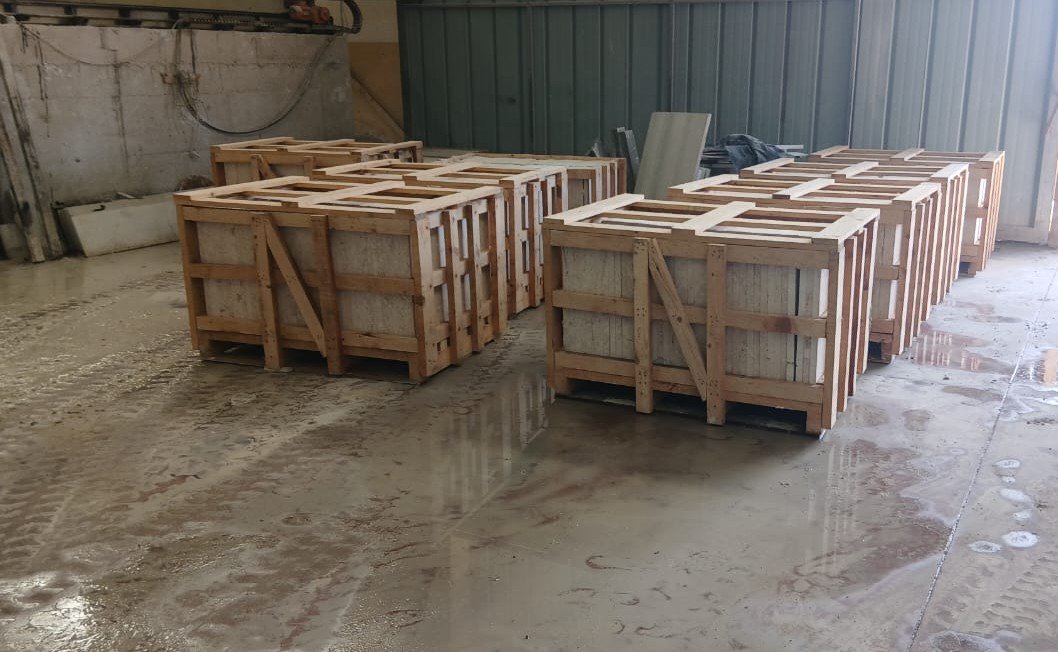
Bulk natural stone purchasing in Arizona operates on different logistics than retail sourcing, and the distinctions matter more than most buyers realize. When you’re ordering full-pallet or full-truck quantities, warehouse stock levels become your primary scheduling variable — not pricing. A supplier quoting you excellent pricing on stone that lives in a warehouse three states away introduces 6-to-8-week lead times that can stall a multi-phase project.
Citadel Stone maintains regional warehouse inventory specifically to compress those timelines. For most standard material types, orders ship within one to two weeks, which lets you align stone deliveries with concrete base cure schedules rather than building floating buffer weeks into every project timeline.
Beyond lead times, bulk orders require you to negotiate the right technical terms upfront:
- Confirm that thickness tolerances are documented — natural stone from some quarries ships with ±3/8 inch variation, which creates lippage problems in tight joint patterns
- Verify whether the supplier charges restocking fees on over-ordered material — this matters when you’re estimating 10-15% waste factor on complex patterns
- Ask whether the supplier provides quarry certificates with each shipment, or only on request — proactive documentation is a quality signal
- Clarify truck delivery constraints at the job site before the first order — standard flatbed trucks require 14-foot clearance height and adequate turning radius, which matters on residential sites
A Wholesale Stone Buying Guide for AZ Contractors Navigating Thermal Specifications
The wholesale stone buying guide for AZ contractors that actually gets used in the field isn’t organized by material type — it’s organized by the thermal performance question you’re trying to answer. Start with the installation environment’s temperature range, work backward to material specifications, and then match those specifications to what suppliers can actually deliver and document.
For natural stone pavers destined for Arizona patios, walkways, or pool surrounds, your specification framework should include these performance anchors:
- Thermal expansion coefficient between 3.5 and 5.5 × 10⁻⁶ per °F — limestone and travertine typically fall in this range, which is preferable to granite’s higher coefficient in wide-format installations
- Minimum 1.25-inch thickness for pedestrian applications — thinner material delaminates from the substrate during thermal cycling because the differential movement between stone and base aggregate compounds across hundreds of cycles
- Expansion joint spacing calculated at 10-12 feet maximum for Arizona installations — the standard 15-to-20-foot spacing on generic spec sheets assumes mid-Atlantic temperature ranges, not Arizona’s
- Penetrating sealer with silane-siloxane chemistry, reapplied every 18-24 months in high-UV zones — film-forming sealers bubble and peel under sustained 110°F surface temperatures
Share these requirements with prospective suppliers early. Their ability to cross-reference their inventory against your specs — rather than simply asking what size and color you want — tells you a great deal about the caliber of technical support you’ll receive on future orders. Applying this wholesale stone buying guide for AZ contractors framework before the first conversation saves significant back-and-forth once the order is in motion.
How to Read Material Documentation From Arizona Stone Suppliers
The documentation a wholesale stone supplier provides is more revealing than any sales conversation. What you’re looking for goes beyond a standard product sheet.
Genuine technical documentation for natural stone pavers should include:
- ASTM C97 water absorption and bulk specific gravity — any value above 0.75% warrants a freeze-thaw discussion before you specify for elevated projects
- ASTM C170 compressive strength — below 7,500 PSI is marginal for vehicular applications; above 12,000 PSI is preferred for driveways
- ASTM C1028 or DCOF Acutest slip resistance data — especially important for pool surrounds and entry areas where wet-surface grip is a liability issue
- Batch test date — material tested more than 18 months ago may not reflect the current production run’s actual performance
In Sedona, where mid-elevation freeze events combine with significant day-to-night temperature swings across all four seasons, the interaction between absorption rate and freeze-thaw cycling determines whether a travertine installation looks pristine at year five or shows progressive surface spalling. Suppliers who understand this zone’s demands can pre-screen inventory to your performance floor before you place the order — saving significant rework costs downstream.
Arizona Wholesale Stone Sourcing Tips for Scheduling and Delivery
Scheduling wholesale stone deliveries around Arizona’s seasonal installation windows requires more planning than most project managers initially budget for. Mortar and grout joint materials have temperature-sensitive working windows — hot weather accelerates hydration and reduces your correction time from roughly 45 minutes to under 20 minutes on an exposed substrate.
These Arizona wholesale stone sourcing tips address material staging as well. Coordinate your truck deliveries so stone arrives on-site no more than 72 hours before installation, and store pallets in shaded areas or under breathable tarps. Stone that’s been sitting in direct Arizona sun at 140°F surface temperature will accelerate mortar set contact on placement, even if ambient air temperature is moderate.
The scheduling and sourcing logistics below consistently separate smooth deliveries from problematic ones:
- Place your warehouse order at least 10 business days before the installation date — this leaves buffer for any material that needs to be pulled and inspected before loading
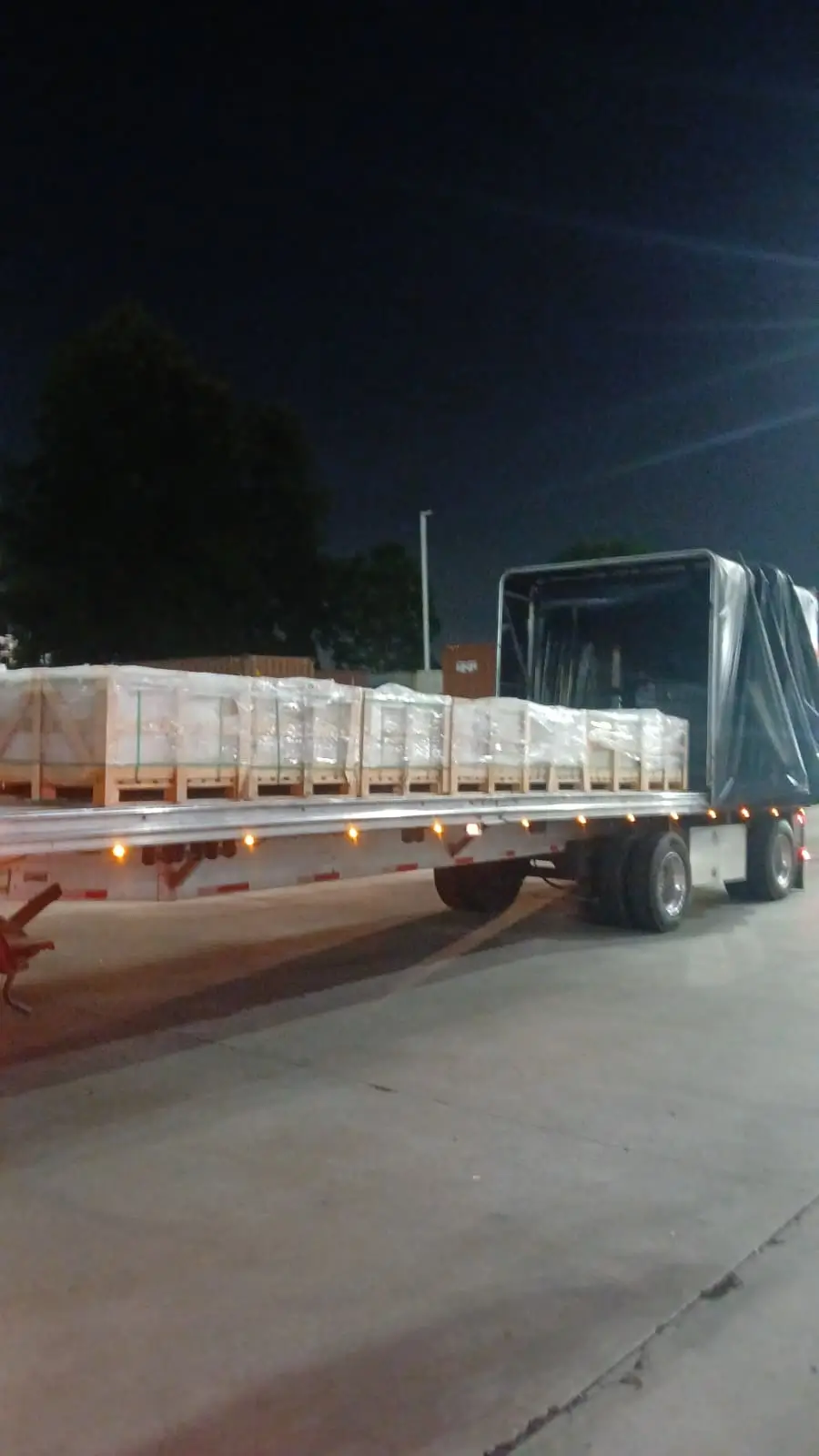
- Confirm truck access dimensions with your site supervisor before finalizing delivery dates — a flatbed loaded with 6 tons of stone that can’t complete its approach requires expensive re-delivery
- Request a pre-shipment photo of pallet wrapping — pallets with loose or inadequate banding frequently arrive with edge chips that force partial material replacement
- Verify that the supplier documents the pallet count and square footage per pallet — discrepancies between ordered and received quantity are much easier to resolve before the truck leaves
For a detailed breakdown of what to look for when sourcing stone for Arizona applications, the Arizona stone supplier guide Citadel Stone covers material selection, regional performance zones, and ordering logistics in a single reference.
Thermal Expansion Calculations That Every Arizona Specifier Should Run
Running the thermal expansion math before you finalize a stone specification isn’t optional — it’s the step that determines whether your joint widths will hold or blow out within two seasons. The calculation is straightforward and takes about 10 minutes, but most field teams skip it because they’re working from generic installation guides that weren’t written with Arizona’s temperature range in mind.
Here’s the working method for natural stone pavers in Arizona installations — a framework that any supplier focused on choosing wholesale stone suppliers in Arizona should be able to walk through with you:
- Determine your local temperature range: in Yuma, you’re looking at roughly 115°F summer highs and 35°F winter nights — an 80°F annual swing that’s among the highest in the continental U.S.
- Multiply the panel run length (in inches) × the thermal expansion coefficient × the temperature range in °F
- Example: 120-inch run × 5.0 × 10⁻⁶ per °F × 80°F = 0.048 inches of total movement — that’s almost 1/16 inch per 10-foot run, which means your joint width must accommodate cumulative movement across the full field
- For a 30-foot field with no intermediate expansion joints, the movement is 0.144 inches — enough to crack an undersized rigid joint even with good adhesion
- Spec your expansion joints accordingly: every 10-12 feet in open fields, minimum 3/8-inch joint width at perimeter, filled with a polyurethane-based joint sealant rated to 200°F service temperature
Suppliers who stock stone for high-volume projects should be familiar with these calculations. If a supplier’s technical rep gives you a blank look when you mention thermal expansion joints, that’s a genuine red flag — not a minor knowledge gap.
Red Flags to Watch for When Vetting Arizona Stone Suppliers
Choosing wholesale stone suppliers in Arizona means navigating a marketplace that includes both highly capable regional specialists and volume resellers with limited material knowledge. The red flags that signal trouble are usually visible before you place your first order.
Pay close attention to these warning signs during supplier vetting:
- No ASTM documentation on file — any credible supplier can produce test data within 24 hours; inability to do so means they’re not tracking material performance
- Blanket statements about material durability without specifying the test standard — “this stone lasts for decades” means nothing without compressive strength and absorption data
- Unwillingness to disclose quarry origin — some imported stone fails to meet domestic quality grades and is repackaged without adequate disclosure
- Warehouse inventory that’s described as “on order” more than 30% of the time — this signals they’re a pass-through reseller who doesn’t maintain working stock, which creates scheduling vulnerability for your projects
- No minimum order flexibility — suppliers who force you into full-truck minimums on small jobs often can’t manage mid-project supplemental orders efficiently
- Pricing that’s dramatically below market without explanation — natural stone has real extraction, processing, and logistics costs; anomalous pricing usually reflects undisclosed grade substitution
At Citadel Stone, we flag material inconsistencies during warehouse receiving inspection before shipment — thickness variation, surface finish discontinuities, or color batch divergence gets caught before it reaches your job site rather than after installation has started.
Final Considerations for Choosing Wholesale Stone Suppliers in Arizona
Getting the supplier relationship right before the first order lands is the most cost-effective decision you’ll make on any Arizona stone project. The thermal cycling reality of this state’s climate — daily swings, seasonal extremes, and elevation-driven freeze-thaw dynamics — demands a supplier who treats technical specification as part of their service, not an afterthought. You’re not just buying material; you’re buying the technical confidence that the stone will perform for 20 or 30 years under conditions that expose every specification shortcut.
Your procurement checklist should prioritize ASTM documentation, warehouse stock transparency, and demonstrated knowledge of thermal expansion effects before you even discuss pricing. Suppliers who lead with material performance data — absorption rates, compressive strength, expansion coefficients — are the ones who’ve been through enough Arizona field problems to know what actually matters. The ones who lead with square-foot pricing without asking about your installation environment are setting you up to find out the hard way why those numbers didn’t tell the whole story.
As you finalize your material and supplier selections for your Arizona project, related stonework considerations are also worth exploring — the Landscape Limestone Slab Dry Creek Bed for Marana Drainage Aesthetics article covers how Citadel Stone’s limestone products perform in Arizona drainage and landscape applications, offering additional perspective on natural stone behavior across Arizona’s varied conditions. Builders in Tucson, Mesa, and Chandler rely on Citadel Stone for bulk stone orders that arrive with documented material specs and predictable lead times across multi-phase construction schedules.