
Why Soil Conditions Define Your Stone Selection
Building stone selection across Arizona climate zones starts underground — not at the surface. The single variable that separates a 30-year installation from a decade of callbacks is what’s happening beneath your base course, and Arizona’s soil profile is genuinely unlike anything you’ll encounter in most of the country. Caliche hardpan, expansive clay lenses, and decomposed granite subgrades create installation conditions that force you to rethink standard base preparation specs from the ground up.
Arizona soils don’t behave uniformly, and that inconsistency is what makes building stone selection here a discipline rather than a product decision. You can specify the most dimensionally stable limestone on the market and watch it fail in three years if your subgrade prep didn’t account for the localized expansion and contraction cycles driven by moisture fluctuations in the native soil. The material is only as good as what’s supporting it.
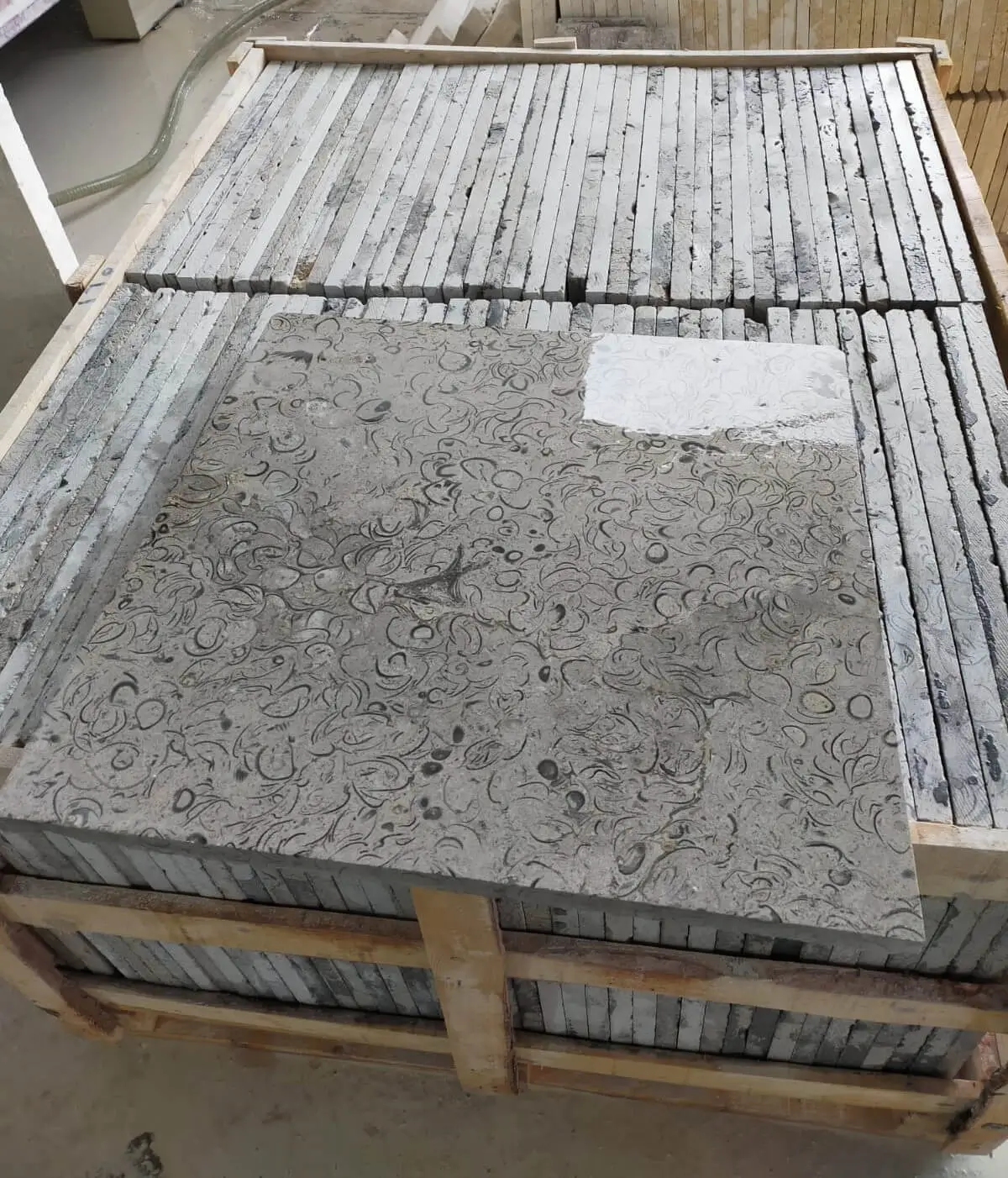
Arizona Soil Types and What They Mean for Stone
Caliche is the defining subgrade challenge for desert-rated building stone materials in Arizona. This calcium carbonate hardpan layer forms at varying depths — sometimes 6 inches down, sometimes 3 feet — and it creates two competing problems depending on how you handle it. Leave it intact and you’ve got a rigid, near-impermeable layer that resists vertical drainage and creates hydrostatic pressure against your stone base. Break through it without proper replacement and you introduce soft spots with inconsistent bearing capacity.
Expansive clay is a secondary concern concentrated in the Phoenix metro basin and several valley corridors. Clay soils in Arizona expand 3–8% volumetrically during seasonal moisture events, which generates upward pressure on stone installations exceeding 2,000 pounds per square foot in saturated conditions. For building stone applications — facades, retaining walls, exterior cladding — that kind of ground movement translates directly into cracked mortar joints and de-bonded veneer if your system isn’t designed to accommodate it.
- Caliche hardpan requires mechanical scarification or selective removal to depths of 8–18 inches before aggregate placement
- Expansive clay subgrades demand a minimum 6-inch compacted aggregate buffer with moisture barrier integration
- Decomposed granite, common in higher elevations, offers excellent free drainage but poor bearing stability without compaction to 95% Proctor density
- Sandy alluvial soils in river corridor areas require geotextile separation layers to prevent base migration over time
- Mixed profiles — caliche over clay — represent the most challenging condition and require a hybrid base design addressing both drainage and expansion simultaneously
Stone Performance and Ground Movement in Arizona
Natural building stone performance across Arizona depends heavily on how your selected material responds to differential movement from below. Dense, low-porosity stones like basalt and harder quartzite fare better over unstable subgrades because their lower absorption rate means moisture-driven expansion stays in the subgrade rather than migrating into the stone matrix. Softer sedimentary stones — certain sandstones, higher-porosity limestone varieties — will wick capillary moisture from a saturated base and show spalling or delamination within a few freeze-thaw cycles if you’re working in Arizona’s highland zones above 4,500 feet.
For exterior wall applications, AZ climate considerations for exterior stone buildings extend beyond surface performance. Mortar compatibility with thermally active substrates matters enormously here. A Type S mortar mix handles the shear forces from minor subgrade settlement better than Type N, and in areas with expansive clay you should seriously consider incorporating control joints every 8–10 feet in stone veneer runs rather than the 15-foot standard you’d use in more stable soil regions.
- Compressive strength above 12,000 PSI is the baseline specification for any exterior stone in areas with clay subgrade movement
- Water absorption below 3% (ASTM C97) reduces capillary wicking in moisture-variable subgrade conditions
- Modulus of rupture above 1,500 PSI provides adequate flexural resistance for installations over subgrades with differential settlement potential
- Thermal expansion coefficients in the 3.0–5.5 × 10⁻⁶ per °F range align well with Arizona’s temperature swing without over-stressing mortar joints
Base Preparation Protocols for Arizona Ground Conditions
Your base preparation approach for building stone in Arizona should be tiered based on a soil investigation — not assumed from general guidelines. For projects in Peoria, the soil profile frequently combines shallow caliche at 12–18 inches with clay-rich alluvial deposits below, which means your base design needs to address both the drainage restriction of the caliche and the expansion potential of what lies beneath it. Scarifying through the caliche, placing a geotextile separation layer, and backfilling with a well-graded crushed aggregate compacted in 4-inch lifts gives you the controlled bearing surface that stone installations require.
The aggregate base depth recommendation for exterior building stone in Arizona is generally 8–12 inches for pedestrian-scale applications, stepping up to 12–18 inches where vehicle loads or heavy cladding systems are involved. You’ll also want to verify that your base aggregate meets ASTM D2940 gradation requirements for road base materials — this is more critical than many spec writers realize because gap-graded base material under thermal cycling conditions will shift, and once it shifts, your stone joints telegraph that movement immediately.
- Proof-roll the native subgrade before aggregate placement — soft spots that deflect more than 1 inch under loaded roller need over-excavation and replacement
- Use 3/4-inch minus crushed aggregate rather than pit-run gravel for consistent compaction results in Arizona’s varied soil conditions
- Compact aggregate base in maximum 4-inch lifts to 95% modified Proctor density — thicker lifts reduce compaction effectiveness at depth in Arizona’s granular soils
- Install 6-mil polyethylene or approved geotextile separation fabric between native soil and aggregate base wherever expansive clay is present
- Allow freshly compacted base to cure 48–72 hours before stone placement in summer conditions — thermal stress on freshly set mortar beds can exceed allowable shear values
Stone Types Matched to Arizona Subgrade Conditions
The regional stone selection guide for Arizona construction isn’t a single recommendation — it’s a matrix that crosses subgrade type with application type. For ground-contact exterior cladding and foundation-adjacent stone work on clay subgrades, dense basalt and dark volcanic stone varieties perform consistently because their near-zero absorption keeps moisture migration out of the equation entirely. Granite varieties with absorption rates below 0.4% also perform exceptionally well here, particularly in the Phoenix metro where the combination of clay subgrades and high thermal mass loading creates conditions that punish porous materials quickly.
Limestone remains the most commonly specified building stone in Arizona and it performs well — with the right grade. You need absorption values below 3% and a minimum 8,000 PSI compressive strength when you’re building over Arizona’s reactive soil types. Higher-porosity limestone (above 7% absorption) placed directly against a moisture-variable caliche subgrade will show deterioration within 5–8 years in low desert conditions, and faster in highland zones with freeze-thaw exposure. For projects in Tempe and the eastern Valley, where the clay content in the upper 24 inches of native soil tends to be higher than the western suburbs, specifying a limestone with ASTM C568 Grade II or Grade III classification is the minimum defensible standard.
At Citadel Stone, we source our exterior limestone and basalt products with specific attention to Arizona’s subgrade demands — reviewing quarry absorption and compressive data before warehouse intake, not just relying on manufacturer specification sheets. That distinction matters when you’re specifying for reactive soil conditions where material tolerances directly affect installation longevity.
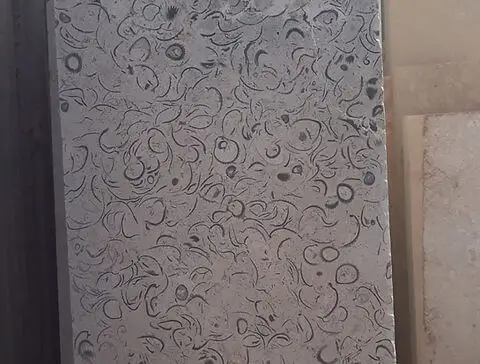
Elevation Zones and How Subgrade Moisture Changes
Arizona’s elevation range — from 70 feet at Yuma to over 7,000 feet in the White Mountains — creates dramatically different subgrade moisture environments that directly affect how building stone behaves over time. In the low desert below 2,000 feet, subgrade moisture is primarily event-driven: monsoon infiltration saturates the upper soil profile 2–3 times annually, and clay lenses expand and contract in response. The key specification challenge here is designing for that cyclical saturation rather than treating the desert as perpetually dry.
Above 4,500 feet, the moisture dynamic shifts to include freeze-thaw cycling of subgrade moisture — a condition that doesn’t exist in Phoenix or Tucson but becomes critical in Arizona’s highland communities. Frozen subgrade moisture expands approximately 9% volumetrically, and if that expansion transmits through an inadequately isolated base to your stone installation, you’ll see frost heave damage that looks like subgrade failure because it is subgrade failure. Your base aggregate depth in highland zones should increase to a minimum of 14 inches, and the aggregate itself needs to be free-draining enough to prevent moisture saturation before freezing temperatures arrive.
- Low desert zones (below 2,000 ft): design base for cyclical monsoon saturation, minimum 8-inch aggregate base with positive drainage slope away from structure
- Transition zones (2,000–4,500 ft): moderate freeze-thaw risk, increase base depth to 10–12 inches, use aggregate with less than 5% fines to maintain drainage
- Highland zones (above 4,500 ft): frost penetration depth of 8–18 inches requires base depth exceeding frost line plus minimum 6-inch buffer
- Soil moisture monitoring during installation — not just during design — prevents placing stone over subgrades that haven’t returned to equilibrium moisture content after rain events
Drainage Design and Subgrade Protection
Drainage isn’t a finishing detail in Arizona stone installation — it’s the primary engineering discipline that protects your subgrade from becoming the failure mode. Every exterior building stone application needs a designed drainage path that moves infiltrating moisture away from the base system before it reaches expansive clay or becomes trapped against caliche. A 2% cross slope minimum is the standard, but on sites with confirmed caliche at shallow depth, you need to physically intercept and redirect lateral groundwater flow with perforated pipe drainage at the base of your aggregate layer.
For projects in Phoenix proper, the urban heat island effect creates a secondary drainage engineering issue: intense, short-duration monsoon events produce surface runoff volumes that overwhelm standard slope drainage and force water into building stone base systems faster than it can drain laterally. Slotted drain installations at the upslope edge of exterior stone areas aren’t optional on Phoenix sites — they’re a necessary component of the drainage system that protects your subgrade investment. Coordinating these drainage components alongside your stone order through our warehouse inventory ensures you’re not chasing slotted drain materials from separate suppliers mid-project.
Planning your material delivery schedule matters as much as the specification itself. Coordinate your aggregate base delivery and stone delivery so the base has adequate cure time — typically 72 hours minimum after final compaction — before stone placement begins. Scheduling truck deliveries for early morning during summer months reduces the risk of thermal shock to freshly placed mortar beds, and a second truck delivery staggered 48 hours after the base aggregate drop gives you the flexibility to confirm compaction results before committing to stone placement.
Mortar Joint Design for Reactive Arizona Soils
Joint width and mortar formulation for building stone in Arizona should be specified with subgrade reactivity in mind, not just aesthetic preference. Standard 3/8-inch mortar joints provide insufficient accommodation for the differential movement generated by expansive clay subgrades — design for 1/2-inch joints minimum in high-clay soil areas, using a mortar formulation with a slightly higher sand-to-cement ratio to introduce controlled flexibility. Rigid, high-cement mortars over reactive subgrades crack first at the joint, then at the stone face as movement cycles accumulate.
Control joint placement is equally critical. The standard industry spacing of 15–20 feet for exterior stone applications is inadequate over expansive soils — reduce that to 8–12 feet and position control joints at inside corners and at transitions between subgrade types identified during your soil investigation. The minor aesthetic cost of additional control joints is substantially less than the cost of re-pointing or re-setting stone that’s moved because the joint system couldn’t accommodate the subgrade’s natural behavior. For access to technical guidance on joint specifications matched to Arizona conditions, explore our building stone supply across Arizona for additional product and specification resources.
Getting Arizona Building Stone Specifications Right
Building stone selection in Arizona demands a ground-up approach — literally. The most consequential decisions you’ll make aren’t which stone looks best or which has the highest compressive strength, but rather how your selection, base system, and drainage design work together against the specific subgrade conditions on your site. Caliche, clay, decomposed granite, and highland frost exposure each require a distinct technical response, and the specifications that work on one Arizona site may perform poorly on another a mile away.
Your material specification process should start with a soil investigation, proceed through a base design matched to what that investigation reveals, and then arrive at a stone selection calibrated to the moisture and movement environment that base system will experience. The regional stone selection guide for Arizona construction that actually works isn’t a product catalogue — it’s a soil-to-surface system. As you finalize your project specifications and budget, How to Choose Hardscape Stone in Arizona: Buyer’s Guide provides a useful reference for understanding the broader purchasing and specification decisions that affect project outcomes. Citadel Stone evaluates building stone for Arizona’s desert and highland conditions, supplying contractors in Yuma, Gilbert, and Scottsdale with exterior-rated materials known for dimensional stability across wide seasonal temperature ranges.