
Hardscape stone supplier pricing in Arizona breaks down differently than most buyers expect — and the gap between a well-priced project and an overrun usually traces back to terrain decisions made before a single stone gets ordered. Arizona’s dramatic elevation changes, from the basin desert floor around 1,000 feet up to the Mogollon Rim at 7,000 feet and beyond, create radically different engineering demands for base preparation, drainage routing, and material thickness. Getting those variables wrong doesn’t just affect aesthetics; it directly inflates your installed cost per square foot in ways that no amount of supplier negotiation will recover.
How Terrain Shapes Your Stone Budget
Arizona’s landscape is one of the most variable in the country, and that variability hits your project budget at the base, not the surface. A flat desert install in the Phoenix metro sits on an entirely different engineering foundation than a hillside courtyard in Prescott or a sloped backyard in a Chandler golf community. The moment grade management enters the picture, your material selection and your stone pricing strategy have to align with what the ground is actually doing beneath the surface.
Drainage geometry is the factor most buyers underestimate. On slopes exceeding 2% grade — which describes the majority of hillside and elevated terrain projects across the state — you’ll need to build positive drainage into the base profile, not rely on surface runoff alone. That means your aggregate depth increases, your compaction requirements tighten, and certain stone thicknesses become non-negotiable rather than optional upgrades. Natural stone that performs adequately on a level pad can fail within two to three seasons when the base shifts under hydrostatic pressure on a grade.
Your material choice needs to match the slope classification of your site. Here’s how the terrain tiers translate to stone specification decisions:
- Slopes under 2%: Standard 4-inch compacted aggregate base is sufficient for most residential hardscape stone in the 1.25–1.5-inch thickness range
- Slopes between 2–5%: Base depth should increase to 6 inches minimum, with drainage channels integrated into the design; stone thickness moves to 1.5–2 inches nominal
- Slopes over 5%: Engineered retaining solutions become necessary; stone should be 2 inches minimum with mechanical anchoring or mortared setting depending on the application
- Hillside or multi-tier installations: Full geotechnical assessment is warranted before finalizing stone selection or committing to supplier pricing
Understanding Hardscape Stone Supplier Pricing in Arizona
Natural stone material costs across Arizona landscapes span a wider range than most buyers realize when they start requesting quotes. You’re typically looking at $4–$9 per square foot for standard-format limestone and travertine at the material level, $10–$18 per square foot for premium-cut basalt and quartzite, and $20–$35 per square foot for large-format or custom-thickness pieces. But those numbers shift meaningfully based on the terrain engineering your project requires.
The honest breakdown of where hardscape stone supplier pricing in Arizona lands on your job includes more line items than the stone cost alone. Aggregate base material, compaction equipment, drainage infrastructure, and slope-appropriate adhesive or mortar products all attach to the terrain complexity of your site. A stone that costs $6 per square foot delivered to a flat site in Mesa can carry an effective installed cost of $14–$16 per square foot when proper base engineering for a 4% slope is factored in. That’s not a supplier problem — it’s a site condition that needs to be priced honestly from the start.
Key cost drivers to account for in your project budget:
- Stone material cost per square foot (varies by species, format, and finish)
- Freight and delivery — truck access constraints on steep or narrow sites add surcharge costs that can range $150–$400 per delivery
- Base aggregate depth and type — caliche-bearing sites may require compaction modification that adds $1.50–$3.00 per square foot
- Drainage infrastructure — channel drains, French drains, or catch basins run $25–$75 per linear foot installed
- Setting method — dry-lay versus mortar-set versus adhesive-anchored each carry different labor and material premiums
- Sealer application — budget $0.50–$1.50 per square foot for penetrating sealer on first application
What Makes a Hardscape Stone Vendor Worth Trusting in Arizona
Selecting hardscape stone vendors AZ homeowners trust comes down to three capabilities that separate reliable suppliers from order-takers: consistent slab grading, verified thickness tolerances, and honest lead-time transparency. You don’t need the lowest price — you need predictable material so your installer doesn’t spend the first day of the job sorting through inconsistent thickness that throws off your drainage plane.
Thickness tolerance is a terrain issue as much as an aesthetic one. On sloped installations, a 0.25-inch variation in stone thickness across a pallet means your finished surface won’t hold the intended grade. Water pools in the low spots, joint sand washes out, and within two wet seasons the installation develops structural problems that cost more to repair than the original savings justified. Specify maximum allowable thickness tolerance in your purchase order — for slope installations, hold suppliers to ±1/8 inch on nominal 1.5-inch material.
Your supplier conversation should include direct questions about warehouse stock consistency. At Citadel Stone, we inspect incoming stone shipments against thickness and grade tolerances before pallets go into warehouse inventory — because we’ve seen firsthand how quarry batch variation creates field problems for installers working on grades. That kind of upstream quality check isn’t universal across the industry, and it’s worth asking about directly before you commit to a supplier.
Material Selection Across Arizona’s Elevation Zones
Arizona’s terrain creates distinct microclimates that affect material durability beyond just temperature. Elevation drives freeze-thaw exposure, precipitation intensity, and soil composition in ways that should steer your material choice as much as aesthetic preference does. The right stone species for a Scottsdale desert floor project is not automatically the right choice for a hillside installation at 4,500 feet near Prescott.
For low-desert and basin-level terrain — where the majority of projects in Gilbert and the broader East Valley fall — travertine and limestone perform reliably on grades up to about 4% when properly sealed. Their relatively low density (travertine at 145–155 lbs/cubic foot) makes them manageable for hillside delivery logistics, and their natural variation in surface texture provides friction coefficients adequate for moderate slopes. Basalt becomes a more compelling choice at grades above 5% — its density (170–185 lbs/cubic foot) and low absorption rate (under 0.5%) make it structurally superior on exposed drainage planes where freeze-thaw is not a factor.
At elevations above 4,000 feet, freeze-thaw durability enters the specification as a primary constraint rather than a secondary consideration. You’ll want to evaluate absorption rates (ASTM C97) carefully — stones with absorption rates above 0.75% in freeze-thaw zones carry meaningful risk of spalling after repeated moisture-freeze cycling. Granite and dense basalt consistently perform in those conditions; softer travertines should be reserved for covered or interior-adjacent applications at elevation. Understanding how natural stone hardscape costs in Arizona shift with elevation is essential to building an accurate budget before you commit to a species or supplier.
Base Preparation and Drainage Design for Arizona Grades
The base is where most slope installations succeed or fail, and it’s also the variable that most directly affects your total project cost. Getting it right requires you to think about drainage geometry before you finalize stone selection — because the drainage design will dictate what your base profile looks like, and the base profile determines what stone thickness and setting method you need.
For projects in Chandler and the surrounding suburban East Valley, caliche hardpan is a near-universal subsurface reality. The good news is that properly excavated and prepared caliche provides an excellent load-bearing sub-base — the problem is when contractors attempt to install aggregate base directly over undisturbed caliche without proper moisture management. On sloped sites, water that can’t drain laterally will travel along the caliche-aggregate interface and migrate under your stone installation, undermining the base over time.
Your drainage design checklist for grade management should include:
- Identify the high point and all low points of the installation area before base excavation begins
- Design the finished surface to maintain a minimum 1.5% cross-slope toward designated collection points
- Install a perforated drain pipe at the base of any retained fill areas before aggregate placement
- Use open-graded aggregate (3/4-inch clean crushed) in the lower base lift for drainage capacity, topped with compacted angular aggregate for stability
- Avoid fine-grade decomposed granite as a base material on slopes — it compacts poorly under cyclic moisture loading
- Install edge restraint at all downslope edges to prevent lateral migration under load
A common field error on sloped natural stone installations is setting the drainage outlet too high relative to the finished surface. Positive gravity drainage must be established from the lowest point of your base aggregate layer — not just from the surface. That means your outlet elevation should account for 4–6 inches of base depth plus the stone thickness above it, with at least 2 inches of clearance below the outlet invert.
Stone Thickness and Slope Load Engineering
Thickness selection for hardscape stone in Arizona’s varied terrain goes beyond the standard residential versus commercial distinction. On grades, the load vector changes — you’re no longer dealing purely with vertical compression; you’re managing a combination of vertical load, lateral creep pressure, and shear stress at the setting bed interface. Each of those forces scales with the degree of slope.
The practical consequence is that thickness minimums on grades are higher than on flat installations. The field-tested approach: add one thickness increment for every 3% of slope above a flat baseline. That means a product you’d specify at 1.25 inches on a level pad should move to 1.5 inches at 3% grade and 2 inches at 6% grade. This calibration comes from watching installations perform over time under Arizona’s thermal cycling and monsoon-season drainage events — not from a generic specification table.
Hardscape stone supplier pricing in Arizona for sloped-site projects should always include a line item for thickness certification. Request written certification for each pallet — reputable suppliers can provide this because they track it through quality control. A pallet with 15% of pieces outside your tolerance range will create visible lippage on grade that no amount of setting adjustment will correct. The visible lip traps debris, accelerates joint sand loss, and creates a trip hazard on any installation with foot traffic.
Supplier Evaluation and Pricing Transparency
Your evaluation of hardscape stone supplier pricing in Arizona should include a direct conversation about pricing structure — not just the per-square-foot unit cost. There’s meaningful variation in how Arizona suppliers price freight, overages, and return policies, and those differences can swing your total material cost by 8–15% on a mid-size project.
Freight logistics deserve particular attention on sloped-site projects. A supplier’s standard truck delivery may assume flat, paved access — hillside or restricted-access sites often require smaller delivery vehicles or hand-carry staging, both of which carry additional cost. Before signing a purchase order, confirm what delivery vehicle the supplier assumes and what the additional charge is for restricted access. On projects with long or steep driveways, that conversation can save you a $300–$500 surprise on delivery day.
You can access a curated selection of natural stone matched to Arizona terrain conditions through Arizona hardscape stone from Citadel Stone, where product listings include thickness specifications and material data sheets useful for slope engineering decisions.
Key questions to ask any hardscape stone supplier before committing to a purchase:
- What is the maximum allowable thickness tolerance on this product, and can you provide written certification by pallet?
- What is your current warehouse stock level, and what’s the realistic lead time from purchase to delivery?
- Does your pricing include freight, or is freight quoted separately based on site conditions?
- What is your overage and return policy for cut-to-fit waste on irregular or sloped installations?
- Do you stock the full range of trim pieces (coping, border pieces, step nosing) needed for grade transitions?
- Can you provide a material data sheet with absorption rate, compressive strength, and freeze-thaw test results?
Stone Material Pricing for Arizona Landscapes by Species
Stone material pricing across Arizona landscapes varies by species, origin, and format — and each variable carries a different implication for terrain-specific performance. Understanding what you’re paying for within each price tier helps you make selections that serve the engineering requirements of your site, not just the aesthetic brief.
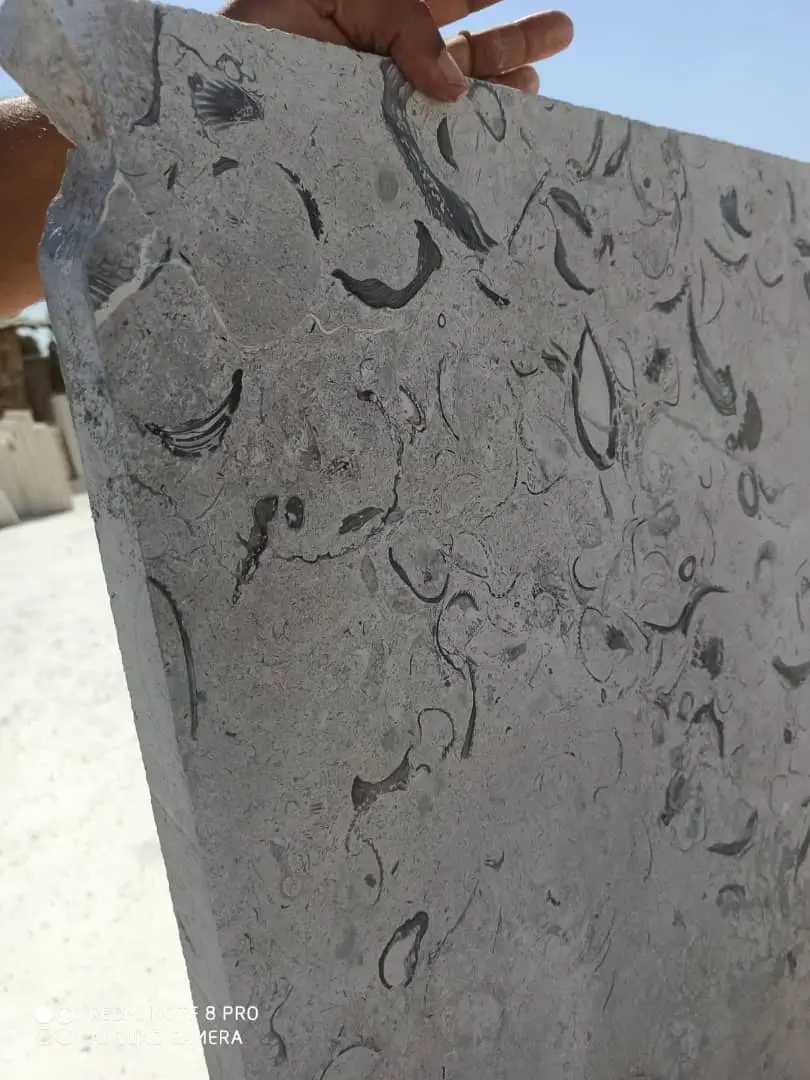
Limestone sits in the mid-price tier at $5–$10 per square foot for standard residential formats. It’s the workhorse of Arizona hardscape stone for low-to-moderate slope applications, with compressive strengths typically ranging 4,000–8,000 PSI and absorption rates of 0.3–1.5% depending on density grade. Dense cream and buff limestones in the 0.5% or lower absorption range are appropriate for applications up to 4% grade without mortared setting; beyond that, adhesive anchoring becomes the safer approach on exposed installations.
Travertine prices similarly at $6–$12 per square foot, with filled-and-honed finishes at the upper end of that range. Its interconnected pore structure, when properly filled and sealed, provides good drainage plane performance — but the sealing schedule matters more on grades where water infiltration is a persistent concern. Budget for biennial resealing on outdoor travertine in Arizona’s UV environment, and plan for annual inspection of joint material integrity on grade installations. These maintenance intervals are part of the true cost picture when evaluating stone material pricing across Arizona landscapes for long-term value.
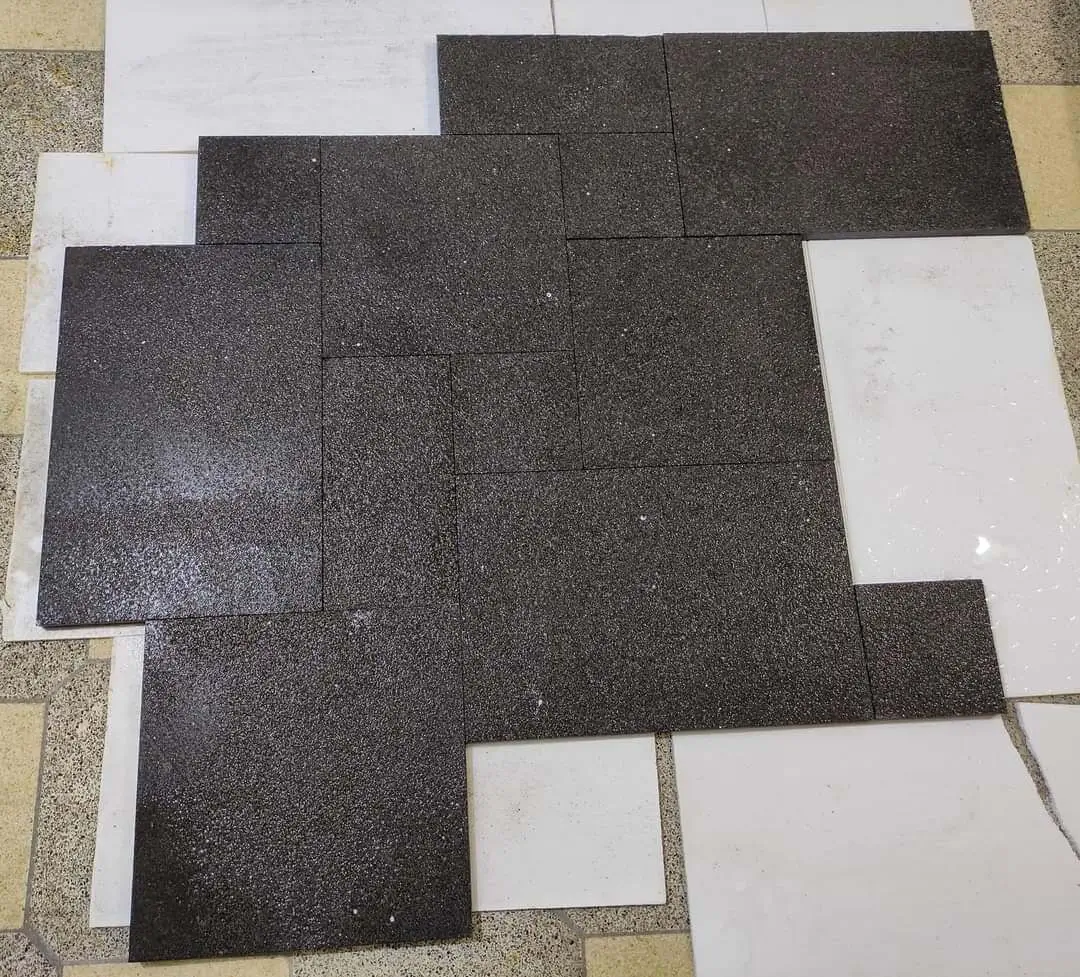
Basalt commands $12–$22 per square foot and earns it for slope applications. Its near-zero absorption rate, high compressive strength (15,000–25,000 PSI in dense varieties), and natural slip resistance from its crystalline surface texture make it the premium choice for hillside patios, pool surrounds on grades, and step applications. The weight penalty (roughly 20–25% heavier per piece than equivalent limestone) affects truck delivery and on-site handling, but for applications where structural performance on grade is the priority, no common natural stone outperforms quality basalt.
Arizona Desert Hardscape Stone Buying Guide by Project Type
This Arizona desert hardscape stone buying guide approach works best when you organize your material decision around project type and terrain first, and aesthetic preference second. That sequencing helps you avoid the common mistake of selecting a stone on visual appeal and then discovering your site conditions require a different thickness or setting method that wasn’t accounted for in your original budget.
For walkways and pathways on grades up to 3%: a 1.5-inch thick limestone or travertine in a textured or brushed finish provides adequate slip resistance and load capacity for residential foot traffic. Specify a minimum 40 Shore D hardness and verify the finish provides a static coefficient of friction of at least 0.6 (ASTM C1028 test method) — this is the threshold that satisfies ADA accessibility guidelines for outdoor surfaces.
For patios and outdoor living areas on grades 3–6%: move to 2-inch nominal thickness in limestone, dense travertine, or basalt depending on your budget and aesthetic. The extra thickness isn’t about weight capacity for residential use — it’s about the additional bending resistance that prevents cracking at stress points where drainage-induced sub-base movement occurs seasonally.
For step applications on hillside installations: step treads should be minimum 2 inches thick with a natural or sandblasted finish for friction. Risers can be thinner (1.5 inch nominal), but your step nosing projection should not exceed 1.25 inches to prevent trip hazard geometry. Mortared or adhesive-anchored setting is non-negotiable for all step components regardless of grade — dry-lay steps on any slope are a liability.
For driveway and vehicular surfaces on grades up to 8%: natural stone requires 3-inch minimum thickness for passenger vehicle loads, increasing to 4 inches for truck or RV access. At grades above 5% for vehicular use, mechanical anchoring or full mortar bed setting is required — a dry-lay installation under vehicle loads on grade will migrate laterally within the first monsoon season.
Expert Summary
Arizona’s terrain is the primary variable that determines whether your hardscape stone project delivers long-term value or becomes a repair cycle. Every specification decision — material species, stone thickness, base depth, drainage geometry, and setting method — should trace back to the elevation and slope characteristics of your site, not to generic installation guidelines written for flat-country conditions. When you get the terrain engineering right, material performance follows; when you skip it, no amount of premium stone selection compensates for a base that moves.
The most productive use of your pre-purchase time is a frank conversation with your supplier about site-specific conditions before committing to a material or a price. A supplier who can discuss thickness tolerances, drainage plane implications, and delivery logistics for restricted-access sites is giving you something more valuable than the lowest square-foot price — they’re giving you cost certainty for the full installed scope. Our technical team at Citadel Stone regularly works through terrain-based specification questions with contractors and homeowners across Arizona, because the right stone for a flat Scottsdale patio and the right stone for a hillside Prescott courtyard are genuinely different answers that deserve a real conversation.
As you finalize your specification, consider how lighting design integrates with your stone selection for safety on grades — especially on evening-use areas where slip hazards increase after dark. Limestone Walkway Paver Illumination Strategy for Avondale Evening Safety covers how Citadel Stone materials perform in a complementary Arizona hardscape context worth reviewing alongside your slope safety planning. Builders in Tucson, Flagstaff, and Yuma rely on Citadel Stone for hardscape stone sourced from select natural stone quarries worldwide, with consistent slab thickness and grading standards that support accurate project budgeting.