

Product Overview & Typical Applications
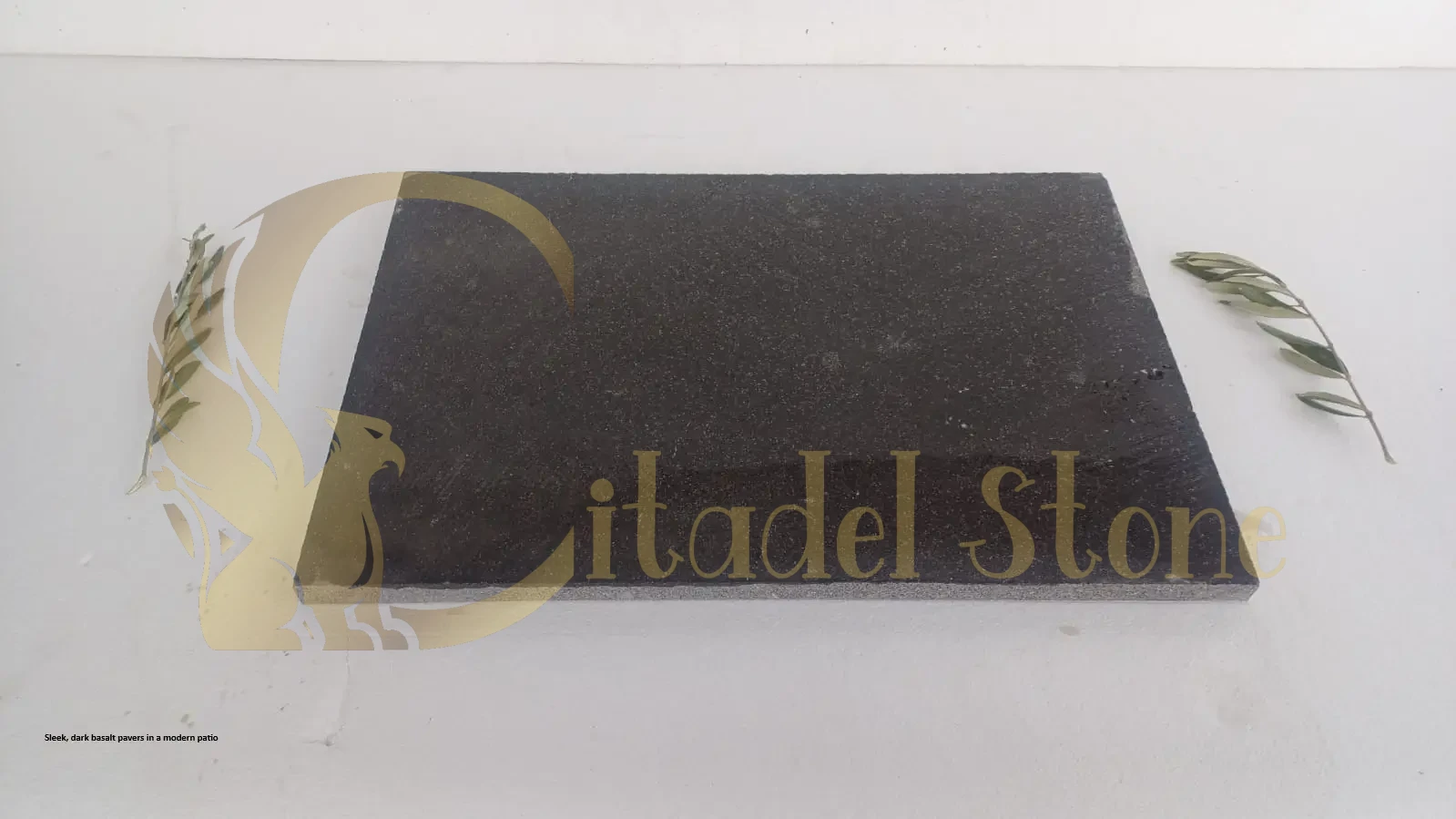
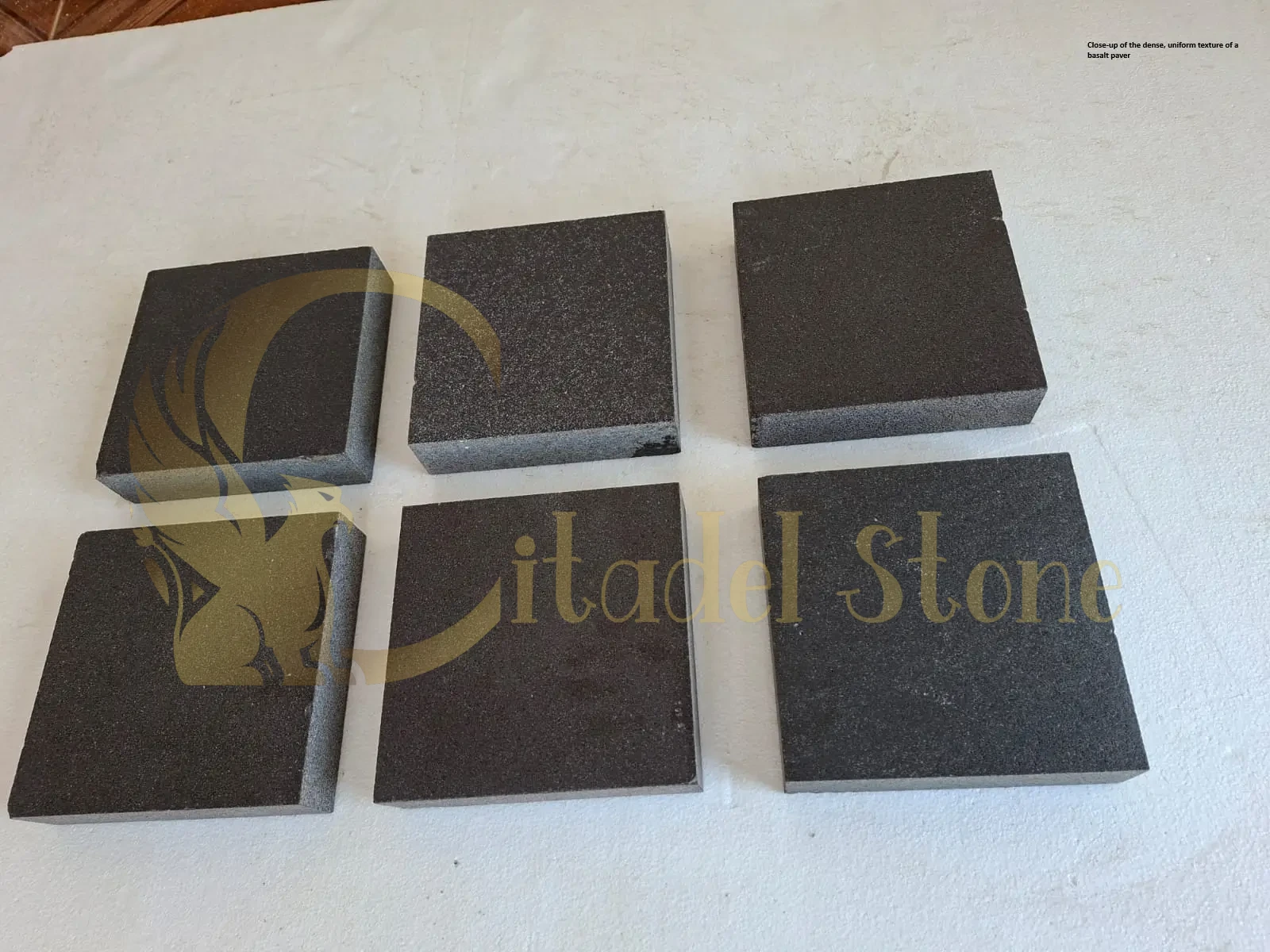
Basalt pavers originate from volcanic extrusive rock formations, characterized by fine-grained crystalline structure and typically dark gray to black coloration. The dense, non-porous nature of basalt provides exceptional durability and weather resistance, making it ideal for demanding exterior applications.
Typical applications include:
- Pedestrian plazas and commercial walkways
- Pool surrounds and wet deck areas
- Light-to-medium vehicle pavements and driveways
- Public plazas, steps, and terraced landscapes
- Coastal installations requiring salt-air resistance
Provenance and traceability matter significantly for basalt technical variability. Quarry location, geological formation, and extraction methods affect mineral composition and performance characteristics. Always specify quarry identification and batch tracking for quality assurance and warranty support.
Quarry Traceability & Batch Control (Supply Chain Requirements)
ASTM basalt pavers require comprehensive batch tagging and lot traceability to ensure performance consistency and warranty compliance. Each delivery should include quarry identification, block or lot ID numbers, individual slab or paver serial numbers, and fabrication date documentation.
Minimum traceability information must appear on delivery paperwork:
- Quarry name and location with geological formation identification
- Block/lot ID number linking to quarry extraction records
- Paver/slab serial numbers for individual unit tracking
- Fabrication date and processing facility identification
- Test report reference numbers linking units to laboratory testing
Chain-of-custody documentation becomes critical for warranty claims and performance verification. Maintain detailed records linking installed areas to specific material batches for long-term maintenance and replacement needs.
Physical & Mechanical Properties — What to Test & Why
Essential Test Properties and Standards
| Property | Units | Illustrative Range | Test Standard | Purpose |
|---|---|---|---|---|
| Density/Bulk Specific Gravity | kg/m³ (lb/ft³) | 2,800-3,100 (175-195) | ASTM C97/C97M | Structural load calculations |
| Water Absorption | % by weight | 0.1-0.5 | ASTM C97/C97M | Freeze-thaw and salt resistance |
| Compressive Strength | MPa (psi) | 200-400 (29,000-58,000) | ASTM C170 | Load-bearing capacity |
| Modulus of Rupture | MPa (psi) | 15-25 (2,200-3,600) | ASTM C99 | Flexural strength for slabs |
| Abrasion Resistance | HAe Index | 15-25 | ASTM C241 | Traffic wear resistance |
| Salt Crystallization | Pass/Fail | Pass | ASTM C88 | Coastal environment suitability |
| Freeze-Thaw Resistance | % weight loss | <0.5 | ASTM C666 | Cold climate performance |
| Coefficient of Friction | Dimensionless | 0.42 min (wet DCOF) | ANSI A326.3 | Slip resistance verification |
| Thermal Conductivity | W/m·K | 1.5-2.5 | ASTM E1461 | Thermal performance |
Note: Ranges marked as illustrative – verify with supplier test data
Test Purpose and Specification Impact
Density testing (ASTM C97/C97M) determines structural load implications and helps calculate foundation requirements. Higher density indicates better durability but increases structural loading.
Water absorption testing (ASTM C97/C97M) predicts freeze-thaw performance and salt resistance. Basalt typically shows excellent performance with absorption below 0.5%.
Compressive strength testing (ASTM C170) verifies load-bearing capacity for vehicular applications and structural uses. Basalt consistently exceeds most specification requirements.
Abrasion resistance testing (ASTM C241) predicts surface wear under traffic loads. Lower HAe index values indicate better wear resistance and longer service life.
Salt crystallization testing (ASTM C88) becomes critical for coastal installations where salt spray exposure occurs regularly.
Get samples of basalt tiles today.
One-Page Technical Data Sheet (TDS) — Required Deliverable
Basalt Paver Technical Data Sheet
| SPECIFICATION ITEM | VALUE/DESCRIPTION |
|---|---|
| Product Name/Code | Premium Basalt Pavers – Series BP |
| Quarry of Origin | Basalto – Lot ID: 4002 |
| Available Finishes | Flamed, Honed, Bush-hammered, Sawn, Split-face |
| Standard Sizes (mm × mm × mm) | 300×300×25, 400×400×30, 600×300×30, 600×600×40 |
| Standard Sizes (in × in × in) | 12×12×1, 16×16×1.2, 24×12×1.2, 24×24×1.6 |
| Dimensional Tolerances | ±2mm length/width, ±1mm thickness (±0.08″/±0.04″) |
| Density (Typical) | 2,950 kg/m³ (184 lb/ft³) |
| Water Absorption (Max) | 0.3% by weight |
| Compressive Strength (Min) | 280 MPa (40,600 psi) |
| Abrasion Resistance | HAe 18 (ASTM C241) |
| Slip Resistance | Wet DCOF per ANSI A326.3 (0.42 minimum) — test report on request |
| Salt Crystallization | Pass (ASTM C88) |
| Freeze-Thaw Resistance | <0.1% weight loss (ASTM C666) |
| Thermal Conductivity | 2.1 W/m·K |
| Recommended Applications | Pedestrian/Light Vehicle/Pool Decks |
| Base Requirements | 150mm (6″) aggregate base minimum |
| Installation Notes | 3-6mm joints, polymeric sand, concrete edge restraint |
| Handling & Storage | Covered storage, max 8 pallets high, lift points marked |
| Sealer Compatibility | Breathable penetrating sealers recommended |
| Maintenance Frequency | Annual cleaning, bi-annual sealing |
| Warranty | 10-year material defect warranty with proper installation |
| TDS Date | 2025 |
| Contact Information | Citadel Stone Technical Department |
Recommended Specification Language (MasterSpec-Style Clauses)
DIVISION 32 14 40 – STONE PAVING
PART 1 – GENERAL
1.1 SECTION INCLUDES A. Natural basalt pavers for exterior pedestrian and light vehicular applications. B. Associated bedding materials, joint sand, and edge restraint systems.
PART 2 – PRODUCTS
2.1 BASALT PAVERS A. Material: Natural basalt stone meeting the following requirements:
- Compressive strength: Minimum 200 MPa (29,000 psi) per ASTM C170
- Water absorption: Maximum 0.5% by weight per ASTM C97
- Abrasion resistance: Maximum HAe 25 per ASTM C241
- Salt crystallization: Pass per ASTM C88
- Slip resistance: wet DCOF minimum 0.42 per ANSI A326.3
2.2 FABRICATION A. Tolerances: ±2mm length and width, ±1mm thickness B. Finish: polished with uniform texture C. Edge Profile: Straight cut with 1-2mm chamfer
2.3 DELIVERY AND STORAGE A. Packaging: Secure pallet strapping with protective corner guards B. Labeling: Each pallet labeled with quarry lot ID and test report numbers C. Storage: Covered storage required, maximum 8 pallets high
PART 3 – EXECUTION
3.1 QUALITY ASSURANCE A. Testing: Submit certified test reports from ISO/IEC 17025 accredited laboratory B. Mockup: Install 3m × 3m (10′ × 10′) sample area for approval C. Sampling: One sample per 100m² (1,000 sf) for verification testing
3.2 WARRANTY A. Material Warranty: 10 years against defects in materials and workmanship B. Performance Warranty: 5 years against structural failure with proper maintenance.
Installation & Detailing Recommendations (Design & Performance)
Recommended Thickness and Base Sections
Pedestrian Plaza Applications:
- Paver thickness: 25-30mm (1-1.2″) minimum
- Aggregate base: 150mm (6″) compacted to 95% Standard Proctor
- Bedding layer: 25-40mm (1-1.5″) sand or cement mortar
Residential Driveway Applications:
- Paver thickness: 30-40mm (1.2-1.6″) minimum
- Aggregate base: 200-250mm (8-10″) compacted in lifts
- Bedding layer: 40mm (1.5″) cement-sand mortar bed
Commercial Loading Lane Applications:
- Recommend concrete slab alternative for heavy vehicles
- If paver system specified: 60mm (2.4″) minimum thickness
- Enhanced base: 300mm+ (12″+) engineered aggregate
- Mortar bed: 50mm (2″) cement mortar with reinforcement
All dimensions are illustrative – verify with structural engineer
Bedding and Jointing Systems
Sand bedding works well for pedestrian applications with proper edge restraint. Use coarse concrete sand (ASTM C33) with 6-12mm (0.25-0.5″) thickness after screeding.
Mortar bedding required for vehicular loads and formal installations. Specify 1:3 cement:sand mixture with polymer modification for enhanced bond and flexibility.
Joint materials depend on application:
- Polymeric sand for pedestrian areas with 3-6mm (0.12-0.25″) joint width
- Cement grout for vehicular applications with 6-10mm (0.25-0.4″) joints
- Pointing mortar for formal installations requiring weather sealing
Edge Restraints and Drainage
Concrete edge restraints provide permanent support for paver systems. Minimum 150×200mm (6×8″) concrete haunching extends below frost line in cold climates.
Drainage requirements:
- Minimum 1-2% slope for positive drainage
- 2% slope recommended for areas subject to wash-down
- Integrate with landscape drainage systems
- Provide edge drainage collection where required
Control joints every 6-8 meters (20-25 feet) for large areas to accommodate thermal movement and prevent random cracking.
Order premium basalt tiles USA for your patio now.
Quality Control, Sampling & Acceptance Testing
On-Delivery QA Checklist
Visual Inspection Requirements:
- Verify batch ID numbers match approved samples
- Check for transportation damage (chips, cracks, staining)
- Confirm dimensional consistency within specified tolerances
- Verify color and finish consistency with approved mockup
- Document any deficiencies with digital photography
Sampling Protocol:
- Sample frequency: 1 representative unit per 100m² (1,000 sf)
- Minimum 3 samples per delivery regardless of size
- Chain-of-custody documentation for laboratory submission
- Retain witness samples for dispute resolution
Acceptance Criteria:
- Maximum 5% of units outside dimensional tolerances
- Zero tolerance for structural damage (cracks, spalls)
- Color variation within approved range per mockup
- Surface finish consistency per specification requirements
Laboratory Requirements
Third-party testing must be performed by ISO/IEC 17025 accredited laboratories with natural stone testing experience. Test reports shall include sample identification, test method reference, testing date, results, and laboratory certification stamp.
Required documentation includes:
- Complete test certificates for each property tested
- Sample photographs showing tested specimens
- Laboratory accreditation certificates
- Traceability linking test samples to delivered materials.
Maintenance, Sealing & Repair Guidance
Cleaning and Sealing Protocols
Routine cleaning with pH-neutral stone cleaners maintains appearance and performance. Avoid acidic cleaners that can etch basalt surfaces or damage joint materials.
Sealer selection should prioritize breathable penetrating sealers over film-forming alternatives. Basalt paver properties include low porosity, making sealer penetration limited but still beneficial for stain resistance.
Reapplication intervals:
- High-traffic areas: Annual sealer maintenance
- Moderate traffic: Bi-annual sealer maintenance
- Protected areas: 2-3 year sealer maintenance cycles
Stain Removal and Repair
Oil stains respond well to alkaline degreasers followed by hot water pressure washing. Poultice treatments may be necessary for deep penetration stains.
Organic stains (leaves, algae) typically clean with diluted bleach solutions. Ensure adequate rinsing to prevent joint material damage.
Replacement protocols for damaged units:
- Document damage with photos for warranty claims
- Carefully remove damaged unit without disturbing adjacent pavers
- Source replacement from same batch/lot when possible
- Install replacement with matching bedding and joint materials
- Allow appropriate curing time before traffic loading
Request a free quote for basalt honed and installation.
Environmental & Regulatory Notes
Sustainability Documentation
Environmental Product Declarations (EPDs) provide lifecycle environmental impact data for LEED and other green building programs. Request EPDs or equivalent documentation from quarry operators.
Local sourcing benefits include reduced transportation emissions, support for regional economies, and often lower embodied carbon footprints compared to imported alternatives.
End-of-life considerations: Natural tiles basalt offer complete recyclability and reusability, providing circular economy benefits throughout their service life.
Green Building Credit Support
LEED credit opportunities:
- MR Credit: Building Product Disclosure and Optimization (EPDs)
- SS Credit: Heat Island Reduction (light-colored finishes)
- MR Credit: Regional Materials (local quarry sourcing)
WELL Building Standard applications include Material Safety requirements supported by comprehensive material documentation and low-emission characteristics of natural stone.
Attachments & Deliverables
QA Sampling & Acceptance Checklist
Pre-Delivery Requirements:
- Verify approved quarry and lot identification
- Confirm test certificates from accredited laboratory
- Review transportation and delivery logistics
- Prepare covered staging area for material protection
Delivery Inspection Checklist:
- Check batch ID tags on each pallet
- Inspect for transportation damage (photograph any issues)
- Verify quantities against delivery documentation
- Confirm color and finish consistency with approved samples
- Document dimensional checks on representative samples
- Collect samples for verification testing if required
- Complete delivery acceptance documentation
Installation QA Checklist:
- Verify base preparation and compaction
- Check bedding material consistency and thickness
- Monitor joint width consistency during installation
- Inspect edge restraint installation and alignment
- Document any installation deficiencies immediately
- Conduct final acceptance inspection before warranty start
Test Report Verification Checklist
Essential Laboratory Reports to Request:
- ASTM C97 – Water absorption and bulk specific gravity with test date within 12 months
- ASTM C170 – Compressive strength testing with minimum 5 test specimens
- ANSI A326.3 – Wet dynamic coefficient of friction (DCOF)
- ASTM C88 – Salt crystallization resistance for coastal applications
- ASTM C241 – Abrasion resistance testing for traffic durability
- ASTM C666 – Freeze-thaw resistance (required for cold climates)
- Laboratory accreditation – Verify ISO/IEC 17025 certification current
Report Verification Items:
- Confirm sample identification links to delivered materials
- Verify test methods match specification requirements
- Check testing dates are current (within 12-24 months)
- Ensure laboratory signatures and certifications present
- Document test results meet or exceed specification minimums
The Transformative Power of Basalt Pavers in Landscaping
Real Orders, Real Deliveries
We only publish projects we have actually supplied. See our Las Vegas white limestone delivery — two containers, 6,884 sq ft, 32 crates, shipped door to door — and how we supplied Creative Environments in Arizona with 21 containers across a 70,000+ sq ft installation: white limestone pavers and tiles, shellstone and Ocean Reef pavers.
Had Citadel Stone material installed on your project? Send us your photos and we will feature the work here, with your permission.
Call to Action & Technical Support
Ready to specify basalt paver installation guide compliant materials for your project? Our technical team provides comprehensive support including sample coordination, specification review, and installation guidance tailored to your specific application requirements.
Contact Citadel Stone today for:
- Basalt Pavers Product Page with complete product specifications
- Request Technical Samples including test certificates and installation guidance
- Specification review and technical consultation services
- Custom testing coordination for project-specific requirements
Our technical specialists understand the critical importance of proper material specification and can guide you through the selection, testing, and procurement process to ensure successful project outcomes. Whether you need assistance with ASTM compliance, installation details, or quality assurance protocols, we provide the expertise your project demands.