A summer that arrives all at once
Bermuda does not run a flat calendar. The island keeps four real seasons, and outdoor life concentrates hard into the warm months, so a terrace that reads as merely bright in April can be the deciding factor in July. Stone that feels comfortable underfoot at the height of the season is doing its most useful work over a short, intense stretch of the year rather than evenly across it. That is a different design problem from a place where surface temperature barely shifts from one month to the next, and it rewards choosing tone and texture for the peak rather than the average.
What tone does with the sun
Pale stone reflects more of the light that lands on it and dark stone absorbs more. That is the whole physics of it, and it survives contact with a real terrace: a light-toned floor in full sun sits closer to air temperature than a dark one laid beside it. Pale limestone is not immune to heat, and no honest supplier will tell you a stone stays cool through a still August afternoon in open sun. What it does is widen the window in which bare feet are comfortable and shorten the time a surface needs in shade before it settles again.
Glare is the other half of the problem
Reflected light is the cost of a reflective floor, and it is the part people forget until the furniture is out and the table is laid. A very smooth pale surface can throw light back into the room behind it and into the eyes of anyone sitting down. Texture is the control:
- A brushed or lightly worked face scatters light instead of returning it in a sheet.
- Deeper tooling breaks reflection further and reads as quieter, older work.
- Polished and high-gloss faces belong indoors, away from direct sun.
- Wider joints and visible coursing interrupt an unbroken bright plane.
- Planting and a shade structure do more for glare than any change of stone.
Finish changes heat, grip and glare at once
Surface treatment is not a cosmetic layer applied after the important decisions have been made. It changes how a floor feels, how it holds water and how it behaves at the edge of a pool:
- Texture gives bare feet something to key against when the floor is wet.
- A worked face scatters light rather than bouncing it straight back up.
- Fine tooling hides the dust and grit any working property produces.
- Deeper relief holds a little more of everything, so the cleaning routine changes with it.
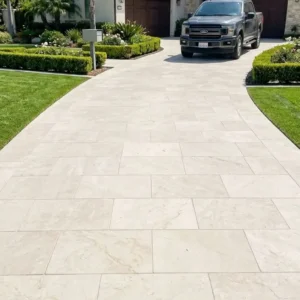
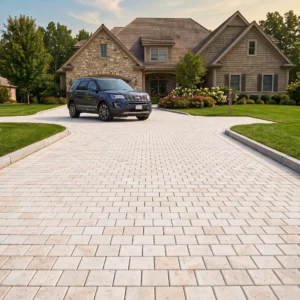
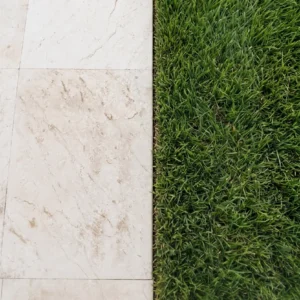
Comparing samples of limestone paving cut for Bermuda side by side in real sunlight settles the question faster than any written description of a finish.
Sitting beneath a white Bermuda roof
The white stepped limestone roof is Bermuda’s own, and it does a job no paving is ever asked to do: it catches, filters and delivers the household water supply. Ground-level stone works in its company rather than in competition with it, and tone should be chosen with that relationship in mind. Establish what the property in front of you actually is before fixing on a shade. The walls may be dressed stone, block and render, timber or several periods layered together, and the building sets a datum a new floor should answer politely rather than copy outright.
Where the heat actually gets tested
Barefoot comfort is not evenly spread across a property. It concentrates on a handful of routes, and those are the places where tone and texture repay attention:
- The run between water and door, walked wet and fast, several times an hour.
- Steps and level changes, where feet stop and rest rather than pass straight over.
- Thresholds where an outdoor floor meets an interior one and the two get compared directly.
- Dark accent bands and borders, which pick up heat faster than the field around them.
- West-facing paving, which takes the full weight of a late Bermuda afternoon.
Keeping a pale floor clean without harming the tank
Pale paving shows what lands on it, which is honest but demanding, and in Bermuda the cleaning question carries a condition found almost nowhere else. Domestic water is caught from the roof and stored in a tank whose capacity is regulated against roof area, so whatever you use at ground level has to be kept clear of anything feeding that system. In practice that favors a mild routine and a settled drainage plan:
- Rinse and sweep on a routine rather than reaching for strong chemistry occasionally.
- Decide on the drawings where terrace runoff goes, and keep it away from the catchment.
- Test any product on a spare piece before it touches the laid floor.
- Deal with organic staining under planting early, while it is still sitting on the surface.
Test it in the season that matters
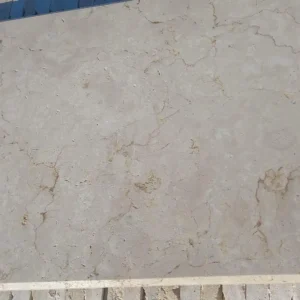
A stone chosen from a photograph in winter is a stone chosen in the wrong light. Order small pieces, put them where the paving will go, and revisit them barefoot in the middle of a warm afternoon rather than in the cool of the morning. Look at the same pieces wet, because a wet floor reads darker and grips differently. Where tone is being weighed before format, white limestone paving we hold is a sensible place to begin the comparison, and darker stone can then be added deliberately where contrast is wanted rather than by default. Judge the stone in the season you will use it, then order with confidence.