Humidity is the constant, not the storm
Storms get the headlines on Cayman, and Hurricane Ivan in September 2004 still sets the reference point for what a building here has to survive. Day to day, though, what actually wears a floor is far less dramatic. It is warm, salt-loaded air that never fully dries, and feet that arrive wet from a pool, a shower or a squall that lasted four minutes. Finish selection is where a floor either absorbs that reality or fights it for the next twenty years. The material matters. The face worked onto the material matters more, and it is the cheapest decision to get right and the most expensive one to reverse.
What each finish actually does
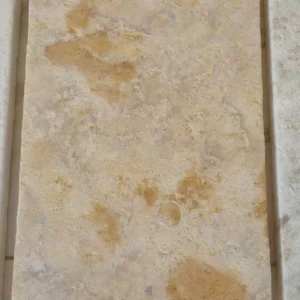
Finish is a surface treatment rather than a grade, and the same block can leave the plant carrying any of these faces. Each one shifts grip, glare and cleaning behavior in a different direction.
- Honed: a flat matte face with even tone, simple to clean, happiest under cover or indoors.
- Brushed: softened by abrasive brushes, quietly grippy, forgiving of light wear and scuffing.
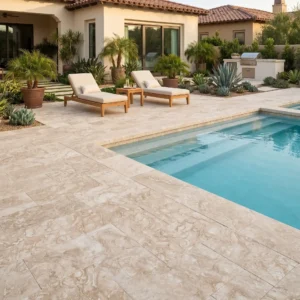
- Tumbled: eased edges and a worn face, warm underfoot, well suited to pool surrounds.
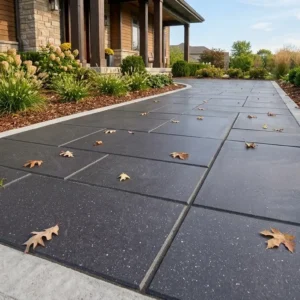
- Bush-hammered: a pitted mechanical texture with strong grip for ramps and wet steps.
- Sandblasted: a fine open texture that keeps grip without the deep shadow lines of heavier tooling.
Around water, texture beats tone
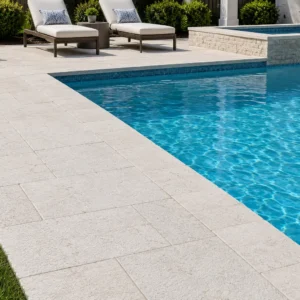
Wet feet do not care what color a floor is. They care whether the face gives them something to push against. Around pools, outdoor showers and covered walkways that catch driven rain, a brushed, tumbled or sandblasted face will outperform a smooth one every time, and the difference is obvious the first time a child runs. When you review the limestone tile finish options for a wet zone, settle the texture first and argue about tone afterwards. Island rain arrives hard and leaves quickly, so a face that sheds water and dries fast is worth more than a face that only looks perfect while it is dry.
Where honed and polished belong
Smooth faces are not a mistake in the tropics; they are simply indoor citizens. Reserve them for positions that stay dry, stay supervised, or both.
- Living rooms, bedrooms and dressing rooms inside conditioned space.
- Feature walls, stair risers and vanity returns where nobody stands.
- Covered lobby floors with entrance matting long enough to strip water off shoes.
- Kitchens, with a matte or brushed alternative in the wet zone around the sink.
Testing grip honestly
Published slip figures describe clean, new material under laboratory conditions. Real island floors carry sunscreen, salt film and a dusting of sand within a week of handover. Test the way the floor will actually be used.
- Wet the sample with fresh water and stand on it in bare feet.
- Repeat with a smear of sunscreen, which is the real contaminant on any resort deck.
- Test on the fall you plan to build, not on a flat table in an office.
- Check the same piece after a week outdoors rather than straight out of the box.
What Caymanite teaches about surface
Caymanite, the banded semi-precious dolomite found only on the Cayman Brac bluff and at the East End of Grand Cayman, is cut and polished for jewelry and fine ornament rather than for floors. It is worth mentioning here for one reason. It is the clearest local demonstration that the same stone reads as an entirely different material depending on how its face is worked. Nobody would ask Caymanite to be a paving field, and nobody should ask a mirror-polished floor to hold a wet foot on a pool step. Finish decides function. The same holds for the ironshore and Bluff Formation dolostone quarried here as fill and aggregate: hard, irregular and never cut to a consistent paving thickness, which is why calibrated material still arrives by sea.
Humidity inside the building
Air conditioning fights island humidity every time a door opens, and the floor sits at the coldest point in the room. Condensation on cool stone in a villa that has been closed up for a month is common, and it is a building-physics issue rather than a stone defect. A few habits keep it under control.
- Ventilate closed-up properties periodically instead of sealing them tight.
- Let air move across floors when the cooling has been switched off.
- Choose a breathable impregnating sealer over a film-forming coating.
- Keep entrance matting long enough to take water off shoes before it reaches stone.
Films are the products that blush white, peel at the edges and end up being stripped two years later at real cost, which is a particularly miserable job to carry out in a finished room.
Proving a finish before you commit
Small samples settle arguments that drawings cannot. Get two or three faces of the same stone in hand, leave them on site for a week, and let the client walk on them wet before anything is ordered. If you want the background on how each stone finish behaves, our finishes page runs through the full range. Bear in mind that George Town is a lighterage port, so pallets are barged ashore from ships at anchor and handled more than once; a textured face hides transit marking better than a polished one, which is a small but genuine practical advantage. Pick the finish for the wettest minute the floor will ever have.