What Mountain Granite Actually Is
Mountain granite landscape rock carries compressive strength figures that routinely exceed 19,000 PSI — a number that matters when you’re specifying material for high-load applications like driveway borders, retaining base fill, or pathway edging that takes foot and equipment traffic year after year. The mineralogical makeup — primarily quartz, feldspar, and mica — creates an interlocking crystalline structure that resists both surface abrasion and subsurface fracture propagation in ways that sedimentary alternatives simply can’t match. This mountain granite landscape rock guide covers everything from sizing and colour selection to base preparation and long-term maintenance, so you’re working with one of the most mechanically stable natural stones available — and specifying it correctly for demanding exterior environments.
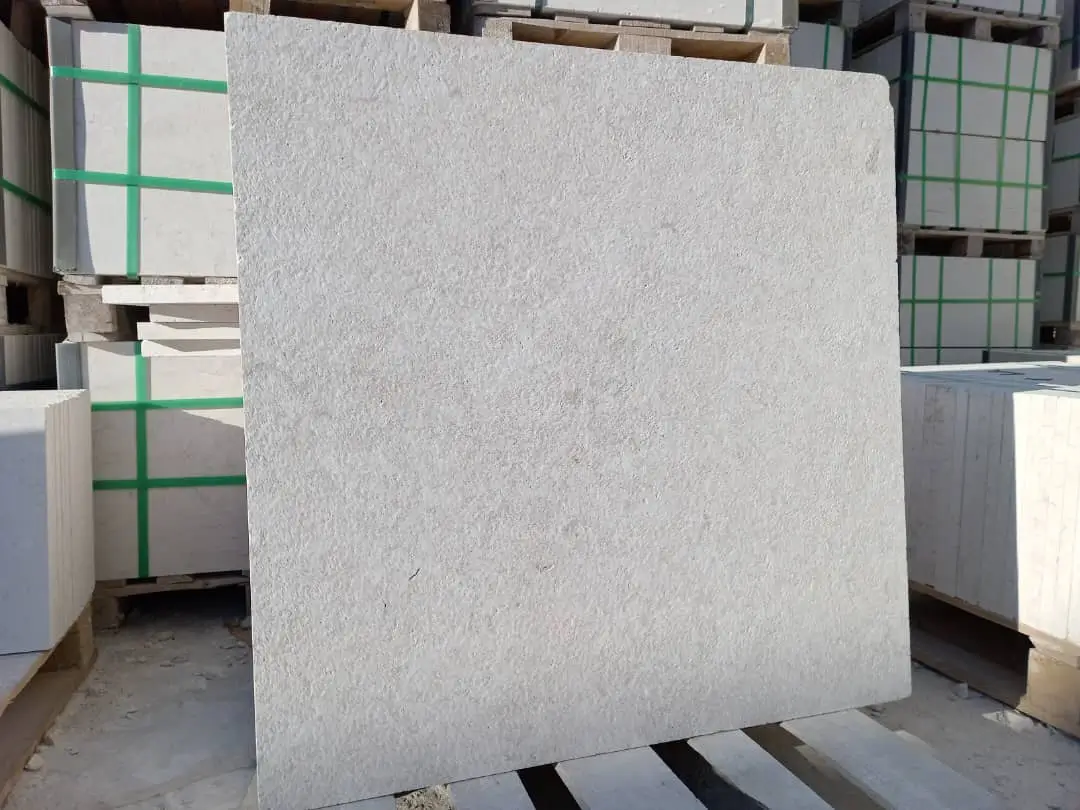
The grain texture and colour variation in mountain granite landscape rock come directly from the cooling rate and mineral concentration at the quarry source. Coarser grains indicate slower cooling deeper in the earth’s crust, producing the bold, high-contrast visual texture that landscape architects favour for naturalistic boulder arrangements and dry creek beds. Finer-grained material from higher-elevation quarry seams tends to present a more uniform face — useful when you need visual consistency across a large coverage area without the distraction of extreme colour variation.
Grades and Sizing: What You Need to Know
Sizing nomenclature for mountain granite landscape rock isn’t standardised across suppliers the way paver thickness specifications are, so understanding the actual dimensional ranges behind the labels is essential before you commit to a quantity. Crushed granite fines run from dust to roughly 3/8 inch and are primarily used for compacted pathway bases or top-dressing where tight particle packing creates a near-solid surface. Decomposed granite — often confused with crushed fines — is a naturally weathered product with clay-particle binding that stabilises differently under compaction.
- 3/8 inch to 3/4 inch: ideal for pathway surfacing, rock mulch beds, and slope erosion control where water infiltration is the design priority
- 3/4 inch to 1.5 inch: the most versatile landscape size — used in dry creek beds, drainage swales, planting bed mulch replacement, and general ground cover
- 1.5 inch to 3 inch: suitable for drainage blanket fill behind retaining structures, creek bed primary course, and accent boulder fill
- 3 inch to 6 inch: larger landscape boulders and structural fill requiring minimal void ratio and maximum surface visual impact
- Boulders above 6 inch: accent pieces, naturalistic water feature construction, and feature planting surrounds
Your project’s intended drainage performance will govern which sizing tier makes sense. Larger aggregate creates higher void ratios — useful behind retaining walls where hydrostatic pressure relief is critical. Smaller sizes compact more thoroughly, reducing permeability but improving surface stability for walkable applications. Getting this choice wrong typically means a costly re-grade within the first two seasons, so size selection deserves more specification attention than most buyers initially give it.
Colour Ranges and Visual Selection
The colour palette in mountain granite landscape rock runs from warm buff and tan through steel grey, charcoal, and near-black, with regional quarry sources producing distinctive tonal signatures. Warm-toned material with golden feldspar inclusions photographs well against green plantings and suits Mediterranean or Southwestern landscape aesthetics. Cool grey and charcoal material reads as more contemporary, pairing cleanly with architectural concrete, steel edging, and minimalist planting schemes.
Here’s what most buyers don’t account for when reviewing colour samples: the quarried colour you see dry in a yard is not the colour you’ll see after a rain event or irrigation cycle. Granite darkens significantly when wet — typically two to three shades deeper — and some charcoal material becomes almost black in sustained wet conditions. If your application involves a visible drainage channel or area that stays moist seasonally, your dry-sample selection process will mislead you unless you evaluate the material wet. Request a wet sample or pour water over a sample board before finalising your colour choice.
- Buff and gold tones: warm, naturalistic, pairs with ornamental grasses and drought-tolerant planting
- Rose and pink granite: distinctive and bold — best used as accent rather than primary ground cover to avoid visual fatigue
- Silver-grey: neutral and architectural, works across most hardscape styles without competing visually
- Charcoal and dark grey: dramatic contrast, effective for formal garden design and contemporary minimal landscapes
- Mixed colour blend: highest naturalistic appearance, most forgiving for colour-matching errors across multiple deliveries
Thermal Cycling and Freeze-Thaw Performance
Granite’s thermal expansion coefficient sits at approximately 4.4 to 5.0 × 10⁻⁶ per degree Fahrenheit — low enough that it performs reliably across significant daily and seasonal temperature swings without the joint opening and heaving that affects softer stone types. According to NSI granite durability specifications, granite’s dense crystalline structure gives it outstanding resistance to thermal cycling stress, making it particularly well-suited to environments where temperature differentials between day and night routinely exceed 30–40°F. This is where the material earns its reputation — not just in the average temperature, but in the range it cycles through repeatedly without degrading.
Freeze-thaw performance is where granite separates decisively from sedimentary landscape rock. The absorption rate for dense granite sits below 0.4% by weight in most mountain-sourced material — low enough that water infiltration into the stone matrix is minimal even through repeated freeze-thaw cycles. Sedimentary alternatives with absorption rates above 3% accumulate internal moisture, which expands approximately 9% on freezing and progressively fractures the stone matrix from the inside. You won’t see that failure on the surface for two or three seasons, but when the face begins spalling, the structural damage is already complete throughout the material. As noted in ASTM C615 granite dimension stone standards, low absorption is a defining quality criterion for granite dimension stone used in exterior applications.
- Specify granite in freeze-thaw regions where daily cycling exceeds 20°F differential across more than 60 days per year
- Avoid topping dry-laid granite with fine organic mulch in freeze-thaw zones — the decomposition creates localised moisture retention that promotes heaving at the aggregate contact surface
- In hot, dry climates with extreme day-night swings, the low thermal mass of smaller granite aggregate means surface temperatures equalise quickly after sunset — a usable performance advantage for evening outdoor areas
- Deep-bed granite installations (4 inches or more) maintain more stable subsurface temperatures, reducing the total thermal cycling range experienced at the base layer
Base Preparation and Installation Essentials
Your installation outcome is determined by the first two inches below the stone, not the stone itself. Granite aggregate placed over inadequate base preparation will migrate, shift, and create drainage problems that no amount of raking fixes. The standard specification for landscape granite applications starts with a minimum 4-inch compacted aggregate base — Class II road base or crusher run — under any walkable surface, and 6 inches under areas that receive vehicle or heavy equipment access.
Weed barrier placement under mountain granite landscape rock is one of the most debated topics in landscape installation, and the field reality is nuanced. Permeable woven geotextile fabric reduces weed germination effectively for the first three to five years, but eventually organic material accumulates on top of the fabric from decomposed granite fines and windblown debris — and weeds germinate in that layer, not in the stone. The barrier isn’t eliminating weeds permanently; it’s delaying them by three to five years. Factor that into your maintenance planning rather than treating fabric as a permanent solution.
- Minimum base depth: 4 inches compacted aggregate for pedestrian applications, 6 inches for vehicle access
- Edging retention: steel, aluminium, or hardwood edging prevents lateral migration of granite fines — without it, borders dissolve in two seasons
- Drainage slope: maintain a minimum 1–2% grade away from structures regardless of the granite sizing used
- Compaction of granite fines: achieve 90–95% Proctor density for walkable surfaces to prevent rutting under foot traffic
- Avoid compacting coarser decorative material — the void ratio is the functional feature, and compaction collapses it
Coverage Calculations and Ordering
Coverage calculation for mountain granite landscape rock follows a straightforward formula, but the variables that trip most buyers are depth specification and compaction factor. A ton of granite aggregate at 3/4-inch sizing covers approximately 70–80 square feet at a 2-inch depth, or 35–40 square feet at a 4-inch depth. At 1.5-inch sizing, coverage per ton drops to roughly 55–65 square feet at 2 inches because the larger particles create higher void ratios that reduce bulk density.
Always add a 10–15% overage buffer to your calculated tonnage. Irregular bed shapes, grade changes, and compaction settling all consume more material than flat-area calculations suggest. Running short mid-installation and trying to match colour from a second delivery is a common problem — quarry batches shift slightly in tone between production runs, and a visible seam between two deliveries in the middle of a finished bed is difficult to conceal. Ordering sufficient material from a single warehouse batch is far more reliable than topping up after the fact.
You’ll find that Citadel Stone mountain granite supply carries consistent quarry-batched inventory that allows larger projects to source matching material without colour-matching risk across deliveries — a practical advantage when your project scales above 5 tons. Confirm stock levels with the warehouse before scheduling your installation start date, since peak landscape season reduces on-hand volume faster than standard lead time estimates account for.
Applications Where Mountain Granite Excels
Dry creek bed construction is where mountain granite landscape rock shows its full performance range. A well-designed dry creek uses three to four size grades simultaneously — boulders for primary structure, mid-size cobbles for secondary fill, and smaller aggregate for gap fill and natural appearance — and the visual result depends heavily on the colour and texture consistency across those grades. Sourcing all grades from the same quarry ensures tonal harmony that mixed-supplier approaches rarely achieve.
Pathway surfacing with compacted granite fines produces a firm, permeable walkable surface that accommodates foot traffic, bicycle use, and light vehicle access — all without the rigid surface cracking that affects concrete and asphalt alternatives under thermal cycling and soil movement. Drainage swales lined with granite aggregate at the 3/4-inch to 1.5-inch range handle high-volume water events without erosion while maintaining naturalistic appearance that blends into planted borders. Planting bed mulch replacement with granite aggregate eliminates the annual organic mulch replacement cycle and provides permanent moisture retention at soil level while the granite surface stays relatively dry and weed-suppressive at the top layer. According to USGS dimension stone production and use data, granite consistently ranks among the top dimension stone categories in national construction and landscape volume, reflecting its proven multi-application performance across diverse project types.
- Dry creek beds and naturalistic drainage channels
- Decomposed granite pathway surfacing for pedestrian and light vehicle access
- Retaining wall drainage blanket fill behind structure
- Rock mulch in planting beds for moisture management and weed suppression
- Slope erosion control and bioswale lining
- Feature planting surrounds and specimen boulder settings
- Fire-resistant ground cover in areas where organic mulch creates fire risk
Comparing Granite to Alternative Landscape Rock
The practical comparison that comes up most often is granite versus river rock — two materials that serve overlapping landscape applications but perform differently at the specification level. River rock’s smooth, rounded profile resists foot penetration, which makes it uncomfortable to walk on barefoot and prone to rolling underfoot in thicker applications. Granite aggregate, particularly angular crushed material, interlocks slightly on settling, creating a more stable surface for walkable installations. River rock’s advantage is its high-polish aesthetic and colour saturation when wet — a genuine visual advantage in water feature applications where appearance under flowing water is the priority.
Pea gravel occupies the fine-aggregate category alongside granite fines but lacks the compressive strength and UV stability that granite delivers over decades. Pea gravel displaces easily under foot traffic and blows out of beds in wind events — a maintenance burden that granite’s greater angular mass largely avoids. Your specification choice between these materials should be driven by the mechanical demands of the application first and aesthetics second, not the reverse.
- Granite vs. river rock: granite wins on walkability and long-term stability; river rock wins on wet-surface aesthetics
- Granite vs. pea gravel: granite wins on compaction performance and wind resistance; pea gravel wins on cost at small scale
- Granite vs. lava rock: granite is denser and more durable; lava rock offers lower weight per coverage area and distinctive red-black colour
- Granite vs. limestone rock: granite wins decisively on absorption rate and freeze-thaw durability; limestone offers warmer tones and lower material cost
- Granite vs. recycled concrete aggregate: granite delivers superior aesthetics and long-term colour stability; recycled aggregate may leach alkalinity into adjacent planting beds
Logistics, Lead Times, and Project Planning
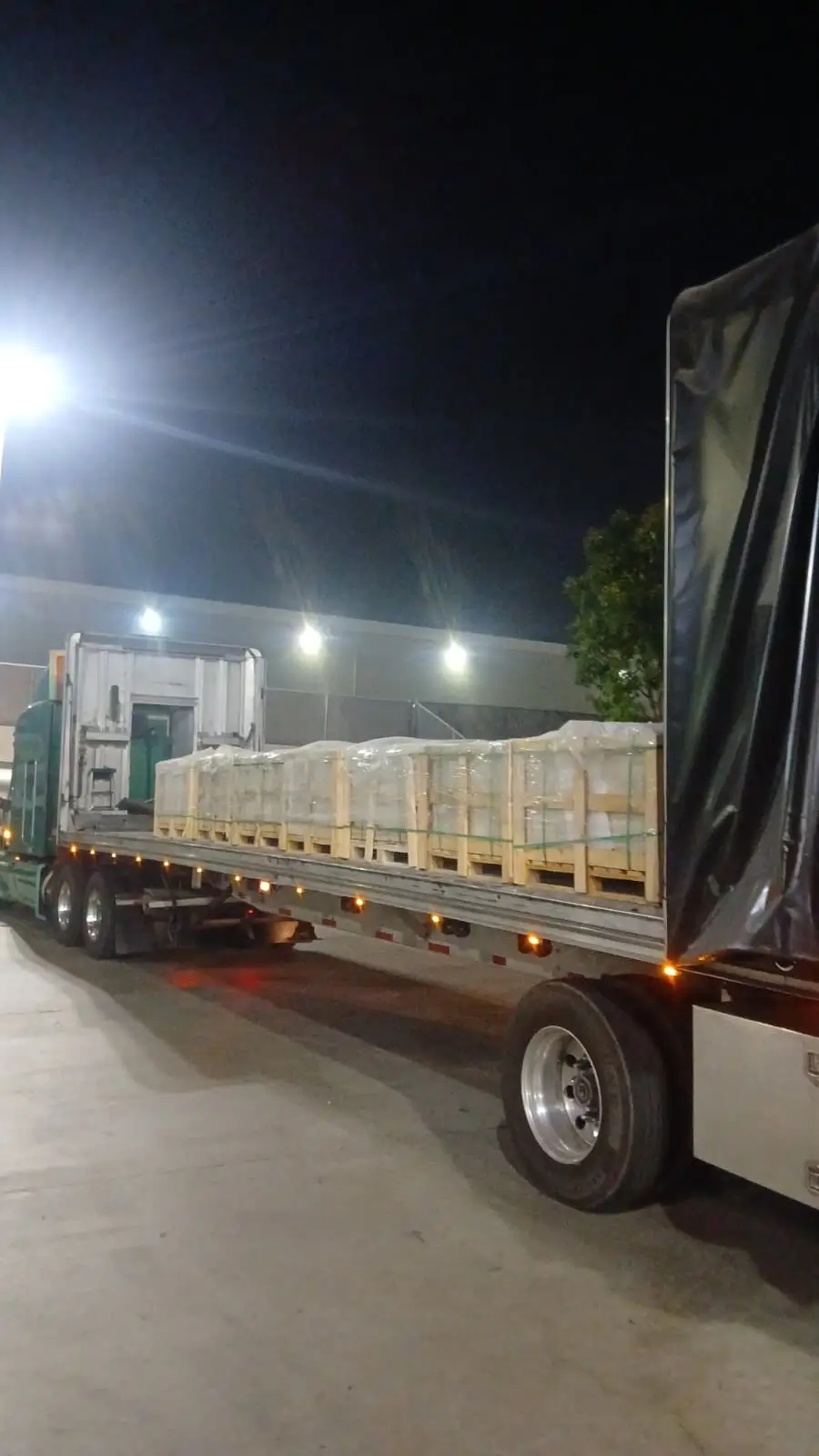
Truck access is a practical constraint that significantly affects granite delivery feasibility and cost. Standard bulk granite deliveries arrive by dump truck, which requires a minimum 10-foot wide unobstructed access path and overhead clearance of at least 14 feet at the delivery point. Sloped driveways steeper than 12% create delivery difficulties that can prevent standard truck positioning — a detail worth confirming before you schedule delivery rather than discovering it on the day. Citadel Stone coordinates truck delivery logistics nationwide, so confirming site access specifics in advance allows the dispatch team to route appropriate vehicle sizes to your site without delay.
Bagged granite is the practical alternative for sites with restricted truck access — urban gardens, gated communities with narrow entries, or rooftop terrace applications. The per-unit cost is higher than bulk, but the elimination of access constraints and precise volume control often justify the premium on smaller projects. At Citadel Stone, we recommend calculating both options for projects in the 2-to-5 ton range, since the access logistics cost on constrained sites can shift the economics in favour of bagged product even at larger quantities. Warehouse stock availability for bagged product is generally more stable than bulk, which experiences seasonal inventory drawdown during peak spring and summer landscape installation windows.
Sealing, Maintenance, and Long-Term Performance
Loose decorative granite aggregate in landscape beds requires minimal ongoing maintenance compared to organic mulch alternatives. Loose aggregate is not sealed — the maintenance protocol is primarily annual top-dressing to compensate for fines migration and occasional raking to restore surface uniformity after heavy rain events. Compacted decomposed granite pathway surfaces benefit from a penetrating stabiliser application that binds fines without eliminating permeability — a product category distinct from standard stone sealers and applied during installation rather than as routine maintenance.
For granite used in adjacent hardscape applications — granite pavers, coping, or dimensional slabs — a penetrating silane-siloxane sealer applied every three to five years provides meaningful stain resistance and reduces moisture infiltration in high-traffic areas. The sealer doesn’t alter the surface appearance on granite the way it can on more porous limestone, which is a practical advantage when you want protection without a noticeable visual change. Field performance data consistently shows that properly maintained granite installations reach 25-plus-year service life without structural degradation — a durability benchmark that directly affects the long-term cost calculation compared to organic mulch products that require full replacement every two to three years.
Getting Your Mountain Granite Landscape Rock Specification Right
Specifying mountain granite landscape rock well comes down to matching the sizing tier to the application’s mechanical demands, understanding how colour reads both wet and dry before committing to a volume, and building your base layer with the same rigour you’d apply to any structural installation. The material itself is exceptionally forgiving once it’s correctly placed — the freeze-thaw durability, the compressive strength, and the near-zero absorption rate mean you’re not revisiting this specification annually the way you would with organic or softer stone alternatives.
Your tonnage calculation should account for the 10–15% overage standard that field installation consistently justifies, and your delivery planning should confirm truck access specifics before scheduling — a detail that avoids the costly re-routing fees that catch projects off-guard. As you build out a more complete naturalistic hardscape vision, Volcán and Cerro Punta highland stone options offer a complementary material perspective worth exploring alongside your granite specification — sourced from the same Citadel Stone warehouse network and suited to projects that call for textural contrast alongside mountain granite. Available in bagged and bulk formats, Citadel Stone mountain granite is sized to cover ground efficiently while maintaining the varied texture that gives naturalistic landscapes their depth.
Related reading: crushed granite landscape ideas · backyard decomposed granite landscape design · Front Yard Decomposed Granite Design for Curb Appeal.