In Chiriquí’s highlands, under the country’s great volcano, Boquete runs Panama’s alpine chapter: coffee farms on the slopes growing some of the most celebrated beans on earth, a river canyon threading the town, flowers in everyone’s garden because everything grows here, and a climate the retirement magazines made famous – eternal spring at altitude, a sweater in the evening, never a hurricane and never a heatwave. The highland brief blends coffee country, retiree gardens and mountain craft, and this guide walks it slope by slope.
The Highland Machine
Boquete’s altitude does what the Central Valley’s does one border north: mild days, cool nights, neither heating nor cooling, and outdoor rooms that work every week of the year. The building dividend follows – terraces as the house’s permanent second half, gardens that grow anything with almost no help, and surfaces earning more hours at gentler duty than any coastal deck. The bajareque – the highland’s misting drizzle that drifts through on the wind – adds the local clause: surfaces that handle frequent light wet without ever seeing a storm.
The Celebrated Slopes
Boquete’s coffee is the highland’s crown – estates on the volcano’s slopes whose auction lots made the region world-famous – and the farm economy writes its working brief:
- Processing yards and drying infrastructure at working-agricultural grade.
- Tasting rooms and tour circuits serving the pilgrimage the beans now draw.
- Farm-stay hospitality at highland-domestic polish.
- The estate courts and verandas where the harvest’s mornings are managed.
the coffee-highland cousin walks the neighboring tradition’s patio inheritance; Boquete’s edition adds the volcano and the auction-lot fame.
The Garden Retirement
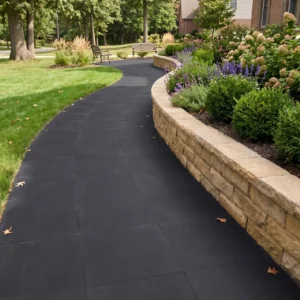
The retirement wave that made Boquete a byword built its own register: single-level homes in flowering gardens, covered terraces for the bajareque’s drift, paths at unhurried grades with no trip edges, and the fire-and-sweater evenings that make the highland’s coolness a feature. The specification is retiree-practical throughout – accessibility detailing as standard sense, surfaces maintained by garden help from a one-page file, and the permanence-minded buying of residents who moved once and mean it. The gardens themselves are the town’s pride; stone frames what the climate grows.
The Canyon Through Town
The Caldera river cuts its canyon through Boquete, and riverside building runs the mountain-river craft: platforms benched above the flood lines the highland’s rains can write, stone steps and landings taking the sacrificial zone, cafe and hospitality terraces working the canyon views, and the bridges-and-banks streetscape the town keeps as its centrepiece. The river is Boquete’s spine and its occasional temper; the craft respects both readings.
Under the Volcano
Barú – the country’s highest point – presides over the highland, its summit the famous two-ocean viewpoint on clear dawns, its slopes the coffee’s terroir, and its geology the ground truth beneath every foundation: volcanic soils, mountain gradients, and the seismic honesty highland engineering carries as routine. The building corollaries are the mountain canon’s – benched terraces, engineered walls, drainage designed for slope water – executed with the highland’s advantage: a building culture that has worked these slopes for a century of coffee.
The Trail Economy
Boquete’s visitors come to walk – the Quetzal trail through the cloud forest, the waterfall circuits, the summit pilgrimage – and the trail economy’s premises run the adventure-lodge register at highland temperature: boot-wash courts and gear rooms, breakfast terraces staging dawn departures, path networks legible in mountain mist, and the wet-path canon on every approach the cloud forest touches. The quetzal itself – the region’s famous bird – draws the birding wing of the trade, whose lodges add the viewing-platform craft at canopy edges.
The Flower Fair’s Town
The town’s great annual moment is its flower fair – the January festival when the fairgrounds bloom and the country visits – and the civic brief follows the festival: fairground surfaces at pulse-crowd grade, garden-display infrastructure the exhibitors rebuild yearly on permanent stone bones, and the town-center thresholds absorbing the season’s traffic. The fair is the highland performing its climate; the grounds’ stone hosts the performance annually and gardens quietly the rest of the year.
Highland Logistics
Boquete’s supply line runs the Pan-American to David – Chiriquí’s lowland capital, a modern day’s drive or short flight from Panama City – then climbs the highland road to town. The mountain disciplines apply gently: consolidated consignments, green-season margins, vehicles matched to the climb – and the highland’s building trades receive with the competence a century of estate work trained. high-valley cold-clause craft maps the loftier cousin’s edition; Boquete runs the same logic in gentler degrees.
The Spring That Stays
Boquete’s brief is the eternal spring’s: terraces that work every week, gardens that never stop, coffee mornings and sweater evenings, and stone that frames a climate most of the world only visits. Build the highland to its gentle rules – benched, drained, bajareque-ready and garden-first – and coffee country’s spring repays in the region’s most liveable currency: every single week of the year.
The Summit Dawn
Barú’s summit sells the isthmus’s singular spectacle: on clear dawns, both oceans at once – the Pacific silvering one horizon, the Caribbean the other – and the pilgrimage economy that grew around it runs on pre-dawn departures: jeeps grinding up the summit track at three, hikers on the trail through the dark, and the staging infrastructure that makes the ritual work:
- Base staging courts where jeeps load in the cold dark – lit low, floored at working grade, coffee counters at ritual scale.
- Trailhead thresholds sorting hikers onto the route with the signage the dark demands.
- Summit-adjacent platforms at high-mountain mirador craft: wind-fixed, rail-guarded, textured for frost-cold stone.
- The return-side breakfast terraces where the two-ocean photographs are compared over highland coffee.
The dawn is the highland’s crown offer – the one morning that shows a hiker both of Panama’s seas – and its modest infrastructure runs the mountain canon at its coldest hour. The volcano provides the spectacle; the staging stone simply gets the pilgrims to it, upright and on time.
What Altitude Does to a Specification
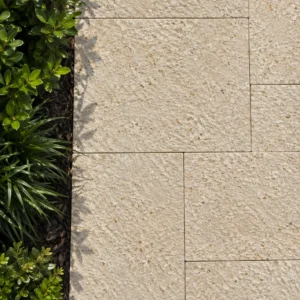
Boquete sits high enough that the coastal rulebook stops applying. Nights are cool, mornings are damp, and the bajareque drizzle keeps shaded surfaces wet for long periods. Damp stone in shade grows biological film quickly, and repeated wetting and drying cycles matter far more than they do at sea level. Absorption is the property that decides how a candidate performs, and it varies widely inside a single commercial name, from under one percent to over ten.
- Test absorption on the actual batch before specifying a shaded terrace
- Choose denser material for north-facing and tree-shaded areas
- Detail generous falls so surfaces dry between showers
- Expect more frequent cleaning than a coastal project would need
The Natural Stone Institute reference on limestone explains the range.
Living Beside a Protected Cordillera
The highlands above Boquete run into the Talamanca range, and the transboundary La Amistad World Heritage property covers 570,045 hectares in total with about 221,000 hectares on the Panamanian side. Building near a corridor like that changes the questions a design review will ask.
- Keep riparian margins planted rather than paved
- Use permeable surfaces away from the building line
- Design lighting so it does not spill into adjoining forest
- Avoid works during known nesting periods where advised
The inscription record for the Talamanca Range and La Amistad gives the detail.
Slopes, Steps and Retaining That Holds
Nearly every plot here has a gradient, and the terracing is the project rather than a detail within it.
- Engineer retaining rather than stacking a decorative face
- Keep riser heights identical across a flight, including the top step
- Drain behind every wall and give the drainage an outfall
- Use textured treads, because mountain damp is present most mornings
A Market of Long Term Residents
Boquete has an unusual buyer profile: retirees and long stay residents who will live with the decision, not rent it out. That pushes value toward repairability.
- Choose formats that can be lifted and reset by two people
- Record batch references so an extension still matches
- Prefer materials with a supply chain likely to exist in a decade
- Specify for garden maintenance traffic, not only for visitors
Highland delivery access is covered in our Panama supply and access overview.
Boquete highlands stone, specified for cloud and cool
Coffee grows here because the climate is different, and the same difference is what defeats a coastal specification.
- Test absorption before choosing anything shaded
- Respect the corridor above the town
- Engineer the terracing properly
- Plan for damp mornings on every route
Where the coffee actually grows, the ground stays wet longer than anyone from the coast expects.