St. Croix was farmed for centuries before it was visited, and the island has never entirely stopped. Its southern plain still carries pasture and cropland, its agricultural fair remains a genuine institution rather than a tourist event, and a farm-to-table movement has grown around small producers supplying the island’s restaurants directly. In a territory that imports almost everything, growing food is both practical and quietly political. Here is farm country’s guide.
The working countryside
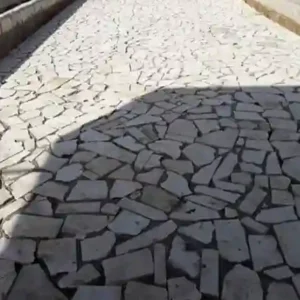
The island’s agricultural ground runs the registers this library knows: pasture and livestock on the drier east, crops and orchards where water allows, and smallholdings threaded through former estate land the freed-land chapter describes in its Kittitian version. Farm infrastructure is honest and specific — working yards on grades that shed water, wash-and-pack areas at food-safe standards, equipment aprons that survive tractor traffic, and boundary walls in the countryside’s own rough stone. The farm-infrastructure canon translates directly with the climate dialled drier.
Water is the constraint
Farming on a catchment island means water is the first agricultural input and the hardest. Rainwater harvesting at scale, pond and cistern storage, drip irrigation over spray because evaporation is the enemy, and crop selection matched honestly to what the island’s rainfall actually delivers rather than what a mainland catalog suggests. The independence logic that governs territory households governs its farms more strictly, and the successful operations treat storage capacity as the business’s real balance sheet.
- Wash-down water captured and reused rather than run to waste
- Produce areas drained separately from vehicle and equipment yards
- Catchment surfaces kept clean enough to feed a cistern
- Silt traps upstream of any storage inlet
Farm-to-table premises
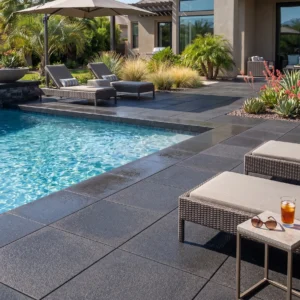
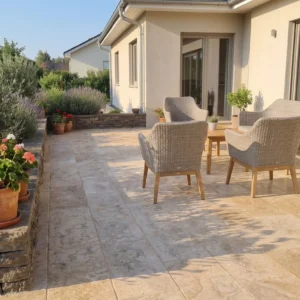
The restaurants driving the movement need the supply chain visible: chefs sourcing directly, menus naming the farm, and increasingly the farm itself hosting — dinners in the field, tastings at the packing shed, the estate-visitor craft in Crucian dress. Premises follow: working stone that photographs honestly, gathering ground under shade for long tables, parking that copes with an event on a farm track, and the food-safe surfaces the packing side requires regardless of who is watching. The register stays agricultural — visitors came for the real thing, and polish would defeat the purpose.
The agricultural fair and the calendar
The island’s agricultural fair anchors a farming calendar that still shapes the year, and it functions as this library’s civic-festival institution does elsewhere: temporary infrastructure on permanent ground, livestock and produce judging, food, music and a community turning out for something that predates tourism entirely. Grounds that host it run the event-and-ordinary duty this library keeps describing — surfaces rated for crowds and trucks, services cast in where they recur annually, and a strike-clean return to working use.
- Fixing points cast in for stalls, canopies and market tables
- Hard standing rated for a delivery truck as well as a crowd
- Power and water outlets grouped where market days actually need them
- A reinstatement standard for whoever takes the setup down
Why it matters commercially
Food security is a live conversation across the territory, and St. Croix is where it is actually being worked on. For property, the agricultural layer adds something the northern islands cannot offer: parcels with productive potential, the estate market’s capacity to include working land, and a buyer profile that increasingly wants both a house and a few acres that do something. Building for that buyer means specifying working infrastructure alongside domestic finish — and doing both honestly rather than treating the farm as landscaping.
Specifying for farm country
The agricultural kit is working-grade throughout: yard and apron surfaces that take equipment, food-safe wash and pack areas, water infrastructure treated as the primary system, rough-stone boundaries in the countryside’s own language and visitor circuits where the operation hosts — supplied through the territory supply page at the modest, unhurried scale farm budgets actually run on. The island fed itself for centuries; the work now is remembering how, on ground built for the job.
Selling at the roadside: the honesty economy
Beyond the restaurants and the fair, St. Croix’s farm economy runs through channels that would be familiar anywhere agricultural: roadside stands, weekend markets, a box-scheme culture, and the informal trade of neighbors with surplus. It is small-scale, cash-based and genuinely important — the island’s produce reaching the island’s tables without crossing water first, which in a territory importing nearly everything is worth more than its revenue suggests.
The premises are modest and reward being built once properly: a hard-standing apron where vehicles pull off the road safely, shade over the produce because the sun ruins a display in an hour, a wash-down surface because vegetables arrive with the field on them, and secure overnight storage so the stand does not become a daily setup and teardown. The neighborhood-trade honesty this library wrote for Curaçao applies precisely: small commerce deserves the same specification logic as large, at its own scale, and the stand built on decent ground outlasts three that were not.
The wider value is what the trade represents. Food security is a live territorial conversation, the island’s farming population is aging and its revival depends on younger entrants finding it viable, and every functional route from field to table strengthens the case. Property that includes productive land inherits a small stake in that argument — and owners who lease a paddock to a working farmer, or let a stand operate at their roadside, are contributing more to the island than the arrangement’s modest economics suggest. It is the kind of neighbourliness rural islands remember.
The numbers behind the revival
The return to farming is measurable rather than anecdotal. The USDA census figures for the Virgin Islands record 565 farms working 9,324 acres, up from 219 farms on 5,881 acres in 2007, with average holdings down to 16.5 acres and the fastest growth in farms under three acres. Vegetables lead by value and bananas lead by volume. That pattern, many small producers rather than a few large ones, is what has put market gardens, farm stands and small packing areas back into the landscape.
- Design for small-scale, frequent handling rather than bulk processing
- Assume the same ground serves growing, sorting and selling
- Keep build-ups simple enough for an owner-builder to extend
- Allow for a site that will change use again within a few years
A wet floor is the working condition
Produce handling means water, and water on a working floor is a slip problem before it is a hygiene one. Guidance on testing frictional properties of natural stone walking surfaces sets out the ANSI A326.3 wet method and a benchmark dynamic coefficient of friction of at least 0.42 for level interior floors expected to be walked on wet. A wash-down area carrying crates and hoses sits beyond that reference case, which argues for testing the delivered finish and specifying above the minimum.
- Wet values requested on the exact finish being supplied
- Extra grip margin wherever crates are carried or hoses run
- Falls that clear standing water rather than holding a film
- Textures that clean easily, since residue changes friction quickly
Two standards on one site
These places are working farms and public destinations at the same time. The route a visitor takes to a table and the route a crate takes to a cold room have different requirements, and the mistake is to specify one surface for both. Separating them early is cheaper than fixing the consequences later.
- Visitor routes detailed for comfort, shade and legibility
- Working routes detailed for load, spillage and daily washing
- Clear thresholds where the two meet, so neither is compromised
- Materials shared across both so repairs stay simple
Choosing farm to table stone for working ground
Specify for water and load first, hospitality second, and the site will still work when the crop changes or the market grows. Our US Virgin Islands stone supply guide sets out the formats, finishes and lead times that suit these islands. The ground here has been farmed before; it only needs a surface that expects to be used.