Importing stone to Antigua & Barbuda is more routine than most first-time buyers expect — island supply is how this region builds. Here is the honest sequence from first inquiry to a crate on site, with the details that matter when your project is a villa on Antigua rather than a warehouse on a mainland.
Samples first, always
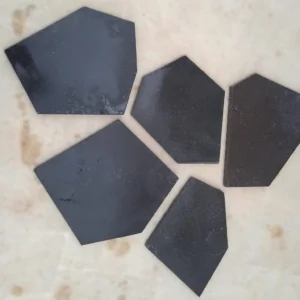
Request samples of the exact stone and finish you are considering — at your door within 3 working days — and judge them in island light, wet and dry. Hold them at midday, not just in the shade of a site office. This single step prevents nearly every expensive mistake in cross-border stone buying, because you are approving the physical material, not a photograph of it.
Quote and cutting
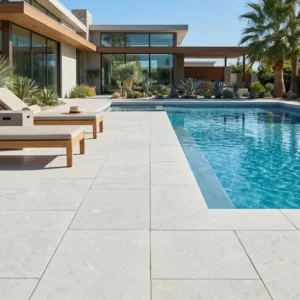
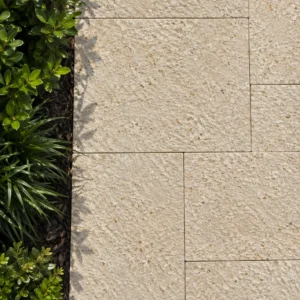
Your order is cut to specification: sizes, thicknesses, finishes and coping profiles are made for your project rather than pulled from standard formats. Mixing finishes across one order is normal — textured faces for the pool surround, honed for covered interiors. Every piece is hand-inspected after manufacturing and packed for sea freight with edge protection and separated faces.
Full container, shared space, or pallet
Three ways stone reaches the island, and the volume decides which:
- Palletized or shared-container groupage — the villa-scale default for a pool surround or terrace, trading a little transit flexibility for a much better rate on smaller volumes
- Full container — resort scale, carrying on the order of 24–26 metric tons, roughly 280–320 square meters at 3 cm thickness, arriving as one sequenced consignment
- Split shipments — occasionally sensible for phased sites, though every extra sailing adds a handling charge
Freight to St. John’s and the paperwork
We prepare the export documentation and a clear commercial invoice; your customs broker settles duties and local charges at St. John’s and can calculate your landed cost before the vessel sails. With clean paperwork, clearance is routine. If your project is on Barbuda, plan the onward inter-island leg with your contractor when scheduling — it is a known step, not an obstacle, but it belongs in the program.
The charges on an Antiguan import are more numerous than most budgets allow for, and the Customs and Excise Division lists them openly: import duty, a throughput levy, a disposal or environmental levy, the national solid waste levy, the revenue recovery charge and the Antigua and Barbuda Sales Tax — the division publishes the full set it collects. Ask your broker to price every line rather than the headline duty rate alone.
Scheduling around an island calendar
Build stone into your program like any long-lead item, and three habits keep the schedule honest:
- Order at design freeze rather than when the site is ready
- If the build straddles the wetter months, agree delivery windows so crates arrive when the site can receive and store them under cover
- Confirm production and sailing dates with the quote, and track the order through to arrival
Stone is indifferent to rain; site logistics are not.
Arrival: the fifteen-minute inspection
When crates land, check them before they scatter across the site:
- Crate count against the packing list
- Visible transit damage photographed on the spot
- One crate opened per stone type, to confirm that what you approved in samples is what arrived
Fifteen minutes of discipline at the gate makes any freight claim simple and keeps installation sequencing intact.
Paying safely across a border
New clients can pay through escrow — funds release only once the order is verified. Combined with samples up front, that means you never pay for stone you have not effectively already approved.
Clearance itself runs on a documented system rather than local custom. All goods entering or leaving must be declared on a Single Administrative Document through ASYCUDA World, the customs platform brokers and carriers register to use — the division explains how the system works. That matters to your schedule: a broker already registered and current clears an entry in a fraction of the time one starting from scratch will.
Materials, finishes and the full picture for Antiguan projects are in the Antigua & Barbuda supplier guide; for proof of how island deliveries come together, read the Bahamas beachfront villa case study.
Groupage, demystified
Since most Antigua orders travel as shared-container cargo, it pays to know how groupage actually works. A consolidator books the container, sells space by pallet or cubic meter, and your crates ride with other consignments. Three implications follow:
- Schedules follow the consolidator’s sailing rhythm, so build a small buffer
- Your crates are handled at both ends alongside others, which is why export crating is engineered to be indifferent to its neighbors
- Costs are quoted by volume and weight together, so thickness discipline pays twice
The Barbuda leg, planned like a pro
Projects on Barbuda add an inter-island hop after St. John’s: cargo transfers to the Barbuda ferry or a chartered landing craft, and site delivery depends on the island’s lighter handling equipment. The planning notes: confirm the onward vessel’s pallet limits before crating (we can crate to suit — say so at order); schedule the hop with weather margin in the wetter months; and brief the site on manual-friendly crate weights where machine offload is not guaranteed. None of this is difficult — Barbuda builds beautifully with imported stone — it simply belongs in the quote conversation, not discovered at the wharf.
Absorption is the number that separates one limestone from another. The Natural Stone Institute records a range running from under one percent to over ten across the family, and notes that dolomitic stones generally carry higher density, lower absorption and better abrasion resistance — the industry variety data sets this out. That spread is why two stones sold under the same broad name can behave nothing alike underfoot.
Duty planning and the broker’s craft
Antigua & Barbuda assesses imports through its customs regime, and rates, concessions and documentary preferences shift the way tax rules everywhere do — which is precisely why this guide names a local broker as the second call after the quote. Development projects sometimes hold concessions worth real money; owner-builders sometimes qualify differently than contractors; and a broker who clears St. John’s weekly knows today’s answer, not last year’s. Our contribution is paperwork that gives the broker zero friction: clear invoice, itemized packing list, consistent values. The combination — their local craft, our clean file — is what makes clearance the boring step it should be.
Storage between arrival and installation
Island programs often land stone before the site is ready, and stone waits graciously if stored with minimal care:
- Crates on level, drained ground
- Kept strapped and covered against site dust — the stone is weatherproof, the packaging keeps it site-proof
- Off the path of machinery
- Opened progressively as zones begin
If storage will exceed a season, crack the crate lids for airflow in humid months.
What shipping stone to Antigua really asks of you
The first Antigua order proves the pipeline; the second is where the economics improve. Repeat clients hold their sample library, their broker relationship, their crate-and-batch preferences on file with us — so a reorder is a two-line email, attic stock ships inside other consignments nearly free, and future phases match past ones because the batch logic never lapsed. Cross-border supply rewards continuity; build the relationship once, and every subsequent square meter arrives easier than the last.