Travertine stone colors carry more variation than most material schedules acknowledge, and that gap between expectation and reality is where most specification errors originate. The palette ranges from warm ivories and classic walnut tones to cooler silvers and grays — each driven by the mineral content and thermal conditions present at the time of deposition. Understanding what drives those color families, and how each performs differently over time, is the foundation of a selection decision you won’t second-guess mid-project.
What Drives Color Variation in Travertine
Travertine forms through the precipitation of calcium carbonate from geothermal and surface waters, and the mineral impurities present during that process determine its final color. Iron oxide concentrations push the palette toward warm ambers, russets, and deep walnuts. Lower iron content with higher silica or manganese produces the cooler silver and gray travertine stone families. This isn’t a superficial finish — the coloration runs through the full depth of the slab, which matters significantly when you’re cutting, profiling edges, or repairing a damaged section years later.
Vein patterns follow the same logic. Warmer-toned travertine typically exhibits horizontal banding — layers deposited during slower mineral accumulation. Cooler tones, particularly gray travertine stone varieties, often show more irregular crystalline structure and tighter vein networks. Neither is structurally superior, but the visual texture reads very differently at scale, and that distinction matters when you’re coordinating with facade materials or interior flooring.
According to Natural Stone Institute travertine properties and outdoor suitability, travertine’s open-pore structure and variable mineral composition directly influence both its aesthetic character and its long-term performance in outdoor environments. That connection between formation chemistry and field behavior is worth keeping in mind as you move through color selection.
The Main Travertine Color Families
Breaking the travertine palette into families gives you a practical framework for narrowing your selection before you pull samples. Each family has characteristic undertones, typical vein patterns, and specific finish responses that affect your final specification.
Ivory and Cream
Ivory travertine is the benchmark most people picture first — warm white base tones with subtle gold or beige undertones and open vein networks. It reads neutrally against most architectural palettes and handles both honed and filled finishes exceptionally well. The lighter base also means surface staining from tannins, rust, or organic matter shows earlier than on darker stones, so your sealing schedule needs to be tighter: plan for biennial application rather than the triennial cycle you might use on walnut-tone material.
Walnut and Noce
Walnut travertine — often labeled noce — draws its depth from higher iron oxide content. The base runs from medium brown to a rich espresso, with contrasting cream veins that create strong visual movement. This color family absorbs heat more readily than lighter options, which is a genuine performance consideration for barefoot-traffic pool decks in freeze-thaw regions where thermal cycling is intense. Noce finishes well in both tumbled and honed surfaces; the honed finish reveals the vein contrast most dramatically.
Silver Travertine Stone
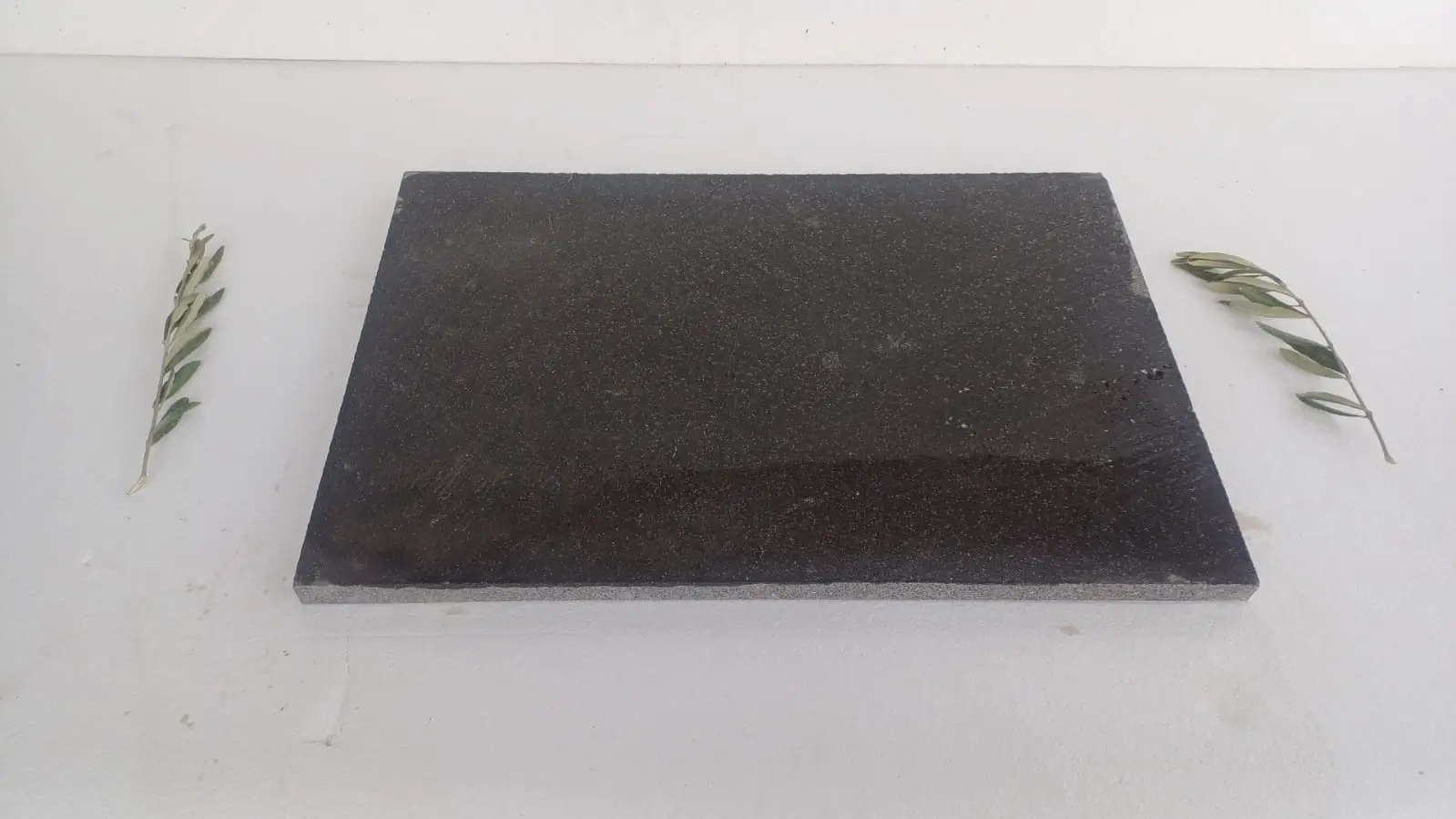
Silver travertine stone sits at the cooler end of the palette — blue-gray base tones with white and charcoal veining that reads almost graphite in certain light conditions. The mineral profile here is distinct: lower iron, higher silica content, and in some quarries a measurable manganese presence. Silver travertine stone tends to have tighter pore structure than its warmer counterparts, which translates to slightly lower absorption rates and marginally better stain resistance out of the box. That said, sealing remains non-negotiable — the difference is meaningful only at the margin.
Gold and Yellow
Gold travertine delivers the warmest end of the spectrum — saturated amber and honey tones with pronounced banding. It’s the most visually dramatic option and works particularly well in large-format travertine pavers where the full banding pattern can express itself. The caution here is consistency: gold-toned travertine shows the widest natural color variation within a single lot, so you’ll need to cull more aggressively during installation to maintain a balanced visual field.
White and Ivory Premium Grades
Premium white travertine approaches a near-uniform cream-white, with minimal veining and very low iron content. These grades are harder to source in quantity and typically carry longer lead times from the warehouse, but the visual payoff in high-design interiors or refined pool surrounds justifies the planning overhead. Confirm warehouse stock availability early — premium whites sell through faster than mid-range grades across most supply cycles.
Colors of Travertine Stone and How Finish Affects Appearance
The finish you specify changes how travertine stone colors read in the field — sometimes dramatically. A honed finish on silver travertine stone deepens the gray undertones and tightens the visual texture, while a tumbled finish on the same material softens the edges and introduces warm variation that moves the apparent color toward a warmer gray. This isn’t a minor shift — it’s a different design outcome from the same raw material.
- Honed finishes flatten the surface and intensify mid-range tones, making color variation more visible
- Polished finishes amplify depth and saturation — ivory reads whiter, walnut reads darker and richer
- Tumbled finishes introduce micro-variation across each piece, visually softening color differences between slabs
- Brushed finishes create a linear texture that catches light directionally, shifting apparent color with viewing angle
- Unfilled travertine exposes the natural void structure, adding shadow play that further modifies perceived color
Your finish selection should be locked before final material approval — reviewing samples in a filled-and-honed state and then specifying tumbled creates a significant expectation gap on delivery.
Gray Travertine Stone: Specification Considerations
Gray travertine stone has moved from niche to mainstream over the past decade, largely because it bridges the gap between the warmth of traditional travertine and the cooler, more contemporary aesthetic that defines a large share of current architectural output. The challenge is that “gray” covers a wide range — from barely-there pewter tones to nearly charcoal depths — and what looks gray in a warehouse can read brown or blue-green under different site lighting conditions.
Review gray travertine stone samples under both natural daylight and the specific artificial lighting your project will use. Fluorescent lighting pulls blue undertones forward; warm LED spectrums push the material toward taupe. This is one area where digital color approximations genuinely fail — the surface texture of travertine scatters light in ways that flat photography doesn’t capture. Physical samples reviewed on-site remain non-negotiable for gray selections.
The ASTM C1527 travertine dimension stone standard establishes the grading and physical property benchmarks that gray travertine should meet before it enters your specification — absorption rate, modulus of rupture, and compressive strength requirements that apply regardless of color selection.
Ordering, Lot Consistency, and Color Matching
Natural color variation is travertine’s defining characteristic — and its biggest project management challenge. Every quarry cut produces material with slightly different tone distribution, and the gap between two production runs from the same quarry can be significant enough to be visible in a finished installation. Your specification needs to account for this systematically.
- Order all material for a single installation from one production lot — split orders across runs are the most common source of visible color mismatch
- Add 10–15% overage to your order quantity upfront — reordering from a matching lot later is frequently impossible and always uncertain
- Request pre-shipment samples from the actual lot being shipped, not display samples from the showroom stock
- For large-format applications, ask for a full crate cross-section — surface-level sampling misses the tonal range present deeper in the stack
- Confirm truck delivery scheduling allows for a full inspection before the installation crew mobilizes
At Citadel Stone, we review lot consistency as part of our standard intake process — comparing incoming material against established color benchmarks before it reaches your project. That step catches tone drift before it becomes a field problem.
Seasonal Timing and Installation Scheduling
Color selection decisions and installation scheduling are more connected than most project timelines acknowledge. Travertine’s setting mortars and grout systems have specific temperature requirements that shift the viable installation window depending on the season — and those windows affect how travertine stone colors read in the finished work.
Mortar systems for travertine typically require substrate and ambient temperatures between 50°F and 95°F during application and the initial cure window (generally 24–72 hours). Below 50°F, hydration slows and adhesive bond strength is compromised; above 95°F, rapid moisture loss causes premature skinning that reduces bond area and increases the risk of hollow spots under the slab. Neither failure mode is visible in the finished surface — they show up months later as lipping, rocking, or full debonding.
- In freeze-thaw regions, spring installations should wait until nighttime temperatures consistently clear 45°F — not just daytime highs
- Summer installations in high-heat climates benefit from early-morning work windows, typically before 10 a.m., when substrate temperatures are lowest
- Avoid afternoon setting in direct sun during peak summer months — the substrate can reach temperatures 20–30°F above air temperature, pushing you outside the safe working range without any visible warning
- Fall installations are often the most predictable: moderate temperatures, lower humidity, and longer cure windows before first freeze
- Curing blankets or shade structures are legitimate tools for extending the workable season, not workarounds — factor them into your scheduling and budget
The color payoff of a well-selected travertine palette disappears quickly if the installation fails at the mortar interface. Scheduling around the optimal thermal window isn’t a luxury — it’s a specification requirement.
Travertine Pavers: Matching Color to Application
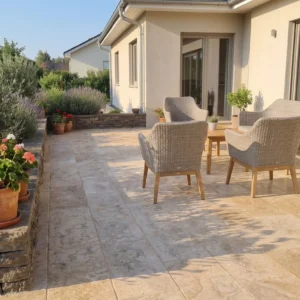
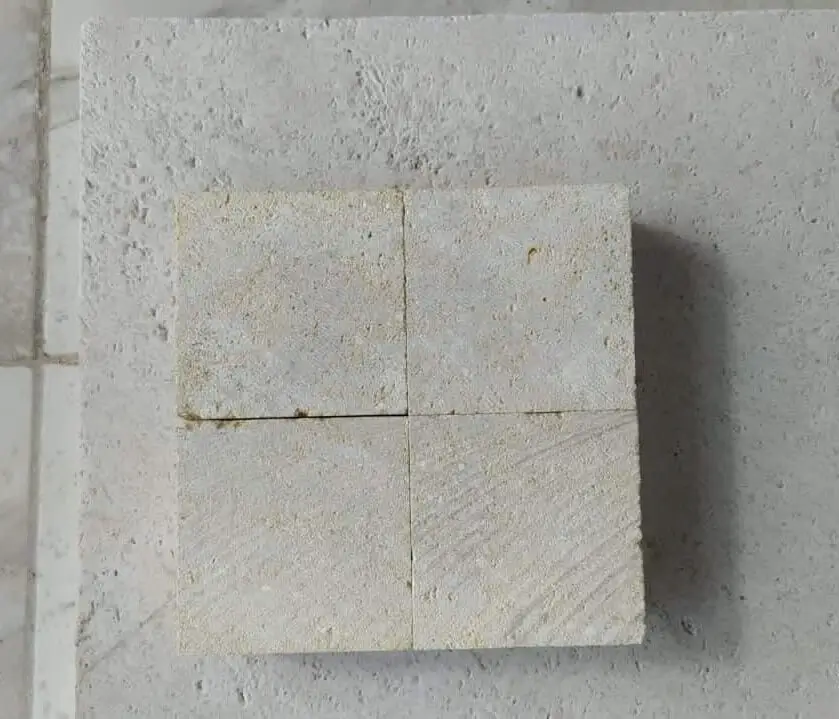
Color selection for travertine pavers isn’t purely aesthetic — the color family affects practical performance in specific applications, and aligning those factors is where experienced specifiers add real value. Lighter colors reflect more solar radiation, which is a measurable surface temperature advantage for pool decks and patios with barefoot traffic. Darker colors, including walnut and noce travertine pavers, absorb and retain heat longer, which can be a liability in high-sun environments but an advantage for areas that need thermal mass to extend usability into cooler morning and evening periods.
For exterior travertine pavers in high-traffic areas, finish texture interacts with color in ways that affect maintenance cycles. Lighter-toned travertine pavers in tumbled finishes show efflorescence more readily than darker honed surfaces — the white calcium deposits that occasionally migrate through the joints are nearly invisible on ivory and cream but obvious on silver and gray backgrounds. This is the kind of detail that doesn’t appear in product specifications but shows up every spring after the first melt cycle in freeze-thaw regions.
You can browse our travertine color options to compare lot samples across the full palette — seeing the actual color distribution across a full crate cross-section is the most reliable way to confirm a selection before committing to a project quantity.
Sealing and Long-Term Color Performance
Every travertine color family responds differently to sealers, and selecting the wrong product for your color range is one of the most common post-installation complaints. The core decision is penetrating impregnator versus topical sealer, and for most exterior applications the answer is penetrating — but the specific formulation matters for colors of travertine stone across the full palette.
- Color-enhancing penetrating sealers deepen and saturate tone — excellent for walnut and gold travertine where you want to bring out the natural richness, but they can push ivory toward a yellow cast that many clients find objectionable
- Natural-look penetrating sealers maintain the dry appearance of the stone — the safer choice for ivory, cream, and silver travertine stone where tone fidelity is the priority
- Topical sealers create a surface film that adds gloss and shifts apparent color toward a wetter look — generally avoid these for exterior travertine pavers, as the film traps moisture and degrades in UV exposure
- Test every sealer on a field sample before full application — the same product can shift appearance differently across color families from the same quarry
According to USGS limestone and travertine natural mineral formation data, the calcium carbonate matrix of travertine has inherent porosity characteristics that vary by deposit — a factor that directly influences how sealers penetrate and how long their protection cycle lasts. Resealing intervals of 18–24 months are standard for high-UV exterior applications; interior applications on polished surfaces can extend to 36–48 months with proper maintenance.
Final Recommendations for Travertine Stone Colors
Your travertine stone colors decision anchors every other material specification in a project — wall finishes, grout color, coping profiles, and adjacent hardscape all get calibrated against it. Making that selection under controlled conditions, from actual lot samples, reviewed under the site’s lighting conditions, is the professional standard that separates installations that hold up visually over a decade from ones that generate client calls two years in. Coordinate your warehouse order timing to align with your installation window’s optimal temperature range — ordering six weeks out gives you buffer for truck scheduling without risking a lot being sold through before your material is pulled. As you develop your stone strategy further, understanding the geological foundation of this material adds useful context — how travertine forms geologically explains why the color variation you’re working with is a feature of the material’s origin, not a quality control gap. Designers working with Citadel Stone travertine can match slab tone to a palette knowing the color variation is entirely natural, not dyed or coated.