The specification decisions you make before a single stone arrives on site determine whether your stone garden bench becomes a 30-year landscape anchor or a maintenance liability by year eight. This stone garden bench buyers guide works through material performance variables — thickness tolerances, finish type, stone density, and drainage geometry — with the specificity that a serious specification actually demands. Most buyers focus on aesthetics first, which is understandable given how striking a well-chosen granite or limestone bench slab looks, but the variables that matter most aren’t visible in a product photograph.
Why Material Type Drives Every Other Decision
Your choice of stone sets the ceiling on every other performance factor. A beautiful bench in the wrong material is a recurring maintenance cost — and in some cases, a structural replacement within a decade. Natural stone options for garden benches break down into three primary categories, each with distinct performance profiles worth understanding before you commit to a specification.
Granite is the workhorse of the group. Compressive strength typically runs between 19,000 and 25,000 PSI for common bench-grade slabs, and its absorption rate sits below 0.5% — which translates directly into stain resistance and reduced freeze-thaw vulnerability. The density that makes granite so durable also makes it heavier to handle during installation, typically 165–175 lbs per cubic foot depending on the variety. According to Natural Stone Institute granite specifications, granite’s crystalline structure resists surface degradation even under sustained UV exposure, making it one of the most low-maintenance bench materials available.
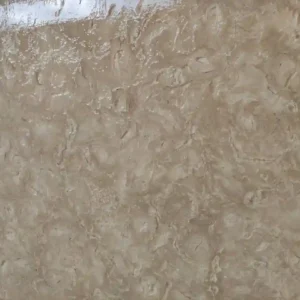
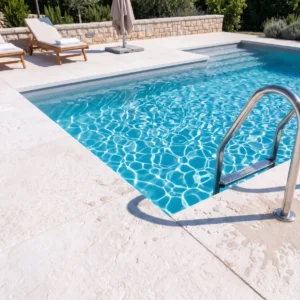
Limestone sits in the middle of the durability range. It’s more porous than granite, with absorption rates ranging from 2% to 8% depending on the specific formation, and it requires sealing on a regular schedule — typically every two to three years for outdoor bench applications. The upside is that limestone is easier to work with dimensionally, accepts a wider range of finishes cleanly, and carries a warmth in its appearance that many landscape designers specifically specify. Dense, tight-grained limestone formations perform significantly better than open-textured variants, so asking for the specific absorption data before ordering matters.
Sandstone and quartzite round out the common options. Quartzite in particular is underused in bench applications — its hardness rivals granite at 7 on the Mohs scale, and its layered visual character gives it a quality that solid-colour stones can’t replicate. Sandstone varies widely in quality, and you’ll want to verify compressive strength data before specifying it for structural bench elements.
Thickness and Slab Dimensions: What the Numbers Mean
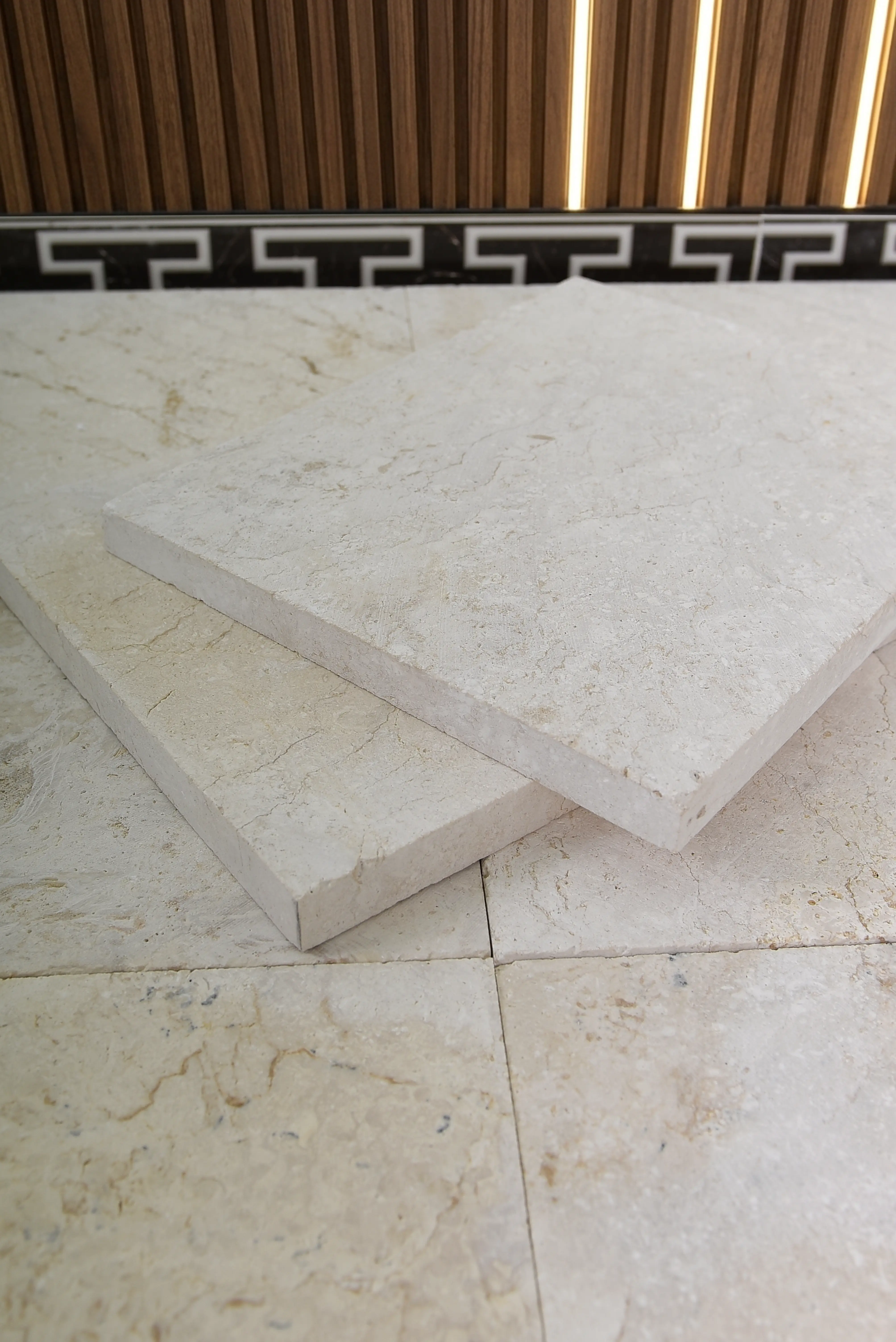
The thickness specification on your stone garden bench slab is not a stylistic choice — it’s a structural one. Seat slabs that are under-specified for their span will deflect under load, and natural stone doesn’t deflect gracefully. It cracks.
For a typical garden bench seat spanning between two support legs or pedestals, here are the minimum thickness guidelines based on span:
- Spans up to 36 inches: 2-inch nominal thickness minimum for granite and dense limestone
- Spans 36 to 48 inches: 2.5-inch to 3-inch minimum, or reduce span with a centre support leg
- Spans over 48 inches: 3-inch minimum with granite only; limestone at this span requires engineering review
- Cantilevered designs: Add 25–30% to the minimum thickness calculated for the equivalent supported span
- Sandstone: Use one thickness grade above the granite guideline at any given span — its lower flexural strength demands the margin
Width affects comfort and visual proportion. A 16-inch-wide seat slab is the practical minimum for comfortable single-seat use; 18 to 20 inches accommodates two people naturally and gives the bench the visual weight it needs to read as a proper seat rather than a ledge. Length is largely a design variable, but standard garden benches run 48 to 60 inches — long enough for two to three people, short enough to fabricate from a single slab without seaming.
Seaming should be avoided in horizontal seat applications wherever possible. A seam in a stone seat slab is a structural weak point, a water entry point, and a visible aesthetic interruption. If your design requires a length that forces a seam, your bench specification needs a redesign, not a seam detail.
Stone Garden Bench Finish Options and Their Practical Implications
Finish selection on a stone garden bench is where comfort, safety, and maintenance intersect — and it’s one of the areas where buyers most consistently under-research their options. The finish you specify determines surface friction, heat retention, water shedding, and how frequently the stone will need cleaning to maintain its appearance.
- Honed finish: Smooth but not reflective; provides good surface uniformity, reduces glare, and accepts sealer effectively. The go-to finish for seat surfaces on dense granite and limestone where comfort is the priority.
- Flamed finish: Produced by rapid thermal shock; creates a coarse, textured surface. Excellent for wet-environment applications or benches installed in shaded, moisture-retentive locations. Works best on granite — the thermal process can cause surface spalling in more porous stones.
- Sandblasted: Similar texture to flamed but achieved mechanically; slightly more consistent across the surface. Lower cost than flaming for larger slab areas.
- Natural cleft: Applies to stones like quartzite and certain sandstones; the natural fracture plane is the seat surface. Highly textured, excellent slip resistance, but not ideal for formal garden settings where a refined appearance is required.
- Bush hammered: Heavily textured mechanical finish; provides maximum grip but a more industrial appearance. Suited to contemporary or minimalist designs where texture is a deliberate aesthetic choice.
- Polished: Avoid for outdoor seat surfaces. The friction coefficient drops to 0.35 or below when wet, and polished finishes on horizontal outdoor stone show staining from organic debris within a single season.
The Natural Stone Institute’s stone variety guidance outlines finish compatibility with specific stone types — worth reviewing if you’re working with an unusual stone variety before finalising the finish specification.
Base Preparation and Terrain Considerations
The site conditions beneath and around your stone garden bench matter more than most buyers anticipate. A bench installed on an improperly prepared base — or on terrain that hasn’t been adequately assessed — will shift, tilt, or settle unevenly within a few years, even if the stone itself is perfectly specified.
Flat, stable sites are the straightforward case: compacted aggregate base of 4 to 6 inches under each support footing, confirm bearing capacity of native soil, done. The more interesting engineering challenge comes with sloped or elevated terrain — and this is where the specification process needs to go beyond the basics.
On sloped sites, the primary risk isn’t the bench itself — it’s lateral movement from water running under or around the support footings. Drainage must be resolved before the bench goes in, not alongside it. A slope of more than 3% toward any bench support requires either redirected surface drainage or a deeper, wider footing that extends below the active drainage plane. On hillside installations with gradients above 8%, individual concrete pier footings tied to grade beams are the right solution — not surface-set pads that soil hydrology will eventually undermine.
Elevated terrain with rock outcroppings presents a different challenge: the surface looks stable, but frost heave in freeze-thaw regions can shift a surface-set bench by half an inch or more over a single winter. In these conditions, setting the support legs into drilled pockets in the rock face with non-shrink grout eliminates the heave vulnerability entirely. Low-lying sites carry the inverse problem — waterlogged soil with poor bearing capacity — and typically require compacted gravel base depths of 8 to 12 inches rather than the standard 4 to 6.
Regardless of terrain, level the support points independently rather than assuming the ground plane is consistent. A stone bench that’s out of level by more than 1/4 inch looks visually wrong before it causes a structural problem, and realignment after installation requires full stone removal — there’s no shimming a finished garden bench without it showing.
Natural Stone Garden Stepping Stones as Approach Paving
Your bench doesn’t exist in isolation — it exists at the end of a path, in a garden setting, surrounded by other hardscape elements. The material relationship between your bench and the surrounding paving matters both aesthetically and practically. Natural stone garden stepping stones are the most common approach-path solution in residential and commercial garden settings, and getting this pairing right elevates the entire composition.
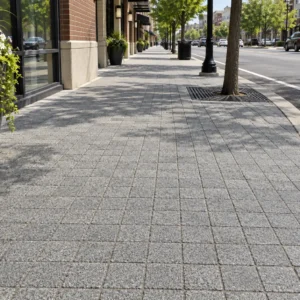
The rule of thumb for material continuity: use the same stone family, not necessarily the same finish. A honed granite bench pairs naturally with flamed or bush-hammered granite stepping stones — same material, complementary textures. A limestone bench works beautifully with tumbled or sawn limestone stepping stones for a more informal character. Mixing material families — a granite bench with sandstone stepping stones, for example — can work, but requires intentional colour and tone coordination to avoid a disconnected appearance.
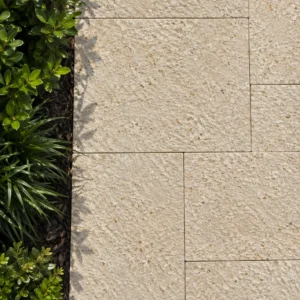
Stepping stone thickness for approach paths should be specified independently of the bench slab. For set-in-grade stepping stones, 1.5 to 2 inches is the standard working range for granite; 2 to 2.5 inches for limestone, which needs the additional thickness to resist breakage at the exposed edges. Set the natural stone garden stepping stones so their surface sits 1/4 to 3/8 inch above adjacent grade — enough to prevent grass or mulch from creeping onto the stone surface, not so high that the edge creates a trip hazard.
You can explore our stone garden bench material options to see how different stone varieties translate from specification to finished product, including material pairing combinations that work well together across bench and pathway applications.
Sealing, Maintenance, and Long-Term Performance
The maintenance schedule you set at the specification stage determines whether your stone garden bench delivers on its potential. Granite stones for garden applications — particularly in bench form — are the lowest-maintenance option in the natural stone category, but even granite benefits from periodic sealing in outdoor applications. Here’s what a realistic maintenance picture looks like by material:
- Granite: Seal at installation with a penetrating impregnator sealer; reapply every 4 to 5 years under normal outdoor conditions. Annual cleaning with a pH-neutral stone cleaner is sufficient for appearance maintenance.
- Dense limestone: Seal at installation; reapply every 2 to 3 years. More susceptible to organic staining from leaves and debris, so semi-annual cleaning is recommended. Avoid acid-based cleaners entirely — they etch the surface.
- Porous limestone: Seal immediately after installation and again after 6 months; annual resealing thereafter. This is the material that most commonly underperforms in outdoor bench applications because buyers under-estimate the sealing commitment.
- Quartzite: Seal at installation; reapply every 3 to 4 years. The hard surface is resistant to most staining agents, but the natural cleft texture can trap debris that requires periodic brushing out.
- Sandstone: Seal on installation and annually thereafter. Sandstone is the most maintenance-intensive of the common bench materials and should be specified only where its specific aesthetic is essential to the design intent.
Joint maintenance between bench components — where the seat slab meets the support legs or pedestal — is an area that gets overlooked in maintenance planning. Epoxy-set joints are essentially maintenance-free, but mortar joints require inspection every two to three years and repointing when cracking or voids appear. Water infiltration at the joint interface is the primary mechanism for support settlement over time.
Ordering, Lead Times, and Delivery Planning
Natural stone bench components are not stocked items at most suppliers — they’re cut-to-order. Your project timeline needs to account for fabrication lead times, not just shipping transit. Standard fabrication windows for custom bench slabs run 3 to 5 weeks from order confirmation, and that’s before any transit time from the warehouse to your site.
Citadel Stone maintains consistent warehouse inventory of bench-grade stone slabs nationally, which compresses the timeline compared to suppliers who cut against import shipments on a per-order basis. For in-stock slab sizes, lead times from our warehouse typically run 1 to 2 weeks to most delivery locations — significantly tighter than the 6 to 8 week cycle that custom-fabricated orders from overseas suppliers often involve.
Delivery logistics for stone bench components deserve specific planning attention. A 48-inch by 18-inch by 2.5-inch granite seat slab weighs approximately 180 to 200 pounds — manageable with two people and proper equipment, but not a curbside drop that one person can handle alone. Confirm truck access to your installation site before finalising the order: gate widths, overhead clearance, surface bearing capacity for a loaded delivery truck, and proximity to the actual installation location all affect whether your delivery goes smoothly or turns into a half-day equipment problem.
For sloped or terraced sites, communicate the terrain conditions to your supplier at the order stage. Truck positioning on grade affects crane-arm reach and safe offloading geometry — your supplier needs to know if the delivery point is at grade or involves a significant elevation change from the road surface.
Granite Stones for Garden Structures: A Closer Look
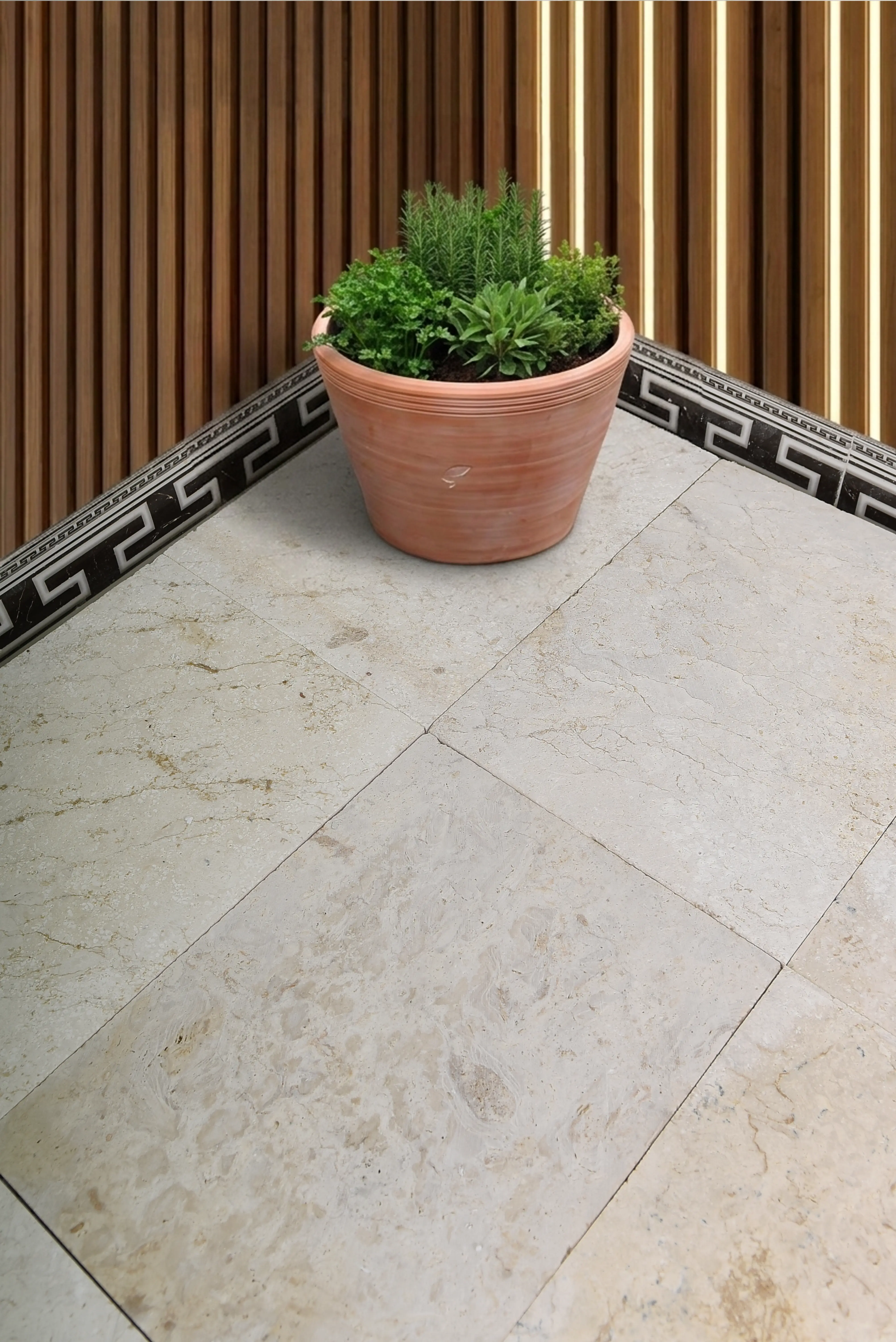
Granite stones for garden bench applications occupy a specific performance tier that no other natural stone consistently matches. The combination of compressive strength above 19,000 PSI, low absorption, high resistance to UV degradation, and dimensional stability under thermal cycling makes granite the specification default for any bench application where longevity is the primary criterion. ASTM C615 granite dimension stone standards set the technical benchmark for what bench-grade granite should deliver in terms of absorption, flexural strength, and compressive performance — worth referencing when evaluating supplier specifications.
The variety of granite available for bench applications is broader than most buyers realise. Beyond the standard grey and black options, granite stones for garden settings come in warm buff tones, deep blues, and complex multi-mineral patterns that hold their character outdoors in ways that painted or stained materials simply don’t. The key specification variable across varieties is consistent grain structure: fine-grained granite machines more precisely, holds sharper edges, and accepts a more uniform finish than coarse-grained varieties. For bench seat slabs where edge profile and surface finish uniformity matter, specify fine to medium grain in the technical requirements.
One detail that experienced specifiers pay attention to: the direction of the rift in the granite slab relative to the bench’s span direction. Granite has a preferred cleavage plane — the rift — and slabs cut against the rift are measurably stronger in flexure than slabs cut parallel to it. For shorter spans this rarely matters; for spans above 42 inches, requesting rift-cut slabs adds a meaningful structural margin that’s worth the conversation with your fabricator.
Getting Your Stone Garden Bench Specification Right
A stone garden bench buyers guide that stops at aesthetics leaves you with half the information you actually need to make a good specification decision. The material type, thickness-to-span ratio, finish selection, site drainage geometry, and maintenance commitment are the variables that separate a bench that looks great in year one and continues to perform in year twenty from one that starts showing stress fractures, staining, or settlement by year five. Every decision in this guide feeds forward into the next: the stone type determines the finish options, the finish determines the sealing schedule, the site terrain determines the footing depth, and the footing depth affects what delivery and installation logistics look like on the ground.
For broader stone projects that extend beyond the bench itself — retaining features, garden walls, or border elements — the specification principles carry over, but the detailing changes. Understanding how those adjacent elements perform in real installation conditions helps you design a garden hardscape that works as a cohesive system rather than a collection of independent pieces. common border wall stone issues and fixes walks through the failure modes and corrective approaches that landscape stone edges encounter — useful context if your project includes edging or wall elements alongside the bench. At Citadel Stone, we work with specifiers and project owners at the pre-order stage to confirm that material selection, dimensions, and site conditions are aligned before fabrication begins — because changes after cutting are costly in both time and material. A honed or flamed finish on a bench slab from Citadel Stone reduces surface porosity and makes the seating surface more comfortable across a range of weather conditions.
Related reading: Stone Garden Wall Ideas for Every Yard Style · faux vs natural stone garden wall · how to build dry stone wall.