What Flagstone Stone Actually Is — And Why the Definition Matters
Flagstone stone earns its reputation not from a single geological identity but from a shared physical trait: the ability to cleave naturally into flat, usable slabs along well-defined bedding planes. Several distinct rock types qualify — sandstone, limestone, slate, quartzite, and bluestone among them — meaning the term “flagstone” describes a format and cleavage behavior rather than a single mineral composition. That distinction matters enormously when selecting material, because two projects both calling for “flagstone” may end up specifying entirely different stones with very different performance profiles. Understanding what flagstone stone actually is — at the geological level — is the prerequisite for every sound specification decision that follows.
The bedding planes that give flagstone its characteristic flatness develop over millions of years as sediment layers compress under their own weight. Silica, calcium carbonate, or clay minerals cement those layers into rock, and the interfaces between layers remain the weakest structural plane — which is exactly what allows quarry operators to split clean, flat pieces with minimal mechanical intervention. According to flagstone sedimentary rock characteristics and paving use, this natural splitting tendency is the defining property that distinguishes flagstone from other dimension stone formats.
Material selection decisions start with understanding which rock type underlies the flagstone under consideration. A sandstone flagstone and a quartzite flagstone may look similar in a yard sample but behave completely differently under freeze-thaw cycling, foot traffic loading, and storm-driven water infiltration.
Rock Types That Produce Flagstone
Not every sedimentary or metamorphic rock splits cleanly enough to be flagged. The ones that do share a laminated or foliated internal structure that predisposes them to flat fracture. Here’s how the main flagstone-producing rock types compare in practical terms:
- Sandstone flagstone — the most common type, composed of quartz grains cemented by silica or iron oxide; moderately porous, good traction when textured, tends toward warm tan, buff, and brown tones
- Limestone flagstone — calcium carbonate-dominated, denser than most sandstones, available in grey, blue-grey, and cream tones; responds well to honing but requires sealing in wet environments
- Slate flagstone — a fine-grained metamorphic rock with pronounced foliation; extremely low absorption, excellent durability, but more brittle at thin profiles than sandstone or limestone equivalents
- Quartzite flagstone — sandstone that has been metamorphosed under heat and pressure; quartz grains fuse into a near-impermeable matrix, producing the hardest and most durable flagstone option
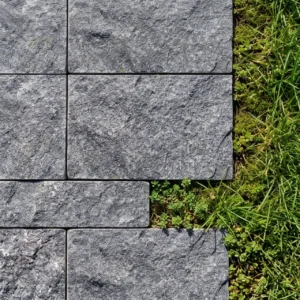
- Bluestone flagstone — a dense sandstone or wacke with blue-grey coloring; extremely popular for flagstone patios and walkways, dimensionally stable, and resistant to surface wear
Each of these behaves differently at the installation stage, too. Quartzite requires diamond-blade cutting and generates heat that can micro-fracture thinner pieces if the cut is rushed. Slate splits predictably but snaps across the grain if lateral stress is applied during handling. Sandstone is the most forgiving to cut and shape on-site, which makes it the preferred option for irregular flagstone layouts where field trimming is unavoidable.
How Flagstone Forms Geologically
The geological process behind flagstone formation is what ultimately determines piece consistency, thickness variation, and surface character — all of which affect the installation approach. Sedimentary flagstones originate in environments where material deposits in horizontal layers: riverbeds, shallow marine shelves, lake bottoms, and desert basins all produce the layered deposits that eventually lithify into splittable rock.
Grain size and cementation chemistry during lithification control how cleanly a deposit splits and how consistent the resulting slabs will be. Coarse-grained sandstones with weak iron-oxide cementation tend to produce thicker, rougher slabs with more thickness variation between pieces. Fine-grained sandstones cemented with silica split more cleanly and yield slabs with tighter thickness tolerances — often within 3/8 inch across a 24-inch piece. According to USGS flagstone and dimension stone paving data, the domestic dimension stone industry accounts for significant annual production across multiple flagstone-producing rock types, with quarrying methods tailored to each formation’s specific bedding characteristics.
Metamorphic flagstones — slate and quartzite — follow a different formation path. Both start as sedimentary rocks subjected to elevated temperature and pressure deep in the earth’s crust. The original bedding planes often survive metamorphism as foliation planes in slate, which is why slate splits so predictably. In quartzite, recrystallization can partially obliterate original bedding, which is why quartzite flagstone pieces sometimes show more irregular break patterns along edges compared to sandstone.
Thickness Variation and What Causes It
Thickness variation is the one characteristic of flagstone stone that catches buyers off guard most often. Unlike manufactured pavers, natural flagstone splits along geological planes that aren’t perfectly uniform — a single pallet of irregular flagstone typically shows 3/4 inch to 1-1/2 inch variation, and even dimensional-cut flagstone carries tolerances of plus or minus 1/4 inch. This isn’t a quality defect — it’s a direct expression of how the rock formed.
Base preparation has to account for this. A rigid mortar bed installation can compensate for significant thickness variation by varying mortar depth beneath each piece. A sand-set installation requires working within a tighter tolerance range — typically pieces within 3/4 inch of each other — or tripping hazards develop at joints where adjacent pieces differ substantially in thickness.
Flagstone Patios: Application Requirements and Performance Expectations
Flagstone patios represent the highest-volume application for what is flagstone stone in practice, and for good reason. The natural surface texture of most flagstone types provides inherent slip resistance without any additional processing — something polished tile and smooth concrete simply can’t match without applied coatings that wear off. For residential flagstone patios, a brushed or natural-split sandstone or bluestone flagstone delivers coefficient of friction values well above the 0.5 threshold recommended for outdoor foot traffic surfaces, according to ASLA natural stone and flagstone outdoor paving guidance.
Structural performance for flagstone patios depends on three variables: stone thickness, support method, and the underlying base. Here’s what to confirm before specifying:
- Minimum 1-1/2 inch thickness for mortar-set applications — anything thinner risks cracking under point loads from furniture legs and foot traffic
- Minimum 2-inch thickness for sand-set irregular flagstone, where unsupported spans between base contact points create bending stress
- 4-inch compacted aggregate base for residential patio loads — increase to 6 inches on clay-heavy soils with seasonal movement
- Proper edge restraint to prevent lateral migration of sand-set pieces over time
- Expansion joints at 8-10 foot intervals in mortar-set applications to manage thermal cycling stress
For any patio project, the choice between regular (dimensional-cut) and irregular flagstone shapes comes down to aesthetics and installation labor. Irregular flagstone costs less per square foot but requires significantly more labor to lay — a skilled installer typically completes 60-80 square feet of irregular flagstone per day versus 120-150 square feet of dimensional flagstone. Factor that into the budget before assuming irregular is the economical choice.
Explore the full range of sizes, thicknesses, and rock types available through the flagstone selection at Citadel Stone to match your project’s specific load and aesthetic requirements.
Durability Under Wind, Storm, and Mechanical Stress
Material selection for outdoor flagstone installations needs to account for more than foot traffic loads. Wind events, hail, and storm-driven water introduce mechanical stresses that affect different flagstone types very differently — and these are variables that often get overlooked at the specification stage.
Impact Resistance Across Flagstone Types
Hail impact on exposed flagstone surfaces can cause surface spalling on softer, more porous sandstone types, particularly where freeze-thaw cycling has already opened micro-fractures near the surface. Quartzite and dense bluestone flagstones show significantly better impact resistance because their tightly cemented or recrystallized grain structure distributes impact energy laterally rather than concentrating it at a point. In hail-prone regions, quartzite or dense limestone flagstone is a more defensible specification than soft sandstone.
Wind loads affect flagstone installations primarily through two mechanisms: wind-driven rain penetrating joints and forcing moisture into the base, and uplift pressure on thin flagstone pieces in exposed installations like elevated terraces. Joint integrity under wind-driven rain is a function of joint width, joint material, and the absorption characteristics of the flagstone itself. Wider joints — over 1-1/2 inches — filled with polymeric sand maintain integrity better under sustained wind-driven rain than open or loosely mortared joints, because polymeric sand swells slightly when wet, effectively self-sealing against infiltration.
Edge Restraint and Joint Integrity
Edge restraint is the unsung specification detail that determines whether a sand-set flagstone installation survives its first major storm season intact. Without adequate lateral containment, wind-driven water infiltrating joints washes fine material from the base, creating voids that allow individual pieces to rock, settle unevenly, and eventually heave. Edge restraint options for flagstone include:
- Concrete curbing — the most robust option for exposed or high-wind locations, providing rigid lateral containment that doesn’t shift under storm hydrostatic pressure
- Steel or aluminum edging — effective for interior patio areas sheltered from direct wind exposure, but requires proper anchoring stakes at 12-inch intervals minimum
- Natural stone border pieces set in mortar — appropriate where aesthetics demand a natural look, but requires mortar integrity to hold lateral loads
- Compacted gravel margins — a compromise option, less effective than rigid restraint but better than no restraint in lower-exposure locations
For elevated terraces or any flagstone application directly exposed to prevailing wind direction, concrete edge restraint with mortar-set perimeter pieces provides the mechanical resistance needed to maintain joint integrity through repeated storm events. Sand-set installations in exposed locations also benefit from a polymeric jointing compound rather than standard sand — the binding agents in polymeric products resist washout from wind-driven rain far more effectively than unbound sand.
Surface Finishes and What They Change About Performance
The finish applied to flagstone stone — or more accurately, the finish that results from how the stone is split and processed — changes its performance characteristics substantially. Natural-split flagstone retains its original cleft surface from the quarry splitting process. This surface is inherently textured, providing good traction and a rustic aesthetic, but the irregular surface traps organic material in micro-recesses, which can promote biological growth in shaded, moist conditions if the stone isn’t sealed.
Honed flagstone — ground to a smooth, flat surface with a matte finish — changes the performance equation in several ways:
- Traction decreases compared to natural-split surfaces — relevant for pool surround applications or locations that see frequent wet conditions
- Cleaning becomes significantly easier because contaminants don’t penetrate surface texture irregularities
- The stone absorbs more uniformly after honing, which means sealer application penetrates more consistently and lasts longer
- Dimensional flatness improves, which reduces the adjustment work during mortar-set installation
Tumbled flagstone — run through mechanical tumbling to soften edges and create a weathered appearance — is the most forgiving finish from a handling standpoint. The rounded edges eliminate the sharp chipping risk that affects natural-split and honed pieces during transport and installation. The trade-off is dimensional precision: tumbled pieces tend to show more edge-to-edge variation than cut-edge formats, which means joint widths vary more across an installation.
What Is Flagstone Best Used For? Matching Material to Application
The question of what is flagstone suited for doesn’t have a single answer — it depends on which flagstone type is being specified and what structural and aesthetic demands the application creates. Here’s a practical breakdown by application category:
Walkways and Stepping Stone Paths
Walkway applications tolerate a wider range of flagstone types than flagstone patios because individual pieces carry lighter cumulative loads and greater base flexibility is acceptable. Irregular sandstone flagstone performs well in garden paths where aesthetic informality is the goal. For formal walkway applications with consistent joint lines, dimensional-cut limestone or bluestone flagstone delivers the edge-to-edge alignment that irregular material can’t reliably achieve.
Stepping stone layouts should maintain flagstone pieces at a minimum 18 inches in their shortest dimension — anything smaller creates an unstable surface that rocks under off-center foot placement. Thickness for stepping stones set in soil should be 1-1/2 to 2 inches minimum, as thinner pieces flex and crack under repeated impact without the rigid mortar support a patio installation provides.
Driveways and High-Load Applications
Flagstone driveways are possible but demanding to specify correctly. Vehicle loads require minimum 2-inch thickness across all pieces, mortar-set installation on a 6-inch compacted aggregate base with 4 inches of concrete subbase in most soil conditions, and quartzite or dense bluestone as the preferred stone type. Softer sandstone flagstones will surface-abrade and chip under repeated tire loading — the angular contact between tire tread and stone edges creates stress concentrations that softer materials can’t sustain over time.
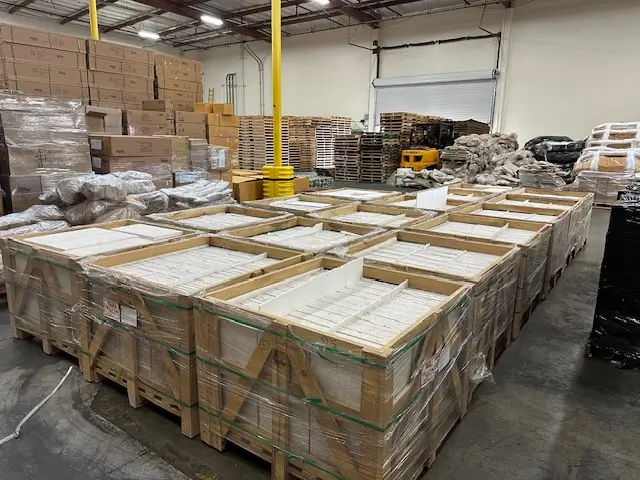
At Citadel Stone, our technical team advises customers on minimum thickness requirements for flagstone driveway applications before warehouse shipment — because undersized material returned from a job site costs far more in delays than getting the specification right upfront. We stock flagstone pavers in the heavier profiles specifically to cover these demanding-load scenarios, and warehouse inventory levels are updated regularly so customers can confirm availability before a project schedule commits.
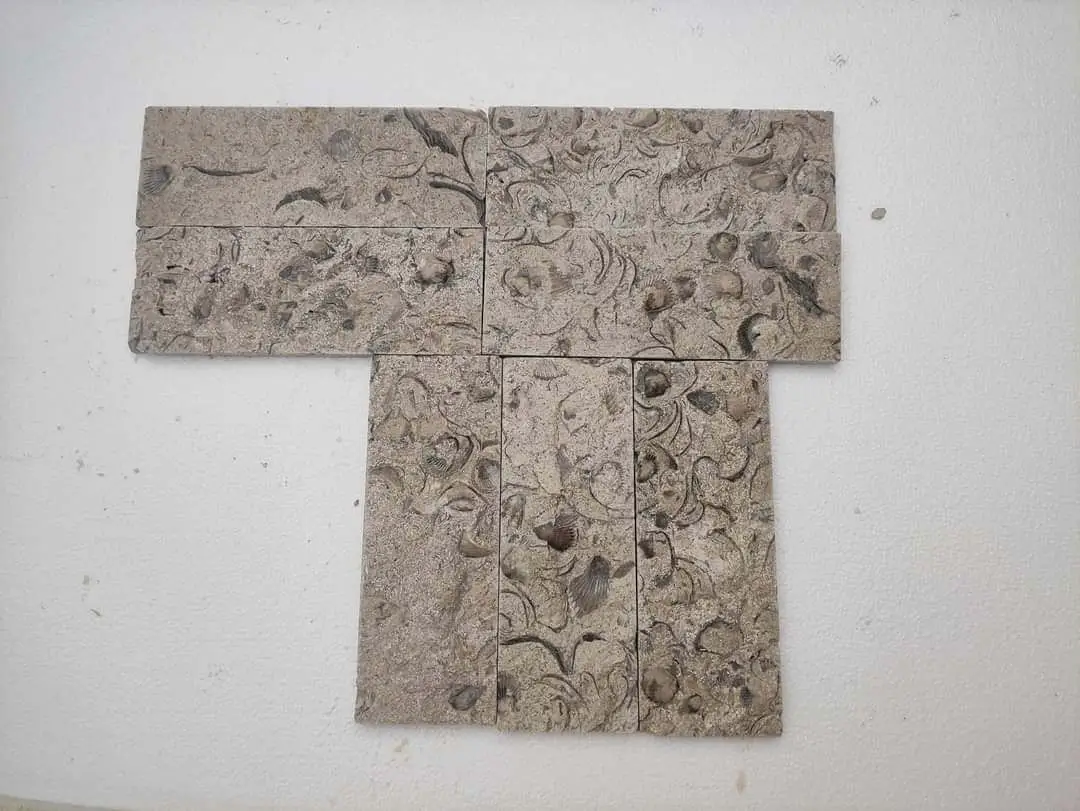
Selecting and Ordering Flagstone: What to Verify Before Your Material Ships
Ordering flagstone stone involves more pre-purchase verification than most natural stone formats because of inherent variation in piece size, thickness, and color between production batches. Here’s what to confirm before material leaves the warehouse:
- Coverage calculation — irregular flagstone is typically sold by the ton, with coverage ranging from 70 to 100 square feet per ton depending on thickness; dimensional flagstone is sold by square foot at nominal thickness
- Batch consistency — for larger projects, confirm that all material ships from the same production run to minimize color and texture variation between pallets
- Thickness range — request the actual thickness range within the pallet, not just the nominal specification; this determines mortar bed depth and base adjustment requirements
- Truck access at delivery — confirm the site can accommodate a flatbed or boom truck delivery; flagstone pallets typically run 3,000 to 4,000 pounds and require mechanical off-loading
- Lead time from warehouse — domestic flagstone stock typically ships within one to two weeks; imported specialty types can run four to six weeks from order confirmation
Citadel Stone maintains national warehouse inventory of core flagstone types, which shortens lead times considerably for most project schedules. For projects with firm completion deadlines, confirming warehouse stock levels at the time of specification protects the timeline against sourcing delays that affect imported material through slower supply chains. A quick call to our technical team before finalizing quantities ensures ordering against confirmed stock, not theoretical availability.
Material waste factors for flagstone vary significantly by format. Budget 10% overage for dimensional-cut flagstone where field cuts are minimal. For irregular flagstone layouts with complex field trimming requirements, 15-20% overage is more realistic — particularly for tight, puzzle-fit joints where rejected pieces accumulate quickly. Under-ordering irregular flagstone mid-project creates real problems, because matching an existing pallet’s color and thickness profile from a new production batch is rarely perfect.
Flagstone Stone Specifications: Getting the Selection Right
Choosing flagstone stone that performs over decades rather than years comes down to matching rock type, thickness, finish, and installation method to the specific demands of the application. Quartzite and dense bluestone for high-impact or high-load situations, sandstone and limestone for aesthetic-driven residential flagstone patios with proper base preparation — the material family is broad enough to suit nearly any project, but only when the selection is deliberate rather than generic. Jointing material, edge restraint specification, and base depth matter as much as the stone itself, and the storm-resistance details discussed above deserve the same attention given to surface aesthetics.
As the overall natural stone project takes shape, complementary hardscape elements can reinforce the design direction flagstone establishes. grey stone landscaping ideas explores how Citadel Stone’s grey-toned materials work across multiple landscape applications — a useful reference if the flagstone selection leans toward cooler, neutral tones. Understanding how flagstone forms and splits along natural bedding planes helps buyers appreciate why Citadel Stone’s material varies slightly in thickness and texture across pieces.
Related reading: flagstone patio installation cost · flagstone vs bluestone paving.