Most material selection mistakes happen before a single stone leaves the warehouse — the wrong rock type chosen for the wrong application, or the right rock ordered in the wrong finish for the exposure it will face. Understanding the full spectrum of types of landscaping rocks isn’t about memorizing a glossary; it’s about knowing which physical properties actually govern performance in real installations. Compressive strength, absorption rate, surface texture, and UV stability all interact differently depending on whether you’re laying a garden path, building a dry-stacked wall, or lining a water feature. This guide walks you through each major rock type, what it genuinely does well, and where it will let you down if you push it past its natural limits.
Why Rock Type Determines Long-Term Performance
The instinct to choose landscaping rocks based on appearance alone is understandable — stone looks great in the showroom under controlled lighting. But field performance is governed by geology, not aesthetics. Igneous rocks like granite and basalt formed under intense heat and pressure, which means their crystalline structure is dense, low-absorption, and exceptionally resistant to surface erosion. Sedimentary rocks like limestone and sandstone formed through mineral deposition, giving them higher porosity and softer surface characteristics that respond differently to moisture, UV exposure, and freeze-thaw cycling.
The third major class — metamorphic rocks like slate and quartzite — sit between the two. They’ve been altered by heat or pressure without fully remelting, which creates a cleaved structure that’s useful for splitting into thin landscape slabs but can delaminate under sustained point loading. Knowing which geological family your stone belongs to gives you a predictive model for how it will behave over a 10- to 20-year horizon, which is the kind of foresight that separates projects that age gracefully from ones that need remediation.
The Natural Stone Institute landscape stone variety selection guide provides technical variety data that reinforces why geological classification should precede any aesthetic decision in a serious specification.
Granite: The High-Durability Standard
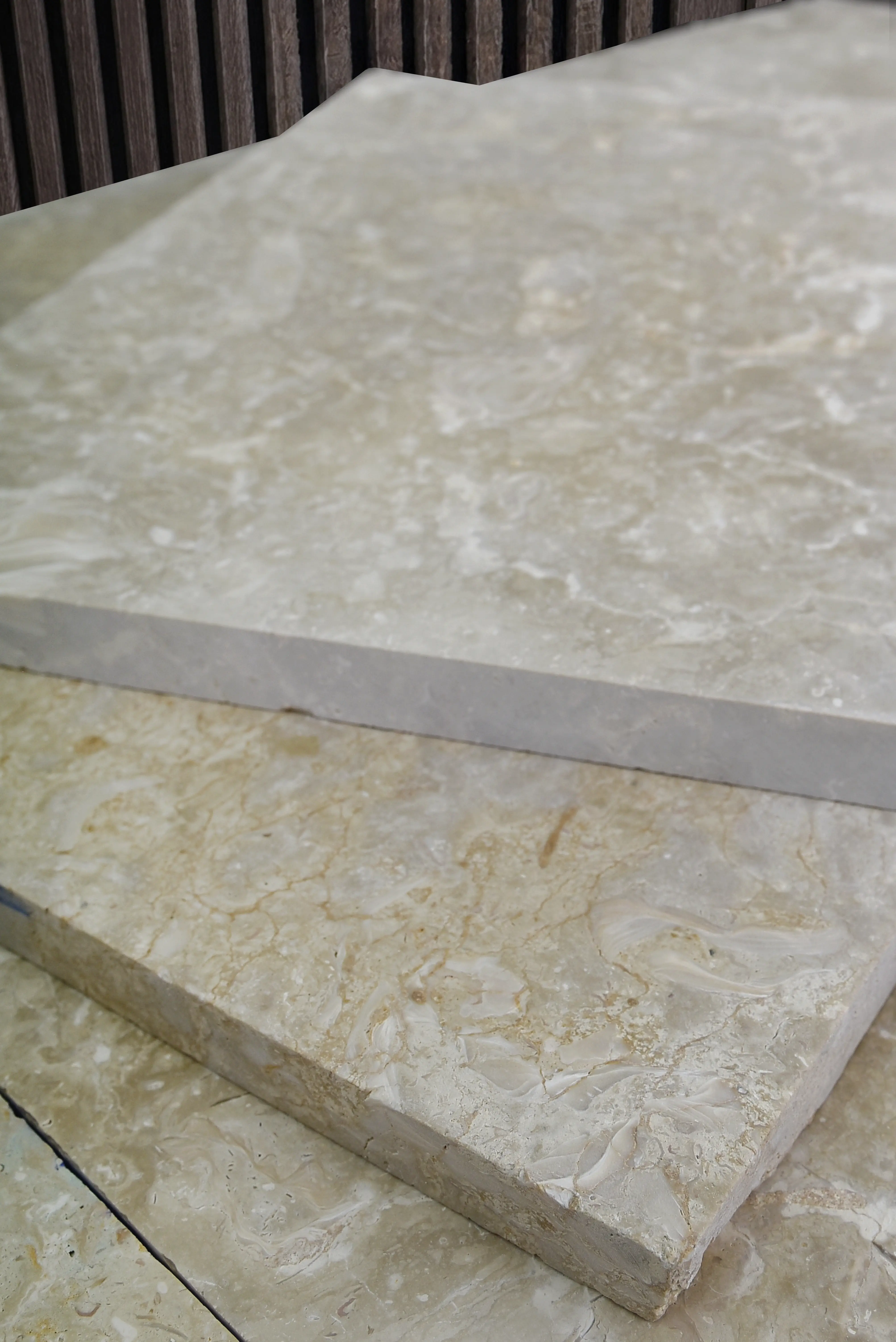
Granite is the benchmark most other types of landscaping rocks get measured against — and for good reason. With compressive strength typically ranging from 19,000 to 30,000 PSI and water absorption rates below 0.4%, it handles vehicular traffic, frost heave, and heavy point loads without meaningful degradation. Driveway borders, retaining wall caps, and heavy-use pathway areas are exactly where granite earns its specification.
UV exposure has minimal impact on granite’s structural integrity. The mineralogy — primarily feldspar, quartz, and mica — is chemically stable under direct sun. However, certain pink and salmon granites with high iron content can develop a surface oxidation layer when exposed to prolonged UV and moisture cycling. This isn’t structural damage, but the reddish surface bloom it produces surprises homeowners who weren’t warned. For sun-exposed landscape installations, specifying a grey or black granite eliminates this variable entirely.
- Compressive strength of 19,000–30,000 PSI makes it suitable for vehicular and heavy pedestrian applications
- Water absorption below 0.4% means minimal freeze-thaw expansion at joint interfaces
- Honed finishes provide better slip resistance than polished in outdoor settings
- Iron-rich varieties may oxidize on the surface under UV and moisture — verify mineral composition for sun-exposed placements
- Available as cobbles, setts, stepping stones, boulders, and irregular fieldstone
Rock landscaping projects that involve edges, borders, or structural elements typically benefit most from granite’s density. The material’s weight — roughly 168 lbs per cubic foot — also means truck delivery logistics need to account for access constraints before the stone is ordered, not after it arrives on site.
Limestone: Versatile Performance Across Applications
Limestone occupies more landscape applications than any other single stone type, and that breadth reflects genuine material versatility. Compressive strengths range from 4,000 PSI in softer oolitic varieties up to 18,000 PSI in dense hydraulic limestone, which means you’re not dealing with a single material — you’re dealing with a family of stones that spans a wide performance envelope.
The critical specification decision with limestone is density and absorption class. High-absorption limestones (above 7.5% by weight) are suitable for garden borders and decorative placement, but they’re not appropriate for freeze-thaw regions as primary paving stones. Dense limestones in the 3–5% absorption range handle most outdoor landscape applications without issue. Your supplier should be able to provide absorption test data — if they can’t, that’s a flag worth noting.
UV exposure affects limestone differently than it affects granite. The calcium carbonate matrix can lighten subtly over years of intense sun exposure, and some buff-toned limestones develop a pale, chalky surface texture under strong UV without sealing. Applying a penetrating, UV-resistant impregnator every two to three years in high-sun installations preserves both the color depth and the surface integrity. For landscaping rocks and stones that will see consistent UV load, sealing isn’t optional — it’s part of the specification.
- Absorption rates from 3–12% depending on variety — verify before specifying for wet or freeze-thaw-exposed zones
- Calcium carbonate chemistry makes it susceptible to acid etching — avoid proximity to acidic fertilizer applications
- Tumbled finishes improve slip resistance without polishing; honed finishes suit formal garden settings
- UV-resistant penetrating sealers applied biennially maintain surface color in direct-sun applications
- Works well as flagstones, dry-stack wall stone, garden edging, and decorative boulders
According to USGS data on limestone composition and construction applications, limestone is the most widely used sedimentary dimension stone in the United States — a statistic that reflects both its availability and its adaptability across project types.
Sandstone and Flagstone: Natural Layering for Path and Patio Work
Sandstone’s defining characteristic is its layered, sedimentary structure — grains of quartz and feldspar bound together by silica, calcium carbonate, or iron oxide cement. That layering is what makes sandstone naturally split into the flat slabs used as flagstone, and it’s also what determines how the stone weathers. Silica-cemented sandstone is harder and more UV-stable; calcium carbonate-cemented sandstone behaves more like limestone and can etch or soften in acidic soil environments.
For garden pathways and patio applications, natural stone for landscaping in a flagstone format is often the most practical choice. The irregular shapes allow for creative layout without cutting, and the natural surface texture is the property that governs footing against the ANSI A326.3 minimum wet DCOF of 0.42 that most outdoor installations require. Flagstone thicknesses from 1.5 to 2 inches handle typical foot-traffic loads on a properly prepared aggregate base; anything thinner than 1.25 inches risks cracking under heavy point loads like furniture legs or delivery equipment.
UV exposure does cause surface color migration in iron-oxide-cemented sandstones. The warm red and buff tones that look striking when freshly installed can fade toward a more uniform tan over three to five years of intense sun exposure. This isn’t a failure — it’s a natural aging process — but it’s worth communicating to clients before they fall in love with the showroom color. A penetrating sealer with UV inhibitors slows the process significantly without altering the stone’s natural texture.
- Natural cleft surfaces provide inherent slip resistance suitable for most pedestrian applications
- Iron oxide pigmentation fades under intense UV — UV-inhibiting sealers extend color retention
- Minimum 1.5-inch thickness for flagging; 2 inches for areas with furniture or occasional wheeled traffic
- Silica-cemented varieties outperform carbonate-cemented types in wet, acidic soil conditions
- Irregular shapes reduce cut waste in organic garden layouts; square-cut formats suit formal designs
Slate: High Visual Impact With Specific Limitations
Slate’s fine-grained metamorphic structure produces a naturally cleft surface that catches light differently at different times of day — it’s one of the most visually distinctive types of landscaping rocks available. The material splits cleanly along its foliation planes, which is why it’s been used for centuries as roofing material and paving stone. In landscape applications, it works beautifully as a stepping stone, a low-retaining wall cap, or a decorative mulch replacement in planting beds.
The limitation you need to plan around is delamination risk under sustained compressive or impact loading. Slate’s layered structure — the same quality that makes it split cleanly — means layers can separate if heavy point loads are applied perpendicular to the foliation plane. This rules it out for driveway paving or any application involving vehicular or heavy equipment loads. Garden paths with typical residential foot traffic are fine; anything heavier requires a denser stone.
- Natural foliation creates distinctive visual texture and light reflectance
- Not suitable for vehicular applications — delamination risk under heavy point loads
- High thermal mass stores heat; surface temperatures in direct sun can be uncomfortable for barefoot use
- Black and charcoal slate shows UV bleaching toward grey over time without sealing — penetrating sealers maintain depth of color
- Excellent as stepping stone, wall cap, or decorative accent material
Basalt and Volcanic Stone: Dense, Modern, and UV-Stable
Basalt is the most UV-stable option across the types of landscaping rocks covered in this guide. Its fine-grained igneous structure — formed from rapidly cooled volcanic lava — gives it a mineral homogeneity that resists surface oxidation and color shift under sustained UV exposure. That’s why basalt cobbles and honed basalt slabs hold their deep charcoal and black tones without significant fading, even in high-sun installations where other dark-colored stones would noticeably lighten over three to five years.
Two practical realities apply with basalt. First, the material’s density — around 185 lbs per cubic foot — creates significant truck payload considerations for large-volume orders. Calculating tonnage accurately before ordering prevents split deliveries that delay projects. Second, basalt’s naturally smooth surface becomes genuinely slippery when wet in a polished finish. For any outdoor application, a honed or flamed finish meeting the ANSI A326.3 minimum wet DCOF of 0.42 is the only specification that makes sense.
According to USGS basalt volcanic rock properties and composition, basalt is among the most chemically resistant natural rocks available — a geological property that directly translates to long-term performance in demanding outdoor environments.
- Exceptional UV stability — charcoal and black tones hold without sealing in most sun-exposed applications
- Density around 185 lbs/ft³ — calculate truck payload and site access carefully for large orders
- Polished basalt is hazardous when wet — specify honed or flamed finishes for all outdoor use
- Excellent for water features, modern garden edging, stepping stones, and pathway paving
- Low porosity means it doesn’t absorb moss or algae as readily as limestone in shaded wet zones
River Rock, Pea Gravel, and Decomposed Granite: Loose-Fill Applications
Loose-fill landscape stone covers a different functional territory than dimensional paving. River rocks, pea gravel, and decomposed granite are all used as ground cover, drainage layer material, mulch alternatives, and decorative infill — and each has a distinct performance profile that governs where it belongs in your design.
River rocks are water-worn, naturally rounded stones ranging from 1 to 5 inches in diameter. Their smooth surface and varied color make them visually appealing in dry creek beds, planting borders, and erosion control applications. They’re not comfortable to walk on barefoot, and they shift underfoot on slopes — making them a poor choice for primary foot-traffic pathways. Pea gravel (3/8-inch nominal) is finer, more stable underfoot, and widely used under deck structures, around play equipment, and as a pervious pathway surface. It compacts reasonably well with foot traffic but requires edging containment to prevent migration.
Decomposed granite (DG) is a different material than either of the above. It’s granite that has weathered in place to a sandy, granular consistency. Stabilized DG — mixed with a polymer binder — compacts into a firm, semi-pervious surface that handles light foot traffic well and has a natural, organic appearance that works beautifully in formal garden paths. Unstabilized DG tracks onto adjacent hard surfaces and erodes in heavy rain events, which creates maintenance demands that some projects underestimate.
- River rock: best for drainage applications, dry creek beds, and decorative borders — not primary foot-traffic surfaces
- Pea gravel: effective pervious pathway material and under-deck ground cover; requires solid edging to prevent migration
- Stabilized DG: firm, natural appearance, light foot traffic suitable; verify binder compatibility with your soil moisture conditions
- Unstabilized DG: visually attractive but requires maintenance after rain events in areas with significant precipitation
- Verify warehouse stock depth for loose-fill materials — large volume projects can exhaust supply faster than import restocking allows
Natural Stone for Retaining Walls and Structural Features
Retaining wall stone is a category where material choice directly affects structural performance, not just aesthetics. Dry-stacked walls rely on mass and friction — each course of stone needs enough weight and flat bearing surface to resist the lateral soil pressure behind it. Rounded river rocks and irregular rubble don’t provide the consistent bearing surfaces that make dry-stack structurally reliable. Flat-faced fieldstone, cut limestone blocks, or quarried basalt with a consistent rectangular profile are the materials that actually perform in structural applications.
For mortar-set walls, the stone’s porosity matters more than in dry-stack applications. High-absorption stones can wick moisture from the mortar bed during curing, weakening the bond at the interface. Better results come from specifying a stone with less than 5% absorption for mortared retaining walls, and requiring a pre-wetting protocol for any stone with absorption above 3% — wetting the stone face before mortar application prevents premature moisture extraction.
At Citadel Stone, we source retaining wall stone directly from quarries where we can verify bed orientation — a detail that matters because stone laid against its natural bedding plane resists weathering far better than stone laid on its face. That kind of sourcing intelligence doesn’t appear on a standard product spec sheet, but it’s the difference between a wall that holds its face for 30 years and one that starts spalling within a decade.
- Dry-stack walls require flat-faced stone with consistent thickness — avoid rounded or highly irregular profiles
- Mortar-set walls: specify stone below 5% absorption; pre-wet stones above 3% absorption before laying
- Granite and dense basalt are the top-performing options for structural retaining applications
- Limestone works well in moderate-load walls but requires protection at the base course in water-saturated soil conditions
- Capstone selection affects the entire wall’s appearance — specify a complementary material with a consistent thickness for the top course
Sourcing natural stone from Citadel Stone gives you direct access to technical staff who can advise on bed orientation and absorption class before your order ships — practical guidance that makes a measurable difference in wall longevity.
UV Exposure, Finish Selection, and Long-Term Appearance Retention
UV-related material degradation in landscape stone is one of the most consistently underestimated factors in long-term project performance. Stone doesn’t degrade structurally the way wood or composites do under UV, but surface color, finish texture, and visual appeal all shift over time in ways that differ significantly by material type. Understanding the mechanism helps you spec the right finish and the right sealing schedule from the outset.
Mineral oxidation is the primary driver of color change in sun-exposed stone. Iron-bearing minerals — common in many sandstones, granites, and some limestones — react with UV and atmospheric oxygen to produce iron oxide, which shifts surface tone toward warm orange or rust hues. Dark basalt and slate fade toward grey as surface minerals bleach under sustained UV without the protective layer that a quality sealer provides. Conversely, white and cream limestone can develop a chalky surface texture as the calcium carbonate matrix dries and micro-contracts under intense sun cycles.
The sealing schedule should be driven by finish type, stone porosity, and sun exposure intensity — not by a fixed annual calendar. Polished and honed finishes on lower-porosity stones like granite and basalt may only need resealing every three to four years in most conditions. Tumbled and natural-cleft finishes on limestone or sandstone in full-sun settings benefit from a penetrating UV-resistant impregnator on a 24-month cycle. The application method matters as much as the product — sealer applied to a surface that hasn’t been cleaned and fully dried provides poor adhesion and won’t last the rated cycle.
- Iron-bearing minerals oxidize under UV, shifting surface tone — verify mineral composition for color-critical applications
- Basalt and slate: apply penetrating sealer to lock in surface color against UV bleaching in direct-sun settings
- Limestone and sandstone: 24-month sealing cycles with UV-inhibiting penetrating impregnators in full-sun placements
- Granite and basalt: 36–48 month cycles acceptable for honed and flamed finishes in moderate UV conditions
- Always apply sealer to a clean, fully dried surface — moisture trapped under sealer causes hazing and premature delamination of the sealer layer
- Film-forming sealers alter surface texture and can create a slippery finish — specify penetrating impregnators for all outdoor landscape applications
Matching Rock Type to Specific Landscape Applications
The practical question most buyers are working through is straightforward: which rock type belongs in which specific application? The answer depends on load type, moisture exposure, UV intensity, and the visual effect you’re targeting. Here’s how the matching logic actually works across the most common landscape uses.
Driveways and areas with vehicle access demand stones with compressive strength above 10,000 PSI and water absorption below 3%. Granite cobbles, basalt setts, and dense limestone pavers meet that threshold. River rock, sandstone, and low-density limestone don’t — not because they’re poor quality, but because they’re not engineered by nature for that load category. Using them in vehicular applications accelerates failure and creates safety hazards.
Garden paths and pedestrian areas have a much wider acceptable range. Flagstone in limestone or sandstone, tumbled granite, river rock borders, and stabilized DG all perform well across a variety of landscaping rocks and stones formats. Key decision variables here are slip resistance (minimum 0.42 DCOF dry for pedestrian paths, per industry guidance), drainage geometry (stone set too tightly on clay soil will puddle), and maintenance tolerance (some materials require more sealing and cleaning than others).
- Driveways: granite, basalt, or dense limestone — compressive strength above 10,000 PSI required
- Garden paths: flagstone, tumbled granite, sandstone slabs — verify DCOF and set on permeable aggregate base
- Retaining walls: granite, quarried basalt, flat-faced limestone — flat bearing faces essential for stability
- Water features: non-carbonate stones preferred — basalt, granite, and quartzite resist acid erosion from moving water
- Planting borders: river rock, limestone edging, or decomposed granite all appropriate — choose based on visual language of the design
- Decorative mulch replacement: 1–2 inch river rock or pea gravel — account for weight when calculating truck delivery payload
The American Society of Landscape Architects outlines ASLA guidance on natural stone hardscape and permeable surface design that addresses how material selection intersects with drainage performance — a useful reference when your project involves stormwater management requirements.
Ordering, Volume Estimation, and Supply Logistics
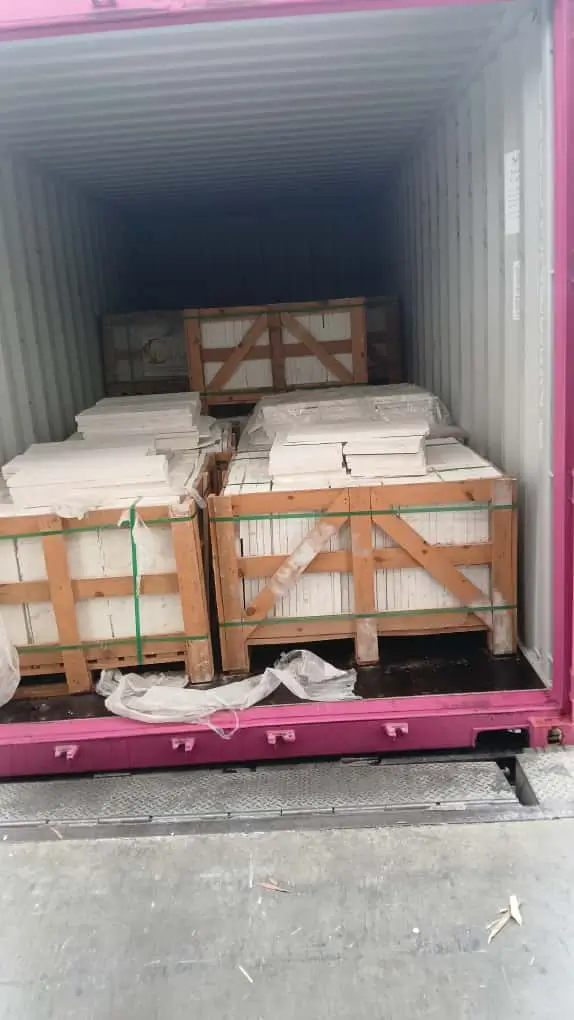
Volume calculation errors are one of the most consistent field problems in landscape stone projects. The conversion from square footage to tonnage depends on the stone’s specific gravity, the specified thickness, and the percentage of waste built into the layout — and all three variables differ by material type. Granite at 168 lbs/ft³ calculates differently than sandstone at 140 lbs/ft³ even at identical coverage areas and thicknesses.
A practical rule: add 10–15% waste factor for irregular flagstone layouts, 5–8% for square-cut dimensional stone, and 15–20% for dry-stack wall stone where you’ll be selecting pieces by shape and fit. Ordering short creates a serious problem when the first truck delivery has already been processed and the batch color won’t match a second pull from a different quarry run. Getting close on the initial order is far less painful than trying to match stone after the fact.
Every order is cut to its own specification, so the schedule is quoted with the order rather than promised from a shelf. That timeline difference matters significantly when you’re coordinating a landscape installation against a construction project’s punch-list schedule.
- Calculate tonnage using the stone’s specific gravity — granite, basalt, and limestone all differ meaningfully
- Build in 10–15% waste for irregular shapes; 5–8% for dimensional formats
- Dry-stack wall stone: 15–20% overage to allow piece selection by profile and fit
- Verify warehouse stock depth before committing installation dates — large projects can draw down available inventory quickly
- For time-sensitive projects, confirm truck scheduling lead time at the point of order, not at the point of need
Selecting the Right Types of Landscaping Rocks for Lasting Results
The types of landscaping rocks you specify shape every dimension of your project’s long-term performance — from structural stability and drainage behavior to UV resistance, maintenance requirements, and visual longevity. Getting that selection right requires moving past surface aesthetics and into the geological properties that govern how each material class actually behaves in your specific application context. Granite and basalt anchor the high-load, UV-stable end of the spectrum. Limestone and sandstone deliver versatility and natural character across a wide range of applications when properly sealed and matched to appropriate absorption and density classes. Slate and river rock fill specific decorative and drainage roles that no dense paving stone replaces as effectively.
Specification decisions — finish type, sealing schedule, absorption class, thickness, and application matching — are what separate a landscape that holds its character for two decades from one that looks tired in five. Natural stone for landscaping rewards specificity: the more precisely you match material properties to application demands, the better the outcome. As you extend your project planning into related hardscape elements, understanding budget structure across different stone applications adds another useful dimension — the flagstone patio cost breakdown covers material and installation pricing in useful detail for projects where flagstone is part of the broader scope. For projects requiring material matched to a specific use case, Citadel Stone offers a broad selection of natural landscaping rock in multiple sizes and finishes.