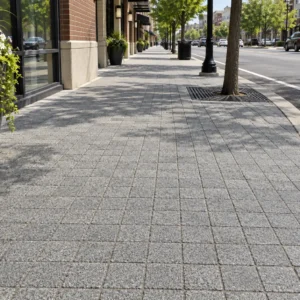
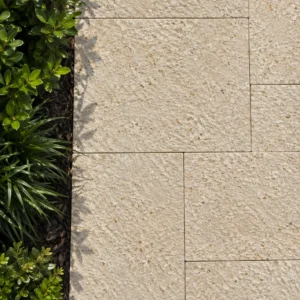
The decision between flagstone vs bluestone paving comes down to more than aesthetics — the structural and mineralogical differences between these two materials produce meaningfully different outcomes under identical loading conditions, thermal stress, and code-mandated base requirements. Most specifiers focus on color and price, but thickness variability and compressive strength are what separate a 10-year installation from a 25-year one. Getting that distinction right before your project moves into the base preparation phase saves you significant rework cost downstream.
What Flagstone and Bluestone Actually Are
The terminology here causes real confusion in the field. Flagstone is a descriptive term, not a mineralogical one — it refers to any flat-splitting sedimentary or metamorphic rock used for paving, which means the category includes sandstone, limestone, slate, quartzite, and even some schists. Bluestone, on the other hand, is a specific material: a dense, fine-grained sandstone or feldspathic sandstone that splits cleanly along bedding planes and produces a characteristic blue-grey surface. The two overlap because bluestone qualifies as a flagstone by general definition, but not all flagstone is bluestone.
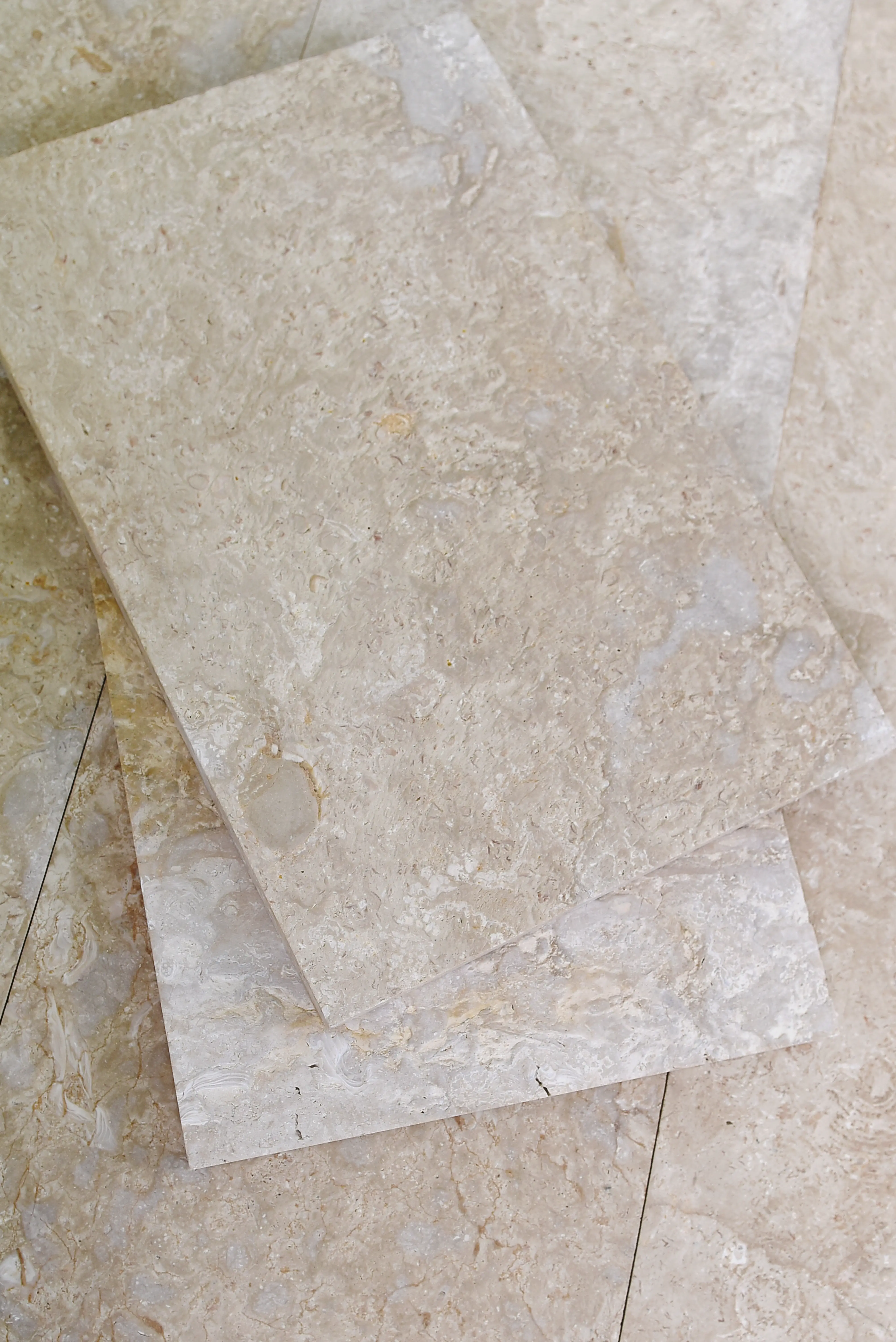
Natural stone flagstone as a product category encompasses a wider range of hardness, absorption rates, and thermal behavior than bluestone alone. You’ll find flagstone specimens with compressive strengths ranging from roughly 4,000 PSI in softer sandstones up to 18,000 PSI in quartzite — a four-fold variation that matters enormously when you’re writing a base specification or estimating long-term performance under vehicle loads. Bluestone typically sits in the 10,000–14,000 PSI range, which places it in the upper tier of flagstone options without reaching the extreme hardness of quartzite or granite.
Understanding this distinction shapes every downstream specification decision — surface finish selection, joint width, edge treatment, and base design all follow from the base material’s density and splitting behavior.
Compressive Strength and Load-Bearing Performance
Load-bearing capacity separates casual material selection from defensible specification. Bluestone’s dense grain structure gives it consistent compressive performance across individual pieces — you won’t find the variance you’d see in a softer sedimentary flagstone like a buff sandstone or a porous limestone flagging. This consistency matters when you’re specifying for foot traffic plus occasional vehicle access, or for any application where point loads from furniture legs or equipment pads could cause cracking in thinner material.
- Bluestone paving at 1.5-inch nominal thickness handles typical pedestrian loads with minimal flexural risk when set on a 4-inch compacted aggregate base
- Softer flagstone varieties — particularly certain sandstones — need 2-inch minimum thickness to achieve equivalent performance under the same conditions
- Quartzite flagstone exceeds bluestone in hardness and abrasion resistance but is significantly harder to cut and adjust on-site
- Limestone flagstone performs well in dry, stable climates but requires careful selection in freeze-thaw regions due to higher absorption rates in some specimens
- Slate flagstone offers layered splitting behavior that suits decorative applications but may delaminate under sustained heavy loading
According to USGS flagstone and dimension stone paving data, dimension stone paving materials vary considerably in structural performance by rock type, reinforcing the need to specify by material category rather than relying on the general term “flagstone” in your project documents.
Surface Finish, Texture, and Slip Resistance
The cleft surface — the naturally split face produced when stone separates along bedding planes — is where bluestone and most natural stone flagstone deliver their most important slip-resistance benefit. A clean cleft creates micro-relief across the surface that maintains traction in wet conditions without requiring abrasive grinding or applied coatings. For outdoor installations, the cleft finish is almost always the correct specification unless you have a specific aesthetic reason to hone the surface.
Bluestone’s cleft is particularly reliable because the stone’s tight grain structure produces a clean, even split with consistent surface texture from piece to piece. You’re not dealing with the soft spots or fossil inclusions that can create irregular cleft depth in some limestone flagstones, and you don’t face the mica-plane separation that occasionally produces a glazed micro-surface on certain slate flagstones. The result is a surface that reads visually as uniform while providing functional traction.
- Cleft bluestone typically achieves a coefficient of friction above 0.60 in wet conditions — well above the 0.42 minimum commonly referenced for outdoor pedestrian surfaces
- Honed bluestone drops to approximately 0.35–0.45 wet COF, which is marginal for uncovered outdoor use and unsuitable near water features
- Irregular flagstone in natural cleft finish maintains grip through variation in surface plane, not just texture depth
- Thermal finish (flame-texturing) applied to bluestone raises wet COF above 0.65 but removes the natural surface character that most designers specify for
For installations near pool surrounds or in high-moisture zones, thermal or sawn-and-flamed finishes on bluestone outperform raw cleft in sustained wet-foot conditions, but you’ll want to verify specific COF values against your project’s safety requirements.
Color Range and Aesthetic Consistency
Here’s where the two materials diverge most visibly in the specification conversation. Bluestone occupies a defined color territory: blue-grey, occasionally warm grey, with subtle brown or green mineral veining depending on quarry origin. That restraint is a specification asset — you can predict how a bluestone installation will read in a finished project with reasonable confidence, and it integrates cleanly with both contemporary and traditional architectural palettes.
Natural stone flagstone for landscaping spans a dramatically wider color spectrum. Warm buff and tan sandstones, rust-toned iron-bearing quartzites, cool grey limestones, deep charcoal slates, and terracotta-inflected sandstones all fall under the flagstone umbrella. This variety gives designers more creative range but introduces consistency challenges that don’t exist with bluestone. You need to manage color variation within a lot, between lots, and across replenishment orders if your project requires staged delivery.
- Bluestone color consistency is high within a single quarry shipment but can shift noticeably between production runs — always confirm the lot before committing to a large order
- Flagstone for landscaping in sandstone or quartzite may intensify in color when wet, creating a temporary two-tone appearance that some clients find surprising
- Sealing affects perceived color significantly — a wet-look sealer on bluestone reads almost black when wet, while a natural-finish sealer preserves the dry surface tone
- Limestone flagstone with fossil content provides decorative texture variation that no manufactured surface can replicate, but requires acceptance of inherent visual inconsistency
Your selection process should include reviewing full pallet samples in both dry and wetted states, ideally under the actual site lighting conditions, before finalizing a color specification.
Base Preparation, Code Requirements, and Structural Specifications
The base is where flagstone vs bluestone paving decisions become code-compliance decisions. Many jurisdictions apply structural requirements to paved surfaces that go beyond general contractor practice — frost line depth affects required base thickness, seismic zones affect edge restraint design, and load classifications determine whether a granular base suffices or whether a concrete slab is mandated.
Frost depth requirements in freeze-thaw regions typically demand aggregate base depths of 6–12 inches below finished grade to prevent heave from disrupting the stone surface. Bluestone handles freeze-thaw cycling well due to its low absorption rate — typically 1–3% by weight — which means minimal water infiltration into the stone body itself. Softer flagstone bluestone alternatives with absorption rates above 5% face greater risk from freeze-thaw spalling at the surface and should be specified at increased thickness (2 inches minimum) when base frost protection isn’t fully achievable. The flagstone sedimentary rock characteristics and paving use entry from Britannica provides useful context on how sedimentary splitting behavior influences freeze-thaw performance across flagstone types.
- IBC and local code requirements often mandate a minimum 4-inch compacted aggregate base (well-graded crusher run) for residential pedestrian flagstone applications
- Vehicular-rated installations require a minimum 6-inch aggregate base, often with a 3-inch sand or concrete mortar bed, depending on jurisdiction
- Edge restraints must be specified to resist lateral movement — this requirement appears in most municipal codes and is frequently under-detailed in residential landscape scopes
- Stone thickness minimums under building code guidance: 1.25 inches for pedestrian residential; 1.5–2 inches for commercial pedestrian; 2.5–3 inches for vehicular access
- Seismic zones may require mortar-set installation with reinforced concrete slab — dry-set flagstone is not always code-compliant in high seismic risk areas
Check local amendments to the International Building Code before finalizing your base specification — what’s acceptable in a low-frost, stable-soil environment may not pass inspection in a region with deep frost penetration or expansive clay subgrade. Getting the structural design reviewed against applicable code before installation protects you from costly remediation.
Installation Setting Methods and Joint Treatment
The method you choose for setting natural stone flagstone affects both long-term structural performance and maintenance requirements across any flagstone bluestone comparison. Dry-set (sand-bed) installations offer flexibility for future stone replacement and better manage differential movement from thermal expansion, but they require disciplined joint maintenance to prevent sand migration and weed intrusion. Mortar-set installations deliver a locked surface with predictable drainage geometry but concentrate stress at joints, which can cause cracking if the base moves at all.
Bluestone’s dimensional stability makes it one of the better performers in dry-set applications — its low thermal expansion coefficient means joints don’t need the aggressive spacing buffers required for some quartzites or dense granites. For flagstone in general, irregular-shaped natural pieces in dry-set require careful attention to individual stone leveling because the variation in natural cleft depth creates rocking risk if the sand bed isn’t shaped precisely to each piece’s underside profile. Skipping this step is the most common field error in irregular flagstone installations, and it’s what causes stone movement after the first season.
- Polymeric sand joint fill extends maintenance intervals significantly over standard dry-set sand — re-application every 3–5 years versus annual top-up
- Mortar joint width for bluestone should stay at 0.5–0.75 inches — tighter joints concentrate crack energy; wider joints look disproportionate at typical stone sizing
- For irregular flagstone in dry-set, hand-shaping the sand bed under each stone’s perimeter rather than screeding a flat bed reduces rocking by roughly 60% in practical terms
- Thermal expansion for bluestone runs approximately 5.0–6.0 × 10⁻⁶ per °F — account for this in joint sizing across long straight runs exceeding 15 linear feet
Mortar-set applications over concrete slabs require control joint alignment between the concrete structure and the stone surface — a detail that gets overlooked more often than it should. Position control joints in the mortar bed directly over the slab joints, or you’ll see random cracking migrate upward through the stone within the first year.
Maintenance, Sealing, and Long-Term Performance
Maintenance expectations separate realistic project outcomes from marketing promises. Bluestone is a relatively low-maintenance material — its density limits stain penetration, and a quality penetrating sealer applied every 2–3 years keeps the surface performing at specification. Natural stone flagstone in softer varieties requires more attention: sandstone and limestone flagging absorb organic staining more readily, particularly from fallen leaves, tannin-rich runoff, or irrigation water with high iron content.
The Natural Stone Institute’s guidance on natural stone paving durability standards confirms that sealing schedules should be calibrated to the specific stone’s absorption rate rather than applied on a universal calendar — this is a point worth communicating to clients who expect a single maintenance protocol across mixed-stone projects. You’ll find a significant performance gap between sealed and unsealed surfaces in high-traffic or high-exposure applications.
- Penetrating sealers (silane/siloxane chemistry) work with the stone’s pore structure rather than forming a surface film — they maintain natural surface texture and don’t build up over time
- Topical sealers on cleft stone trap moisture beneath the film if applied before the stone is fully cured, leading to peel failures within 12–18 months
- Bluestone should be allowed 28 days minimum after mortar-set installation before sealer application — residual alkalinity from Portland cement base materials can compromise sealer adhesion if applied earlier
- Iron-staining on buff sandstone flagstone from irrigation runoff requires oxalic acid treatment, not standard stone cleaners — it’s a mineral deposit, not an organic stain
- Efflorescence on mortar-set flagstone installations is a first-year phenomenon in most cases and resolves with appropriate acidic wash treatment
Set realistic expectations with your clients: a well-sealed, properly installed bluestone or natural stone flagstone surface maintained on a biennial schedule should deliver 20–30 years of functional performance. Deferred maintenance compresses that timeline significantly.
Ordering, Logistics, and Project Planning
Getting material to site on schedule requires planning that starts well before the installation crew arrives. Bluestone and flagstone are both sold by the square foot or by the ton depending on supplier — but the conversion between those units varies by stone thickness and density, so confirm which basis you’re ordering on before calculating quantities. A pallet of 1.5-inch bluestone at 150 SF covers considerably less area than the same pallet measured at 1.25-inch nominal.
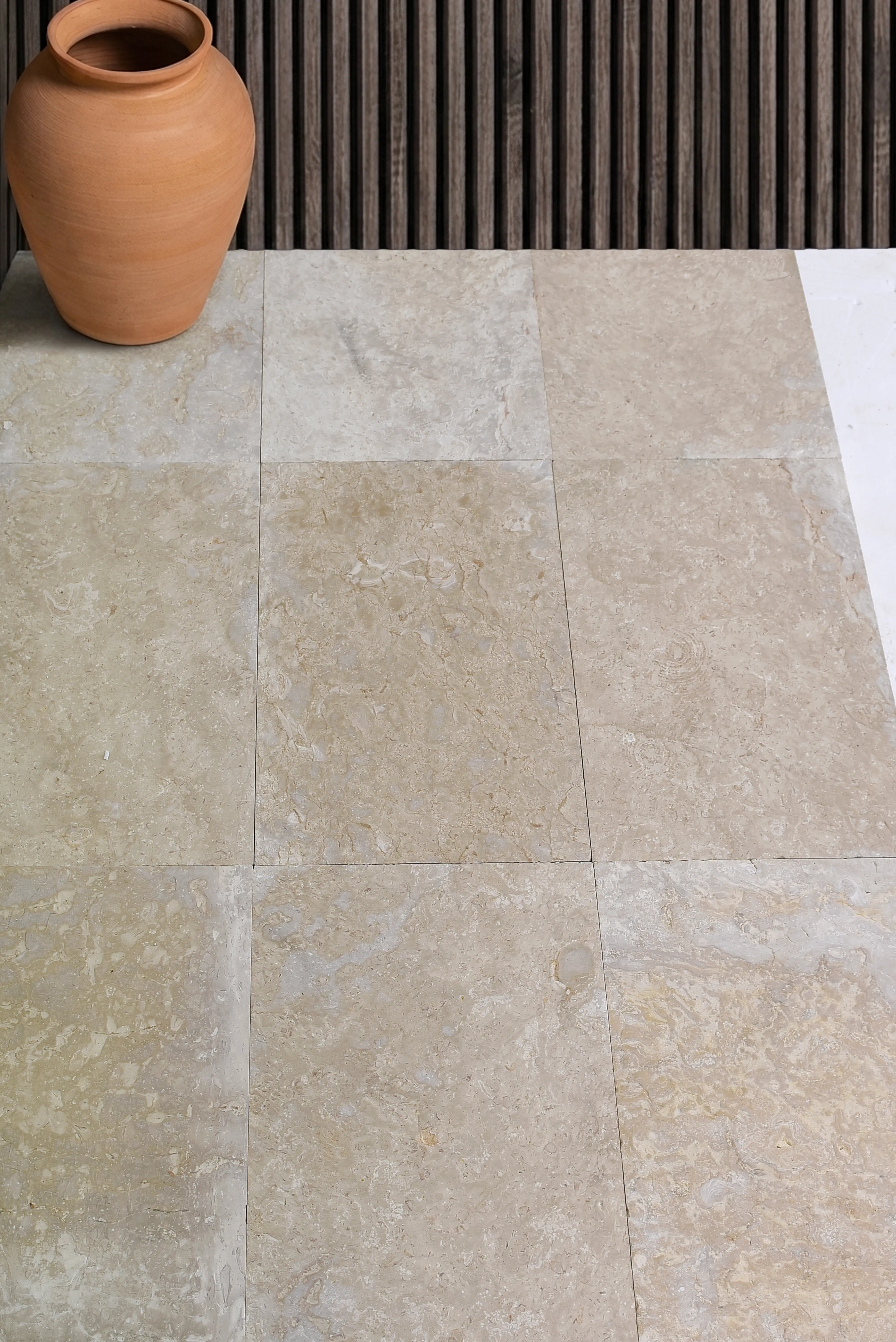
For projects sourcing natural flagstone from Citadel Stone, our warehouse maintains inventory across multiple stone types — including bluestone, quartzite flagstone, limestone flagging, and slate — so buyers can compare actual pieces for thickness, color range, and cleft finish quality rather than working from sample chips. This is a meaningful advantage on projects where color matching across multiple deliveries matters. Warehouse-to-truck lead times typically run 5–7 business days for stock material, though custom-sized cuts or specific thickness selections may extend that to 10–14 days depending on current production scheduling.
- Order 10–12% overage for irregular flagstone to account for cutting waste at borders and complex shape fitting — straight-cut bluestone needs only 5–7% overage
- Verify truck access to your site during the ordering process — flagstone pallets typically run 2,500–3,500 lbs, and a semi-truck delivering a full order needs 14-foot clearance height and a stable surface near the drop zone
- Confirm lot consistency in writing when ordering staged deliveries — quarry production varies between cuts, and a second delivery from a different lot can shift color noticeably
- Warehouse stock levels change with seasonal demand peaks — spring project seasons often deplete popular bluestone SKUs, so early ordering protects your installation timeline
At Citadel Stone, we recommend confirming your exact square footage with a 10% buffer calculated before placing an order — it’s much easier to return a half-pallet than to wait for a re-order that may come from a different production run.
Cost Comparison and Value Assessment
The price gap between flagstone and bluestone paving reflects real material differences, not just branding. Bluestone’s consistent quality, reliable splitting behavior, and predictable thickness range make it a premium-tier flagstone option — you’ll typically pay 15–30% more per square foot compared to a mid-range sandstone flagstone in similar dimensions. The premium narrows for high-grade quartzite flagstone, which can match or exceed bluestone pricing depending on source.
The value calculation shifts when you factor in installation labor. Irregular flagstone for landscaping requires considerably more on-site labor to fit, level, and dress than dimensional bluestone cut to consistent rectangles or squares. A complex irregular flagstone patio can add 30–50% to your labor cost compared to the same area in dimensional bluestone — which means the material price premium for bluestone often disappears when you’re evaluating total installed cost. The ASLA natural stone and flagstone outdoor paving guidance addresses this material-to-labor relationship in the context of sustainable hardscape design, confirming that material cost alone is a poor predictor of total project value.
- Dimensional bluestone in 12×24 or 18×18 cuts installs at roughly 60–70 SF per crew-day; irregular flagstone runs 35–50 SF per crew-day depending on complexity
- Waste factor differences between cut and irregular stone add up: a 1,000 SF irregular flagstone project wastes 100–120 SF of material; the same area in cut bluestone wastes 50–70 SF
- Longevity-adjusted value almost always favors higher-quality material — the replacement and reinstallation cost of a failed 12-year installation typically exceeds the incremental premium paid for bluestone upfront
Budget the full installed cost, not just material price, and you’ll make a defensible selection regardless of which material wins on that comparison for your specific project conditions.
Making the Right Call on Flagstone vs Bluestone Paving
Both bluestone and natural stone flagstone serve demanding outdoor paving applications well — the difference is in how precisely you need to control the outcome. Bluestone gives you a tighter specification: predictable color, consistent compressive performance, reliable cleft texture, and low absorption. Flagstone broadens your design palette and your material options, but it asks you to do more specification work upfront to ensure the specific stone you’re selecting actually delivers the structural and aesthetic performance your project requires. Neither choice is inherently superior — the right call depends on your project’s aesthetic brief, structural demands, applicable code requirements, and long-term maintenance commitment. As you plan your natural stone project, related applications can inform your broader hardscape decisions — rubble masonry techniques and applications explores how Citadel Stone materials perform in a complementary structural context. When deciding between flagstone and bluestone, Citadel Stone’s selection spans multiple stone types so buyers can evaluate thickness, color range, and cleft finish together.