

The decision between porcelain pool tile vs travertine comes down to a performance gap that most spec sheets won’t tell you — how each material actually behaves at the waterline under sustained thermal cycling and chemical exposure. Porcelain and travertine sit at opposite ends of the absorption spectrum: porcelain’s near-zero water absorption (typically below 0.5%) versus travertine’s open-pore calcium carbonate structure that absorbs between 3–7%. That single variable cascades through every downstream decision you’ll make, from adhesive selection to long-term maintenance budgeting.
What Each Material Actually Is
Travertine is a sedimentary limestone formed through calcium-rich spring deposits — the voids and veining you see aren’t defects, they’re geological authenticity. The material carries a natural warmth underfoot because its calcium carbonate structure doesn’t conduct heat the way dense stone does. Porcelain, by contrast, is manufactured under high pressure and fired at temperatures exceeding 2,200°F, producing a vitrified tile with predictable, controlled properties. Both have genuine strengths around water — but they earn those strengths through completely different mechanisms.
- Travertine density ranges from 140–165 lbs per cubic foot depending on fill treatment and quarry source
- Porcelain tiles for pool use typically achieve compressive strength above 10,000 PSI
- Travertine’s thermal expansion coefficient runs approximately 4.4 × 10⁻⁶ per °F — accommodating to joint movement
- Porcelain expands at roughly 3.0–4.0 × 10⁻⁶ per °F, requiring tighter control of joint spacing at installation
Slip Resistance: The Number That Matters Most
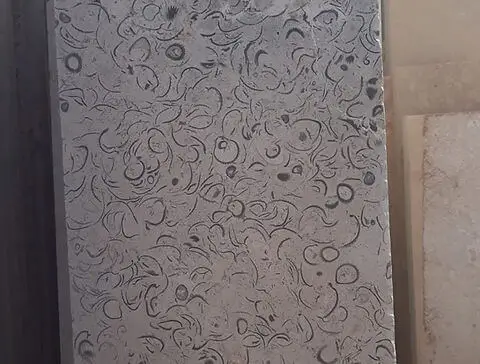
You’ll hear a lot of generalizations about which material is safer around pools — the honest answer is that finish determines slip resistance more than material type does. Tumbled or brushed travertine pool tile surfaces leave an open, textured face, and finish is what governs wet traction. The current wet benchmark is the ANSI A326.3 minimum wet DCOF of 0.42. See also PHTA pool deck safety standards for wet-area stone applications. Porcelain tiles with structured or grip-textured surfaces can hit the same numbers, but smooth-finish porcelain drops well below 0.42 DCOF wet — a dangerous zone for barefoot pool traffic.
The trap with polished or lappato-finish porcelain is that it looks premium in the showroom and photographs beautifully, but you’re essentially speccing a wet skating rink. A trafficked wet pool deck needs a textured surface — in practice that means structured or grip-textured porcelain, or naturally tumbled stone. Travertine in its unfilled, tumbled form practically self-selects into the safe range without requiring a specific finish upgrade.
Waterline Tile Performance Under Chemical Exposure
The waterline band is the harshest environment a pool tile faces — it cycles between wet and dry dozens of times daily, accumulates calcium scale, and gets hit with chlorine or salt concentrations that fluctuate with bather load and weather. Porcelain pool tile excels here precisely because its vitrified surface is chemically inert. Chlorine, muriatic acid cleaning, and salt don’t penetrate the surface, which means staining and etching simply don’t happen to a properly manufactured pool-grade porcelain.
Travertine pool tile at the waterline requires more deliberate management. The open pore structure that makes it beautiful also makes it reactive to calcium hypochlorite and pH swings. You’ll need a penetrating sealer applied before installation and reapplied every 18–24 months at the waterline specifically — not just the deck. Unfilled travertine at the waterline is a maintenance problem waiting to happen; the voids trap scale deposits and biological growth that becomes exponentially harder to clean over time.
- Specify filled-and-honed travertine for any waterline application — never unfilled
- Porcelain pool tile requires grout joint sealing but the tile face itself needs no treatment
- Salt water pools accelerate travertine degradation more than traditional chlorine — budget for annual waterline inspection
- Acid washing (routine in commercial pool maintenance) etches travertine surface — porcelain is unaffected
Subgrade Conditions and What They Mean for Your Choice
Here’s the installation variable that rarely makes it into comparison articles: your subgrade stability determines which material carries more long-term risk. Expansive clay soils — common across large portions of the country — create differential movement that fractures rigid tile installations. Porcelain’s low flex tolerance means that even minor subgrade heave translates directly into cracked tiles or failed grout joints. Travertine pool tile, being a slightly denser and more forgiving natural stone, handles minor subgrade movement somewhat better, but neither material tolerates active soil instability.
Sandy or well-draining subgrades present fewer problems for either material, but building over caliche-heavy ground introduces the opposite challenge: a near-highly resistant layer that traps water above it and creates hydrostatic pressure beneath the pool shell. That pressure transfers into the deck substrate and creates uplift forces that defeat even well-bonded tile systems. Before committing to either porcelain or travertine, your installation contractor needs to assess soil composition and specify a base preparation that accounts for the actual ground conditions — not a generic compacted aggregate spec.
- Minimum 4-inch compacted aggregate base for pool deck tile over stable soils
- Over expansive clay, specify a 6-inch stabilized base with geotextile separation layer
- Isolation membranes between the concrete shell and tile system protect against differential movement regardless of material choice
- Porcelain requires smaller grout joints (minimum 1/16 inch) — any subgrade movement telegraphs immediately through tight-jointed systems
Thermal Performance at the Pool Deck
Surface temperature under direct sun is where travertine’s physical chemistry delivers a genuine advantage. Its open pore structure and light-colored calcium carbonate base reflect solar radiation more effectively than most porcelain alternatives — ivory travertine pool decking consistently runs 15–22°F cooler underfoot than dark or medium-toned porcelain at peak afternoon sun. That’s not a marketing claim; it follows directly from the material’s albedo and lower thermal mass. For any pool project where barefoot comfort matters, this is a specification decision that affects every summer afternoon for the life of the installation.
Porcelain manufacturers have responded with wood-look and light-tone options that reduce heat absorption, but physics still applies — a dense vitrified surface retains heat longer than a porous calcium carbonate one. The Natural Stone Institute’s travertine performance documentation confirms that natural porosity plays a direct role in moderating surface temperatures in high-UV outdoor environments. Specifying for a pool that receives full afternoon sun in a hot, dry region means travertine’s thermal behavior isn’t just a comfort issue — it’s a safety consideration for children and elderly users.
For pool surrounds where you need both material performance and visual cohesion, Citadel Stone pool surround stone offers filled-and-honed ivory travertine pool decking that coordinates across deck, coping, and waterline applications — a detail that matters when you’re sourcing large-format quantities for a continuous installation.
Installation Complexity and Where Things Go Wrong
Porcelain pool tile installation has a narrower tolerance band than most installers expect. Large-format porcelain (anything above 24×24 inches) requires back-buttering with full mortar coverage — voids beneath the tile create stress concentration points that crack under point loads. You’ll also need an uncoupling membrane or movement accommodation joints every 8–10 feet, not the 15–20 feet that generic tile specs recommend. Porcelain’s dimensional precision is its strength in manufacturing and a liability in field conditions where substrates are never perfectly flat.
Travertine installation is more forgiving of minor substrate irregularities, but it introduces its own complexity: the material’s natural variation in thickness (typically ±1/8 inch per tile) requires more skilled setting to achieve a flat finished plane. Your installer needs to back-butter each piece individually and use a large-notch trowel for consistent coverage. The good news is that travertine’s heavier body gives you more working time with the mortar before the tile sets — a detail that speeds up large-format pool deck projects considerably.
- Use ANSI A118.4 polymer-modified mortar for both materials in wet pool environments
- Travertine requires pre-sealing the back face before setting to prevent moisture migration through the stone
- Porcelain grout joints should be epoxy-based at the waterline — standard cement grout stains under sustained chemical exposure
- Both materials require 24 hours minimum cure before flooding — 48 hours preferred in humid conditions
Cost and Long-Term Value Comparison
Material cost alone tells you very little about total project economics. Porcelain pool tile typically runs $4–$12 per square foot at the material level; quality travertine pool tile sits in a similar range at $5–$15 depending on fill treatment, finish, and size. The real cost divergence shows up in maintenance over a 10–20 year horizon. Porcelain requires essentially zero surface maintenance beyond cleaning. Travertine requires sealing every 18–24 months and periodic grout joint inspection — budget $0.75–$1.50 per square foot per sealing cycle for a realistic maintenance cost projection.
At Citadel Stone, we recommend clients run a 15-year cost model before choosing based on upfront price alone. A 500-square-foot pool deck specified in travertine carries approximately $375–$750 in recurring maintenance costs every two years — real money over a decade, but often justified by the material’s thermal performance and aesthetic longevity. Porcelain’s maintenance-free surface wins on total cost of ownership for clients who prioritize minimal upkeep, while travertine wins on sensory experience and barefoot comfort for those who use the pool heavily throughout warm months.
Sourcing and Lead-Time Realities
Project timelines are where the porcelain pool tile vs travertine decision becomes a logistics question, not just a design one. Standard porcelain pool tile in common formats (12×12, 6×6 mosaic sheets) is generally available from domestic warehouse stock with lead times of 1–2 weeks. Large-format or custom-color porcelain often has 6–10 week import lead times that can push pool opening dates if not accounted for in the project schedule. Your contractor needs to confirm warehouse availability before the pool shell is poured, not after.
Citadel Stone maintains nationwide warehouse inventory of ivory travertine pool decking in standard sizes, which typically compresses lead times to 1–2 weeks for most orders. Oversized slabs or specialty cuts require additional production time, so verifying stock quantities early in the design phase is worth a phone call. The detail that trips up even experienced project managers: travertine lots vary in veining and fill density between quarry pulls. Ordering all your tile from a single warehouse batch eliminates the lot-matching headaches that show up as visible color breaks mid-installation.
- Always order 10–15% overage for travertine to account for cuts, breakage, and future repairs from the same lot
- Porcelain dye-lots are more consistent but still warrant 8–10% overage for large installations
- Confirm truck access to your site before scheduling delivery — pool deck installations often involve tight access routes that affect delivery vehicle selection
- Request material samples and hold them against your coping and pool finish selections before committing to a full order
Making the Right Call for Your Pool Project
The porcelain pool tile vs travertine decision doesn’t have a universal right answer — it has a right answer for your specific project conditions, maintenance expectations, and how you plan to use the space. Porcelain wins when chemical resistance, zero maintenance, and dimensional precision are the priority. Travertine wins when thermal comfort, natural aesthetics, and sensory experience define success. The practical path forward is to evaluate your subgrade conditions, confirm your installer’s experience with the specified material, and lock in your material order before the project schedule demands it. As you develop your full pool environment specification, the comparison between ivory travertine and porcelain tile options covers additional technical depth on finish selection, absorption testing, and long-term performance data worth reviewing alongside this guide. Matching material to realistic site conditions — soil composition, sun exposure, chemical regime, and maintenance budget — is where durable installations actually begin. Buyers comparing waterline options will find that Citadel Stone travertine offers a naturally textured surface that porcelain replicas often approximate but rarely match.