

What the Numbers Reveal Before You Spec Either Stone
The travertine vs limestone decision gets made wrong far more often than it should — not because specifiers don’t know the materials, but because they compare finish aesthetics when they should be comparing porosity profiles and compressive strength data. Travertine sits at 3–12% open porosity depending on the quarry seam and the fill treatment applied, while dense limestone like Belgian Blue lands closer to 0.3–1.2%. That gap determines everything from sealer schedules to freeze-thaw performance, and it should anchor your specification before you ever look at a sample board.
Travertine’s calcium carbonate matrix forms through hot-spring mineral deposition, which creates those characteristic cross-cut voids. Limestone forms through marine sediment compression over geological time, producing a tighter, more homogenous crystal structure. Both stones share the same mineral family — you’re comparing two relatives with very different upbringings, and understanding that relationship explains most of the performance differences you’ll see on site.
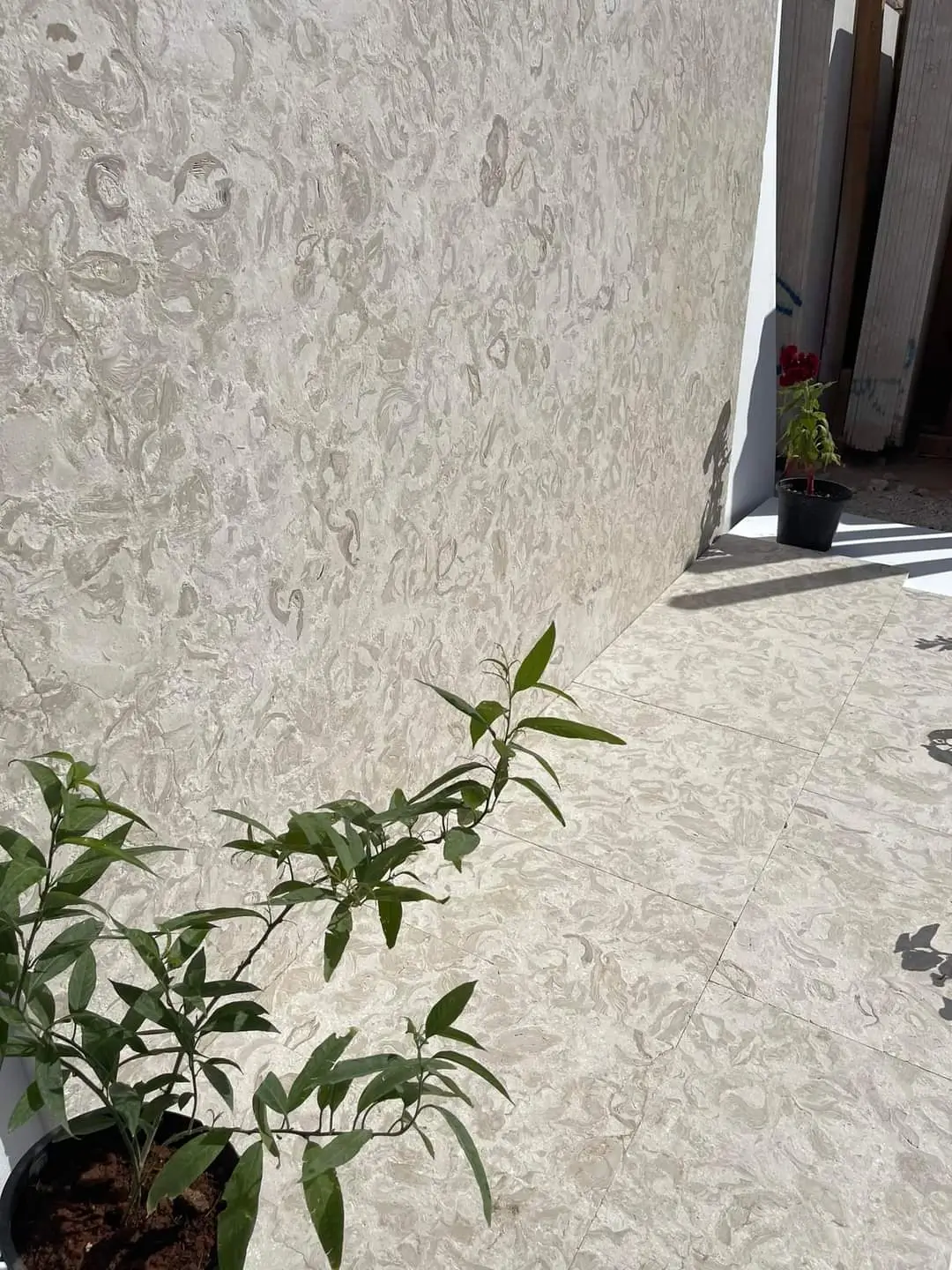
Compressive Strength and Structural Thresholds
Dense limestone typically delivers compressive strength in the 8,000–20,000 PSI range — figures that put it firmly ahead of most concrete pavers and well inside the threshold for heavy vehicular loading when you’re working with 3-inch nominal thickness. Travertine is softer, generally testing at 3,000–8,000 PSI depending on density classification and void fill. That’s not a disqualifier for travertine, but it does set your application boundary clearly.
For foot-traffic patios, pool decks, and residential walkways, travertine slabs perform reliably under normal pedestrian loading. Where the picture changes is beneath vehicle loads or where point loads concentrate — furniture legs, scaffold feet, heavy equipment staging. In those scenarios, you’ll want dense limestone carrying the structural work. Field installations consistently confirm this threshold difference, and misreading it is one of the more common reasons travertine surfaces crack prematurely at driveway aprons.
- Dense limestone handles vehicular traffic in 3-inch nominal thickness without base-related flexure cracking
- Travertine performs best in pedestrian applications where point loads stay below 400 lbs/sq ft
- Filled and honed travertine slabs show better impact resistance than unfilled cross-cut finishes
- For mixed-use areas, consider limestone in the traffic lanes and travertine in the adjacent seating zones
Porosity, Absorption, and Sealing Protocols
Porosity is where the travertine vs limestone comparison gets genuinely complicated. Travertine’s open-pore network absorbs moisture rapidly — test results from field specimens regularly show 24-hour water absorption of 4–8% by weight in unfilled material. Dense limestone absorbs under 1%. That difference reshapes your maintenance calendar and your sealer selection criteria.
For travertine, you’ll need a penetrating silane-siloxane sealer applied annually in high-traffic exterior zones, and biennially in covered or interior locations. The sealer migrates into the pore network and creates a hydrophobic barrier without altering the surface coefficient of friction — which matters a great deal for pool deck and wet-zone applications. Limestone, with its lower absorption rate, typically holds a penetrating sealer for 3–5 years under the same conditions, according to NSI limestone technical specifications. Factor that maintenance gap into your total cost-of-ownership conversation with clients.
- Travertine: annual exterior sealing, biennial interior sealing recommended
- Dense limestone: 3–5 year seal cycle with penetrating silane-siloxane product
- Unfilled travertine voids trap organic material — filled finishes dramatically reduce this problem outdoors
- Never use topical coatings on travertine in freeze-thaw regions — moisture trapped beneath will shear the stone surface
Thermal Performance and Surface Temperature
Surface temperature under direct sun is one of the most practical differentiators in this comparison, particularly for pool decks and uncovered patios. Travertine’s open pore structure and lighter calcium carbonate base — common ivory and walnut tones — reflect a meaningful portion of solar radiation rather than absorbing it. Field surface temperature readings on light travertine slabs in full sun typically come in 15–22°F cooler than dark granite and 8–12°F cooler than comparable limestone in the mid-grey range.
Darker limestone varieties — charcoal, grey, and black finishes — absorb considerably more solar energy and can reach surface temperatures that are uncomfortable for barefoot use during peak afternoon hours. If you’re specifying for a pool surround or an outdoor dining terrace without shade structures, the color and finish of your limestone selection matters as much as the material choice itself. Lighter limestone finishes close the temperature gap with travertine substantially, so don’t treat “limestone = hot” as a blanket rule — it’s color-dependent.
Slip Resistance, Finish Options, and Wet Zones
The travertine vs limestone comparison in wet zones starts with finish selection, not material selection. Both stones can be specified safely for wet applications, but the finish determines your DCOF (Dynamic Coefficient of Friction) outcome far more than the substrate. ANSI A326.3 requires a minimum DCOF of 0.42 for wet areas — tumbled, brushed, and sandblasted finishes on both materials reliably exceed this threshold, while polished finishes on either stone typically fall below it.
Travertine’s natural surface texture in tumbled or brushed form gives it an inherent grip advantage in pool-deck applications — the micro-relief created by voids and fill interfaces creates additional friction surface that dense polished limestone doesn’t replicate. For indoor wet zones like shower floors and spa surrounds, specify either material in a honed or brushed finish with grout joint widths of at least 3/16 inch to provide drainage channels. Pool coping requires a specific consideration: travertine’s lighter thermal mass and comfortable barefoot temperature make it a favored specification for ASTM C1527 travertine dimension stone pool coping applications across the industry.
- Tumbled travertine exceeds 0.42 DCOF in wet conditions — appropriate for pool surround use
- Honed limestone at 0.55–0.65 DCOF provides excellent grip for interior wet zones
- Polished finishes on either stone are restricted to dry interior applications
- Brushed limestone achieves similar wet-zone performance to tumbled travertine when finish depth is consistent
Subgrade Conditions and Base Preparation
Both travertine slabs and limestone perform their best when the subgrade beneath them is genuinely stable — and here’s where the material choice intersects with site conditions in ways most project conversations skip entirely. Expansive clay soils present a specific challenge: seasonal moisture fluctuation causes clay to swell and contract, creating differential movement that cracks stone far more readily than vehicle loads do. Dense limestone, with its lower flexural strength compared to igneous stone, needs a compacted aggregate base of at least 6 inches over clay subgrades — 8 inches if you’re seeing PI (plasticity index) values above 30.
Travertine slabs are more susceptible to differential movement damage than dense limestone because their internal void structure creates inherent stress concentration points. Over expansive clay or caliche-bearing soils, travertine installations demand additional base thickness and more frequent expansion joint placement — every 10 feet rather than the standard 15-foot interval. Sandy or rocky subgrades offer better natural drainage and stability, which allows you to reduce base depth to 4 inches compacted aggregate for foot-traffic applications. Always verify that your subgrade drainage gradient achieves at least 1% fall away from structures — travertine over a saturated base will fail regardless of surface treatment quality.
- Expansive clay: minimum 8-inch compacted aggregate base for both travertine and limestone
- Caliche or rocky subgrades: 4-inch base acceptable for pedestrian travertine; 6-inch for limestone vehicular loads
- Sandy soils: excellent drainage but check for compaction — loose sandy subgrades need geotextile stabilization beneath the aggregate base
- Travertine expansion joints at 10-foot intervals over unstable soils versus 15-foot standard on stable bases
- Always compact aggregate base to 95% Proctor density before stone placement — surface-level flatness depends on what’s underneath
Sourcing your travertine slabs and slab limestone from a supplier with pre-qualified thickness tolerance documentation makes subgrade planning easier — you’re working with consistent material, not variable field-quarry thickness. When you’re ordering limestone and travertine from Citadel Stone, the warehouse team can confirm thickness tolerances from the current stock batch before your base depth calculations are finalized.
Interior Applications and Stone Selection for Floors
Interior floor specifications for travertine and limestone diverge at a key point: limestone marble-adjacent aesthetics versus travertine’s distinctive vein-and-void character. Dense limestone honed to a matte or light-reflective finish reads as quiet and architectural — it’s a stone that recedes and lets the room’s other elements lead. Travertine in cross-cut orientation delivers more movement and warmth, making it the more expressive of the two for residential interiors.
For high-traffic interior floors, specify limestone at a minimum 3/8-inch thickness in 12×24 or larger formats, bonded with a large-format tile mortar meeting ANSI A118.15 specifications. Travertine interiors benefit from filled and honed finishes — unfilled travertine collects fine debris in voids and requires more frequent grout-joint maintenance. Radiant-heat installations work with both materials, but you’ll need to account for travertine’s slightly higher thermal expansion coefficient. According to USGS limestone and travertine formation data, both materials share calcium carbonate mineralogy, which means their thermal expansion coefficients are close but travertine’s void structure creates localized stress during heating cycles that requires flexible adhesive mortars (S2 grade per EN 12002 or equivalent).
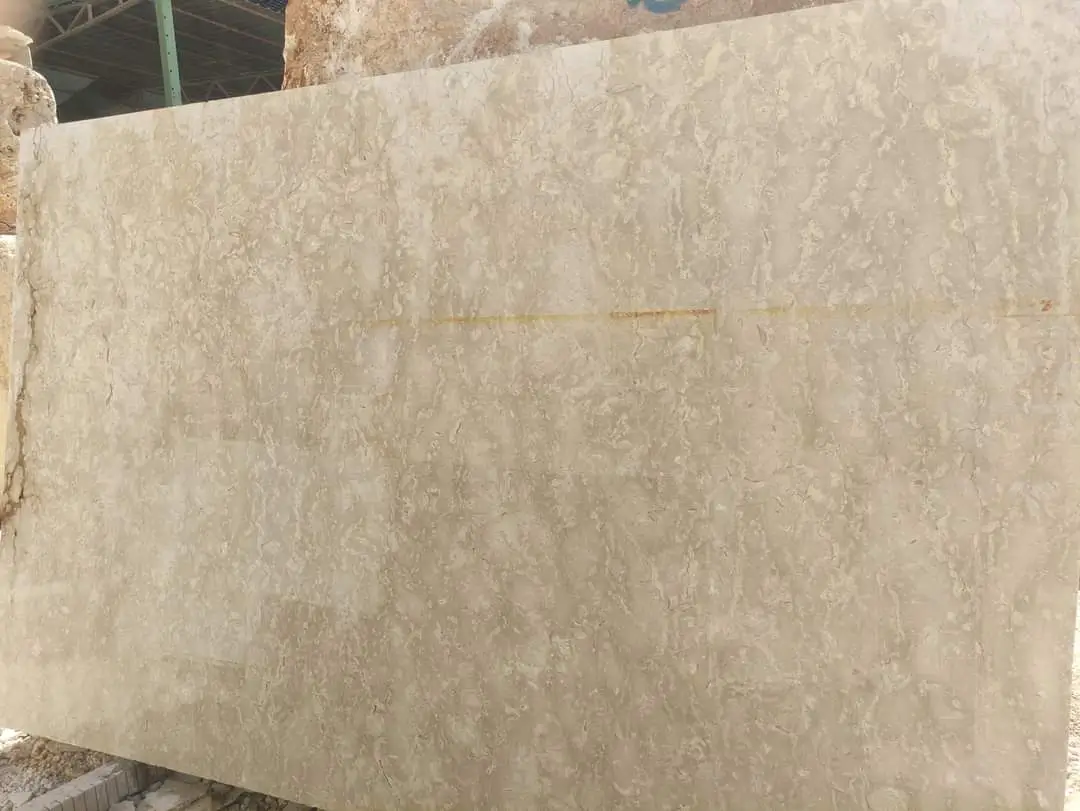
Supply, Lead Times, and Project Planning
One practical consideration that rarely makes it into the material comparison conversation is supply availability and lead time variance between travertine and limestone. Premium travertine slabs with consistent fill, calibrated thickness, and matched lot color come predominantly from Mediterranean and South American quarries — import lead times from those sources run 6–10 weeks from confirmed order to delivery. Dense limestone, depending on the variety, has broader domestic and North American sourcing options that compress that timeline.
Citadel Stone maintains warehouse inventory of both travertine and limestone nationally, which typically reduces your lead time to 1–2 weeks for in-stock material rather than waiting on an import cycle. Verify warehouse stock levels with your material quantities early in the design development phase — large-format travertine slabs in matched lots are the fastest-moving inventory items and can exhaust a batch before your project reaches procurement. Your truck delivery scheduling should account for large-format slab weight — a typical pallet of 2-inch travertine slabs in the 24×24 format runs 2,200–2,600 lbs, and your site access needs to accommodate a standard flatbed truck with appropriate unloading equipment.
- Import travertine slab lead times: 6–10 weeks from Mediterranean or South American quarries
- Warehouse-stocked travertine and limestone: 1–2 week typical lead time
- Match your lot numbers at time of order — color variation between different quarry pulls is significant in travertine
- Order 10–12% overage for travertine slab projects to account for cut loss and future replacement stock
- Confirm truck access dimensions and unloading capacity at the delivery site before scheduling
Cost Comparison and Long-Term Value
The travertine vs limestone cost comparison requires you to look past the per-square-foot material price and account for installation labor, sealing schedule, and replacement frequency. Entry-level travertine typically prices 10–20% below comparable limestone in 18×18 and 24×24 formats, but the annual sealing requirement and higher maintenance frequency in outdoor installations offset that upfront advantage over a 10-year window.
Dense limestone, particularly in larger format sizes, commands a premium on material cost but rewards you with lower maintenance frequency, wider application scope, and structural performance that travertine can’t match in load-bearing contexts. For interior residential applications where the aesthetics of travertine are the primary draw, the maintenance tradeoff is manageable. For commercial exterior applications or any installation where the stone must carry structural load, the cost-performance math typically favors limestone across the project lifecycle. The Natural Stone Institute’s technical library on natural stone variety performance provides comparative durability data that supports long-term specification decisions when you need third-party documentation for a project submittal.
Parting Guidance for Travertine vs Limestone Specifications
Deciding between travertine and limestone is ultimately a specification exercise, not an aesthetic preference debate — and the right answer depends on your application loading, subgrade conditions, maintenance commitment, and installation environment. Travertine delivers warmth, thermal comfort underfoot, and genuine character in pedestrian-scale exterior and interior applications. Dense limestone delivers structural performance, sealing longevity, and application range that extends into vehicular and high-traffic commercial contexts where travertine reaches its limits.
Your specification becomes reliable when you’ve confirmed base stability, selected the correct finish for the wet or dry zone, and matched your sealing schedule to the material’s porosity profile. Understanding how these stones originate from the ground up informs better material decisions — exploring how natural stone moves from quarry to slab gives useful context for why porosity and density vary between travertine and limestone even within the same calcium carbonate family. At Citadel Stone, we work through these specification questions with project teams regularly — the right stone for your project exists in this comparison once you’ve matched the material’s properties to what the installation actually demands. For projects where climate performance matters, Citadel Stone’s selection of travertine and limestone offers material options suited to a range of outdoor and interior applications.