

Granite slab pricing breaks in ways most buyers don’t anticipate — and the break point is almost never the stone itself. The variables that actually drive cost sit upstream of the finished slab: quarry tier, block yield, gang-saw versus wire-saw processing, and the thickness tolerance your fabricator is willing to accept. Once you understand how those factors compound, a quote that looks expensive often reveals itself as the right number, and a quote that looks cheap starts to look like a liability.
What Drives Granite Slab Pricing
Granite slab pricing doesn’t follow a simple cost-per-square-foot formula. The price you see on a quote reflects a chain of decisions made long before the slab reached a warehouse shelf — quarry location, block quality grading, processing method, and surface finish all stack on top of each other. Understanding where each cost enters the chain gives you the leverage to push back on inflated quotes or recognize fair ones.
- Quarry tier classification — premium, commercial, and builder-grade blocks yield different slab sizes, vein consistency, and surface defect rates, with premium commanding a 25–45% price premium over commercial grade
- Block yield efficiency — a high-void block with internal fissures forces fabricators to cut around defects, shrinking usable slab area and driving cost per net square foot higher
- Processing method — gang-saw cutting produces uniform 2 cm or 3 cm slabs at lower per-unit cost; wire-saw cutting handles complex patterns and oversized blocks but adds 12–18% to processing cost
- Surface finish — a raw sawn finish is the baseline; honed adds one pass, polished adds two, and leathered or brushed finishes require additional mechanical processing that adds cost at each step
- Slab dimensions — jumbo slabs (120″ × 60″ and above) command higher per-slab pricing because they require oversized processing equipment and generate more handling risk
The detail most buyers miss is that surface finish pricing varies by stone density. A tight, low-porosity granite like Absolute Black achieves a mirror polish faster than a coarser-grained material like Colonial White, which means polishing labor costs differ even within the same product category. Your fabricator’s labor rate for finish work often varies by material, not just by finish type.
Thickness Specifications and Their Cost Impact
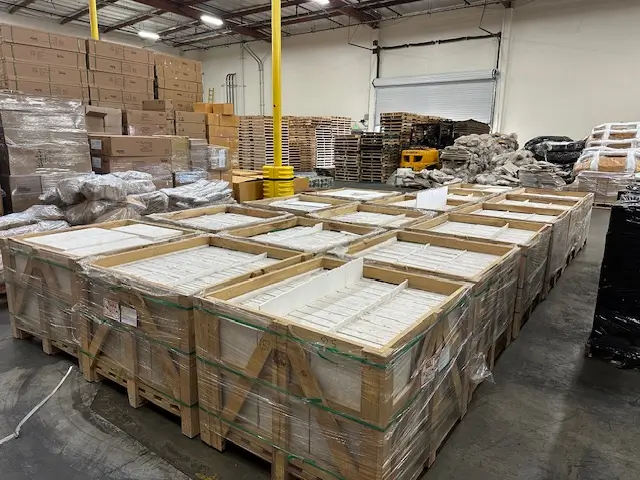
Your specification choice between 2 cm and 3 cm slabs isn’t just a structural decision — it directly affects your granite slab pricing at the procurement stage. The 3 cm slab requires roughly 50% more raw stone volume per finished piece, and because quarry extraction costs are largely fixed per block, that volume increase translates almost linearly to price. The trade-off is that 3 cm eliminates the need for a plywood substrate in most countertop applications, which shifts cost from the fabrication phase back to raw material procurement.
- 2 cm slabs: lower material cost, require substrate support for countertop spans over 18″, preferred for vertical cladding and lightweight applications
- 3 cm slabs: higher material cost, self-supporting across standard countertop spans, preferred for kitchen islands, commercial counters, and exterior coping applications
- Thickness tolerance matters — a specification calling for “3 cm” without a tolerance range can produce slabs measuring anywhere from 28 mm to 32 mm, creating visible height variation at seams
- ASTM C615 specifies dimensional tolerances for granite dimension stone; referencing this standard in your specification eliminates ambiguity at the quote stage
According to ASTM C615 granite dimension stone quality standards, dimensional tolerance requirements establish the baseline for acceptable thickness variation in fabricated granite. Specifying compliance with C615 in your purchase order gives you measurable grounds to reject non-conforming material — something a vague “3 cm granite slab” specification doesn’t provide. That protection matters most on large commercial orders where thickness variation compounds across hundreds of running feet of seams.
Granite Grades and Price Tiers Explained
The industry uses a loose grading system — Level 1 through Level 4 or 5 depending on the distributor — that correlates with rarity of pattern, origin country, and movement complexity. What the tier labels don’t tell you is why a slab sits at a given level, and that gap is where pricing errors happen.
- Level 1 (builder grade): uniform grain, common colors (Santa Cecilia, Venetian Gold), high-volume quarry production, lowest pricing — typically $40–$60 per square foot installed
- Level 2 (mid-range): more visual movement, moderate quarry output, colors like Giallo Ornamental or Baltic Brown — typically $55–$80 per square foot installed
- Level 3 (premium): distinctive veining or rare colorways, lower quarry output, longer lead times — typically $75–$110 per square foot installed
- Level 4–5 (exotic): highly figured material, single-origin slabs, complex movement patterns — pricing often exceeds $150 per square foot installed and depends heavily on current inventory
The grading level assigned by one distributor doesn’t carry over to another. A slab sold as Level 2 at one yard might be graded Level 3 at the next because the classification reflects the distributor’s internal pricing logic, not an industry-wide standard. Your comparison shopping should focus on the stone’s origin quarry, thickness, and finish specification — not the level number assigned by the seller. The Natural Stone Institute granite durability and application specifications provide a material-based technical reference that cuts through distributor-specific grading language and grounds your evaluation in actual stone properties.
Origin Country and Supply Chain Costs
Granite slab pricing responds directly to origin country because quarrying costs, export logistics, and import duties all feed into the landed price before any domestic processing occurs. Brazil and India supply the majority of commercial-grade slabs to the North American market, and their pricing reflects high-volume quarry operations with established container shipping networks. European origins — particularly Norway, Finland, and Portugal — command significantly higher pricing because quarry output is lower and container costs per cubic meter are higher on those shipping routes.
- Brazilian granite (Bianco Romano, Monte Christo, Via Lattea): high quarry output, competitive pricing, strong consistency across lots — a reliable default for commercial volume projects
- Indian granite (Black Galaxy, Tan Brown, Himalayan White): dominant in low-to-mid price tiers, wide color range, but quality consistency varies more between quarry operators than Brazilian material
- Norwegian/Finnish granite (Labrador Antique, Baltic Brown): premium pricing driven by quarry scale and shipping distance; the visual distinctiveness justifies the premium on feature applications
- Chinese granite: price-competitive but specification compliance varies widely — referencing ASTM C615 in purchase orders becomes especially important with this origin
Tariff exposure is a real pricing variable that doesn’t appear on most quotes. Import duties on granite from certain origins fluctuate with trade policy, and a price locked in at quote stage can shift between order placement and container arrival if tariff schedules change. Ask your supplier explicitly whether the quoted price is tariff-inclusive or tariff-subject — the difference can be 8–15% of material cost on a significant order.
How Landscape Design Drives Granite Selection and Pricing
The landscape design context around a granite installation shapes material selection in ways that directly affect your cost per square foot. A modern minimalist design with clean planes and monochromatic planting palettes tends to specify large-format, low-movement granite — material where slab uniformity matters more than visual drama. That specification typically lands in the Level 1–2 range and keeps procurement costs predictable. A traditional colonial aesthetic with formal garden geometry and warm-toned hardscape elements usually demands warmer granite colorways with moderate movement, pulling from Level 2–3 material where per-square-foot costs step up noticeably.
Designs influenced by arid, dry-climate planting schemes present a specific pricing dynamic worth understanding. Those schemes tend to specify granites with warm ochre, buff, or reddish tones that complement arid planting palettes — material in the Giallo or Venetian family — which happens to align well with high-volume Brazilian quarry output and keeps pricing competitive. Contrast that with tropical or lush landscape schemes that call for darker, more dramatic granite to anchor planting beds; those specifications often pull toward Black Galaxy or Absolute Black, which carry a premium driven by demand more than quarry scarcity.
- Minimalist modern: specify low-movement, uniform-grain granite in large format — cost-efficient because high quarry output meets the specification easily
- Traditional/colonial: warm-toned granites with moderate movement — mid-tier pricing, reliable availability from Brazilian and Indian origins
- Arid and xeriscaping schemes: buff, ochre, and warm grey tones complement dry planting palettes — good alignment with commercially priced material
- Tropical or lush garden settings: darker granites as anchor elements — expect Level 3–4 pricing for the most visually distinctive options
The practical implication for your project budget is that landscape design intent isn’t a soft aesthetic preference — it’s a specification driver with measurable cost consequences. Locking the design direction before requesting granite slab quotes lets you provide suppliers with a genuine specification rather than a loose request for “dark granite,” which produces quotes across a $60 price range for the same application.
Common Granite Slab Pricing Errors and How to Prevent Them
These are the mistakes that inflate project costs or create budget shortfalls after material is already on a truck heading to your site. Field experience confirms these errors appear consistently across project types and order volumes.
- Quoting square footage without specifying thickness tolerance — receives mixed quotes that aren’t comparable; always specify nominal thickness and ASTM C615 compliance
- Ignoring wastage in slab layout — natural stone slab layouts for kitchens and bathrooms typically require 15–20% additional material to account for cutouts, seams, and defect avoidance; under-ordering on initial purchase forces a second delivery that rarely matches the first lot
- Comparing installed price to material-only price — a $65/sq ft installed quote and a $38/sq ft material quote aren’t competing figures; fabrication, delivery, and installation labor are separate cost lines that need separate evaluation
- Accepting a quote without warehouse stock confirmation — a price that can’t be backed by available inventory is a placeholder, not a commitment; verify warehouse stock levels match your required quantity before signing anything
- Failing to account for truck delivery constraints — oversized granite slabs require flatbed truck delivery with fork access or crane offload capability; if your site doesn’t support those access requirements, you’ll pay for a specialized delivery that wasn’t in the original quote
- Buying to a level tier without reviewing the actual slab — level designations vary by distributor; always review the specific slabs you’re buying against each other for lot consistency before purchase
The wastage calculation error is the one that creates the most painful mid-project surprises. A 300-square-foot kitchen installation sounds like a clean order for 300 square feet, but once you account for an island with a waterfall edge, a full-height backsplash, and a window cutout, your net material requirement lands closer to 360–375 square feet. Ordering the difference as a second shipment introduces lot variation risk that no supplier can fully guarantee away — quarry blocks cut at different times produce subtly different tones even in the same material.
Reading Granite Slab Quotes Accurately
A well-structured granite slab quote contains specific line items that let you evaluate it against competing bids on equal terms. Vague quotes are expensive quotes — they leave room for cost escalation that only surfaces after you’ve committed. Here’s what your quote must include before you treat it as a real bid.
- Material origin and quarry designation — “Brazilian granite” is not sufficient; the material name or quarry family should appear
- Thickness specification with tolerance — “3 cm per ASTM C615” is defensible; “approximately 3 cm” is not
- Finish specification — polished, honed, leathered, or brushed, and which faces receive finish treatment
- Edge profile specification if fabrication is included — edge profiles range from a simple eased edge (low cost) to a full bullnose or ogee (adds $12–$25 per linear foot)
- Delivery terms — whether the price includes truck delivery to your site and what offload requirements apply
- Lead time from warehouse — distinguishes stocked material from material that requires a container import cycle
Once you have quotes with those line items from multiple suppliers, you’re comparing actual specifications rather than different assumptions dressed up in similar numbers. The Citadel Stone quoting process is structured around line-item transparency so your project team can evaluate bids without having to chase suppliers for clarifying information after the fact.
Delivery Logistics and Their Cost Impact on Granite Slab Projects
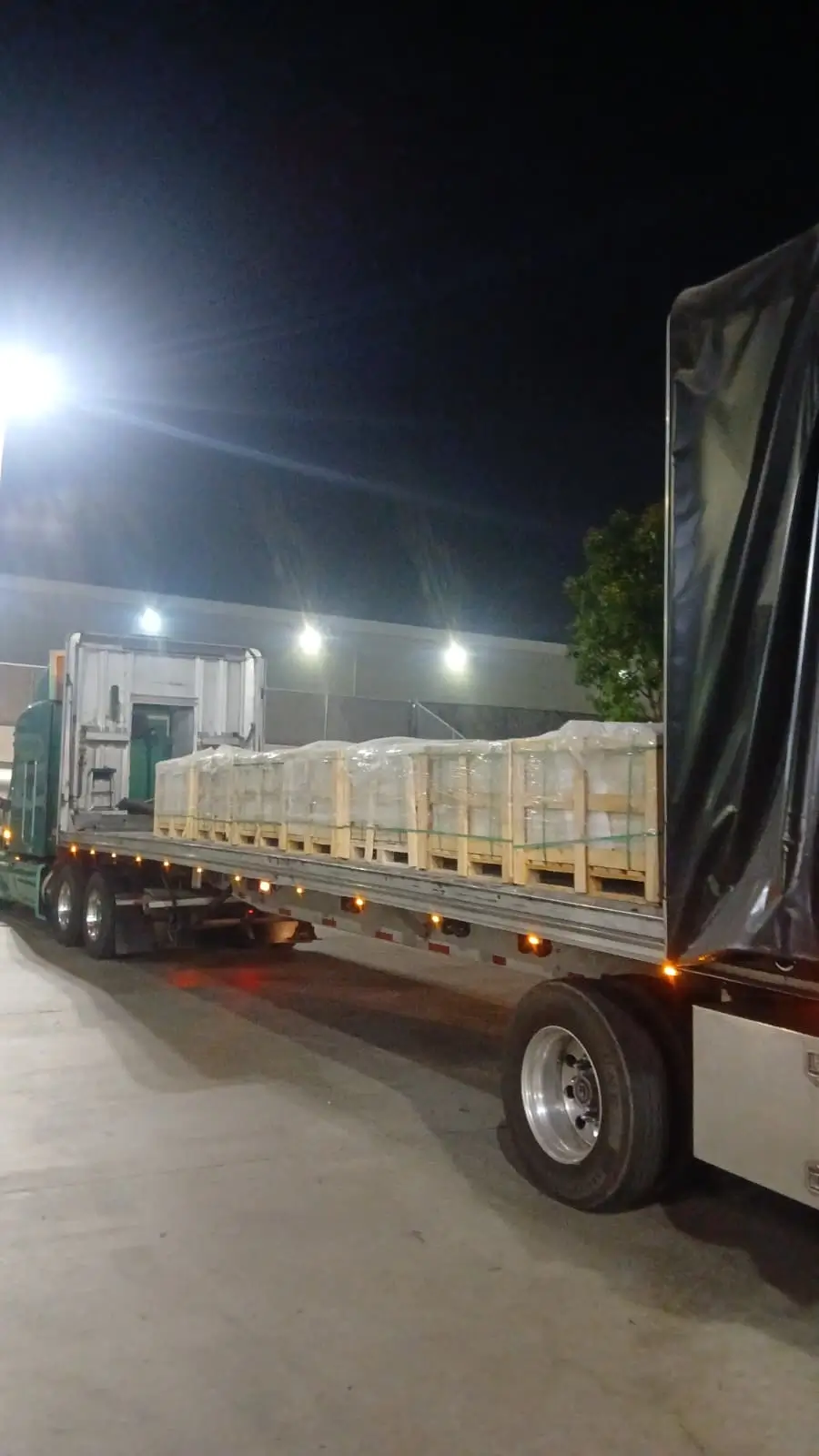
Delivery logistics add cost to granite slab procurement in ways that don’t appear in the material price. A full granite slab — typically 110″ × 60″ at 3 cm thickness — weighs between 180 and 230 pounds depending on granite density. Multiply that by a commercial order of 20–30 slabs and you’re moving 4,000–7,000 pounds of stone on a truck that requires either a loading dock, fork access, or crane offload at the delivery point. If your site doesn’t have that infrastructure, specialized delivery adds a line item to your project cost that should have been in the original budget.
Warehouse proximity matters for lead time more than most buyers realize. Citadel Stone maintains national warehouse inventory, which compresses lead times to 1–2 weeks on stocked material — a meaningful advantage compared to the 8–12 week cycle typical of projects that trigger a direct container import. That lead-time difference has real budget implications when project schedules are tight, because schedule delays generate carrying costs that dwarf the savings from chasing the cheapest per-square-foot quote. According to USGS granite production and construction use statistics, granite accounts for a substantial and consistent share of domestic dimension stone consumption, which means national distribution infrastructure for the material is well-established and predictable when you source through channels with genuine warehouse depth.
- Verify truck access requirements for your site before confirming delivery — flatbed versus enclosed trailer, fork clearance height, and crane pad proximity all affect delivery cost
- Confirm warehouse stock quantity against your order volume — a supplier with three slabs in stock can’t support a 30-slab order without triggering an import cycle
- Request delivery with A-frame crating for slabs exceeding 90″ in any dimension — unframed slab delivery on long-haul truck routes carries meaningful breakage risk
- Build a 5–7 day buffer into your project schedule between confirmed delivery and scheduled fabrication — truck delays compound when granite slabs are involved
Getting Granite Slab Pricing Right for Your Project
The cost errors that hurt projects most aren’t the ones made at the granite yard — they’re the ones made in the specification document before a quote is ever requested. Vague specifications produce incomparable quotes, incomparable quotes produce budget uncertainty, and budget uncertainty produces cost overruns after commitment. Tightening your specification to include origin, thickness tolerance, finish, edge profile, and delivery terms transforms a market inquiry into a genuine procurement process.
Granite slab pricing also benefits from understanding how the material performs at a molecular level. Granite’s crystalline interlocking structure — feldspar, quartz, and mica bonded during plutonic cooling — produces compressive strength values that regularly exceed 19,000 PSI and water absorption rates below 0.4%, which explains both its durability and its resistance to staining when properly sealed. These aren’t marketing claims; they’re documented in the physical property testing protocols that underpin reputable supply. Understanding these performance characteristics lets you evaluate whether a quoted material actually meets your application requirements, not just your aesthetic ones.
As you finalize your stone specifications, related natural stone elements across your project may benefit from the same sourcing rigor. Natural stone supplier selection involves consistent criteria regardless of the specific material — quality documentation, inventory transparency, and logistics capability matter whether you’re sourcing granite slabs or other hardscape materials. For a related look at how those supplier evaluation criteria apply in a different natural stone context, choosing a river rock supplier covers the same discipline applied to a different product category. Granite slabs from Citadel Stone are cut to standard thicknesses that let buyers compare quotes on a like-for-like basis.
Related reading: granite cobblestone suppliers · granite cut to size suppliers · granite curbing suppliers.