

Stone supplier red flags don’t announce themselves — they show up later, on your project site, as cracked units, short deliveries, or material that photographs well but fails specification review. The suppliers most likely to create these problems tend to share a predictable set of behaviors before the first pallet ever leaves their yard. Recognizing those patterns early is what separates projects that finish on schedule from ones that spend two months chasing replacement stone.
What Vague Sourcing Actually Signals
Suppliers who can’t tell you where their stone comes from are telling you something important — they either don’t know, or they don’t want you to know. Either answer creates risk. Quarry of origin matters because the same commercial name (“beige limestone” or “charcoal bluestone”) can describe material pulled from a dozen different geological formations, each with different density, porosity, and freeze-thaw resistance profiles. You’re not just buying a color; you’re buying a performance profile tied to a specific formation.
Ask any prospective stone paving supplier to name the quarry and country of origin for the material you’re specifying. A credible supplier answers without hesitation. Watch for responses like “it’s sourced from various premium quarries” — that phrasing almost always signals either spot-buying from opportunistic importers or blended stock where consistency is impossible to guarantee. Both situations create field problems, particularly when you’re ordering in phases and need the second delivery to match the first.
- Suppliers unwilling to provide quarry documentation are removing your ability to verify material claims independently
- Blended stock from multiple origins creates color and density variation that becomes visible after installation — especially under wet conditions
- Spot-buying practices mean the product available today may not exist in six weeks when your second phase requires it
- At Citadel Stone, we document quarry origin for every product line so you can request that information at any stage of your specification process
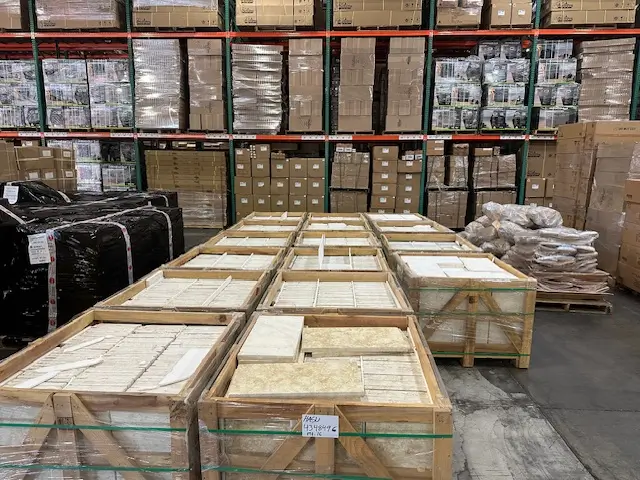
No Physical Samples Before Commitment
A supplier who pushes you to commit based on a website photograph is a stone supplier red flag worth taking seriously. Natural stone varies within the same quarry block — that’s not a defect, it’s the nature of the material — but the range of variation is something you need to see in person before writing it into a specification. Screen samples, also called range samples, show you the lightest, darkest, and most typical pieces from the available stock. Refusing to provide them, or offering only a single best-case piece, is a deliberate withholding of information you need to make a sound decision.
Wet samples matter too, particularly for exterior applications. Many stones look dramatically different when saturated, and that’s the condition your material will spend a substantial portion of its service life in — especially in projects exposed to heavy rain seasons, monsoon-pattern moisture cycles, or drainage-intensive applications. A stone that appears warm beige dry can shift to dark grey when wet. If that’s a surprise on delivery day rather than something you approved at the sample stage, the supplier has failed you.
- Request a range sample set showing minimum, maximum, and median variation — not just the most attractive individual piece
- Test samples in wet conditions before final approval, particularly for pool surrounds, exterior walkways, and any surface with drainage exposure
- Document sample approval in writing with photographs — this protects you if the delivered material falls outside the agreed range
- Suppliers who delay sample provision beyond two weeks are usually managing stock uncertainty, not backorder logistics
Quantity and Lead-Time Claims That Don’t Add Up
Here’s what most specifiers miss: a supplier quoting a two-week lead time on a large-format natural stone order without warehouse confirmation is almost certainly quoting hope, not inventory. Real lead times depend on whether the material is sitting in a domestic warehouse or still sitting in a container at port — and those two scenarios carry completely different delivery timelines. A four-week difference in lead time discovered two weeks before your installation window is a project-schedule disaster.
Pressure to commit quickly — “we have limited stock at this price” — is a classic stone supplier red flag that works because it’s occasionally true and frequently manufactured. Legitimate suppliers can tell you within 24 hours whether the specific quantity you need is in warehouse stock or on order. If that question produces a vague answer, treat it as a no. According to USGS dimension stone production data, the domestic natural stone supply chain involves significant import dependency, which means warehouse stock levels fluctuate considerably — a reason to verify actual availability rather than accept assurances.
Confirm truck access logistics early as well. Some suppliers quote delivery to a general region without accounting for access constraints at your specific site — narrow roads, weight-limited bridges, or residential delivery windows that prohibit large truck arrivals during peak hours. Finding this out after your order is placed creates cost and scheduling complications that fall entirely on your project.
Inconsistent or Absent Technical Data
A reliable stone paving supplier doesn’t just sell you material — they provide the technical documentation that lets you verify the material is appropriate for your application. That means ASTM test results for compressive strength, water absorption, and modulus of rupture. For exterior applications, freeze-thaw cycle data matters. For pool surrounds and wet-area surfaces, coefficient of friction results are non-negotiable. If a supplier can’t produce these numbers, you have no basis for a defensible specification.
The Natural Stone Institute technical stone specifications provide baseline performance expectations for major stone varieties — these are the industry benchmarks you should compare supplier-provided data against. A supplier whose test results sit meaningfully below NSI benchmarks for the stone type they’re selling is either selling a lower grade than they’re representing or testing from a better batch than what’s in their warehouse.
- Compressive strength for exterior paving should typically exceed 6,000 PSI — lower values indicate higher porosity and greater freeze-thaw vulnerability
- Water absorption above 0.75% in a stone marketed for heavy-use exterior paving warrants scrutiny in regions with pronounced wet and dry cycles
- Coefficient of friction below 0.6 wet is a slip-risk concern for any surface where water pooling is a drainage reality
- Nominal thickness tolerances should be stated to ±1/16 inch for calibrated stone — wider tolerances complicate installation and create lippage
Drainage and Base Preparation Guidance That’s Missing
The connection between water management and installation failure is direct and well-documented — yet many suppliers say nothing about it. A stone supplier red flag that often goes unnoticed is the complete absence of base preparation and drainage guidance in a supplier’s technical support. This matters because the base system under your stone determines whether moisture-related failure occurs at year two or year twenty.
Projects in areas with variable precipitation patterns — heavy seasonal rainfall, monsoon cycles, or regions that swing between extended drought and intense rain events — need base systems engineered to handle hydraulic load variation. Inadequate drainage below a stone installation creates hydrostatic pressure that works at joint interfaces and undermines the bedding layer progressively. You won’t see the problem immediately; you’ll see it at year three as isolated settlement, joint sand loss, and surface displacement. Suppliers who understand their product should be pointing out these considerations, not leaving them for you to discover through callbacks.
The ASLA natural stone paving design guidance addresses permeable base system design as it relates to water behavior under hardscape — a reference worth reviewing before finalizing any base specification for exterior stone work. Knowing how your building stone suppliers approach this conversation tells you a great deal about the depth of their product knowledge.
- A competent supplier should recommend minimum base aggregate depths based on your described application and load conditions
- For installations in high-rainfall or flood-risk zones, base compaction to 95% Standard Proctor density is the minimum defensible specification
- Drainage slope across the surface — typically 1-2% — should be discussed during product selection, not left to the installer as an afterthought
- Suppliers who don’t ask about site drainage conditions before recommending a product don’t understand the performance risks of the material they’re selling
Poor Communication Patterns That Predict Order Problems
The way a supplier communicates before you place an order tells you exactly how they’ll communicate when something goes wrong. Slow responses to technical questions, answers that redirect rather than inform, and reluctance to provide written confirmations are all stone supplier red flags that translate directly into project risk. Natural stone procurement involves enough inherent variables — quarry availability, shipping logistics, material variation — that you need a supplier who reduces uncertainty through clear communication, not one who adds to it.
Pay specific attention to how a supplier handles discrepancy claims. Ask directly: what’s your process if delivered material doesn’t match the approved sample? A supplier with a clear, documented claims process answers that question confidently. One who hedges, offers store credit as the default resolution, or makes the process sound difficult is signaling that post-delivery support is not a priority. For a specification involving building stone suppliers at scale, that matters enormously.
You can review our stone sourcing criteria to understand the documentation and quality standards we apply before material reaches your project. Transparency in the sourcing chain is the baseline for any working relationship worth maintaining.
Pricing Structures That Obscure Real Costs
Unusually low per-square-foot pricing on natural stone almost always means something — and it’s rarely good news. Stone that’s priced meaningfully below market typically reflects one of three realities: a lower grade than what’s being represented, old warehouse stock with color drift or surface degradation, or a landed price that excludes freight, crating, and handling fees that appear later on the invoice. Any of these create budget problems once you’re committed to the order.
Reputable stone paving suppliers price transparently. You should receive a quote that separates material cost from freight, crating, and delivery charges — broken out to the line item. Lump-sum pricing that combines everything makes it impossible to compare apples to apples across suppliers and impossible to identify where overcharges occur. Truck delivery fees, in particular, can vary significantly based on distance, access requirements, and whether the delivery is a standard drop or requires specialized handling. These need to be visible in your quote before you commit.
- Request itemized quotes that separate material, crating, freight, and any minimum order or handling surcharges
- Grade designations (first quality, commercial, seconds) should be explicit in every quote — “premium grade” without ASTM reference means nothing technically
- Confirm whether quoted pricing holds for a specific inventory lot or is subject to change based on warehouse stock fluctuation
- Overage recommendations should be stated as a percentage — typically 10-15% for pattern cuts, 5-8% for straight running bond — not left to you to guess
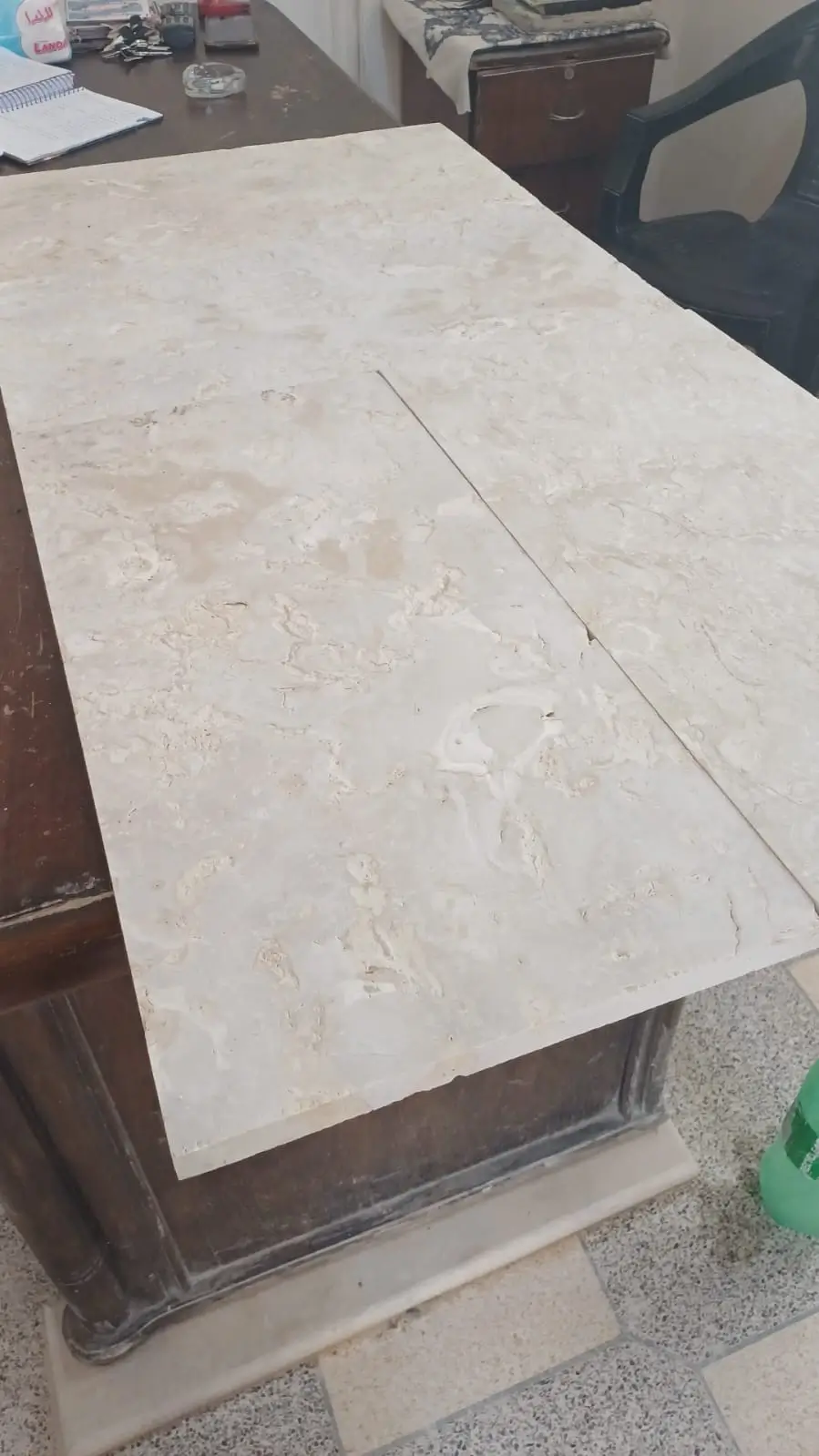
No References and No Track Record
A supplier who cannot point you toward completed projects or past clients has either not been operating long enough to have a record, or has a record they’d prefer you didn’t investigate. Neither scenario is reassuring when you’re committing to a significant natural stone procurement. Established building stone suppliers at the national level should be able to reference completed commercial, residential, and institutional projects across varied applications. That’s not a demand for perfection — it’s a basic verification of operational competence.
The ASTM dimension stone quality and testing standards form the technical backbone of any defensible stone specification — and suppliers who regularly work with architects, landscape architects, and project managers will reference these standards naturally in conversation. If the supplier you’re evaluating seems unfamiliar with ASTM standards when you raise them, that’s a signal about the technical depth of the organization you’re dealing with.
At Citadel Stone, we maintain records of projects supplied across the country, and our technical team is available to discuss material performance data before you finalize any specification. That depth of support is what distinguishes a supplier relationship from a simple transaction.
Final Perspective on Stone Supplier Red Flags
Avoiding stone supplier red flags isn’t about being difficult — it’s about applying the same professional diligence to your supply chain that you apply to your installation details. The suppliers worth working with understand that and welcome the scrutiny. They’ll have quarry documentation ready, technical data on file, range samples available for dispatch, and a clear process for handling discrepancies. The ones who resist those reasonable requests are telling you exactly what working with them at volume will look like.
Your specification decisions and your supplier decisions are connected — a well-specified stone paired with a poorly vetted supplier produces the same outcome as a poor specification. Both end in callbacks, replacement costs, and schedule delays. As you build out your supplier evaluation process, related hardscape procurement considerations are worth reviewing. For broader procurement planning, wholesale stone procurement planning covers additional dimensions of the supply chain worth understanding before your next project cycle. Stone selected for nationwide projects through Citadel Stone undergoes material review before shipment, reducing costly on-site rejections.
Related reading: types of stone for building · finding natural stone suppliers · natural stone veneer contractor.