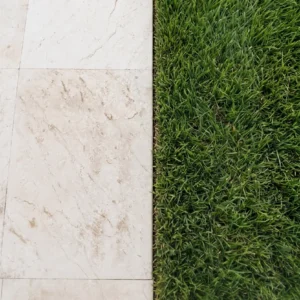
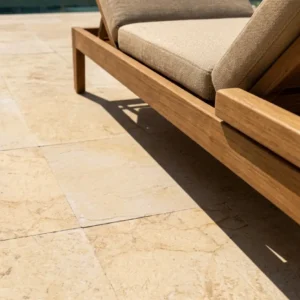
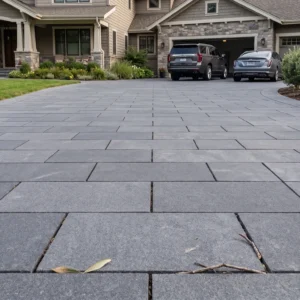
The jointing material you choose for flagstone pavers does more structural work than most people realize — it’s not decorative filler, it’s what keeps individual stones from rocking, shifting, and undercutting over time. Deciding what to put between flagstone pavers comes down to three factors that interact in ways generic advice rarely explains: your base type, the width of your joints, and how much movement tolerance your installation can handle. Get that combination right, and you’re looking at a 20-plus-year surface. Get it wrong, and you’re releveling stones within three seasons.
Why Your Joint Choice Determines Installation Life
Flagstone pavers are inherently non-uniform — that’s the point. But that natural variation in thickness and edge geometry means the joint between stones carries real mechanical load. In wide joints (anything over 2 inches), the filler material has to resist lateral pressure from stone edges, handle freeze-thaw cycling in colder regions, and still allow enough drainage to prevent hydrostatic buildup under the field. Narrow joints under an inch have a completely different performance profile — they need filler that won’t wash out but also won’t lock the stones so rigidly that thermal expansion causes edge cracking. These are not interchangeable scenarios, and the best material for flagstone gaps shifts significantly between them.
According to flagstone sedimentary rock characteristics and paving use, the inherent porosity and cleavage planes of sedimentary flagstone make it particularly sensitive to joint movement — which is why jointing material selection is an engineering decision, not an aesthetic one. Your specific stone type, thickness, and base preparation all feed into that decision before you ever open a bag of product.
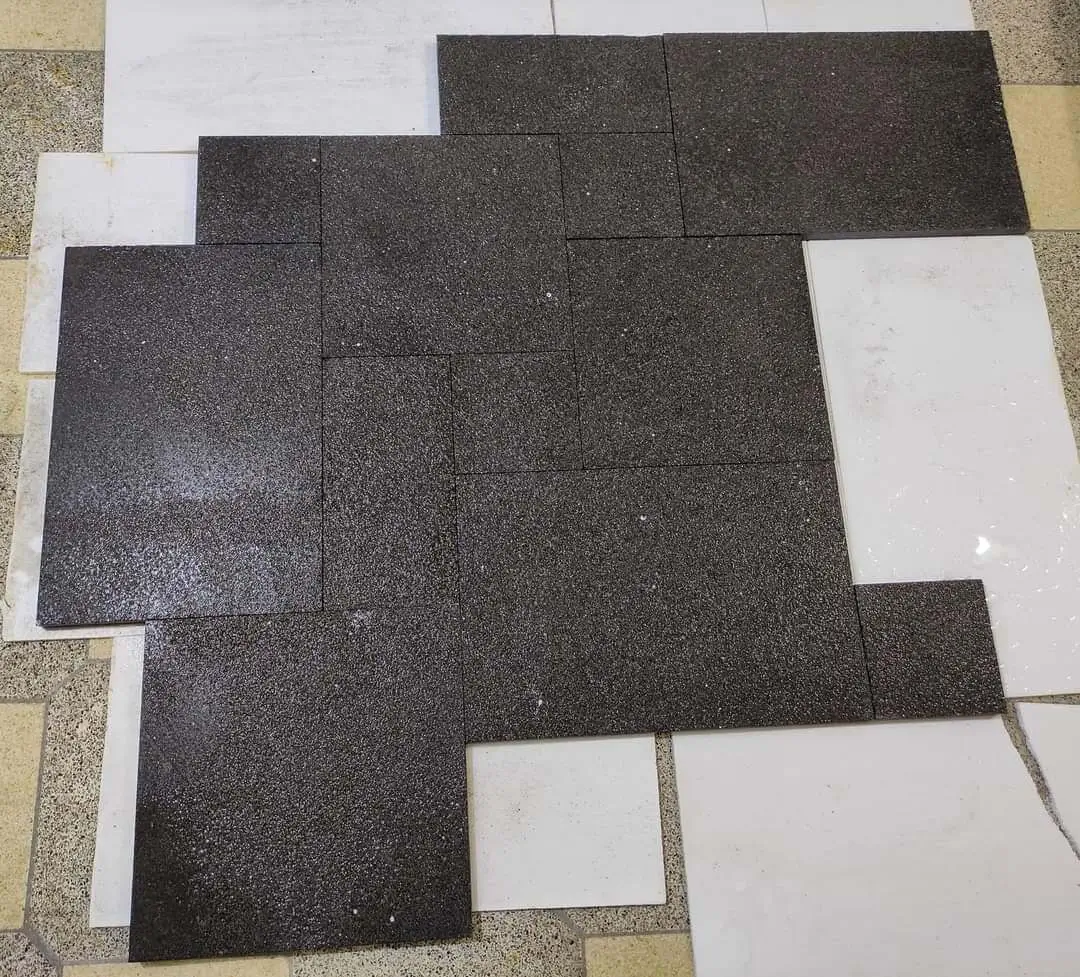
Polymeric Sand: The Reliable Workhorse for Most Installations
Polymeric sand dominates flagstone paver joint filler options for one practical reason — it handles joint widths from half an inch to about two inches without requiring a licensed mason. The polymer binders activate with water and cure into a semi-rigid, weed-resistant matrix that stays in place through rain and moderate freeze-thaw cycles. For residential patios and walkways, it’s the go-to spec for good reason.
That said, there are real limitations worth knowing before you commit. Polymeric sand requires a completely dry stone surface during application — even morning humidity can prevent proper curing and leave you with a white haze on the stone face that’s difficult to remove without acid washing. You also need to compact the sand into joints in multiple passes, not just sweep it in once. Field performance data shows that a single compaction pass leaves voids that collapse within the first winter, requiring top-up within 12 months.
- Joint width sweet spot: 0.5 to 2 inches for reliable performance
- Surface must be bone-dry at application — even dew will compromise the binder activation
- Use a plate compactor (or hand tamper for tight areas) between filling passes
- Do not apply below 32°F or above 90°F — polymer chemistry stalls at temperature extremes
- Darker pigment versions are available but tend to fade faster than stone-matched natural colors
Mortar for Flagstone Joints: When It Works and When It Fails
Mortar-set flagstone paver joints are the spec you reach for on structural slabs, elevated surfaces, or anywhere the code requires a rigid, bonded system. Portland cement mortar (typically a 3:1 sand-to-cement ratio, modified with a polymer additive) bonds to both the stone edge and the concrete substrate, creating a monolithic system that resists the kind of differential movement that cracks individual pavers.
The failure mode for mortar joints is well-documented and almost always traces back to one of two root causes. The first is applying mortar over a sand or compacted aggregate base — mortar requires a concrete substrate because any base movement telegraphs directly into rigid mortar and causes cracking within one frost cycle. The second failure is using full-strength mortar without movement joints in large fields. Industry standards recommend control joints every 10 to 12 feet in mortar-set flagstone installations, and this is where building code compliance becomes directly relevant. Many jurisdictions have adopted prescriptive requirements for expansion joint spacing in hardscape structures that connect to or bear against a building foundation. Verify applicable code requirements before specifying mortar joints on any installation larger than 100 square feet.
For project planning purposes, note that mortar jointing takes longer from a logistics standpoint. Confirming warehouse availability of the correct flagstone dimensions before the mortar crew mobilizes prevents costly delays. At Citadel Stone, we recommend confirming dimensional tolerance specifications when ordering flagstone for mortar-set applications — tighter thickness tolerances (±⅛ inch versus the standard ±¼ inch) make consistent bed depth and joint width achievable without constant shimming.
Flagstone Jointing Sand vs. Mortar: Choosing the Right System
The flagstone jointing sand vs. mortar decision comes down to your base and your tolerance for future maintenance. Sand-based systems — whether standard builder’s sand, polymeric sand, or decomposed granite — are forgiving. They accommodate minor base settlement, allow individual stones to be lifted and releveled, and drain freely without creating pressure buildup. Mortar systems are rigid, low-maintenance once cured, but unforgiving when movement occurs.
Here’s what most specifiers overlook in that comparison: sand-based systems require ongoing maintenance, typically annual joint replenishment for the first three years while the base fully consolidates, then every two to three years after that. Mortar systems require almost no ongoing attention but may need full joint re-cutting if cracking develops — a more disruptive and expensive repair than topping up sand joints. Your project’s maintenance budget and the client’s expectations for long-term ownership need to factor into this decision as directly as the installation method itself.
- Sand or polymeric sand: better for flexible base systems, DIY-accessible, repairable
- Mortar: required for structural slabs, elevated decks, and code-mandated rigid systems
- Mixed base (concrete slab with sand-set stone): sometimes specified, but mortar joints are then required to match system rigidity
- High-traffic commercial surfaces typically require mortar regardless of base type
Decomposed Granite and Loose-Fill Options
Decomposed granite (DG) in flagstone paver joints is a legitimate choice for informal garden paths and naturalistic stepping stone layouts where joint widths exceed 2 to 3 inches. It compacts under traffic to create a stable fill, drains excellently, and weathers to blend visually with the stone. The tradeoff is that it migrates — both from foot traffic and from rain events — and needs periodic top-up, especially in sloped installations.
For filling gaps in flagstone patio settings where the stones are spaced 3 inches or more apart, DG is often paired with a stabilizing emulsion (similar to a soil binder) that locks the particles without completely sealing the surface. Unstabilized DG in these applications typically needs replenishment once or twice a year in high-rainfall zones. Fine crushed granite or stone screenings are also worth considering — essentially the same concept but with a slightly different particle size that may lock up more reliably in wide joints without stabilizer.
For deeper guidance on selecting and specifying your stone before you get to the jointing stage, our flagstone jointing resource at Citadel Stone covers dimensional consistency and material specifications worth reviewing alongside your joint material decision.
Ground Cover Plants: Living Joints That Earn Their Keep
Planting low-growing ground cover between flagstone pavers is genuinely functional, not just aesthetic. Creeping thyme, Irish moss, and blue star creeper — all common choices — develop root systems that knit into the base material and actually resist stone migration better than some inorganic fillers over a five-year period. The roots create a fibrous mat that holds base material in place and reduces the surface erosion that hollow, unfilled joints allow.
The limitation is practical: living joints need a minimum joint width of about 2 inches to establish and survive foot traffic, and they need at least partial sunlight to thrive. Shaded patios are not good candidates. The stones themselves must also be set in a base that won’t be disturbed by routine irrigation — living joints require moisture to establish, but the base below flagstone paver gap material must drain freely or you’ll get base saturation and settlement.
- Creeping thyme: drought-tolerant once established, handles moderate foot traffic, aromatic
- Irish moss: needs consistent moisture, better for decorative low-traffic areas
- Corsican mint: fragrant, very low profile, sensitive to hard freezes
- Avoid aggressive spreaders like creeping Jenny in joints adjacent to garden beds — containment becomes a full-time job
Code Compliance and Structural Requirements for Flagstone Jointing
Your jointing material choice doesn’t exist in isolation from the structural system underneath. Building departments in many jurisdictions have adopted prescriptive standards for hardscape base depth, edge restraint, and — critically — drainage provisions that directly affect which joint materials are permissible. A fully mortared flagstone surface over a compacted aggregate base, for example, may not meet applicable code requirements for an highly resistant surface within certain setback distances of property lines or drainage easements.
Permeable jointing — polymeric sand rated for permeable applications, DG, or planted joints — can help installations qualify under stormwater management ordinances. The ASLA natural stone and flagstone outdoor paving guidance addresses permeable hardscape design in detail and is worth reviewing when your project is subject to site coverage restrictions. Frost line depth is the other structural variable that affects jointing decisions — in freeze-thaw regions, a rigid mortar joint over an inadequate base depth (anything shallower than the local frost line plus 4 inches of compacted aggregate) will crack within one to two winters regardless of how well the mortar is mixed.
Edge restraint also interacts with your joint choice. Polymeric sand and DG joints rely on lateral confinement to stay in place — without proper edge restraint (aluminum or steel edging for sand-set systems, or a concrete border for DG applications), the outer stones migrate and the joint material follows them out. Many failed sand-joint installations trace back not to the material itself but to missing or inadequate edge restraint at the perimeter. Specify edge restraint as part of the system, not an afterthought.
Matching Joint Width to Your Flagstone Type
Flagstone paver joint filler options narrow down considerably once you know your stone’s edge geometry. Irregular natural-cleft flagstone — the kind cut along natural bedding planes with uneven edges — typically produces joints that vary from 1 to 4 inches across a single installation. That variation makes polymeric sand or DG the practical choice because mortar can’t be evenly tooled across variable-width joints without looking patchy. Regular sawn or gauged flagstone, by contrast, produces consistent joints that mortar can fill cleanly.
According to USGS flagstone and dimension stone paving data, sedimentary flagstone represents a significant segment of dimension stone use in the US, and much of that material is supplied in irregular formats specifically because the natural cleavage edge is part of the aesthetic value. That natural edge irregularity is a spec decision you make before the stone arrives on site — and it should inform your jointing material selection before the installation is scheduled, not after the stone is laid.
- Natural-cleft irregular flagstone: use polymeric sand, DG, or planted joints — variable joint width makes mortar impractical
- Sawn-edge gauged flagstone: mortar joints are achievable and may be required for elevated or structural applications
- Tumbled flagstone: slightly rounded edges create a slightly wider effective joint — factor this into your material quantity calculations
- Thickness matters: flagstone under 1.5 inches should not be mortar-set without a full concrete substrate — the stone lacks the mass to resist differential stress at the joint line
Parting Guidance on Flagstone Paver Joint Filler Options
Every jointing decision you make for flagstone pavers feeds back into how long the surface performs and how much ongoing maintenance it demands. The best material for flagstone gaps is the one matched to your specific base type, joint width, stone geometry, and applicable code requirements — not the one a box store stocks in bulk. Take the time to confirm those variables before committing to a product, and your installation will look and function the way it should for decades.
For projects where related hardscape elements factor into the overall design, reviewing limestone paver installation guidance is worthwhile — it covers base preparation and installation sequencing that applies across natural stone hardscape projects and complements the jointing decisions outlined here.
Whether using mortar, decomposed granite, or ground cover plants between joints, the flagstone Citadel Stone supplies is selected for the dimensional consistency that stable jointing requires.