White Stone Pavers for Pool Decks: What Works Best
White limestone is a top pool-deck surface for a reason: it stays markedly cooler underfoot than dark stone and offers reliable wet grip in honed or bush-hammered finishes. This guide covers what works best — the right thickness and finish, drainage and sealing, chlorine resistance, and the install timing that protects the result.
Explore our pool deck natural stone range to find materials specified for demanding outdoor installations. Sourced from internationally sourced quarries, Citadel Stone white stone pavers for pool decks are generally selected in brushed or tumbled finishes to reduce surface heat and improve grip.
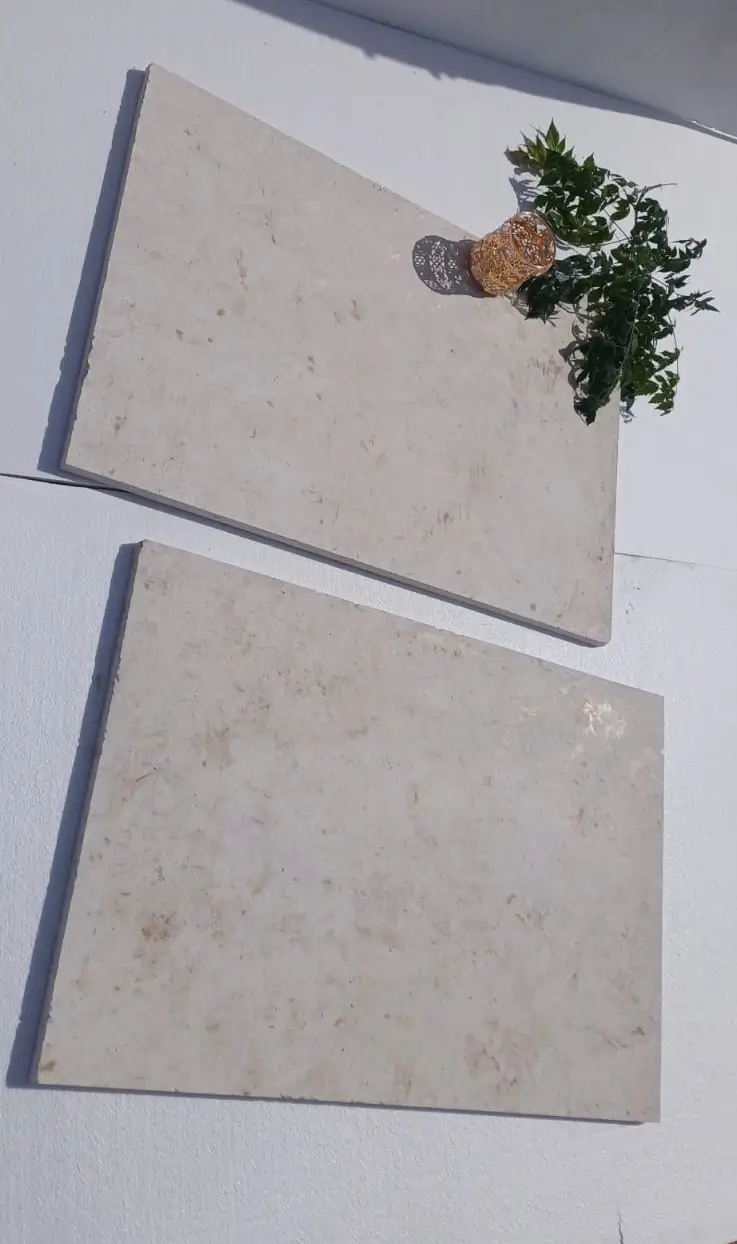
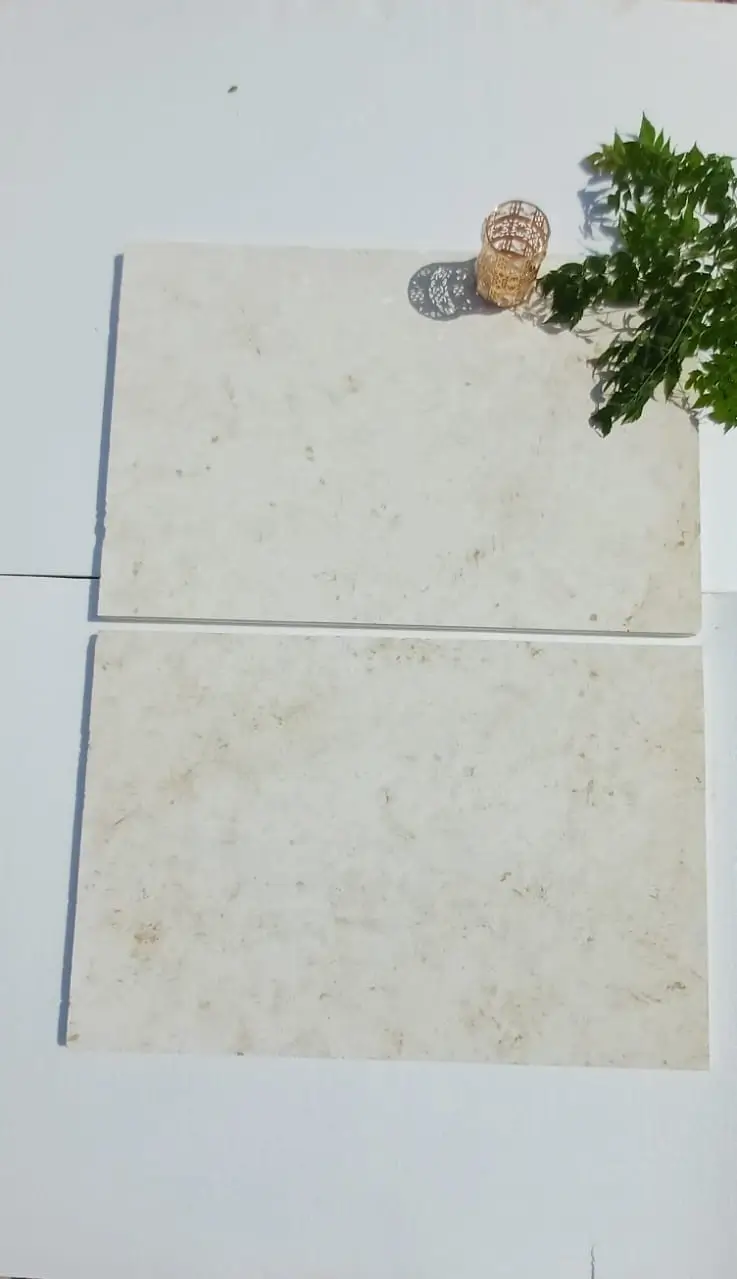
Scheduling white stone pavers for pool deck installation around the right seasonal window is the single variable most specifiers underestimate — and it shows up years later as joint failure, uneven settlement, or surface delamination that should never have happened. The substrate conditions that exist during installation essentially get locked in once the setting bed cures, which means a wrong-season pour can haunt the project for its entire service life. Understanding when to lay, when to pause, and how morning versus afternoon conditions shift your adhesive behavior is where good pool deck specifications separate from great ones.White stone pavers pool decks specimen — limestone slabs provide a neutral foundation, enhanced by a decorative metallic holder and fresh greenery, for a sophisticated aesthetic.
White Stone Pavers for Pool Decks: Material Fundamentals First
White limestone sits in a compressive strength range of 4,000–12,000 PSI depending on formation density — a wide band that reflects how dramatically quarry source and crystalline structure affect field performance. For pool deck applications, material tested above 6,000 PSI minimum is essential, because the combination of constant moisture cycling, pool chemical exposure, and point loads from furniture and foot traffic demands a denser formation. White stone pool deck pavers in the honed or bush-hammered finish category deliver a coefficient of friction above 0.6 when wet, which meets the threshold most specifiers target for safe barefoot surfaces near water.The porosity question comes up constantly in pool deck work. White limestone typically shows absorption rates between 3–7% by weight depending on density classification — lower than many sandstone alternatives but higher than granite. According to NSI limestone specifications, open-pore structures in lower-density limestone require penetrating sealer application before exposure to chlorinated splash water, because chlorine compounds can accelerate calcite surface degradation over time. Your finish schedule should account for this step before any water exposure occurs.
Seasonal Installation Windows That Protect Your Investment
The optimal temperature range for setting bed mortars used under white stone pavers for pool decks falls between 50°F and 85°F at the substrate surface — not the air temperature, the substrate surface. These two numbers diverge significantly depending on the season, and confusing them is one of the most common causes of premature bond failure. A concrete pool surround sitting in full sun during peak summer can register 120°F+ at the surface even when the air reads 88°F, which drives moisture out of your mortar before adequate hydration chemistry can develop.
Spring installations (soil temps 55–70°F) offer the most forgiving conditions — mortar retains moisture well and curing progresses at a controlled rate
Fall installations are equally reliable when you catch the window before overnight temps drop below 45°F consistently, which stalls hydration chemistry
Summer work is manageable only with strict morning scheduling — your setting bed laid before 10 a.m. behaves very differently from the same mix applied at 2 p.m. on the same day
Winter installations require supplemental heat blankets and enclosed work zones in regions with sustained sub-40°F periods — the cost premium is rarely worth it unless schedule demands it
The textured natural stone around swimming pools requirement adds another layer to seasonal decisions. Bush-hammered or sandblasted finishes that provide the best wet traction also present higher surface area to UV degradation, meaning any joint sealant applied during sub-optimal temperatures — typically below 50°F — won’t cure to full elasticity and will begin failing within 18 months. Timing your installation in the right season means your sealant schedule also lands in the right temperature window.
Morning vs. Afternoon Scheduling: The Field Reality
Pool deck installation crews who’ve been doing this for years know the rule without being told: set stone in the morning, grout and seal in the afternoon — but only when conditions allow, and never past the point where evaporation is outpacing your working time. During peak installation seasons, the substrate temperature differential between 7 a.m. and 1 p.m. can exceed 40°F on an exposed concrete pool surround. That swing changes your mortar open time from roughly 45 minutes down to 20 minutes, which affects how many pavers you can position per mix before the bed skins over.Afternoon work in warmer months creates a specific problem with white stone pool deck pavers — the lighter surface color reflects solar radiation effectively once installed, but during installation the stone itself absorbs heat rapidly from the setting bed contact side. A 2-inch limestone paver in direct sun for 20 minutes before placement can reach 95–100°F on its underside, which instantly accelerates mortar drying at the bond interface. Misting the back face of pavers immediately before placement is standard practice in these conditions, not optional. Skipping it is the difference between a clean bond and a hollow-sounding deck two summers later.
Pool Deck Stone Paver Thickness and Finish: Hitting the Right Numbers
Pool deck stone paver thickness and finish selection interact directly with your seasonal installation window because thicker pavers act as thermal mass buffers during installation. A 1.25-inch paver in direct afternoon sun reaches thermal equilibrium with its environment faster than a 2-inch paver — which means the thicker specification actually gives your crew more working time in marginal conditions. For pool deck applications, 1.5 to 2 inches is the practical specification range for residential projects; commercial pool surrounds with vehicle access during maintenance should step up to 2.5 inches minimum.
1.25-inch nominal: acceptable for pedestrian-only residential pool surrounds with full mortar bed installation — not suitable for vehicle access or heavy furniture point loads
1.5-inch nominal: the most common residential specification, balancing weight management during installation with adequate structural depth
2-inch nominal: commercial-grade residential and light commercial, recommended for any pool deck where heavy outdoor furniture, carts, or service vehicles will operate
2.5-inch and above: full commercial specification, typically specified alongside a reinforced concrete substrate poured to 4,000 PSI minimum
Finish selection for white stone pavers around pools follows a straightforward hierarchy. Honed finishes offer a clean aesthetic and adequate wet traction for most pools. Bush-hammered and sandblasted finishes improve textured natural stone around swimming pools performance measurably — consistent with ANSI A326.3, which sets 0.42, the ANSI A326.3 wet DCOF threshold. Polished finishes have no place on a pool deck — they’re a liability concern and a specification failure regardless of how well everything else is done.
Base Preparation and Drainage: Where Pool Deck Specs Are Won or Lost
Your base preparation schedule ties directly to seasonal timing in a way that’s easy to overlook on the specification sheet. Compacted aggregate bases need to stabilize for a minimum of 72 hours after installation before you place a mortar bed over them — but in wet seasons or following rain events, that window extends significantly. Placing a mortar bed over a base that hasn’t fully consolidated creates a compression layer that will shift under thermal cycling, producing the stepped joint lines and rocking pavers that appear within the first two winters and are expensive to fix.Drainage geometry for pool deck white stone pavers requires a minimum 1/8-inch-per-foot fall away from the pool structure. Specifying less creates standing water at the pool edge, which accelerates limestone surface degradation through sustained calcium carbonate leaching. More critically, poor drainage allows water infiltration under the setting bed, and freeze-thaw regions will see that moisture expand repeatedly in sub-freezing conditions, lifting sections of the deck systematically from the substrate. Drain placement during base work — before any stone goes down — is the specification decision that protects every other element.For your material planning and logistics, Citadel Stone pool area stone options provide thickness-verified stock ready for pool deck specifications, with warehouse inventory maintained to support project scheduling rather than forcing you into extended lead-time commitments.
Limestone Heat Absorption Around Pool Areas: What the Numbers Show
Limestone heat absorption around pool areas is genuinely lower than most dense materials — surface temperatures on white limestone at peak sun exposure typically run 20–35°F cooler than dark granite or black basalt in the same installation position. The mechanism is straightforward: white limestone reflects 60–70% of incident solar radiation rather than absorbing it, and its open-pore microstructure allows limited evaporative cooling from residual moisture within the stone itself. For barefoot pool environments, this is a material performance specification point, not just an aesthetic preference.According to USGS limestone composition data, the calcium carbonate crystalline matrix in sedimentary limestone has a specific heat capacity of approximately 0.84 J/g·°C — significantly lower than the 0.79 J/g·°C of granite. What this means practically is that white limestone heats up more slowly and releases stored heat faster once sun exposure drops in the late afternoon. Your pool deck cools down more quickly as evening approaches, which matters for outdoor entertainment spaces that see heavy use after 5 p.m. This is a genuine performance advantage that denser, darker materials can’t replicate.White stone pavers pool decks specimen — exploring the subtle beauty and natural characteristics of granite pavers for elegant outdoor flooring solutions.
The deck edge deserves the same attention as the field: bullnose white limestone pool coping cut from the same stone keeps the waterline comfortable to the touch and visually seamless with your pavers.
Joint Sealing, Maintenance Scheduling, and the Seasonal Tie-In
Outdoor stone paver performance in wet zones depends more on joint maintenance than almost any other factor, and joint maintenance scheduling is where the seasonal theme loops back around in a practical way. Penetrating sealers applied to white stone pool deck pavers need surface temperatures above 50°F and below 90°F for proper penetration and cure — which in most regions means a spring application window of April through mid-June and a fall window of September through mid-October provides the reliable conditions for full-depth sealer absorption.
Initial sealer application: required before first water exposure — schedule this as part of the installation phase, not an afterthought
Resealing cycle: biennial for pool environments where chemical splash is regular; annual in pools with aggressive chlorine or salt systems
Joint sand refresh: polymeric sand compacts and erodes over time — plan a 3-to-5-year refresh cycle to maintain the structural integrity that prevents rocking pavers
Surface inspection: conduct an annual tap test across the full deck to identify hollow sections before they become loose pavers — catching this early means a spot repair, not a section replacement
Citadel Stone’s technical team regularly advises clients on sealer selection for white limestone pool surrounds — the distinction between penetrating silane-siloxane sealers and surface-film sealers matters significantly in high-UV, high-moisture environments. Surface film sealers look attractive initially but typically peel and cloud within two seasons of pool chemical exposure. Penetrating sealers are invisible, durable, and vapor-permeable, which prevents the subsurface moisture pressure that causes surface spalling in pool environments.
Ordering, Truck Delivery Logistics, and Project Planning
Your project timeline for white stone pavers for pool decks should build in a material delivery buffer that accounts for seasonal demand patterns. Spring and early summer represent the highest-demand period for pool deck material across the country — warehouse stock in popular white limestone specifications turns over quickly between March and June, and projects that don’t confirm material availability 4–6 weeks in advance frequently face delays that push installation into the peak summer heat window. That’s the scheduling outcome you want to avoid, because summer installation requires more management and creates more risk than spring work.Truck delivery logistics for pool deck projects require specific access planning. A standard flatbed truck delivering palletized white stone pavers needs a clear run of approximately 40 feet to the drop point, with a surface capable of supporting 40,000+ lbs of loaded truck weight. Pool deck areas are often surrounded by landscaping, fencing, and existing hardscape — confirming truck access before placing your material order prevents the scenario where a delivery arrives and can’t get within workable distance of the installation zone. Citadel Stone’s logistics team can advise on pallet sizing and staging configurations that work within constrained access conditions, which is worth a quick conversation before you commit to a delivery date.
Your Action Plan for White Stone Pool Deck Success
Getting white stone pavers for pool decks right comes down to a sequence of decisions that build on each other — and seasonal timing sits at the foundation of that sequence. Target your installation for the spring or fall window when substrate temperatures are in the 55–75°F range, schedule your crew to work in the morning during any summer-adjacent periods, and confirm warehouse availability before your project timeline locks in a delivery week. Specify 1.5-inch minimum thickness for residential pool surrounds, select honed or bush-hammered finish for adequate wet traction, and build your drainage slope to 1/8 inch per foot minimum before a single paver goes down.Material selection and installation craft are both necessary — but neither compensates for the other when one is wrong. Outdoor stone paver performance in wet zones is the product of every variable working together: white limestone pavers installed in optimal seasonal conditions on a properly prepared base, with correct drainage geometry and a biennial sealing program, routinely deliver 25-year service life in pool environments. Compromise any one of those variables and you’re looking at a 10-to-12-year outcome with expensive remediation in between. For a detailed comparison of how white limestone stacks up against another popular pool deck material, how limestone and sandstone compare for pool surrounds is worth reviewing before your final specification decision. White limestone pavers from Citadel Stone are known for staying noticeably cooler underfoot than darker stones in sunny outdoor settings, making them a practical choice for pool surrounds.
Unlock the potential of your spaces with our expansive range of limestone pavers, ideal for both residential and commercial applications. As a premier limestone paver supplier, we provide a diverse selection of colors, textures, and finishes to suit any design vision. Transform your environment with our high-quality limestone pavers, where each piece offers durability and aesthetic appeal tailored to your specific needs.
With unlimited tiles, features, and the fastest delivery options, What’s not to love? Say goodbye to unnecessary hassles!
What is the best time of year to install a white limestone pool deck?
In practice, mid-spring and early autumn offer the most reliable installation windows. Substrate and air temperatures in the range of 10–25°C allow adhesive mortars and jointing compounds to cure at the rate they were engineered for. Extremes in either direction — hard frosts or intense midsummer heat — introduce curing irregularities that can compromise bond strength before the material is fully bedded.
Why does time of day matter when laying limestone pavers around a pool?
What people often overlook is that a sun-exposed pool deck substrate can reach temperatures well above the ambient air reading by mid-morning. Laying onto an overheated slab draws moisture out of the mortar bed too quickly, reducing open time and weakening adhesion. Scheduling installation work for early morning — before direct sun loads the surface — gives you a more consistent working window and better control over the bed.
How do seasonal temperature swings affect adhesive selection for pool deck installations?
From a professional standpoint, adhesive selection should be matched to the temperature conditions expected both during installation and in the weeks immediately after. Rapid-set mortars that perform well in cooler autumn conditions can become unworkable in peak summer heat, while standard mortars may cure too slowly in cooler periods. Always check the manufacturer’s working temperature range and adjust your product choice seasonally rather than using a single adhesive year-round.
How long should limestone pool deck pavers cure before the area is used?
A minimum of 48–72 hours for foot traffic is a standard professional benchmark, but full cure of the mortar bed beneath natural stone typically takes 7–28 days depending on product type and ambient conditions. In cooler seasonal periods, that timeline extends. Rushing this stage — particularly around pool areas where water exposure begins immediately — risks paver movement, grout cracking, and premature edge deterioration.
Can white limestone pool deck work be scheduled during winter months?
In freeze-thaw regions, winter installation of outdoor stone is generally not recommended. Sub-zero temperatures prevent mortar from hydrating correctly, and any residual moisture in the substrate that freezes during cure can fracture the bond line entirely. In milder climates with stable winter temperatures above approximately 5°C, installation is possible with appropriate cold-weather mortar products and protective covering overnight — but scheduling risk is higher and monitoring requirements increase significantly.
How does working with Citadel Stone simplify a white limestone pool deck project's logistics?
Unlike typical importers who route orders through brokers or require full container minimums, Citadel Stone operates with direct quarry relationships and warehouse-held inventory — meaning specifiers access a broad range of finishes, sizes, and custom cutting options from a single source without intermediary delays. That product range breadth reduces the coordination burden across a project considerably. Citadel Stone’s nationwide distribution infrastructure ensures reliable material access and consistent lead times, regardless of project scale or location.