
Budgeting for Limestone Tile in Arizona: What Drives the Real Cost
Most specification failures in limestone tile installations trace back not to the material itself but to a budget built without accounting for Arizona’s freight reality. Installing limestone tile in Arizona means you’re working within a supply chain that adds meaningful cost at every stage — from quarry to warehouse to your job site — and the projects that stay on budget are the ones that mapped those costs before the first tile was ordered.
The delivered price of limestone tile in Arizona typically runs 18–35% higher than the material’s base cost, once you factor in freight from the port of entry, regional distribution, and last-mile truck delivery to interior markets. Projects in suburban Phoenix metro may see the lower end of that range, while remote sites add distance surcharges that can push costs toward the upper threshold.
Your cost-per-square-foot calculation should start with the material cost and immediately layer in freight, substrate preparation, labor, and sealer — not add those in later as line items that surprise you. For a typical limestone tile flooring project running 400–600 square feet, expect the material-to-labor ratio to sit around 45:55 in labor-heavy metro markets, but closer to 55:45 when you’re sourcing efficiently and working in markets where labor rates are more moderate.
How Sourcing Decisions Shape Your Total Project Cost
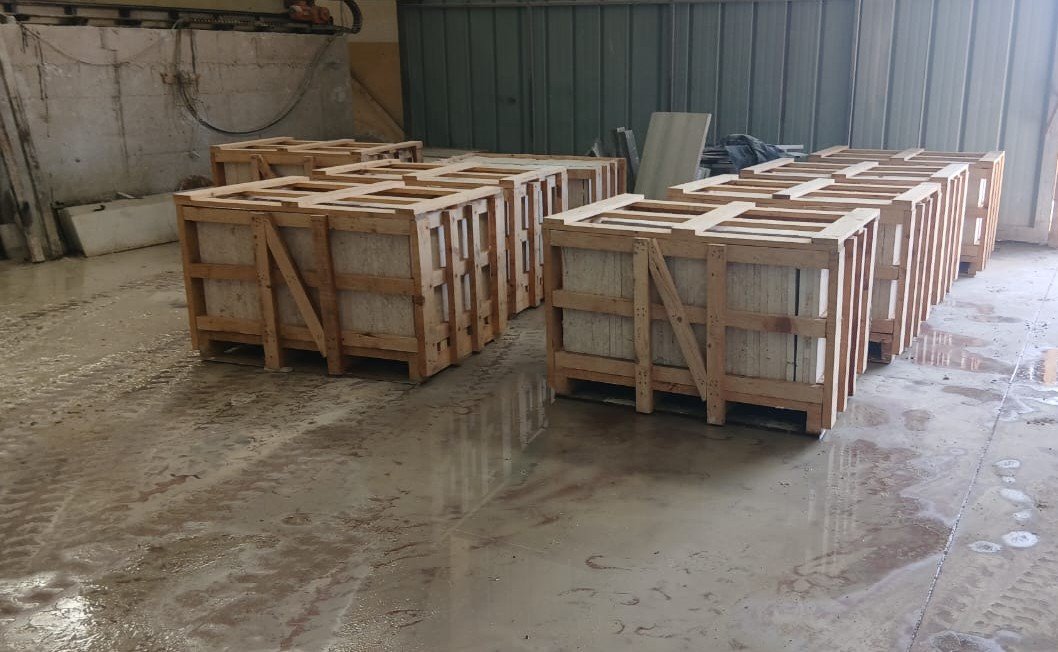
The decision of where you source your limestone tile in Arizona directly controls two of the biggest budget variables: lead time and freight cost. Domestic warehouse stock shortens your lead time to 1–2 weeks and eliminates the 6–8 week import cycle that forces contractors to carry carrying costs or delay other trades. At Citadel Stone, we source limestone tile directly from quarries across the Mediterranean and Middle East and maintain regional inventory that Arizona contractors can draw from without absorbing full import logistics costs themselves.
Choosing between premium quarry-matched material and regionally stocked alternatives is a real value engineering decision, not just an aesthetic one. Here’s what that trade-off looks like in practice:
- Quarry-direct material offers tighter color consistency across large orders — critical for open-plan floors over 500 square feet
- Regional warehouse stock ships faster and often carries lower per-unit freight cost, which matters when your project timeline is compressed
- Mixed sourcing — using warehouse stock for field tile and special-ordering matching borders — can reduce costs without sacrificing visual coherence
- Material waste factors of 10–12% for limestone tile (accounting for cuts and breakage) should be priced into your order, not added after the fact
- Verify warehouse inventory before you finalize your project schedule — partial shipments from two separate truck runs add cost and coordination burden
In Scottsdale, where high-end residential projects often demand premium material finishes, the value engineering conversation typically centers on tile thickness and finish grade rather than core material — honed 3 cm limestone from the same quarry line can run 15–20% less than a polished equivalent while performing identically under traffic loads.
Preparing the Subfloor for Limestone in Arizona
Natural stone tile substrate requirements in Arizona desert conditions are non-negotiable — and the subfloor is where most cost overruns actually originate. Preparing subfloor for limestone in Arizona demands a higher standard than most general contractors apply from wood-frame residential experience. Limestone is unforgiving of subfloor deflection: the tile’s modulus of rupture typically falls between 1,200–1,800 PSI depending on density and finish, which means any subfloor movement at mid-span will telegraph directly to the tile surface as cracking, often at the grout joint first.
Your deflection limit for limestone tile installation should not exceed L/360 — that’s the industry standard under TCNA guidelines, and it’s more conservative than what some general contractors assume. For concrete slab installations, which are far more common in Arizona’s residential stock, you’re primarily managing flatness, not deflection, but flatness tolerances still matter: no more than 3/16 inch variation in 10 feet before you set a single tile.
The desert subfloor conditions that natural stone tile substrate in Arizona’s desert environment presents include these common slab issues that must be addressed before setting begins:
- Alkali bleed from uncured or recently patched concrete — this contaminates thinset bond and requires neutralization treatment before installation
- Existing radiant heat systems embedded in slab — these require uncoupling membrane installation to manage differential thermal movement
- Expansion joint locations in the slab — these must be honored through to the tile surface, never bridged
- Surface laitance from construction traffic — mechanically scarify or acid-etch to achieve a surface CSP (Concrete Surface Profile) of 2–3
The uncoupling membrane decision adds roughly $1.50–$2.25 per square foot to your installed cost, but it’s the specification detail that separates 8-year installations from 20-year ones in Arizona’s thermally active slab environment. Skip it on a slab over radiant heat and you’ll see lippage and cracking within three to five heating seasons.
Thinset and Mortar Selection for Desert Climate Conditions
Arizona’s combination of extreme ambient heat and low humidity creates an open time problem that installers from more temperate climates routinely underestimate. Standard polymer-modified thinset rated for 20–30 minutes of open time can skin over in 8–12 minutes when ambient temperature exceeds 100°F and relative humidity drops below 20% — both routine summer conditions across the Phoenix basin.
Spec a large-format tile mortar (ANSI A118.15 compliant, extended open time formulation) for any limestone tile installation happening between May and September in low-desert Arizona. The difference in material cost is modest — approximately $0.30–$0.45 per square foot more than standard thinset — but the performance gap between using the right mortar and the wrong one is the difference between 95% back-coverage and 60% back-coverage, which directly determines bond longevity.
Marble and limestone tiles in the 18-inch-and-larger format require back-buttering as a standard practice, not an optional upgrade. This isn’t a preference — it’s an installation requirement driven by the material’s relatively low tensile strength combined with desert slab thermal cycling. Your installation sequence should follow this protocol for each tile:
- Comb thinset onto prepared substrate with a 1/2-inch square-notch trowel
- Apply a skim coat of thinset to the back of the tile before setting
- Press and beat tile into position with a rubber mallet, checking back-coverage after the first 3–5 tiles by lifting and inspecting
- Maintain minimum 5/32-inch grout joint width for thermal expansion — narrower joints in Arizona’s climate will telegraph stress as edge chipping
- Verify vertical thinset transfer confirms full contact at tile corners, which are the first failure points in large-format limestone
Limestone Tile Installation Steps for Arizona Homes
The limestone tile installation steps AZ homes require differ from generic installation guidance primarily in pacing and environmental management. You can’t install at the same tempo in a Phoenix summer as you might in a mild climate — the material and mortar demand you work in smaller sections with faster verification checks.
Your installation sequence for a standard Arizona residential floor should run as follows. Start by snapping your layout lines from center-point rather than wall-starting, because limestone tiles need balanced cut pieces at all perimeter walls — asymmetric cuts under 1/3 of tile width look poor and are structurally weaker at the edge. Dry-lay your first section before any thinset is mixed, confirming your layout accounts for existing door swings, floor registers, and transition thresholds.
For the setting phase, limit your working section to 15–20 square feet at a time during summer installations. Mix only what you can place and cover within 10 minutes. Using a tile relay system — where one person mixes and combs while a second back-butters and sets — maintains pace without letting thinset skin over between sections.
- Allow a minimum 24-hour cure before grouting, 48 hours recommended for 24×24 and larger format limestone
- Use unsanded grout for joints under 1/8 inch, sanded grout for joints 1/8–3/8 inch — limestone’s edge softness means sanded grout in very narrow joints can scratch tile faces during installation
- Apply a grout release agent (penetrating sealer, not film-forming) to limestone faces before grouting to prevent grout hazing on porous stone
- Clean grout haze within 30–45 minutes of application — the heat accelerates grout cure, leaving a haze that’s difficult to remove if you wait for end-of-day cleanup
The Arizona limestone tile from Citadel Stone range includes tile dimensioned to consistent tolerances, which matters more than most installers realize — dimensional inconsistency of more than 1/32 inch across a pallet forces you to adjust your grout joint width mid-installation, which reads poorly in the finished floor.
Arizona Labor Market Realities for Stone Tile Installation
Arizona’s tile installation labor market is meaningfully different from national averages, and understanding that dynamic helps you build a realistic project budget. Experienced natural stone setters — specifically those with limestone and travertine experience — command a premium in Phoenix metro, Tucson, and the high-growth Scottsdale corridor. Labor rates for skilled stone setters in these markets typically run $8–$14 per square foot installed, compared to $5–$7 per square foot for ceramic or porcelain tile work.
That differential exists because limestone tile installation requires a fundamentally different skill set than ceramic work: back-buttering discipline, mortar consistency management in heat, understanding of natural stone movement behavior, and the patience to work at the pace the material requires rather than the pace a production-oriented tile crew would prefer. Cutting corners on labor to balance a tight budget is one of the highest-risk decisions in a limestone tile specification — the material cost is already committed, and a poor installation will cost more to remediate than the labor savings ever delivered.
In Flagstaff, the labor market is smaller and installer availability can affect your scheduling window significantly — plan 3–4 weeks of lead time to secure a qualified stone setter, and verify their experience specifically with natural limestone rather than assuming any tile installer can handle it. The elevation and freeze-thaw exposure in Flagstaff also require an installer who understands how to spec expansion joint placement for thermal cycling, which is a different skill set than low-desert installation.
Thermal Expansion and Joint Planning in Arizona’s Climate
Desert climate thermal cycling creates tile movement stresses that most residential specifications underestimate. Installing limestone tile in Arizona without properly spaced expansion joints produces a clear failure pattern: floors begin showing stress cracking within 2–3 years in direct sun exposure areas, regardless of how well the base preparation and setting were executed.
Your expansion joint specification for limestone tile should follow TCNA EJ171 guidelines, but with more conservative spacing than the standard’s maximum recommendations allow. In heated slabs or sun-exposed areas, place expansion joints every 20–24 linear feet in both directions for interior applications — not the 25–30 feet some generic specs carry. At perimeter walls, maintain a 1/4-inch movement gap filled with flexible sealant, not grout.
The thermal mass behavior of limestone also creates a subtler issue you’ll encounter in large open-plan Arizona homes: the slab and tile expand at different rates when the AC system cycles off for extended periods. During power outages or extended seasonal shutdowns, the differential between slab temperature (which responds slowly) and surface tile temperature (which responds quickly to radiant heat through low-e glass) can generate stress spikes at field joints. Designing those joints into the floor plan at the layout stage — not adding them as an afterthought — is how you prevent callbacks.
- Use a color-matched, paintable polyurethane sealant in expansion joints — silicone caulk eventually collects dirt and discolors in Arizona’s dust environment
- Confirm that expansion joints align with any control joints in the concrete substrate — bridging them is a specification error that guarantees cracking
- For outdoor limestone tile applications in Sedona or similar high-UV environments, reduce expansion joint spacing to 15 feet maximum given extreme diurnal temperature swings
Sealing and Protecting Limestone Tile in Arizona
The sealing decision for limestone tile in Arizona isn’t binary — it’s a specification choice between penetrating impregnators and topical sealers that has real performance consequences in the desert environment. Topical film-forming sealers trap moisture vapor migrating through slabs (common in Arizona’s irrigated residential areas) and peel or blister within 18–24 months. Penetrating impregnators allow vapor transmission while blocking staining agents — that’s the right choice for Arizona limestone flooring in virtually all residential applications.
Your sealing schedule should start before grouting (apply penetrating sealer to the tile face, allow full cure, then grout) and repeat every 18–24 months depending on traffic and cleaning habits. The desert’s alkaline water — common across Phoenix metro and many well-water properties in Sedona — accelerates sealer depletion and can leave calcium carbonate deposits on unprotected limestone surfaces that are difficult to remove without mild acid treatments.
Testing your sealer coverage before committing to a full floor application is standard practice at Citadel Stone — we recommend the water-bead test at 12, 18, and 24 months to confirm whether your resealing interval is appropriately calibrated to your specific site conditions. Natural stone tile substrate in Arizona’s desert environment means you’re dealing with a living surface that responds to its environment, and sealing maintenance is the one variable that most determines whether your investment holds its appearance over the long term.
Following a Complete Limestone Flooring Installation Guide for Arizona Conditions
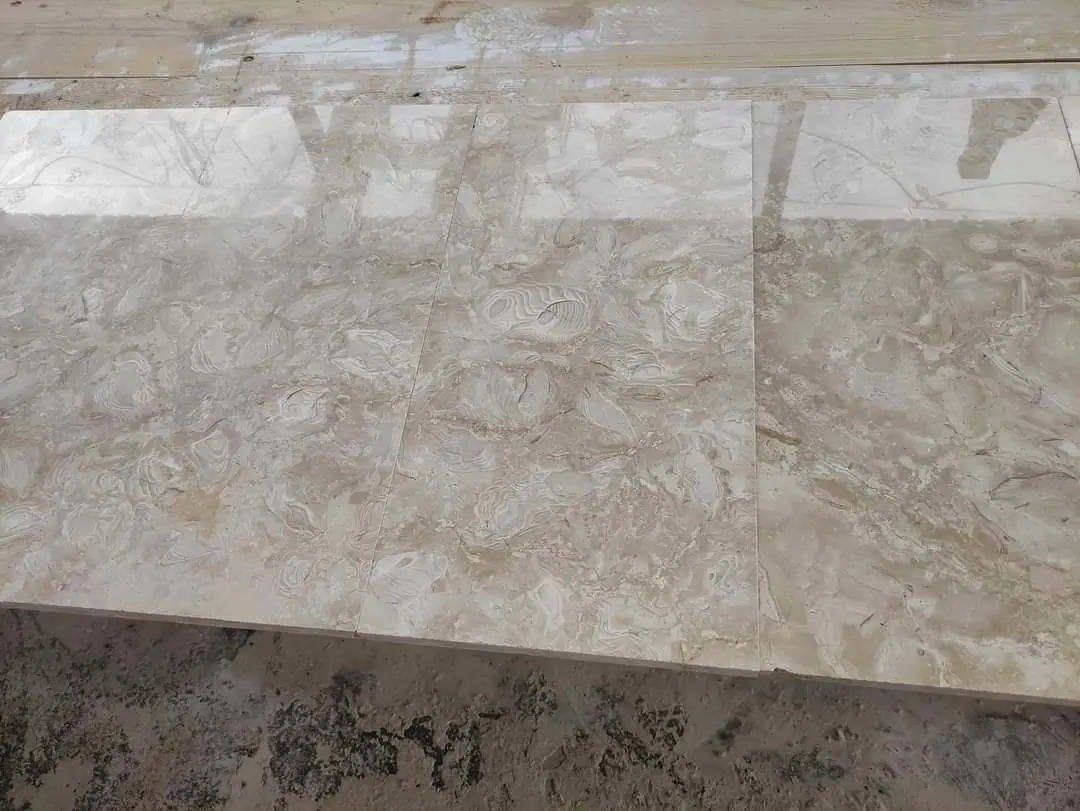
A reliable limestone flooring installation guide across Arizona projects isn’t a single document — it’s a framework that adjusts by elevation, slab type, and season. The checklist that serves a Phoenix slab-on-grade project in February doesn’t serve a Flagstaff above-grade installation in July without meaningful adjustments to mortar selection, curing time allowances, and expansion joint frequency.
The framework that consistently produces durable results across Arizona’s varied conditions comes down to five non-negotiable checkpoints: subfloor flatness verification, mortar selection matched to ambient conditions, back-buttering discipline on every tile, expansion joint placement at layout stage, and sealer application before grouting. Missing any one of these isn’t a minor shortcut — it’s a failure mode that emerges 18–36 months after installation, when the warranty conversation becomes uncomfortable for everyone involved.
- Document your subfloor prep with photos before tile is set — this protects you if bond failure claims arise later
- Keep a mortar spec sheet on-site and verify the product lot number matches the extended open-time formulation you specified
- Use a straightedge check on every 50 square feet during installation to catch lippage before thinset cures
- Confirm your grout joint width is consistent before moving past your first 20 square feet — corrections after mortar cures require tile removal
- Review your tile delivery from the truck for color lot consistency before any tiles are set — returns on already-installed material are costly and avoidable
Getting Installing Limestone Tile in Arizona Right: Final Considerations
Every cost and specification decision in a limestone tile project is interconnected. The freight cost you pay for properly sourced material affects your total budget less than a subfloor that wasn’t properly prepared, or a thinset that skinned over in the heat before achieving full coverage. Every decision in this process compounds — good ones forward, poor ones backward.
Your best protection is a specification built on the real conditions of your specific project: the slab type, the elevation, the season of installation, and the labor market you’re working within. Whether you’re specifying limestone tile for a Scottsdale residential project or managing a commercial build in a high-traffic environment, the limestone tile installation steps AZ homes and commercial sites demand serve as your baseline — not your ceiling. The ceiling is what you build with a qualified stone setter who understands natural limestone, a supplier with verified warehouse inventory, and a material order that includes appropriate waste factor and color lot management. For a closer look at another dimension of limestone specification worth considering alongside this project, How to Choose Grey Limestone Floor Tiles in Arizona provides cost and selection guidance from the same regional perspective that complements the installation detail covered here. Contractors in Tucson, Mesa, and Chandler rely on Citadel Stone for limestone tile sourced from quarries across the Mediterranean and Middle East, suited to Arizona’s demanding desert subfloor conditions.