
What Actually Drives Wholesale Granite Pricing in Arizona
Thermal cycling — not just heat — is the variable most Arizona builders underestimate when evaluating a wholesale granite pricing guide Arizona builders rely on for project budgeting. The Sonoran Desert’s temperature swing from 38°F pre-dawn to 108°F by mid-afternoon represents a 70-degree daily range that expands granite at roughly 4.4 × 10⁻⁶ inches per inch per degree Fahrenheit. That thermal behavior directly affects which slab thicknesses perform over decades and, by extension, which price tiers actually deliver value versus those that create expensive callbacks. Understanding the pricing structure starts with understanding why material performance in Arizona’s specific thermal environment shapes every spec decision you’ll make.
Granite Slab Cost Per Square Foot in Arizona: What the Numbers Mean
The granite slab cost per square foot in Arizona ranges from roughly $8–$14 per square foot at the builder-grade wholesale tier, climbing to $22–$38 per square foot for premium exotics like Blue Bahia or Calacatta Gold granite. Those figures cover material only — they don’t account for fabrication, edge profiling, cutouts, or delivery. For commercial projects, the slab cost typically represents 45–55% of total installed cost, which means your wholesale purchasing decision carries significant downstream weight on final project economics.
What most first-time wholesale buyers miss is that slab pricing tiers aren’t arbitrary. They reflect quarry yield rates, gang-saw waste percentages, and transportation costs from ports of entry — most commonly Houston, Los Angeles, or direct Arizona drayage from Nogales for Mexican granite varieties. When comparing quotes across suppliers, make sure you’re evaluating equivalent slab dimensions. A 108″ × 56″ slab priced at $320 yields meaningfully more usable square footage than a 96″ × 52″ slab at $285, even though the second looks cheaper on paper.
- Builder-grade wholesale granite: $8–$14 per square foot (2cm slab, standard finishes)
- Mid-tier wholesale granite: $14–$22 per square foot (3cm slab, polished or leathered finish)
- Premium and exotic granite: $22–$38 per square foot (full slab, bookmatching available)
- Commercial slab bundles: negotiated per-bundle pricing typically beats per-slab rates by 12–18%
- Remnant wholesale lots: $4–$9 per square foot — ideal for bathroom vanities and accent applications
Arizona Bulk Stone Purchase Pricing Tiers: How Volume Changes the Equation
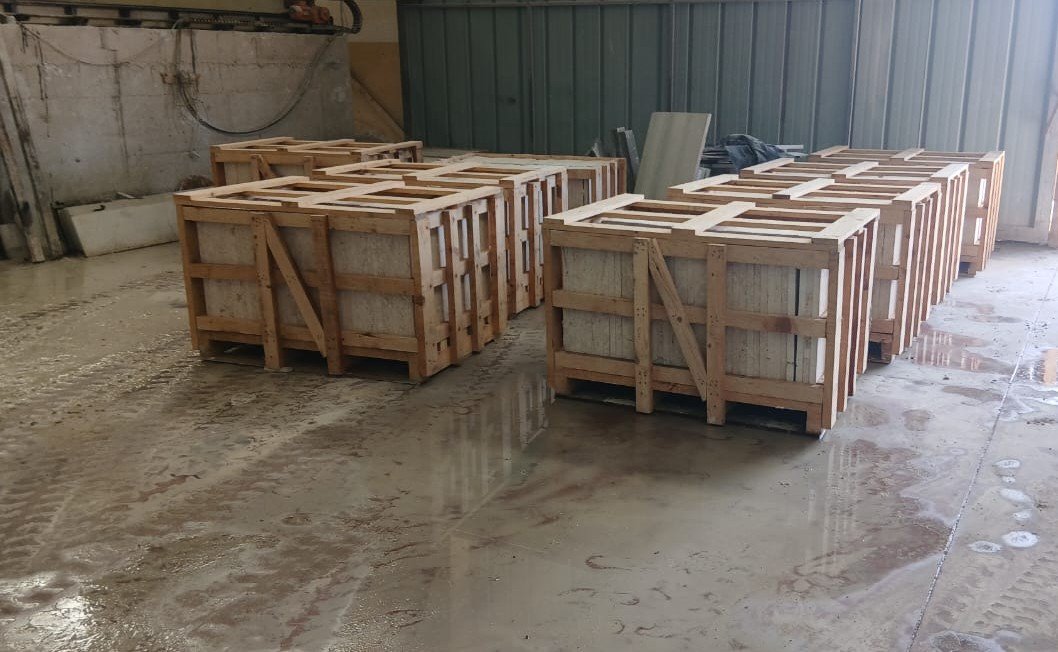
Arizona bulk stone purchase pricing tiers typically break at three volume thresholds: single slab, quarter-container (roughly 80–120 slabs), and half-container or full-container orders. The jump between single-slab pricing and quarter-container pricing is where you’ll see the most dramatic per-unit reduction — often 18–25% depending on the material and supplier relationship. Full-container pricing, which runs 550–600 slabs for standard 2cm product, delivers the steepest discounts but requires warehouse storage capacity and a corresponding volume of committed projects.
For most mid-sized Arizona developers, the quarter-container tier is the practical sweet spot. You get meaningful price reduction without tying up capital in excess inventory that sits in a warehouse through summer months when thermal expansion and humidity fluctuation can affect packaging integrity on certain finishes. Projects in Mesa and the surrounding East Valley often pool orders across multiple townhome or commercial kitchen installations to hit that quarter-container threshold — a strategy worth considering if you have relationships with other builders on adjacent timelines.
Minimum Order Thresholds and Lead Time Realities
Most wholesale granite suppliers in Arizona set single-project minimums at 5–10 slabs, though some distributors operating on import cycles require 15-slab minimums before they’ll process an order outside their standing delivery schedule. Lead times from warehouse stock run 3–7 business days for in-state inventory. Import orders, particularly for materials not held domestically, can stretch 8–14 weeks depending on port congestion and ocean freight scheduling. Always verify current warehouse inventory levels before locking your project timeline — a single material substitution decision made late in the schedule can add $3–$5 per square foot in expediting costs.
Thermal Cycling and Slab Specification: The Arizona Performance Variable
Here’s what separates a 20-year granite installation from a 12-year one in Arizona’s climate: joint accommodation for thermal movement. Daily temperature cycling of 60–75°F across the year — and up to 95°F in extreme desert locations — means a 10-foot granite run expands and contracts by approximately 0.05–0.07 inches over each full cycle. For countertops and cladding with rigid substrate adhesion, that movement gets absorbed through the stone itself or through substrate failure. The field consequence is edge chipping, substrate delamination, or grout joint cracking that begins within 3–5 years of installation on improperly detailed work.
The specification response isn’t complicated, but it requires discipline. Silicone perimeter joints at all wall-meets-counter terminations, flexible-set thin-set mortars rated for high thermal movement environments (ANSI A118.15 or better), and a minimum 1/8″ movement joint for every 8–10 linear feet of granite cladding are non-negotiable in Arizona’s thermal range. At Citadel Stone, we consistently advise builders to specify 3cm over 2cm granite for exterior applications specifically because the additional thickness provides greater thermal mass buffering — the surface temperature gradient between face and back of a 3cm slab is meaningfully lower than in 2cm material, which reduces the differential stress that causes microfracturing over time.
- Specify ANSI A118.15 or equivalent flexible-set mortar for all exterior granite installations
- Install silicone movement joints at all wall-to-counter and curb terminations
- Plan for 1/8″ movement joint every 8–10 linear feet on exterior cladding runs
- Choose 3cm thickness for any exterior application in Arizona’s high-cycling thermal zones
- Account for differential thermal expansion between granite and steel, aluminum, or concrete substrates in mixed-material assemblies
Affordable Granite Wholesale Options Across Arizona: Material Selection That Holds Value
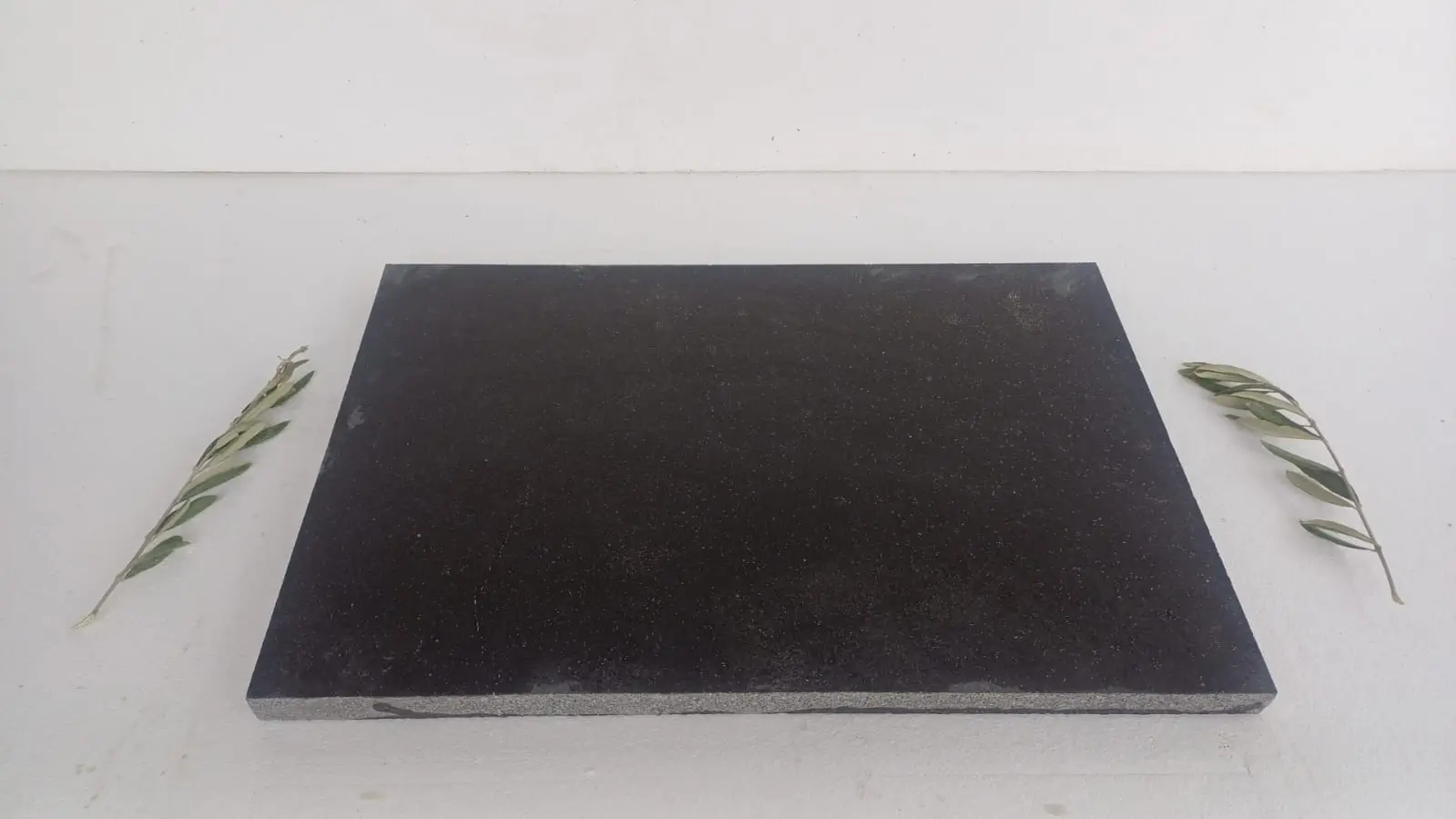
Affordable granite wholesale options across Arizona concentrate heavily in the Brazilian and Indian granite categories — materials like Santa Cecilia, Giallo Ornamental, New Venetian Gold, and Absolute Black dominate the builder-grade tier for good reason. These granites are quarried in high-yield formations that allow consistent slab sizing, they’re available in sufficient volume to support container-level purchasing, and they’ve demonstrated 25–30 year performance records in comparable desert climate installations in the American Southwest and in the Middle East.
The freeze-thaw consideration is also relevant even in Arizona’s low-desert zones, despite what the average temperature would suggest. Prescott sits at 5,400 feet elevation with genuine overnight freezing from November through March. Gilbert and the Phoenix metro area experience lows in the high 20s on 5–10 nights annually — not frequent enough to drive specification decisions on most projects, but frequent enough that you should verify the absorption coefficient on any granite you’re specifying for exterior horizontal surfaces. ASTM C97 absorption testing results below 0.4% indicate freeze-thaw resistance adequate for Arizona’s low-cycle freeze exposure.
Citadel Stone Arizona slab pricing guide
Material Grades and Performance Expectations by Price Tier
Grade 1 commercial granite — the entry-level wholesale tier — is appropriate for applications where surface consistency matters less than structural performance. Think building cladding, stair treads, and flooring in high-traffic commercial lobbies where the architectural finish comes from lighting and layout, not from exotic veining. Grade 2 represents the mid-market sweet spot for upscale residential and boutique commercial: consistent color, minimal pitting, tight grain structure, and available in larger slab formats that reduce seam frequency. Grade 3 and above covers bookmatched feature walls, exotic countertops, and statement pieces where the stone itself is the architectural centerpiece.
- Grade 1: Consistent color, minor natural variations accepted, best for high-volume commercial applications
- Grade 2: Tighter selection criteria, uniform finish, preferred for residential kitchen and bath installations
- Grade 3+: Premium exotic colorways, bookmatching capability, architectural feature applications
- Remnant lots: Graded separately — inspect for edge chips and surface scratches before committing to remnant purchases for finished installations
Commercial Granite Supply Costs for Arizona Developers: Project-Scale Budgeting
Commercial granite supply costs for AZ developers vary significantly based on project type, finish specification, and delivery requirements. A mid-rise mixed-use development specifying granite lobby flooring and elevator cabs at 8,000 square feet total will approach material costs differently than a 50-unit multifamily project specifying granite countertops in kitchens and primary baths. For the mixed-use scenario, your material-only budget at wholesale pricing will typically run $85,000–$140,000 depending on finish tier. The multifamily project, assuming 35 square feet of countertop per unit average, translates to 1,750 square feet total — a volume that can access commercial wholesale pricing but may not reach full container minimum thresholds without creative aggregation.
Delivery logistics at commercial scale require specific coordination with your general contractor’s site schedule. Granite slabs ship on A-frames on flatbed truck, and unloading requires either a forklift-accessible staging area or crane pickup — details your superintendent needs to account for in site access planning. Truck access constraints on tight urban infill sites in downtown Yuma or on commercial corridors with restricted turning radii can add $800–$2,400 per delivery in specialized equipment costs. Walk your delivery access conditions with your supplier before your first order, not after.
Wholesale Granite Suppliers in Arizona: Evaluating Your Sourcing Options
Wholesale granite suppliers in Arizona operate across three distinct business models, and understanding which model you’re working with determines your negotiating position and risk profile. Import distributors carry their own container inventory and sell directly to builders and fabricators — they offer the best pricing on in-stock material but limited flexibility on special orders. Broker-distributors don’t hold inventory; they connect you with container sources and take a margin, which can work for exotic materials but adds a price layer. Fabricator-distributors combine slab supply with in-house fabrication, which is convenient but typically prices at retail plus fabrication rather than true wholesale.
Any wholesale granite pricing guide Arizona builders use should account for the competitive dynamics of the regional supplier landscape. The Phoenix metro’s dense supplier network creates genuine price competition — use that to your advantage by collecting three quotes minimum on any order above 20 slabs. Citadel Stone maintains regional warehouse inventory that allows orders to ship within 5–7 business days for most standard granite varieties, which matters on projects where the countertop installation is on the critical path between cabinet installation and punch-list walkthrough.
Evaluating Supplier Quality Controls Before You Commit
The detail that separates reliable wholesale granite suppliers in Arizona from transactional ones is their incoming quality inspection process. Reputable suppliers inspect slabs against the purchase order specification upon warehouse receipt — checking for edge damage from transit, surface scratches from improper A-frame loading, and finish consistency against the approved sample. Suppliers who skip this step pass their inspection problem to you when a slab arrives on-site that doesn’t match the rest of the bundle. Our warehouse team at Citadel Stone performs slab-by-slab inspection on every incoming container, which is why our callback rate on material quality issues stays well below industry average.
- Request a sample slab or physical sample board before committing to any large order
- Confirm the supplier’s inspection process for incoming container loads
- Verify that slab dimensions are measured and confirmed — not estimated — before pricing
- Ask for documentation of quarry origin and grade classification for premium materials
- Confirm the supplier’s return policy and process for slabs with transit damage discovered at delivery
Freeze-Thaw and Thermal Expansion Joint Specifications for Arizona Projects
Even in Arizona’s hottest and lowest-elevation cities, the engineering math on thermal cycling can’t be dismissed. A record daily temperature range exceeding 60°F, combined with the high solar absorptance of polished dark granites like Black Galaxy or Absolute Black, means surface temperatures on south-facing horizontal installations can swing 80–90°F within a single daylight cycle. That’s not a heat problem — that’s a thermal fatigue problem, and it manifests in joint failures, edge delamination at adhesive interfaces, and progressive microfracturing that isn’t visible at year three but becomes a replacement conversation by year eight.
The specification response requires coordinated detailing across your granite spec, your substrate spec, and your adhesive spec. Granites with thermal expansion coefficients above 5.0 × 10⁻⁶ per °F — which includes many dark granites and some mica-rich varieties — require tighter movement joint spacing than the generic tile industry standard of 10–12 feet. In Arizona’s thermal cycling range, drop that to 8 feet maximum for exterior horizontal granite, and use a Type S silicone sealant rated for service temperatures from -65°F to 300°F to accommodate the full thermal range the material will see across its service life. The affordable granite wholesale options across Arizona that perform longest in the field are invariably those specified with this level of joint coordination from the outset.
- Calculate thermal expansion using material-specific coefficients, not generic stone averages
- Specify movement joints at 8-foot maximum intervals for exterior horizontal granite in Arizona
- Use Type S silicone rated for -65°F to 300°F service temperature range
- Avoid rigid epoxy-only adhesion systems on exterior granite in high thermal-cycling zones
- Document joint locations in as-built drawings to support future maintenance and resealing programs
Specifications, Sourcing, and Long-Term Value in Arizona Granite Projects
The wholesale granite pricing guide Arizona builders actually need isn’t just a price list — it’s a framework for connecting material cost to long-term performance value in a climate that tests stone harder than most buyers anticipate. Thermal cycling separates average specifications from durable ones, and your purchasing decisions at the wholesale tier directly determine which outcome you get. Choosing the right slab thickness, verifying absorption coefficients for freeze-thaw resistance, and coordinating your material grade with your joint specification are the decisions that separate a granite installation that depreciates in 10 years from one that appreciates for 25.
As you finalize your sourcing and specification approach, reviewing how different Arizona suppliers structure their pricing and inventory models can sharpen your negotiating position. The Granite Suppliers in Arizona: A Comparison Guide provides a useful framework for evaluating those differences across the regional market — a natural complement to the commercial granite supply costs AZ developers review when assembling project budgets. Working with a supplier who understands both the pricing tiers and the technical performance requirements of Arizona’s thermal environment gives your projects a meaningful advantage at both the specification stage and the long-term serviceability review. Citadel Stone provides Arizona builders in Flagstaff, Gilbert, and Peoria with tiered wholesale granite pricing that scales with order volume and slab dimension.