
Most contractors evaluating granite suppliers in Arizona focus on price per square foot — and they miss the variables that actually determine whether a project passes inspection or stalls at the permit stage. Comparing granite suppliers in Arizona through a code-compliance lens tells you far more about long-term project performance than a price sheet ever will. Arizona’s structural requirements for stone installations aren’t uniform across the state, and the supplier you choose needs to understand those distinctions before you cut a single slab.
Why Arizona Building Codes Shape Your Supplier Choice
Arizona’s construction regulatory environment varies significantly between municipalities, and granite specifications that clear permitting in one jurisdiction may require re-submittal in another. The International Building Code as adopted by Arizona — with local amendments — sets minimum thickness and load-bearing thresholds that directly affect which granite products qualify for commercial and residential applications. You can’t separate material sourcing from code compliance when you’re specifying natural stone in a state with this much jurisdictional variation.
Structural requirements for stone flooring and exterior paving in Arizona typically mandate minimum thickness values between 1.25 inches and 2 inches depending on application type, occupancy classification, and anticipated live loads. For exterior installations, the base preparation requirements add another layer — Arizona code in most counties calls for compacted aggregate base depths of 4 to 6 inches for residential and 6 to 8 inches for commercial, with compaction verified to 95% of maximum dry density per ASTM D1557. A supplier who can document their slab thickness to within ±1/16 inch gives you a defensible spec sheet for the permit office.
Evaluating Granite Quality Across Arizona Suppliers
Evaluating granite quality across Arizona suppliers requires you to go beyond surface aesthetics and look at material certifications, quarry documentation, and third-party test data. The differences between suppliers become concrete when you ask for ASTM C615 compliance documentation — the standard that governs granite used in construction. Suppliers who stock slabs that meet C615’s modulus of rupture minimums (1500 psi for standard granite) versus those who can’t produce test data are operating at fundamentally different levels of professionalism.
Here’s what the quality evaluation checklist should include:
- ASTM C615 compliance documentation with batch or lot reference numbers
- Measured absorption rates — quality granite typically shows absorption below 0.40% per ASTM C97
- Surface finish consistency across multiple slabs, verified in person at the warehouse
- Dimensional tolerance certifications — critical for large-format installations where lippage accumulates
- Country of origin and quarry traceability, which affects both consistency and lead time predictability
- Flexural strength data, especially relevant for cantilevered applications or thin-gauged slabs
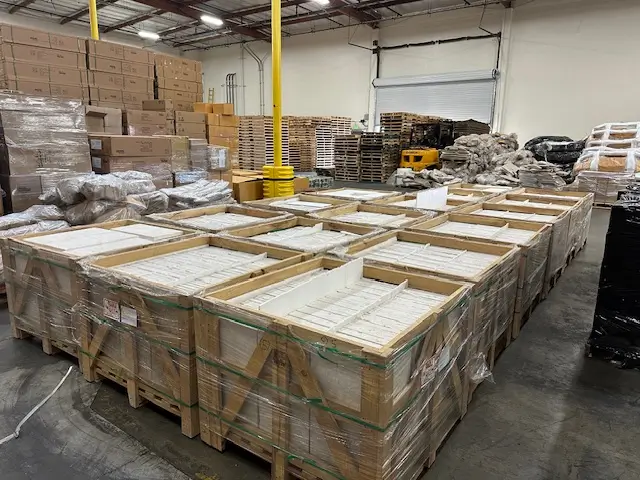
Your bid review process should include a warehouse visit before you commit volume. Slab yards in Arizona carry mixed inventory — some batches from the same quarry will show color and vein variation that photographs simply don’t capture. The only way to evaluate granite quality across Arizona suppliers for large-format projects is to see the material in person under consistent lighting conditions.
Seismic and Structural Load Considerations for Arizona Projects
Arizona sits within USGS Seismic Zone 2B in several regions, particularly in the western counties along the Basin and Range Province. That designation carries real implications for how you specify granite attachments in vertical applications — countertops, cladding panels, and stone veneer installations all require anchor systems engineered to resist lateral forces. Suppliers who stock only standard-thickness slabs may not carry the 3/4-inch gauged material needed for anchored veneer systems specified under seismic provisions.
In Flagstaff, you’re working at 6,900 feet elevation, which introduces frost line considerations that southern Arizona suppliers often underestimate. The frost depth in Coconino County reaches 20 to 24 inches — a factor that changes base preparation requirements entirely and affects which granite products perform across freeze-thaw cycles. You need a supplier who stocks material with absorption values low enough to pass ASTM C97 freeze-thaw testing, not just a supplier who can get you slabs quickly.
Load-bearing calculations for granite countertop applications in commercial kitchens and public assembly spaces in Arizona often require engineering sign-off. Granite with a compressive strength above 19,000 psi — typical of harder igneous varieties — satisfies most structural engineering requirements without additional reinforcement. Ask your supplier for compressive strength data upfront; it’s the document that keeps the structural engineer’s review moving.
Bulk Granite Slab Purchasing and Arizona Logistics
Bulk granite slab purchasing in Arizona introduces logistical variables that smaller orders don’t expose. Truck access to job sites in the Phoenix metro versus rural or semi-rural project locations creates real scheduling constraints — a supplier operating with a well-maintained regional delivery fleet and experienced drivers familiar with Arizona road restrictions is worth paying a slight premium over a supplier who brokers delivery through a third party. Your timeline depends on it.
Arizona wholesale stone pricing for contractors typically drops at volume thresholds of 500 square feet, 1,000 square feet, and 2,000 square feet — but those thresholds only make financial sense when you have warehouse inventory confirmed, not just a supplier’s verbal commitment. Projects in Scottsdale — where high-end residential and commercial specifications demand tight aesthetic continuity — often require holding an entire lot from a single quarry pull. Confirm with your supplier whether their warehouse carries reserved lot inventory or operates on first-come allocation. The answer determines whether your 3,000-square-foot kitchen project arrives with matching veining from start to finish or ends up with a noticeable batch shift in the second delivery.
At Citadel Stone, we maintain regional warehouse stock specifically sized for volume contractor orders, which lets you confirm material on hand before you commit project timelines to your client. Our technical team has helped contractors structure phased delivery schedules that keep slab storage at the site manageable without risking a mid-project supply gap.
Consider these logistics checkpoints before signing a supply agreement:
- Confirmed warehouse inventory levels versus back-order lead times — typically 6 to 8 weeks for import stock
- Truck delivery capabilities, including A-frame cradle equipment for large-format slabs
- Reserved lot availability for aesthetic-critical projects
- Cutting and fabrication services offered on-site versus outsourced
- Return and exchange policy for damaged material received on truck delivery
Large-Format Granite Sourcing: What Arizona Contractors Need to Know
Large-format granite sourcing options AZ contractors trust tend to cluster around suppliers with dedicated A-frame delivery equipment and experienced crews who know how to unload slabs without edge damage. A 126-by-63-inch slab of 3/4-inch granite weighs over 400 pounds — the handling infrastructure matters as much as the material itself. Suppliers who rely on generic freight carriers for large-format material report significantly higher damage rates than those operating their own specialized truck fleet.
The slab sizing standards most relevant to Arizona commercial projects follow SLGA (Slab and Gauged Stone) production guidelines, with standard slabs running 110-by-57 inches and jumbo slabs reaching 126-by-63 inches. Your layout efficiency — and therefore your material cost — depends on understanding which slab format aligns with your project’s field measurements before you place the order.
For projects in Sedona, architectural aesthetics often drive a preference for thicker, more character-driven granite selections that complement the region’s red rock vernacular. That specific aesthetic requirement narrows the sourcing options considerably — you’re looking for quarries in Brazil, India, or select domestic sources that produce warm-toned granites with appropriate movement. Confirm your supplier has sourcing relationships with those quarry regions, not just spot-market access to whatever inventory is available at a given moment.
For contractors managing multiple Arizona projects simultaneously, Arizona wholesale granite from Citadel Stone provides a centralized sourcing solution with documented lot traceability across project sites.
Comparing Pricing Structures Across Arizona Granite Suppliers
Comparing granite suppliers in Arizona on price requires you to normalize quotes against a consistent set of variables: slab size, finish type, thickness, and delivery terms. Arizona wholesale stone pricing for contractors varies more than most buyers expect — a supplier offering $28 per square foot delivered is not directly comparable to one offering $22 per square foot FOB their warehouse if your project site is 60 miles from their yard and you’re moving 2,000 square feet.
The pricing tiers most Arizona suppliers use look roughly like this:
- Standard commercial granite (polished, 3/4-inch, domestic or Brazil origin): $22 to $38 per square foot at volume
- Premium and exotic granite (book-matched, large movement, specialty quarry): $45 to $85 per square foot
- Gauged thin stone (3/8-inch to 1/2-inch, cladding applications): $18 to $32 per square foot
- Fabricated countertop slab pricing (edge profiles, cutouts included): typically $65 to $120 per square foot installed
The detail that separates experienced buyers from first-time volume purchasers is understanding what’s embedded in the fabrication cost versus what gets billed separately. Edge profiles, radius cuts, sink cutouts, and polished returns each carry line-item charges at most Arizona fabrication shops. Your comparison should include a fully-loaded cost per square foot for the finished application, not just the raw material price.
Supplier Reliability and Documentation Standards
The difference between a supplier you can build a long-term contractor relationship with and one you use once comes down to documentation discipline. Material certifications, delivery manifests, lot tracking numbers, and damage claim processes all signal how professionally a supplier operates. In Arizona’s construction environment — where inspectors in Maricopa, Pima, and Yavapai counties each interpret material documentation requirements slightly differently — a supplier who generates clean, consistent paperwork saves you significant project administration time.
Here’s what reliable supplier documentation looks like in practice:
- Material test reports referenced to specific lot numbers, not generic product lines
- Delivery documentation with slab count, square footage, and receiving condition notes
- Country of origin documentation available for projects requiring domestic or trade-agreement sourcing
- Warranty terms clearly defined — most reputable suppliers offer material defect coverage for 12 to 24 months
- Dedicated account contact with technical knowledge, not just order processing capability
At Citadel Stone, we source granite directly from quarry partners we’ve maintained relationships with for years, which means our lot documentation goes back to the extraction point — not just to the import broker. That traceability matters when a project specifier asks for origin verification or when a warranty claim requires proving material consistency across multiple deliveries.
Installation Performance: Thermal Factors as Secondary Specifications
Arizona’s thermal environment doesn’t drive the primary specification decision for granite — code compliance and structural requirements do — but it shapes several secondary variables worth understanding. Granite’s thermal expansion coefficient of approximately 4.5 to 7 × 10⁻⁶ per °F means that a 10-foot run of exterior granite in Phoenix, cycling from 50°F at night to 145°F surface temperature mid-afternoon, will expand and contract roughly 3/32 of an inch. Your joint spacing and setting material need to accommodate that movement or you’ll see cracking at the grout lines within two to three seasons.
The practical joint specification for exterior granite in Arizona’s low desert runs 1/8 to 3/16 inch minimum, wider than the 1/16-inch joints many fabricators prefer for interior aesthetics. Setting mortars rated for high-temperature service — ANSI A118.4 compliant large-format tile mortars with non-sag properties — perform significantly better than standard thin-set in Arizona exterior applications. This is the kind of installation detail that doesn’t show up in a supplier’s marketing materials but determines whether your installation looks right in year five.
Moving Forward: Choosing the Right Granite Supplier in Arizona
The comparison that matters when evaluating granite suppliers in Arizona isn’t a line-item price race — it’s a structured assessment of documentation quality, inventory reliability, code-compliance knowledge, and logistics capability. Suppliers who can speak fluently about ASTM C615 compliance, lot traceability, and Arizona’s jurisdictional variation in base preparation requirements are operating at a professional level that translates directly into fewer permit delays and fewer field surprises. The ones who lead with price and trail off when you ask for test reports are telling you something important about how your project will go.
As you finalize your supplier selection, the financial side of the equation deserves equal rigor. Understanding how to structure a stone budget against realistic Arizona market pricing will sharpen your bid accuracy considerably — Stone Supplier Pricing vs Budget: Arizona Projects covers the cost modeling detail that makes the difference between a profitable project and a margin-eroding one. Builders in Tucson, Mesa, and Chandler comparing wholesale granite suppliers in Arizona will find that Citadel Stone offers direct slab access with transparent volume pricing structures.