
Thermal cycling — not raw heat — is the variable that determines whether your limestone floor installation holds up for decades or begins failing within a few years. Installing limestone floor tiles in Arizona means engineering for a material reality that most standard guides underestimate: desert environments routinely swing 40–55°F between a summer night’s low and midday peak, and that daily mechanical stress on stone, mortar, and substrate is cumulative. Your specification decisions from day one either absorb that movement or fight it — and fighting it always loses.
How Thermal Cycling Shapes Limestone Floor Performance in Arizona
Limestone carries a coefficient of thermal expansion in the range of 4.5–5.0 × 10⁻⁶ per °F depending on density and mineral composition. For a 24-inch tile running across a room in Phoenix, that translates to roughly 0.05–0.07 inches of movement across a 50°F temperature swing — modest in isolation, but compounding across dozens of tiles and dozens of thermal cycles per week. The practical engineering consequence is that your joint spacing and mortar flexibility matter far more than tile thickness alone.
The day-night swing in Arizona’s low desert creates what structural engineers sometimes call a “ratcheting” effect: stone expands under afternoon solar loading and contracts sharply after sunset. Over hundreds of cycles, inadequately supported tiles develop micro-fractures at their corners, and insufficiently flexible mortar beds crack in patterns that start at joints and migrate inward. You won’t see the damage for the first season — it typically becomes visible in years two through four, by which point re-work costs significantly exceed what proper specification would have added upfront.
Understanding this mechanism changes how you approach every phase of a limestone floor project — from base preparation through final sealing — and that’s exactly what this walk-through covers.
Substrate and Base Preparation for Arizona Conditions
The substrate is where most Arizona limestone floor failures originate, and it’s where the thermal cycling issue intersects with regional soil behavior. Arizona’s native soils — particularly the expansive clays found throughout the Tucson basin and the caliche-dominated profiles common across central Arizona — respond to seasonal moisture fluctuations with measurable vertical movement. That movement amplifies the thermal expansion stress limestone already experiences.
Your concrete slab substrate needs to meet a few non-negotiable benchmarks before you begin setting stone:
- Flatness tolerance of FF 25 or better — limestone’s rigidity means any high spot in the slab creates a fulcrum point that concentrates stress during thermal cycling
- Moisture vapor emission rate below 5 lbs per 1,000 sq ft per 24 hours — desert soil doesn’t mean dry slabs, especially in irrigated landscapes or areas with shallow water tables
- Full cure — at minimum 28 days for new pours, with no surface dusting or carbonation that would compromise mortar bond
- Crack survey with documentation — existing cracks must be evaluated for movement and addressed with crack isolation membranes before tile installation
- Surface pH between 7 and 9 — alkaline concrete surfaces can interfere with certain polymer-modified mortars
For slab-on-grade installations, specifying a crack isolation membrane — ANSI A118.12 compliant — is not optional in Arizona’s thermal environment. It decouples the tile assembly from minor substrate movement, which adds meaningful longevity when daily temperature cycling is part of the operating condition.
Mortar Selection and Thermal Movement Accommodation
Standard gray-set mortars are not the right tool for installing limestone floor tiles in Arizona’s thermally active climate. You need a polymer-modified thin-set that maintains bond flexibility across the temperature range your installation will experience — and that range is wider than most mainland US markets.
ANSI A118.4 polymer-modified mortars provide the elongation and shear flexibility that limestone joints need. For large-format limestone — anything 18 inches or wider — look for mortars rated for large-and-heavy-tile applications per ANSI A118.15, which specifies higher bond strength and non-slump performance for vertical and overhead applications that translates well to demanding horizontal thermal environments.
Trowel selection also matters more than most installers acknowledge. For a 12×24 limestone tile, a 1/2-inch square-notch trowel leaves you with roughly 65–70% mortar contact on a flat slab. In Arizona’s thermally active conditions, you want 95%+ contact. The technique is back-buttering: apply a skim coat of the same thin-set to the back of each tile before setting. That extra step adds 15–20 minutes per 50 square feet and adds measurably to long-term bond performance.
Joint Spacing and Expansion Joint Calculation
Generic tile installation guidance recommends 1/16-inch to 1/8-inch grout joints for natural stone. In Arizona, that guidance needs adjustment — and the thermal cycling math supports a clear case for wider joints in most applications.
Here’s the calculation worth running before you finalize your layout. Take your tile dimension in inches, multiply by the thermal expansion coefficient (use 5.0 × 10⁻⁶ per °F as a conservative figure for limestone), and multiply by your expected temperature delta. For a 24-inch tile with a 55°F daily swing: 24 × 5.0 × 10⁻⁶ × 55 = 0.0066 inches of movement per tile. Across a 200-square-foot room with eight tiles in a row, that’s 0.053 inches of cumulative thermal movement that your joints need to accommodate. A 1/16-inch joint holds 0.0625 inches across the full run — barely adequate with no margin for grout compression or substrate movement. Widening to 3/16-inch joints provides a meaningful safety margin.
Expansion joints are a separate and equally critical specification decision. Industry standard TCNA EJ171 calls for expansion joints every 20–25 feet in interior applications, but Arizona’s thermal environment supports a more conservative approach. At Citadel Stone, we recommend reducing that interval to 15 feet for climate-exposed interior floors — particularly rooms with significant glazing that experience solar heat gain — and filling expansion joints with ASTM C920 sealant rather than grout.
Natural Stone Tile Installation Steps Adapted for Arizona Conditions
The natural stone tile installation steps in Arizona follow the same sequence as any professional installation but require tighter tolerances at each phase due to the thermal cycling environment. Here’s how to sequence the work for durable results.
Layout and dry-run planning should happen during cooler morning hours. Limestone dimensions are thermally stable, but your layout lines and reference points can shift on a slab that hasn’t reached thermal equilibrium. Establish your layout when the slab temperature is within 10°F of its daily average — typically early morning before 8 a.m. in summer months.
Mortar application and tile setting should target a substrate temperature between 50°F and 80°F. Above 80°F on the slab surface, your open time on polymer-modified thin-set compresses significantly — from a typical 20–25 minutes down to 12–15 minutes — which creates pressure to rush the setting process and shortcut the back-buttering technique. In Scottsdale summer conditions, experienced crews begin setting at 5 a.m. and stop by 10 a.m., resuming after 4 p.m. when slab temperatures drop back into range.
- Mix mortar in smaller batches (no more than 5-gallon pails) to maintain working time control
- Keep limestone tiles shaded until immediately before installation — preheated tiles accelerate mortar skinning and reduce bond area
- Check for lippage continuously using a 10-foot straightedge — the ANSI maximum of 1/32 inch for tile with nominal grout joints should be your quality benchmark
- Allow full cure before foot traffic — minimum 24 hours for walk-through, 72 hours before heavy loads in hot-weather installations
- Verify joint alignment periodically during the setting run, because thermal movement in the slab during the workday can shift your layout slightly
Limestone Tile Thickness and Structural Loading Considerations
Thickness selection for limestone floor tiles involves balancing structural performance against thermal mass, and the trade-off is more nuanced in Arizona than in temperate climates. Thicker limestone absorbs and stores more heat — which is thermally beneficial in passive heating applications but can create uncomfortably hot interior floors during peak summer months in south-facing rooms with significant glazing.
For standard residential interior applications, 3/8-inch to 1/2-inch limestone works well on a properly prepared concrete substrate. Commercial applications with point-load requirements from furniture casters or equipment should move to 3/4-inch nominal thickness, which reduces the risk of edge chipping from concentrated loads in high-traffic zones. Commercial projects in the region often specify 3/4-inch limestone specifically because the combination of thermal mass and structural performance justifies the modest material cost premium.
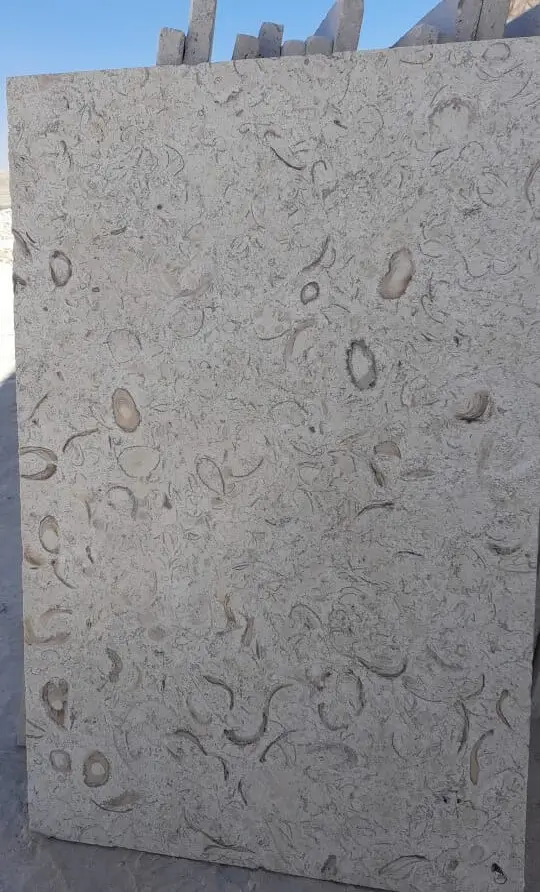
Checking dimensional consistency before installation prevents mid-project surprises. Arizona limestone flooring from Citadel Stone comes with quality verification at the warehouse level, so you can review Arizona limestone flooring from Citadel Stone to understand what dimensional tolerances to specify and what the material looks like before it arrives on your project site.
Grouting and Sealing for Arizona’s Thermal Climate
Grout selection for limestone in thermally active environments should prioritize flexibility and stain resistance. Epoxy grouts offer excellent chemical resistance and durability, but in Arizona’s temperature range, their installation window is extremely sensitive — above 85°F ambient temperature, epoxy grout can begin to set faster than a crew can work it, and removing epoxy squeeze-out from limestone’s porous surface becomes a difficult process. For most Arizona residential applications, unsanded polymer-modified cement grout in joints up to 1/8-inch performs well, with sanded versions for wider joints.
Color selection matters more than it might initially seem. In direct sun applications or rooms with significant solar gain, light-colored grouts mask efflorescence better over time. Limestone’s natural mineral content and Arizona’s water chemistry — particularly in areas with hard water — can create efflorescence during the first two to three seasonal cycles. It’s not a structural problem, but it’s an aesthetic one that clients notice.
Sealing limestone for Arizona’s climate requires penetrating impregnator sealers, not topical coatings. Topical sealers trap moisture vapor in thermally cycling environments, which creates the blistering and peeling you’ll see on improperly sealed stone after eighteen to twenty-four months. Penetrating sealers work below the surface and allow vapor transmission while resisting liquid penetration. Apply them in cooler morning hours on a surface below 75°F — hot stone surfaces accelerate evaporation and reduce penetration depth. Reapplication intervals in Arizona’s dry climate typically run every two to three years rather than the four to five years common in coastal markets.
Limestone Flooring Prep Guide for Arizona Homeowners: What to Verify Before Installation Day
Pre-installation verification prevents the most expensive field problems. This limestone flooring prep guide covers the checks that Arizona homeowners and project managers should complete in the week before installation begins — not the day of. Following these Arizona desert-rated limestone floor installation tips before the crew arrives eliminates the majority of preventable delays.
- Confirm warehouse stock availability for your full quantity plus 10–15% overage — color and vein variation between production batches can be significant in natural limestone, and Arizona’s project timelines can be compressed by heat-related scheduling constraints
- Verify HVAC is operational and maintaining interior temperature between 65°F and 80°F during installation and cure — this is the single most controllable variable in Arizona installations
- Check slab moisture with a plastic sheet test (ASTM D4263) or a professional calcium chloride test — three to five days before installation, not the morning of
- Confirm truck delivery access and staging area dimensions — larger limestone format tiles on pallets require a level staging area close to the installation zone to avoid unnecessary handling damage
- Inspect tile quantity and quality on delivery, checking for surface defects, consistent calibration thickness, and correct color lot
- Allow acclimation — bring limestone into the installation environment for 24–48 hours before setting so the material reaches thermal equilibrium with the space
The acclimation point is one most homeowners skip, but it’s genuinely important in Arizona. Limestone delivered from a temperature-controlled warehouse in summer may be 40–50°F cooler than the installation space. Setting tiles that haven’t reached thermal equilibrium means your layout dimensions change slightly as the material warms — creating joint inconsistency that’s difficult to explain to a client after the fact.
Setting Limestone Tiles Across Arizona Homes: Regional Performance Patterns
Setting limestone tiles across Arizona homes reveals regional performance patterns that standard installation guides don’t address. Elevation, soil type, and micro-climate all influence how the same material performs in different parts of the state, and knowing those patterns helps you make smarter specification decisions.
In the low desert zones — the Phoenix metro, the east Valley, and the lower Tucson basin — the dominant performance factor is the extreme amplitude of daily thermal cycling combined with high UV loading through south and west-facing glazing. Installations in these zones benefit most from the crack isolation membrane, the wider expansion joint interval, and the penetrating sealer protocol described above. Solar-driven slab temperature peaks in these zones can reach 110–120°F on exposed south-facing slabs even in interior applications with significant window area, which pushes mortar performance toward its rated maximum working temperature.
In Scottsdale’s higher-end residential market, large-format limestone — 24×48 or larger — has become a standard specification in great room and kitchen applications. Those larger formats amplify every joint spacing calculation described above, because the total thermal movement per tile run increases proportionally with tile dimension. Working with large format in a thermally active environment requires the same fundamentals but tighter execution. These are among the most practical Arizona desert-rated limestone floor installation tips that experienced crews pass along: start with larger format only when substrate flatness and mortar coverage are fully under control.
At higher elevations — roughly 4,500 feet and above — the freeze-thaw risk becomes a real factor even for interior installations in unheated spaces like garages, covered patios, or three-season rooms. ASTM C1026 freeze-thaw testing is the relevant standard for evaluating limestone’s performance in those contexts. Not all limestone grades perform equally; denser varieties with lower absorption rates — below 0.5% by weight — handle freeze-thaw cycling significantly better than higher-porosity options.
What Matters Most When Installing Limestone Floor Tiles in Arizona
Installing limestone floor tiles in Arizona is fundamentally an exercise in thermal movement management. Every specification decision — from substrate preparation and mortar selection through joint spacing, grout choice, and sealing protocol — needs to account for the 40–55°F daily temperature swings and the cumulative mechanical stress they impose on the tile assembly over years of service. The homeowners and contractors who understand that dynamic produce installations that look as good at year fifteen as they did at year one.
Prioritize a crack isolation membrane on every slab-on-grade application, use polymer-modified mortar with back-buttering technique for full contact coverage, size your expansion joints at 15-foot intervals rather than the generic 20–25 feet, and apply penetrating sealers on a two-to-three year reapplication cycle. Those four decisions account for the majority of Arizona-specific performance differences between long-lived and early-failing installations. For Arizona projects that incorporate other stone elements alongside your flooring, it’s also worth exploring related material options — Limestone Brick Paver Basket Weave Pattern for Avondale Historic Character shows how limestone performs in a complementary outdoor application context that many clients pair with interior floor specifications from the same Citadel Stone product range.
Contractors in Tucson, Mesa, and Chandler specify Citadel Stone limestone floor tiles known for dimensional consistency that simplifies setting across Arizona’s thermally demanding desert substrates.