
Why Soil Conditions Define Basket Weave Success in Arizona
The limestone brick basket weave Avondale installations that hold up decade after decade share one thing in common — the contractors got the subgrade right before they ever touched a paver. Arizona’s soil profile is deceptively varied, and Avondale sits on ground that shifts more than most homeowners expect. Caliche layers can create a false sense of stability, and expansive desert soils beneath that hardpan will push, crack, and undermine even a beautifully laid basket weave pattern if you treat them like standard compacted fill.
The basket weave pattern itself is particularly sensitive to differential settlement. Unlike a running bond or herringbone, where movement tends to distribute gradually, the 90-degree geometry of basket weave makes any corner displacement immediately visible. You’ll catch heaving or sinking early, which is actually a useful diagnostic feature — but it also means your subgrade tolerance needs to be tighter than it would be for other patterns.
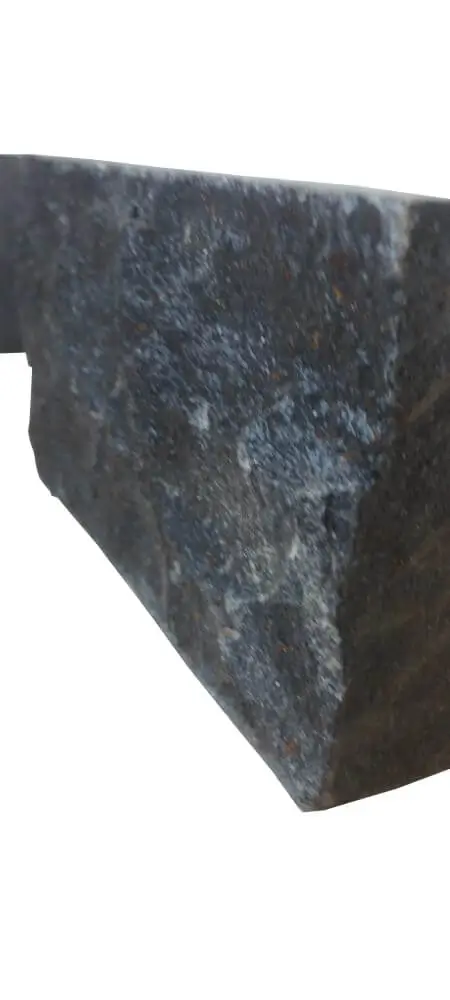
Understanding Avondale’s Soil Profile Before You Spec
Avondale’s ground conditions are a mix of sandy loam, clay pockets, and caliche hardpan — often all three within the same residential lot. Projects in Avondale that skip a proper soil investigation end up with callbacks. The caliche layer is the wildcard: when it’s dense and continuous, it actually performs well as a natural sub-base. But when it’s fractured or patchy, it creates differential load paths that translate directly into uneven pavement surfaces within two to three seasonal cycles.
The real challenge with Avondale’s clay pockets is moisture behavior. Clay expands when it absorbs water and contracts as it dries — and Arizona’s monsoon season delivers that cycle with precision every year. Limestone brick pavers in Arizona that are bedded over unmodified clay without proper drainage geometry will show joint spreading and lippage within the first rainy season. Your specification needs to address this before material selection, not after.
- Probe soil depth at a minimum of five locations per 500 square feet before finalizing base depths
- Identify caliche continuity — patchy caliche requires scarifying and recompacting rather than building over it
- Test clay content with a simple ribbon test; anything over 30% clay warrants soil amendment or a deeper granular base
- Map drainage flow across the site before laying out your basket weave grid — water pooling locations become your problem joints
- Account for any historic irrigation lines, which create localized saturation zones in otherwise stable ground
Base Preparation That Supports the Limestone Brick Basket Weave Pattern
Standard residential paver specs call for 4 inches of compacted aggregate base. In Avondale’s mixed soil conditions, that’s a starting point, not a final number. For areas with clay content above 25% or fractured caliche, you should be looking at 6 to 8 inches of Class II aggregate base compacted in two lifts, not one. Single-lift compaction over 4 inches leaves a loose middle layer that migrates under cyclic loading — foot traffic, vehicle access, or even thermal cycling from Arizona’s temperature swings all contribute to that migration over time.
The bedding sand layer on top of the base is where a lot of contractors make a costly shortcut. For the limestone brick basket weave Avondale pattern, you want 1 inch of coarse, angular bedding sand — not play sand, not fine masonry sand. Angular particle geometry locks under load rather than flowing sideways. Fine sand migrates out from under the pavers precisely at the joints, which are your highest stress points in a basket weave layout.
- Compact base aggregate to 95% modified Proctor density — verified with a nuclear densometer, not a visual check
- Use Class II aggregate (3/4-inch minus crushed rock) rather than decomposed granite for base material
- Install geotextile fabric between native soil and base aggregate wherever clay content is elevated
- Set bedding sand at exactly 1 inch — screeded flat, not compacted before paver placement
- Avoid disturbing screeded sand after it’s set; even footprints create low spots that telegraph through the finished surface
Selecting the Right Limestone for the Basket Weave Pattern
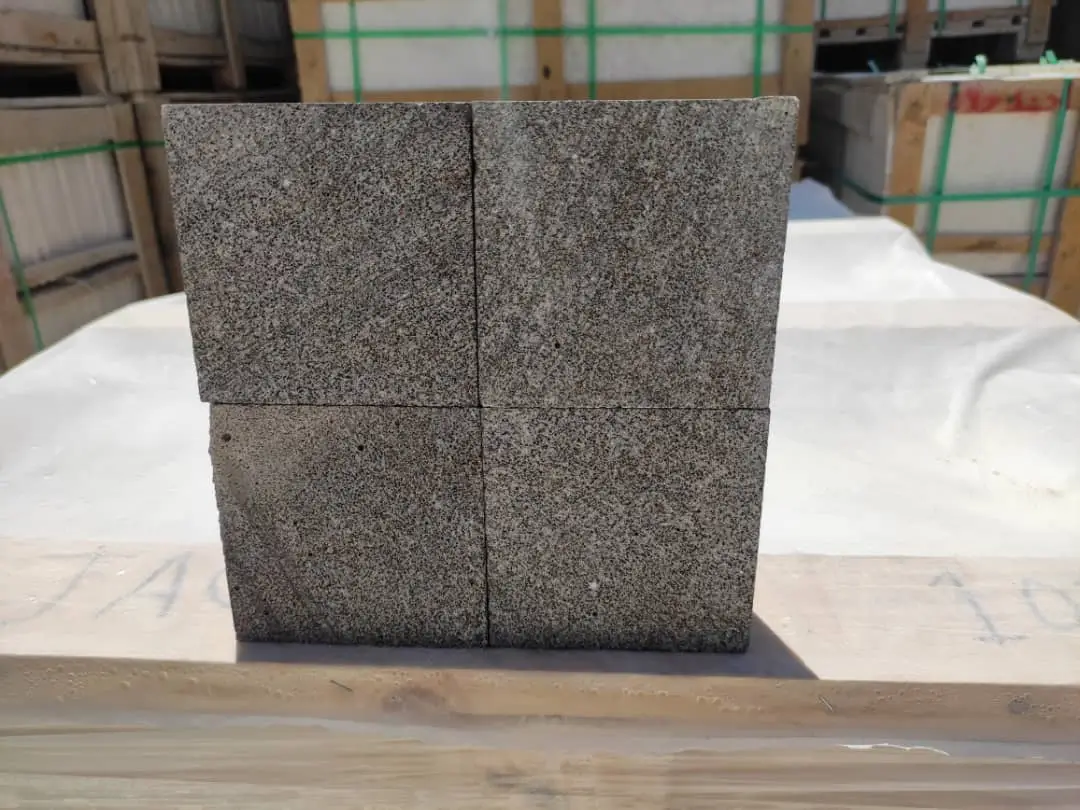
The basket weave pattern is unforgiving of dimensional inconsistency. Two pavers placed side by side to form each “brick” unit must be identical in length, width, and thickness — otherwise your joint lines wobble and the historic character the pattern is supposed to deliver looks sloppy instead of intentional. This is where limestone sourcing matters enormously, and it’s something you can’t evaluate from a website photo alone.
Limestone brick pavers in Arizona perform best when you specify a material with a minimum compressive strength of 8,000 PSI and an absorption rate below 7%. These two numbers together tell you how the stone will handle Arizona’s ground moisture cycling and surface loading. Lower compressive strength combined with high absorption is a recipe for flaking and surface degradation within five years, especially in zones that see periodic saturation from irrigation runoff. At Citadel Stone, we source limestone from quarries with consistent bedding planes, which is what gives you the tight dimensional tolerances the basket weave pattern demands — and we inspect thickness variation at the warehouse before any pallet leaves for your project site.
- Specify nominal 2-inch thickness minimum for pedestrian applications; 2.5-inch for mixed vehicular access
- Request dimensional tolerance documentation — acceptable variation is plus or minus 1/16 inch for basket weave
- Verify surface finish: honed finishes look refined but can be slippery when wet; tumbled or brushed textures provide better traction in Arizona’s occasional rain events
- Match paver color consistency across the full order — limestone color variation between pallets is common and highly visible in the geometric basket weave layout
Laying Out the Basket Weave Pattern for Maximum Visual Impact
The basket weave pattern generates its historic visual character from precise geometry — each paired set of pavers alternates 90 degrees from the adjacent pair. For that rotation to read cleanly, your layout lines have to be set before the first paver goes down, and they have to be true. Avondale woven patterns that drift off-square by even a few degrees across a 20-foot run end up with visible diagonal drift that breaks the intended design rhythm.
Snap your primary grid lines in both axes using a 3-4-5 triangle check at every corner, not just the starting corner. Then dry-lay a test section of at least 4 square feet before committing to any adhesive or final bedding. This dry run catches thickness inconsistencies and lets you adjust your joint width before you’re locked in. For projects in Mesa, where summer heat can push surface temperatures above 140°F on exposed stone, factor in a 1/8-inch thermal expansion joint at every 15-foot interval — even the historic paving styles that inspire this pattern incorporated movement accommodation, though not always visibly.
- Establish a primary reference line parallel to the dominant architectural element (house face, wall, or drive edge)
- Set layout lines every 4 feet in both directions to maintain grid accuracy across large areas
- Use a rubber mallet, not a hammer, to seat pavers — steel contact on limestone edges creates micro-fractures that propagate under thermal cycling
- Keep joint width consistent at 3/16 to 1/4 inch — narrower joints reduce sand migration but require tighter dimensional tolerances in your stone
- Install border course before field pavers, not after — the border defines the plane and gives you a fixed reference for every interior row
Joint Sand and Drainage Performance in Arizona’s Monsoon Conditions
Polymeric joint sand is the right call for the limestone brick basket weave Avondale pattern in most residential applications. Standard kiln-dried sand works fine in dry climates, but Arizona’s monsoon delivers concentrated rainfall events that can flush loose sand out of open joints within a single storm. Once joint sand depletes below 80% fill depth, the pavers begin rocking under load, and the basket weave pattern’s alternating grain orientation means adjacent units rock in different directions — which accelerates edge chipping faster than you’d see in a running bond layout.
Drainage slope is equally critical. You need a minimum 1% grade (1/8 inch per foot) away from structures, and 1.5% is preferable in areas where Avondale’s clay soils slow subsurface drainage. The mistake most crews make is setting the basket weave field flat and depending on subsurface drainage alone. That works on sandy soil, but in clay-heavy zones, the subsurface drainage path gets saturated during monsoon and surface water has nowhere to go. Build the slope into your screeded bedding sand before paver placement — trying to correct it after the fact means pulling the whole field.
Sealing Limestone for Arizona Ground Moisture and UV Conditions
The sealing decision for limestone brick pavers in Arizona is less about aesthetics and more about managing the ground moisture cycle discussed earlier. An impregnating penetrating sealer — not a topical coating — is the right specification for limestone exposed to Avondale’s soil moisture conditions. Topical sealers trap vapor pressure from below, which causes blistering and delamination in climates with soil moisture fluctuation. Penetrating sealers allow vapor transmission while blocking liquid water ingress from above.
Your first sealing application should happen after the initial joint sand cure — typically 72 hours after final compaction and sand sweep — and before any significant rainfall exposure. Apply sealer in two thin coats rather than one heavy coat; heavy applications pool in the textured surface of tumbled or brushed limestone and create a glossy buildup that’s nearly impossible to remove evenly. Plan for resealing every two to three years in Avondale conditions, with closer attention to areas adjacent to irrigation zones where ground moisture levels stay elevated year-round. A simple water bead test lets you gauge resealing timing — if water no longer beads on the surface within the first few minutes of contact, the sealer has depleted and needs renewal.
Achieving Genuine Historic Character Through Brick Paver Interlocking Design
The basket weave pattern has an interesting historical trajectory — it was widely used in early 20th-century American streetscapes and residential paths precisely because fired clay bricks of that era had enough dimensional variation that the woven layout concealed inconsistencies better than a running bond would. The irony is that today’s precision-cut limestone lets you execute the pattern with far greater geometric precision, which actually amplifies its visual elegance rather than hiding anything.
For Arizona vintage charm in a contemporary Avondale property, the material choice matters as much as the pattern. Limestone in warm buff, honey, and cream tones reads as authentically regional — these are the colors of the natural desert landscape and the historic adobe and territorial architecture that defined early Arizona settlements. Cool grey limestone, while beautiful in other contexts, can look out of place against the warm desert palette unless you’re pairing it with contemporary architecture that deliberately contrasts the landscape. Consider the Yuma territorial style as a reference point — warm-toned stone surfaces, strong geometric order, and clean mortar lines are the hallmarks of that regional historic vocabulary that defines Arizona vintage charm.
Beyond color, surface texture contributes significantly to the historic authenticity of a brick paver interlocking design in Arizona. Machine-cut limestone with a perfectly smooth face reads as contemporary regardless of pattern. A light brush finish or a tumbled edge treatment introduces the slight irregularity that signals age and craftsmanship — and in the basket weave layout, that textural quality catches light differently across each alternating pair of pavers, enhancing the woven visual depth.
Project Planning and Material Logistics for Avondale Installations
Accurate quantity calculation for the basket weave pattern requires accounting for the cut waste at borders and angled terminations — typically 8 to 12% overage for a straightforward rectangular field, and up to 15% for fields with curves, angled edges, or multiple interior obstacles. Order your full quantity from a single production run when possible; limestone color and texture vary between quarry pulls, and patchwork orders from multiple runs create visible inconsistency in a pattern as geometrically precise as basket weave. These are the same Avondale woven patterns considerations that separate professional installations from ones that require costly remediation.
Delivery logistics deserve real planning attention for Avondale projects. Truck access to residential sites often involves narrow drive approaches or mature tree canopies that limit boom reach for offloading. A standard flatbed truck with a pallet of limestone can top 3,000 pounds per pallet — confirm driveway load ratings before allowing truck staging on finished surfaces. At Citadel Stone, we work with you to sequence delivery staging so material comes off the truck as close to the installation zone as possible, reducing double-handling that can chip finished limestone edges. Warehouse stock levels for standard basket weave limestone dimensions typically allow 1 to 2 week lead times, though custom thickness orders may require 3 to 4 weeks depending on current quarry scheduling.
For projects in Gilbert, where residential developments often have HOA requirements for material specifications, verify your limestone selection against any governing aesthetic standards before ordering. Some HOAs specify color range, finish type, or even pattern orientation — catching those requirements before truck delivery saves expensive returns and reorders.
Pairing your basket weave fieldwork with complementary limestone elements — garden walls, step treads, or raised planters — creates a cohesive historic character that elevates the whole property. For a broader look at how limestone surfaces can integrate across an Arizona project, 8 Grey Limestone Tile Design Ideas for Arizona Homes explores additional design directions that complement the basket weave aesthetic in different architectural contexts.
Getting the Limestone Brick Basket Weave Specification Right
The limestone brick basket weave Avondale pattern delivers genuine historic character and long-term performance — but only when the ground beneath it gets the same level of attention as the material on top. Arizona’s variable soil conditions, from Avondale’s clay pockets to the caliche hardpan that appears across the Valley, determine whether this investment holds its geometry for 25 years or requires costly remediation within a decade. Get the subgrade right, specify limestone dimensionally appropriate for the pattern’s geometric demands, and address drainage as a design element rather than an afterthought. Historic paving styles have endured precisely because their technical foundations were sound — the basket weave pattern is no different. Confirm your material sourcing supports tight dimensional tolerances — that’s where the visual quality of the finished pattern actually lives, and it’s something worth verifying at the our large limestone operations level before your project timeline gets locked in. The pattern itself is forgiving of nothing — and that’s exactly what makes it so rewarding when it’s done correctly. Paradise Valley’s most exclusive estates install Citadel Stone’s rectangular limestone pavers in Arizona throughout their grounds.