
Finish selection is where most grey limestone projects either lock in long-term design cohesion or quietly start to unravel. The grey limestone finish options Arizona designers and contractors choose determine far more than surface texture — they define how the stone reads against desert soil tones, how it ages with minimal intervention, and whether the material holds its visual weight through years of harsh UV exposure. Specifying the wrong finish for your application isn’t a minor oversight; it can turn a well-budgeted project into a reseal-heavy maintenance problem within five years.
How Grey Limestone Reads in Arizona’s Design Language
Arizona’s residential and commercial landscape aesthetic has shifted significantly over the past decade. The old approach — terracotta tile, warm sandstone, heavy ironwork — has given way to a more nuanced desert-modern vocabulary that blends clean lines with organic materials. Grey limestone fits this shift almost perfectly. Its cool, neutral tone creates contrast against the warm ochre and rust tones of native soil while simultaneously referencing the basalt and granite outcroppings found throughout the Sonoran and Mojave landscapes.
The finish you select is what determines whether that reference feels intentional or accidental. In Mesa, where newer master-planned communities favor a transitional aesthetic between desert vernacular and contemporary minimalism, a honed finish reads as deliberate and curated — it signals a design decision rather than a default. Tumbled finishes, by contrast, carry a more tactile, historical weight that suits Spanish Colonial revival and Tuscan-inflected exteriors common in older neighborhoods.
Understanding where your project sits on that spectrum before you commit to a finish is the single most important pre-specification step. Grey limestone finish options Arizona specifiers evaluate don’t reduce to one correct surface treatment — there are several, each calibrated to a different design context.
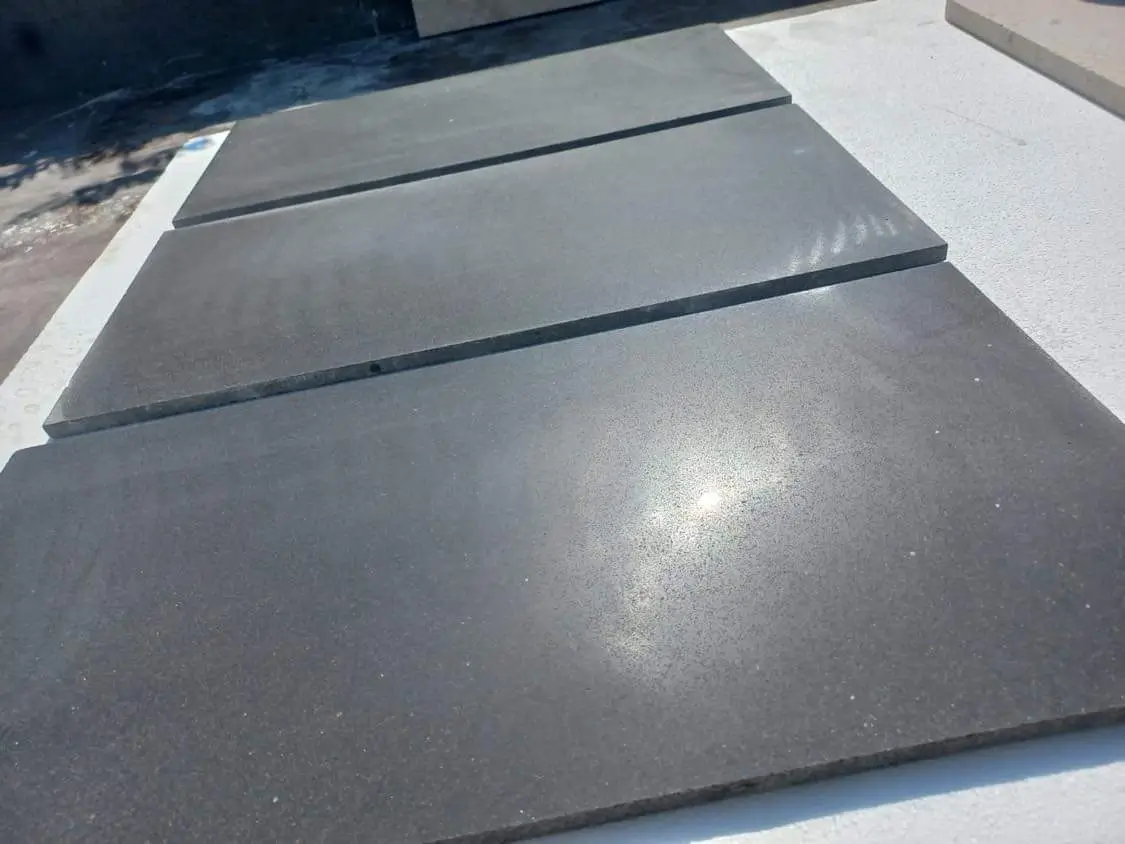
Honed Finish: What You Get and Where It Works
A honed surface is ground to a flat, matte finish — no shine, no polish, but a smooth face with tight pore closure. The stone’s natural grey tones come through with remarkable consistency because the grinding process removes the microscopic surface variation that makes raw-cut limestone look uneven. Honed grey limestone photographs almost like concrete but carries a warmth that concrete can’t replicate once you see it in natural Arizona light.
For contemporary pool surrounds, interior courtyard floors, and large-format patio layouts, honed limestone delivers the clean geometry that modern desert architecture demands. The surface integrates naturally with architectural concrete walls, steel corten accents, and gravel-mulched xeriscaping. Honed versus tumbled limestone for AZ homeowners often comes down to this single question: do you want the stone to read as a designed element or a natural one?
- Honed surfaces offer consistent color saturation — particularly valuable when matching grey tones to exterior wall renders
- Flat-face geometry simplifies grout joint alignment and produces cleaner sight lines across large installations
- Slip resistance on honed limestone meets most residential code requirements, but pool deck applications should verify ANSI A137.1 dynamic coefficient of friction values above 0.42 wet
- Maintenance sealing every 24 months with a penetrating silicone impregnator is standard for honed surfaces in Arizona’s UV conditions
- Efflorescence migration is minimal with honed finishes due to reduced surface porosity compared to tumbled or brushed alternatives
Tumbled Finish: Texture, History, and Arizona Applications
Tumbling rounds the edges, softens the face, and introduces the kind of organic irregularity that makes limestone look as though it’s been in place for decades the moment installation is complete. For landscape designers working in Gilbert‘s established residential neighborhoods — where Spanish Colonial and Mediterranean-influenced architecture still dominate — tumbled grey limestone delivers the visual weight and historical reference those styles require.
The texture isn’t just aesthetic. Tumbled surfaces produce a naturally higher wet slip resistance reading, which makes them practical for pool coping, water feature surrounds, and entry approaches that receive morning irrigation overspray. The rounded edges also handle foot traffic better in barefoot applications — the stone’s corners don’t present the catching hazard that sharp-cut honed pieces can create over time as joint sand settles.
- Tumbled pieces typically read 2-3 shades lighter than the same stone in honed format — account for this in color palette planning
- Edge rounding from the tumbling process reduces the need for secondary edge profiling on coping and step applications
- Irregular face variation means tighter QC on your material order — warehouse stock should be inspected for consistent depth range before delivery
- Grout joint width typically runs 3/8 to 1/2 inch on tumbled pieces versus 1/8 to 1/4 inch on honed, which affects the visual rhythm of the finished floor
- Natural grey limestone surface types in Arizona’s tumbled category perform well in high-foot-traffic zones without requiring the surface sealers that honed finishes demand
Brushed Surfaces for Arizona Outdoor Spaces
Brushed grey limestone outdoor spaces in Arizona represent a specification that sits between honed and tumbled in both texture and visual character. The surface is mechanically wire-brushed after cutting, which opens the stone’s grain without rounding the edges or dramatically altering the face color. What you get is a slightly rippled, directional texture that catches raking light — particularly striking in the low-angle morning and evening sun that defines the Arizona desert experience during most of the year.
Brushed finishes have gained real traction in high-end xeriscaping projects where the stone needs to integrate with decomposed granite groundcover, agave plantings, and low-water ornamental grasses. The texture references the natural weathering of Arizona’s indigenous rock formations without fully committing to the roughness of tumbled stone. For projects in Chandler’s newer luxury residential developments, brushed grey limestone walkways and entry courts have become a go-to specification precisely because they read as design-forward while still feeling grounded in the regional landscape palette.
Brushed grey limestone outdoor spaces Arizona designers favor also benefit from a practical thermal advantage — the textured surface breaks up solar gain more effectively than a flat honed face, reducing the peak surface temperature by a measurable margin during summer afternoon exposure. That said, the primary driver for choosing brushed should still be aesthetic integration, not thermal performance alone.
Comparing Finishes in Desert Xeriscaping Contexts
Desert xeriscaping places specific demands on stone finish selection that differ substantially from turf-based landscape environments. Without grass to buffer visual transitions, your stone finish becomes a primary design element rather than a secondary hardscape border. Every ripple, edge treatment, and surface tone reads at full intensity against gravel mulch and native planting.
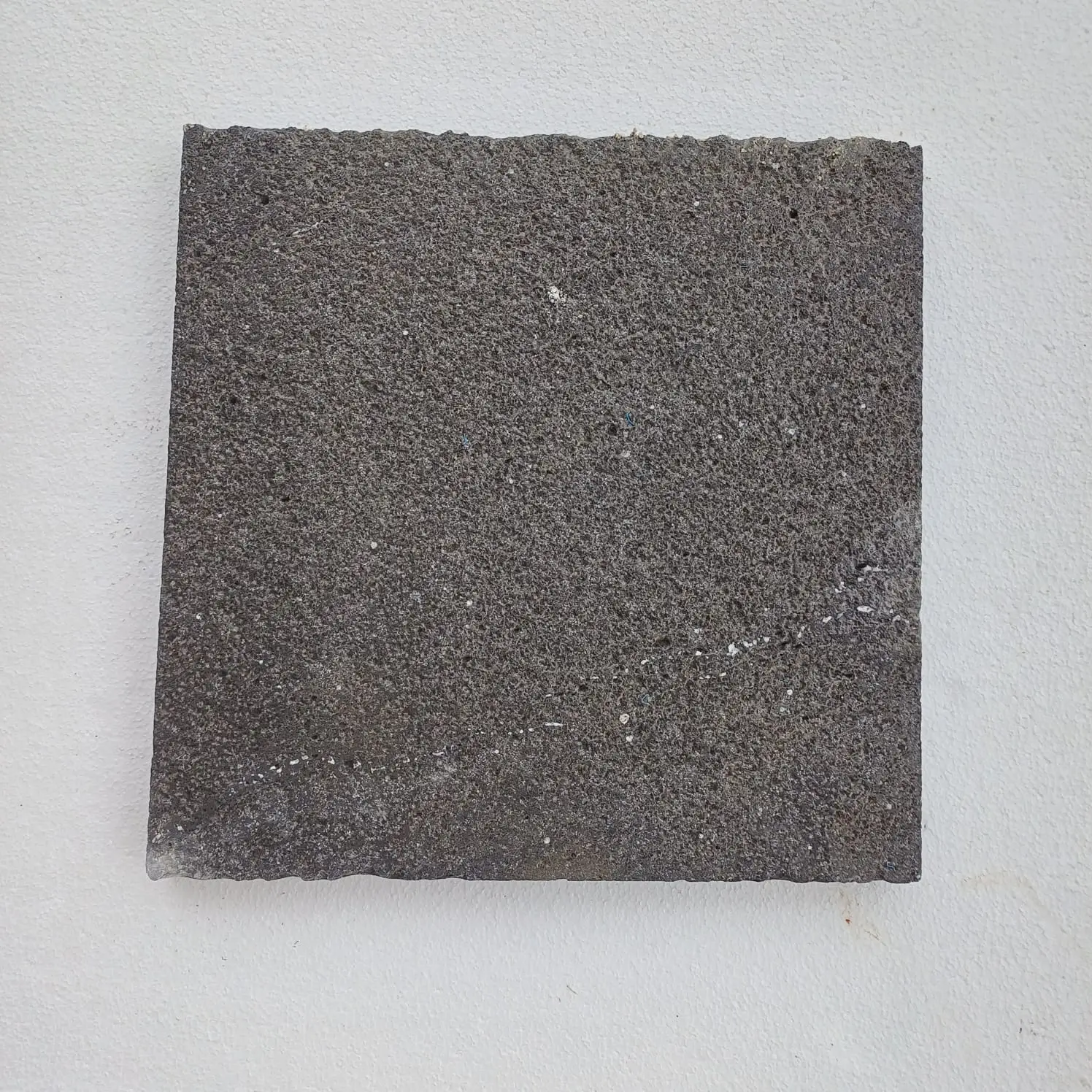
The Arizona desert-rated grey limestone selection guide for xeriscaping applications generally points toward brushed or tumbled finishes for larger horizontal planes — patios, garden paths, and decomposed granite transition zones — while honed finishes work best in smaller, architecturally defined areas like covered terraces and interior courtyards. This isn’t a rigid rule, but it reflects how each finish interacts with the visual noise level of a planted desert landscape.
- Honed limestone adjacent to coarse decomposed granite can create a jarring contrast — use brushed stone as a visual transition element if both materials appear in the same composition
- Tumbled pieces integrate naturally with river-washed boulder arrangements and dry-stack wall features common in Arizona xeriscaping
- Brushed finishes hold their texture profile better than tumbled over time — tumbled edges continue to soften with foot traffic, which affects long-term color matching if you add material later
- Sealing schedules differ: brushed surfaces in full-sun Arizona exposure typically need resealing every 18-24 months; tumbled surfaces, with their higher inherent porosity, may require annual sealing in zones with high organic debris
For reference, Arizona grey limestone from Citadel Stone covers the full material range available for these xeriscaping and outdoor design applications.
Matching Finish to Arizona’s Architectural Traditions
Arizona’s built environment isn’t monolithic. You’re dealing with at least four distinct architectural traditions in the Phoenix metro alone — Territorial, Spanish Colonial Revival, Organic desert modern, and Contemporary minimalist — each of which interacts differently with grey limestone surface treatments.
Territorial and Spanish Colonial styles were historically built with rough-faced masonry and hand-formed clay tile. Tumbled grey limestone honors that material legacy in a way that honed stone can’t — the surface irregularity belongs to the same visual language as adobe coursework and rough-sawn timber. For these project types, the specification decision is usually straightforward once you frame it correctly.
Organic desert modern — think structures that seem to grow from the site rather than sit on it — typically benefits from a mix of brushed and natural-split limestone surfaces. The directional grain of brushed stone echoes the stratification visible in nearby rock formations, and the grey tone grounds the composition without competing with the landscape. Specifiers working across the Phoenix metro are increasingly combining brushed grey limestone decking with natural-split veneer on retaining walls to create a continuous material narrative through the landscape.
Contemporary minimalist projects demand precision — honed finishes, consistent joint widths, and careful color-matching across material lots. At Citadel Stone, we batch our honed grey limestone to ensure color consistency within a single order, which is a detail that matters significantly when you’re running large-format tiles across an open patio without interruption.
Thickness and Format Considerations by Finish Type
Finish type and stone thickness aren’t independent decisions. The mechanical process used to create each finish affects how thin the stone can go before structural integrity becomes a concern — particularly relevant in Arizona’s temperature cycling environment, where daily thermal expansion and contraction stress the stone consistently.
- Honed grey limestone in residential patio applications: 3/4 inch minimum for areas under 200 square feet; 1 inch or thicker for larger continuous fields to manage thermal flex
- Tumbled pieces are almost always supplied at 1 to 1.5 inch nominal thickness — the tumbling process itself requires sufficient mass to prevent edge chipping during production
- Brushed limestone can be produced at 3/4 inch for wall cladding applications, but horizontal traffic surfaces should be specified at 1 inch minimum
- Pool coping in any finish should be specified at 1.25 to 1.5 inches — the cantilevered edge carries point loads from pool users and needs the depth
- Large-format honed pieces (24×24 and above) need a flexible mortar system rated for thermal movement — standard cement-based thinset isn’t adequate in Arizona’s summer heat range
Your warehouse order should always specify the nominal thickness range you’ll accept and the maximum variance within a lot. A tolerance of plus or minus 1/8 inch is standard, but for honed installations where lippage is visible, tighten that to 1/16 inch and confirm with the supplier before the truck ships your material.
How Finish Affects Grey Tone and Color Behavior Over Time
Grey limestone isn’t a single color — it’s a range of warm blue-greys, cool silver-greys, and taupe-inflected neutral greys, and the finish you select changes how those undertones read in Arizona’s particular quality of light. The high UV intensity and strong directional shadows of desert environments make finish-driven color behavior more pronounced than in softer-light climates. Selecting the right grey limestone finish options Arizona conditions demand means accounting for how the stone will look not just on installation day, but through seasons of sun, rain, and foot traffic.
Honed finishes read cooler and more silver in direct sun, warmer and more taupe in shade. This shift can be dramatic enough to look like two different stones depending on the time of day and the angle of light — something worth considering for shaded patio areas adjacent to open sun zones. Brushed surfaces hold their color more consistently across lighting conditions because the textured face diffuses light rather than reflecting it directionally.
- Wet sealing darkens all grey limestone finishes by approximately 15-20% — always view sealed samples before approving a color match
- Tumbled stone tends to lighten as the surface weathers, which can work in your favor if you prefer a slightly faded, aged appearance over time
- Honed finishes show water spots and mineral deposits more readily than brushed or tumbled — factor this into maintenance expectations for pool deck and irrigation-adjacent applications
- UV bleaching is real in Arizona conditions — specify stone with a CIE whiteness index appropriate for your desired end-state color rather than the installation-day color
Decision Points for Grey Limestone Finish Selection in Arizona
The practical reality of grey limestone finish selection in Arizona comes down to a sequence of concrete questions, not abstract preferences. Start with the architectural style and work outward — every good finish decision flows from design intent, and every poor one starts with a contractor picking a sample because it was available at the warehouse that week. Once you’ve established the design context, layer in the application (traffic type, sun exposure, adjacent materials), and the finish choice usually becomes clear without requiring a lengthy deliberation.
The Arizona desert-rated grey limestone selection guide approach applies here too: match the finish to the environment first, then refine for aesthetics. Natural grey limestone surface types in Arizona vary enough between honed, brushed, and tumbled that treating them as interchangeable will produce inconsistent results across a project. Honed versus tumbled limestone for AZ homeowners remains a foundational decision that shapes every downstream specification — sealing schedule, grout joint width, edge profile, and thickness all follow from it.
For projects across the Phoenix metro, sourcing consistency is as important as initial material selection. A finish that looks perfect in a sample board can shift if your second truck delivery comes from a different quarry lot. At Citadel Stone, we document the quarry batch and finish specification for every order so you can match material accurately if the project requires a future expansion. That kind of supply chain transparency is what separates a smooth project from one that creates headaches during closeout.
As you finalize your limestone specification, related hardscape elements deserve the same level of deliberate selection. For projects where grey limestone meets darker accent materials, How to Choose Black Limestone Cobbles in Arizona covers a complementary application that pairs naturally with grey limestone in contemporary desert landscape design. Contractors in Tucson, Mesa, and Chandler specify grey limestone finishes from Citadel Stone, selecting brushed and tumbled surfaces that manage heat absorption across Arizona’s demanding desert climate.