
Cobblestone pavers in Arizona face a performance challenge that most buyers don’t fully account for — not the heat itself, but the relentless cycling between extremes. Diurnal temperature swings of 40°F to 55°F are common across the Phoenix metro, and in higher desert communities, those swings can push past 60°F within a single 24-hour period. That repeated contraction and expansion is what separates a pavement that ages gracefully from one that starts spalling at the joints within a few seasons. Selecting the right cobblestone pavers in Arizona means understanding that thermal cycling — not aesthetics — drives every specification decision that matters.
Your buying decision for cobblestone pavers needs to be grounded in how specific stone grades, thickness ranges, and joint systems respond to that cycling — not just how they photograph in a showroom. This guide walks through the material science, budget variables, and specification decisions that actually determine long-term performance in Arizona conditions.
Thermal Cycling: What It Actually Does to Stone
Most Arizona homeowners hear “desert climate” and assume their primary concern is UV exposure or heat absorption. The thermal cycling reality is more structurally demanding than that. Stone expands at a rate governed by its coefficient of thermal expansion — for most natural cobblestone, that lands between 3.0 and 5.5 × 10⁻⁶ per °F depending on mineralogy. Over a 50°F daily swing on a 10-foot cobblestone run, you’re looking at cumulative movement in the range of 0.018 to 0.028 inches per cycle.
That sounds small, but multiply it across 300+ high-swing days per year and you understand why under-specified joint systems fail. Rigid mortar joints crack under this movement, sand-set joints migrate without proper edge restraint, and thin-gauge cobbles fracture at stress concentrations near their edges. Your specification needs to accommodate this movement, not resist it.
- Natural cobblestone with water absorption below 3% handles thermal cycling better — less moisture infiltrates joint interfaces and freeze-thaw damage potential drops significantly
- Granite and basalt cobbles exhibit lower thermal expansion coefficients than limestone or sandstone, making them preferable where cycling is most severe
- Nominal 3-inch thickness is the minimum for vehicular-rated cobblestone in Arizona — anything thinner concentrates bending stress at the mid-point during temperature extremes
- Joint width of 3/8 inch to 1/2 inch accommodates expansion without allowing polymeric sand to de-bond from stone faces
- Edge restraint systems need to be anchored at 12-inch intervals maximum in high-cycling environments — the standard 18-inch spacing creates flex that compromises the entire field
Understanding Cobblestone Grades for Arizona Projects
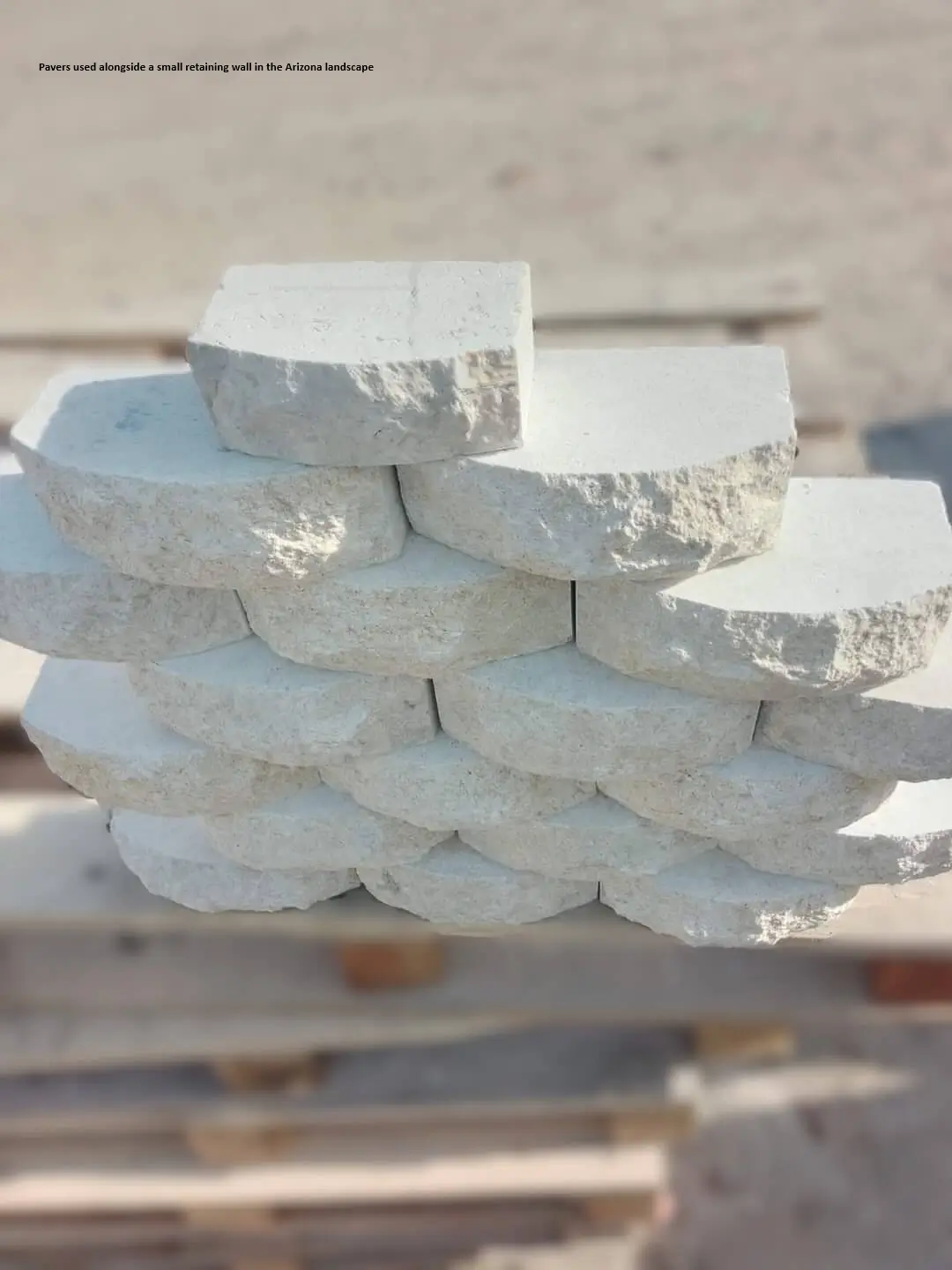
Not all cobblestone is graded equally, and the terminology gets used loosely enough in the market that you need to know what questions to ask. Commercial-grade cobblestone typically carries a minimum compressive strength of 8,000 PSI with tight dimensional tolerances — usually ±3/16 inch on face dimensions. Architectural grade adds surface finish consistency to that strength standard. Economy or utility grade drops the dimensional tolerance significantly, which creates installation challenges when you’re trying to maintain consistent joint widths under thermal movement stress. Matching cobblestone material grades to Arizona outdoor projects is the first decision that separates a durable installation from one that requires early repair.
For Arizona outdoor projects, the grade choice affects more than aesthetics. Tighter dimensional tolerances mean more predictable joint widths, which means more predictable expansion accommodation. A cobble that varies 3/8 inch across its face dimension creates joints that pinch in some locations and gap excessively in others — and both conditions accelerate deterioration under cycling.
- Commercial grade: compressive strength 8,000–12,000 PSI, dimensional tolerance ±3/16 inch, appropriate for driveways and vehicular areas
- Architectural grade: compressive strength 10,000+ PSI, surface finish consistency rated, appropriate for high-visibility pedestrian and entertainment areas
- Economy grade: variable compressive strength, dimensional tolerance ±3/8 inch or greater, appropriate for low-traffic garden paths where thermal performance is less critical
- Tumbled finish cobblestone has naturally radiused edges that reduce stress concentration points — a genuine performance benefit in high-cycling climates, not just an aesthetic choice
- Split-face cobblestone exposes raw mineral faces that can be more absorptive than sawn-and-sealed surfaces — verify absorption rates before specifying for pool-adjacent or irrigated areas
At Citadel Stone, we inspect every pallet of cobblestone for dimensional consistency before it leaves our warehouse — it’s a step that matters more than most buyers realize until they’re mid-installation and dealing with joints that won’t hold their geometry.
Stone Paver Pricing Per Square Foot in Arizona
Budget planning for natural cobblestone pavers in Arizona requires you to think in terms of total installed cost, not just material cost per square foot. The material component typically runs $8 to $22 per square foot depending on stone type, grade, and thickness — but installation labor, base preparation, and jointing materials can push total project cost to $18 to $45 per square foot or more for properly engineered work. Using an Arizona desert stone paving cost guide framework helps you account for these compounding variables before contractor bids arrive.
Here’s where the budget planning for natural pavers in Arizona gets important: skimping on base depth or joint system quality in a high-thermal-cycling climate costs you a repair cycle at years 7 to 10 that often exceeds the original installation savings. The most expensive cobblestone installation is the one you have to redo.
- Granite cobblestone: $12–$22/SF material, highest durability, lowest maintenance cycle cost over 20 years
- Basalt cobblestone: $10–$18/SF material, excellent thermal stability, natural slip resistance makes it valuable around pools and water features
- Limestone cobblestone: $8–$14/SF material, requires sealing every 2–3 years in Arizona, higher long-term maintenance cost than granite
- Reclaimed cobblestone: $14–$28/SF material, highly variable quality, requires experienced installation crews familiar with non-uniform dimensions
- Base preparation adds $3–$6/SF in labor and materials — non-negotiable in Arizona clay soils where expansion under moisture further complicates thermal cycling effects
Reviewing our Arizona cobblestone paver pricing before building your project budget gives you specific stone paver pricing per square foot in AZ to check against contractor bids — knowing those numbers early prevents scope-creep surprises when estimates arrive.
Base Preparation: The Layer That Thermal Cycling Tests Hardest
Your cobblestone surface is only as stable as the base beneath it, and in Arizona, that base has to perform under conditions that would challenge well-engineered pavement in most other states. The combination of thermal expansion at the surface, potential for clay soil expansion lower in the profile, and occasional monsoon saturation creates a base preparation challenge that demands real engineering discipline.
Standard residential specifications often call for 4 inches of compacted aggregate base. In Arizona, for cobblestone applications, 6 inches is a more defensible minimum for pedestrian areas and 8 to 10 inches for any vehicular loading. Projects in Gilbert frequently encounter expansive desert clay soils that benefit from geotextile separation fabric between native subgrade and aggregate base — without it, clay fines migrate upward through the aggregate during monsoon events and progressively reduce base stiffness.
- Compact aggregate base in 2-inch lifts to 98% Modified Proctor density — single-lift compaction on deep fills creates air pockets that collapse under thermal and load cycling
- Use angular crushed aggregate, not rounded gravel — angular particles interlock under compaction and resist migration under load
- Bedding sand layer should be 1 inch nominal — deeper bedding sand allows more pavement movement and increases joint instability over time
- Geotextile fabric at the subgrade interface is cost-effective insurance against clay contamination, adding roughly $0.50–$0.80/SF to base cost
- Drainage slope minimum 1.5% away from structures — thermal expansion forces are manageable when drainage functions correctly, but moisture trapped at the base amplifies expansion damage significantly
Joint Systems and Thermal Expansion Calculations
The joint is where thermal cycling either gets managed or causes damage — there’s no neutral outcome. Polymeric sand has become the standard for cobblestone joints in most markets, but Arizona’s UV intensity degrades low-quality polymeric sand binders faster than manufacturers’ published lifespans suggest. Specifying a polymeric sand rated for high-UV environments with a binder system designed for temperatures above 140°F surface exposure is essential — standard big-box polymeric sand doesn’t meet that threshold reliably.
Thermal expansion calculations give you a concrete framework for joint sizing decisions. Using a coefficient of 4.0 × 10⁻⁶ per °F for a granite cobble and a 55°F daily swing: a 10-foot run expands approximately 0.026 inches per cycle. Over 15 feet, that’s 0.040 inches. Your joint system needs to absorb that movement without cracking the binder or pumping sand out of the joint. A 3/8-inch joint filled to 90% depth leaves adequate compression room while maintaining structural support at the stone face.
- High-UV-rated polymeric sand performs better at 3-year refresh cycles in Arizona than economy-grade sand at any cycle length
- Expansion joints using flexible backer rod and polyurethane sealant are mandatory at hard interfaces — where cobblestone meets concrete curbs, walls, or building foundations
- Joint sand should be vibrated into place in two passes, not just swept and watered — single-pass filling leaves voids that collapse under the first significant thermal cycling event
- At Citadel Stone, our technical team advises specifying joint sand that matches the stone color family — it prevents the visual striping effect that becomes pronounced when joints lighten from UV exposure at different rates than the stone face
Natural Cobblestone Pavers in Arizona: Material Selection by Application
Different applications within the same Arizona project have genuinely different performance requirements, and selecting natural cobblestone pavers in Arizona without matching material to application is one of the most common specification mistakes. A driveway entrance, a pool deck surround, and a garden pathway all see the same thermal cycling but experience different load, moisture, and maintenance conditions.
Driveways and vehicular access areas require cobblestone with minimum 3-inch thickness and compressive strength above 8,000 PSI. Anything less under vehicular loading creates point-contact stress at the stone edges that accelerates fracture — thermal cycling then finds those micro-cracks and widens them rapidly. Projects in Chandler where suburban driveways carry substantial pickup truck and SUV traffic should budget for 4-inch cobble thickness as a standard specification, not an upgrade.
- Vehicular driveways: granite or basalt cobble, 3–4 inch thickness, commercial grade, 6–8 inch compacted base minimum
- Pool deck surrounds: basalt or honed limestone, 2–2.5 inch thickness, thermal finish or tumbled surface for wet-area slip resistance (DCOF above 0.42 minimum per ANSI A137.1)
- Pedestrian walkways and garden paths: full range of stone types appropriate, 2-inch minimum thickness, economy grade acceptable for very low traffic
- Entertainment patios: architectural-grade cobblestone, consistent face dimension critical for furniture stability, tumbled or lightly honed surface balances aesthetics and function
- Step treads using cobblestone require minimum 6-inch depth to resist cantilever stress — surface-only cobble application on step noses fails within 2–3 seasons under foot impact and thermal cycling
Sealing and Long-Term Maintenance in a High-Cycling Climate
Sealing cobblestone in Arizona isn’t optional for most stone types — it’s the primary mechanism for managing the interplay between thermal cycling, UV degradation, and the occasional monsoon moisture infiltration that accelerates both. The right sealer for Arizona conditions is a penetrating impregnator, not a surface film-former. Film-forming sealers create a surface layer that expands and contracts at a different rate than the stone underneath, eventually delaminating in a pattern that’s both ugly and protective-layer-defeating.
Penetrating impregnators work within the stone’s pore structure and move with the stone during thermal cycling rather than fighting it. For granite and basalt cobblestone, a quality penetrating sealer applied at 2-year intervals provides adequate protection. Limestone cobblestone in Arizona deserves 18-month resealing cycles given its higher natural porosity — skipping a cycle in limestone lets UV and alkaline soil contact begin attacking the calcite matrix at the surface.
- Apply penetrating sealer when surface temperature is below 90°F — above that threshold the sealer flashes off the surface before penetrating, leaving inadequate protection
- Test sealer penetration with a simple water bead test 48 hours after application — water should absorb within 4 minutes on properly sealed stone
- Clean cobblestone surfaces before resealing using pH-neutral stone cleaner — alkaline cleaners leave residue that interferes with sealer bonding
- Joint sand should be refreshed concurrent with resealing — joints that have compacted below 80% depth from original fill allow moisture infiltration that thermal cycling then uses as a failure path
- Efflorescence on cobblestone joints in Arizona often indicates a base drainage issue, not a sealing failure — address drainage before resealing or the efflorescence will return within one wet season
Ordering and Logistics: Planning Your Cobblestone Supply
Project timeline management for natural cobblestone requires earlier ordering than most contractors anticipate. Imported cobblestone from European or South American quarries carries lead times of 8 to 14 weeks from order confirmation to delivery — longer during peak construction seasons. Domestically sourced cobblestone from Arizona-accessible suppliers can reduce that to 1 to 3 weeks for in-stock grades and thicknesses.
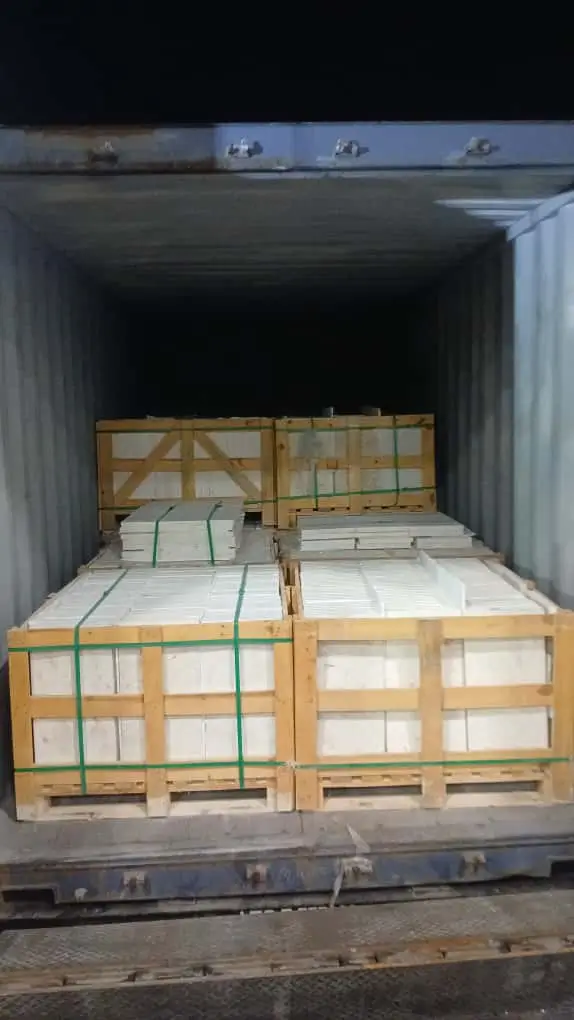
Truck delivery logistics for cobblestone deserve specific attention during project planning. Cobblestone pallets run 2,200 to 2,800 pounds depending on stone density and thickness — a standard flatbed truck carrying a full project load for a 1,500 SF driveway can easily exceed 15 pallets and require a crane-equipped or boom-truck delivery. Your site access needs to accommodate that vehicle weight without damaging finished landscaping or utility cover locations, and in tighter residential neighborhoods across communities like Peoria, street delivery coordination with the municipality may be required for oversized loads.
- Order 8–10% overage on cobblestone quantity — cutting waste and breakage during installation is higher than with regular-format pavers due to irregular face dimensions
- Confirm warehouse availability before finalizing your project schedule — cobblestone lot consistency matters for color matching, and mid-project reorders from a different lot can produce visible color variation
- Request a sample pallet or material board before committing to full quantity — cobblestone color range within a grade can be broader than catalog photos suggest
- Coordinate truck delivery timing with your installation crew — cobblestone should move directly from truck to staging area, not sit on the pallet for extended periods in direct sun where moisture differential builds between exposed and covered faces
- Citadel Stone maintains Arizona warehouse inventory that allows for phased delivery on large projects, reducing site storage requirements when laydown area is limited
Before You Specify Cobblestone Pavers in Arizona
The specification decisions that determine cobblestone paver performance in Arizona come down to thermal cycling engineering first, application matching second, and aesthetics third — in that order. You’re working in a climate where 55°F daily swings are routine, where monsoon moisture follows extreme heat, and where UV intensity degrades surface sealers and joint systems faster than most national product specifications anticipate. Your material grade, thickness, joint system, base depth, and sealing schedule all need to account for that reality explicitly.
The cobblestone material pricing decisions you make now set up your maintenance cost trajectory for the next 20 years. Choosing an appropriate grade and thickness aligned with your application — and budgeting for proper base preparation and joint materials — is where long-term value gets established. Decisions that save $2 to $3 per square foot on installation typically cost $8 to $12 per square foot in repair or replacement within a decade. For ongoing maintenance considerations as your project matures, How to Maintain Garden Cobbles in Arizona’s Climate covers the maintenance schedule decisions that protect your cobblestone pavers in Arizona across the full range of seasonal extremes.
Cobblestone pavers in Arizona reward buyers who do their specification homework before the first truckload arrives. Match your stone grade to your application, engineer your base for the soil and thermal conditions at your specific site, and treat your joint and sealing system as an active maintenance program rather than a one-time installation step. Projects across Phoenix, Sedona, and Mesa benefit from Citadel Stone’s range of cobblestone grades, which allow contractors to align stone thickness and surface finish with per-square-foot budget targets for Arizona driveways.