
A kerb block cost comparison Arizona homeowners actually need starts with drainage geometry, not sticker price. Most landscape edging decisions get made on upfront materials cost, and that’s where long-term budget math goes wrong — especially when you factor in Arizona’s monsoon season and what standing water does to poorly designed borders. The real comparison between natural stone kerb blocks and concrete edging runs through drainage performance, base preparation demands, and what each material costs you over a decade of desert weather cycles. Understanding stone kerb vs concrete edging in Arizona means running that full-cycle math before committing to a material.
Why Drainage Defines Your Edging Decision in Arizona
Arizona’s precipitation pattern is counterintuitive for homeowners who assume desert means dry. The monsoon season — roughly July through September — delivers intense, short-duration rainfall events that generate significant surface runoff in compact timeframes. Yuma sits at the extreme low end of this rainfall curve, but even there, a single monsoon cell can drop an inch of rain in under 30 minutes on impermeable hardscape. Your edging material needs to manage that hydraulic load, not just define a border.
The fundamental drainage difference between natural stone kerb blocks and concrete edging comes down to material porosity and joint behavior under saturation. Concrete edging, particularly the precast variety most contractors spec by default, creates a near-impermeable barrier. When water accumulates behind it, hydrostatic pressure builds against the base — and that pressure cycles with every storm event. Over three to five monsoon seasons, that repeated loading and unloading destabilizes the aggregate base and initiates lateral shift.
- Natural stone kerb blocks allow limited moisture migration through the material body, reducing hydrostatic pressure buildup behind the edging line
- Joint spacing in stone kerb installations can be calibrated to provide intentional drainage relief at planned intervals
- Concrete edging requires supplemental drainage infrastructure (weep holes or gap placements) to achieve what stone manages naturally
- Base saturation under concrete edging accelerates in clay-rich soils common to central Arizona, where drainage is already compromised
Breaking Down the Upfront Cost Numbers
Any kerb block cost comparison Arizona project budget needs to separate material cost per linear foot from installed cost per linear foot — these two figures diverge significantly depending on which material you’re specifying. Precast concrete edging typically runs $4 to $9 per linear foot for materials, while natural stone kerb blocks sit in the $12 to $22 range depending on stone type, thickness, and finish. That gap looks decisive at first read, but it doesn’t include base preparation differences.
Concrete edging installation is simpler on paper — a compacted gravel base and concrete anchoring stakes get the job done in most residential applications. Natural stone kerb block installation requires a more carefully graded base, often 4 to 6 inches of compacted Class II base aggregate with a defined cross-slope for drainage. That additional base work typically adds $3 to $6 per linear foot to installed cost, narrowing the price gap considerably.
- Concrete edging installed: $8 to $16 per linear foot including base and labor
- Natural stone kerb blocks installed: $18 to $32 per linear foot including properly graded base
- Replacement cycle for concrete edging in high-drainage zones: typically 6 to 10 years
- Expected service life for properly installed stone kerb blocks in Arizona conditions: 20 to 30 years with minimal maintenance
- Net cost per linear foot per year of service: concrete $1.60 to $2.67 vs. stone $0.90 to $1.60
The per-year cost math consistently favors stone when you run the full service life comparison. Driveway border stone pricing for AZ homeowners looks different when you divide by actual years of performance rather than installation day cost — a distinction that shapes every well-structured Arizona landscape edging material cost guide.
Base Preparation and Drainage Grading: Where Cost Differences Actually Live
Here’s what most specifiers miss when comparing stone kerb vs concrete edging in Arizona — the base system is not the same for both materials, and trying to install natural stone kerb blocks on a base designed for concrete edging is the most predictable path to early failure. Stone’s additional mass requires a base with enough compaction and drainage capacity to handle both dead load and the repeated hydraulic cycling of monsoon season.
For natural stone kerb blocks in Arizona, your base preparation should include a 4-inch minimum compacted aggregate layer with a cross-slope of at least 2% directing water away from the installation. In areas where the native soil is expansive clay — common in the Phoenix metro corridor — you’ll want to extend that base to 6 inches and consider a geotextile separation fabric between native soil and aggregate. Skipping the fabric in clay-heavy soils means fine particles migrate upward through the base over time, compromising compaction and initiating settlement.
Flagstaff‘s higher elevation introduces a different base preparation requirement: freeze-thaw cycling. At 6,900 feet, ground temperatures cycle below freezing regularly through winter, which means your base aggregate needs to be free-draining enough to prevent ice lens formation. A 6-inch base of clean, angular 3/4-inch crushed stone handles freeze-thaw stress in Flagstaff applications where the same base spec used in Phoenix would be overbuilt and unnecessary.
- Phoenix area clay soils: specify 6-inch base with geotextile separation fabric
- Flagstaff freeze-thaw zone: specify clean angular aggregate, minimum 6 inches, with free-draining profile
- Sandy desert soils in western Arizona: 4-inch base typically sufficient with proper compaction to 95% modified Proctor density
- Caliche hardpan zones: verify bearing capacity before specifying base depth — caliche often provides excellent sub-base when properly prepared
How Each Material Handles Monsoon Stress Cycles
Natural kerb block value across Arizona projects becomes clearest after the first monsoon season. Concrete edging’s failure mode in high-intensity rainfall events is lateral displacement — the hydrostatic pressure buildup behind an impermeable barrier has to go somewhere, and it typically pushes the edging out of alignment at its weakest point. This pattern appears most often at corners, transitions, and anywhere the concrete anchoring stakes weren’t set deep enough.
Stone kerb blocks respond differently to the same hydraulic stress. The material’s mass — typically 70 to 120 pounds per running foot depending on thickness and stone density — resists lateral force mechanically. Combined with the drainage relief that properly spaced joints provide, natural stone kerb installations handle monsoon events with substantially less post-storm maintenance than concrete alternatives. At Citadel Stone, our team has tracked installation performance across multiple Arizona regions and found that properly installed natural stone kerb blocks rarely require realignment after individual storm events, unlike concrete edging which often needs annual check-and-reset cycles.
For the Arizona landscape edging material cost guide comparison to hold up in practice, you need to account for annual maintenance labor. Concrete edging realignment after monsoon season typically runs $2 to $4 per linear foot when a contractor resets displaced sections and re-anchors stakes. Over a 10-year period, that maintenance cost adds $20 to $40 per linear foot to concrete edging’s total lifecycle cost — a figure that closes most of the remaining gap between concrete and stone.
Thermal Performance: A Supporting Factor, Not the Lead
Temperature matters in this comparison, but as a secondary factor rather than the primary driver. Natural stone kerb blocks in Arizona’s low desert absorb and release heat differently than concrete, with surface temperatures under direct sun running 15 to 25°F cooler than comparable concrete edging in mid-afternoon. For residential driveway borders and landscape edging adjacent to irrigated planting zones, that thermal differential affects plant root zone temperatures in the immediate border area.
Concrete’s higher thermal mass also affects the material’s expansion behavior. Standard precast concrete edging expands at approximately 5.5 × 10⁻⁶ per °F, and in Arizona’s temperature swing between December nights and July afternoons — a range that can exceed 90°F — that expansion creates cumulative joint stress. Concrete edging installed without adequate expansion joint spacing will develop hairline cracking within two to three years in Phoenix-area temperature conditions. Natural stone kerb blocks have lower thermal expansion coefficients (typically 3 to 5 × 10⁻⁶ per °F depending on stone type) and handle the same temperature range with less internal stress accumulation.
Long-Term Maintenance Costs in Arizona Conditions
Your kerb block cost comparison Arizona analysis needs a maintenance column, and that column looks substantially different for each material. Concrete edging maintenance involves annual inspection and reset after monsoon season, crack repair as thermal cycling opens joints (typically starting around years 3 to 5), and eventual full replacement when section heaving or lateral displacement becomes structural rather than cosmetic.
Natural stone kerb blocks require a different maintenance regimen — one that’s less frequent but requires more attention when performed. Sealing natural stone every three to five years maintains the material’s moisture resistance and prevents staining from irrigation overspray and mineral-rich desert soils. For Sedona projects where red iron oxide soils are ubiquitous, a penetrating sealer applied within 30 days of installation and renewed every two to three years prevents the permanent staining that compromises stone aesthetics in that specific soil environment.
- Concrete edging annual maintenance cost: $2 to $5 per linear foot (inspection, reset, minor crack repair)
- Natural stone kerb block sealing: $1.50 to $3 per linear foot every 3 to 5 years
- Concrete full replacement cycle: typically required at year 8 to 12 in high-drainage Arizona zones
- Stone kerb blocks: refinishing or replacement rarely required before year 20 with proper sealing and base maintenance
- Net maintenance cost over 20 years: concrete $40 to $80 per linear foot vs. stone $6 to $12 per linear foot
For project planning and ordering, verifying warehouse stock levels before committing to a project start date matters — natural stone kerb blocks are a dimensional product and availability varies by thickness and finish. Citadel Stone maintains warehouse inventory across Arizona, which typically reduces lead times to one to two weeks compared to the longer cycles for special-order or imported materials.
Selecting the Right Stone Type for Arizona Kerb Applications
Kerb blocks in Arizona cover a range of natural stone options, and the selection decision connects directly to your drainage and thermal performance targets. Limestone and basalt represent the two most common stone families for Arizona kerb applications, each with distinct performance profiles relevant to any driveway border stone pricing AZ homeowners undertake.
Limestone kerb blocks offer compressive strengths typically ranging from 8,000 to 15,000 PSI and moderate density (approximately 150 to 165 lbs/ft³). Their higher porosity compared to basalt means they handle moisture migration more readily — a drainage advantage in Arizona’s monsoon conditions — but they require more consistent sealing to prevent staining in iron-rich soils. Basalt kerb blocks run denser (175 to 195 lbs/ft³) with compressive strengths exceeding 18,000 PSI in many quarry sources, making them the structural choice for heavy vehicular loading zones like driveway entrances.
- Limestone: better drainage behavior, easier to cut on-site for curves and transitions, requires sealing every 3 years in Arizona conditions
- Basalt: maximum structural performance, superior resistance to surface abrasion, sealing interval extends to 4 to 5 years due to lower porosity
- Sandstone: available in regional Arizona quarry material, excellent aesthetic match to desert landscapes, lower compressive strength limits it to pedestrian and light landscape border applications
- Granite: highest long-term durability, minimal maintenance requirement, highest upfront cost among natural stone options
For specifying Citadel Stone natural kerb blocks Arizona projects, the stone selection should align with your specific load requirements, soil chemistry, and drainage design — not just aesthetic preference.
Installation Sequencing and Drainage Design Decisions
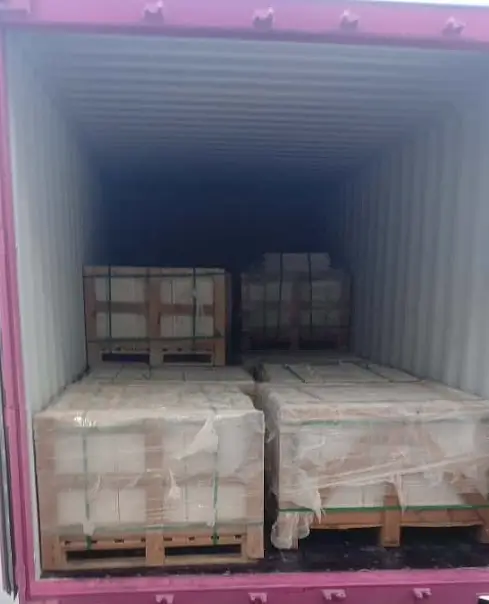
Your installation sequence determines whether the drainage design specified on paper actually performs in the field. For natural stone kerb block installations in Arizona, the critical sequencing decision is base compaction timing relative to truck delivery. Stone kerb blocks are heavy — a pallet of 2-inch nominal limestone kerb blocks typically runs 2,200 to 2,800 lbs — and truck access to the installation zone can disturb a freshly compacted base if delivery and installation aren’t properly sequenced.
The standard approach that avoids this problem is to establish your delivery and staging zone on undisturbed native soil or existing hardscape, complete base compaction in the installation zone without truck access, and stage blocks from the perimeter inward. This keeps truck wheel loads off the prepared base and preserves your compaction effort. Contractors who skip this sequencing and allow direct truck access to the base zone often find settlement at year two or three that traces directly back to the installation day compaction disturbance.
- Establish truck staging on undisturbed or protected surface before base compaction begins
- Complete all base grading and compaction before any stone material is moved into the installation zone
- Verify base compaction with a nuclear density gauge or dynamic cone penetrometer before setting the first block
- Set drainage slope across the base — minimum 2% cross-slope — before setting any stone
- Allow 24 hours after base compaction before setting stone in clay soil zones to allow any moisture equalization
Final Considerations for Arizona Kerb Block Cost Planning
Running a complete kerb block cost comparison Arizona homeowners can act on means building a 20-year cost model, not a day-of-installation price comparison. The upfront premium for natural stone kerb blocks — typically $10 to $16 per linear foot over concrete edging — pays back through reduced maintenance frequency, near-elimination of monsoon-season realignment costs, and the avoidance of a full replacement cycle at year 8 to 12. For projects in Arizona’s high-drainage zones, that math consistently favors stone.
Natural kerb block value across Arizona projects also depends on the technical support available from your material supplier. At Citadel Stone, our technical team reviews drainage design parameters and base specification requirements before delivery, catching common specification mismatches before they become field problems. That kind of pre-delivery consultation isn’t standard across the industry, but it’s the difference between a 20-year installation and one that’s showing stress by year five. For projects where proper base preparation and installation technique determine long-term performance, the How to Install Kerb Blocks in Arizona: Step-by-Step Guide provides detailed sequencing guidance worth reviewing before you finalize your specification.
Available across Gilbert, Peoria, and Mesa, Citadel Stone kerb blocks offer property owners a material with lower long-term replacement frequency compared to standard concrete border alternatives in desert climates.