

Material cost variability on 16×16 patio stone cost Arizona projects runs wider than most homeowners expect — not because the stone itself fluctuates dramatically, but because freight distance, local supplier inventory, and regional labor rates compound in ways that can shift your total project budget by 30 to 50 percent before you lay a single paver. Understanding how those variables interact is the difference between a realistic budget and a mid-project cost overrun.
What Drives 16×16 Patio Stone Pricing in Arizona
The base material price for a 16×16 patio stone in Arizona typically ranges from $2.50 to $8.00 per square foot depending on the stone type, finish, and thickness. That spread looks manageable on paper, but it doesn’t account for the freight premium baked into Arizona pricing. Most natural stone enters the state through California ports or Texas distribution hubs, and by the time a pallet reaches an Arizona job site, you’re absorbing 12 to 18 percent in logistics cost above the base quarry price.
Stone type is the first major pricing driver. Travertine and tumbled limestone sit at the lower end of the material range — typically $2.50 to $4.50 per square foot — while bluestone, basalt, and premium sandstone formats climb toward $6.00 to $8.00. Porosity, hardness rating, and finish complexity all influence the quarry price before freight is factored in. Your stone selection should balance aesthetic goals against the total delivered cost, not just the catalog price.
Thickness matters more than most square footage budgets reflect. A 1.25-inch nominal slab behaves differently under furniture loads and foot traffic than a 2-inch stone, and the price difference per square foot can be $1.00 to $2.50. For a 400-square-foot Arizona patio, that thickness variable alone represents $400 to $1,000 in material cost before installation begins.
Freight Distance and Arizona Sourcing Reality
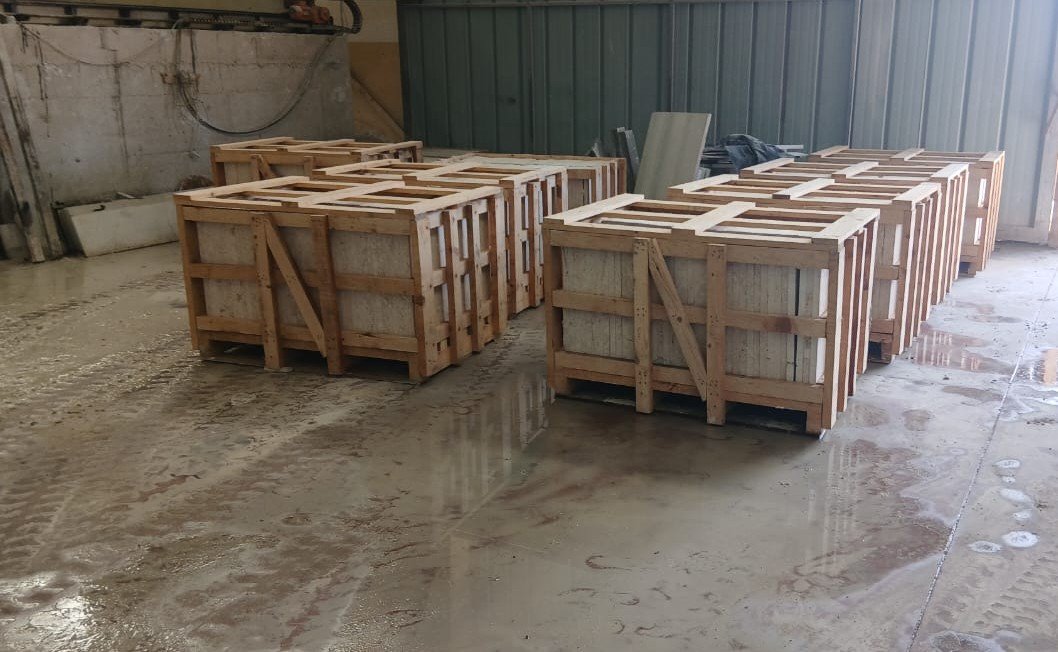
Arizona’s geography creates a specific sourcing challenge. The state has no natural stone quarrying industry of meaningful scale for patio-grade material, which means nearly every 16×16 slab you specify is traveling 500 to 1,500 miles to reach your project. That freight reality is built into every supplier quote you receive — but the degree to which it’s visible varies considerably.
When comparing bids from three different suppliers, confirm whether freight is itemized or bundled into the per-square-foot price. Bundled freight quotes look competitive until you change your order volume — at which point the per-unit cost restructures in ways that may not be transparent. Ask for a line-item freight breakdown on any order over $3,000.
Local warehouse stock is the most reliable way to compress both lead time and freight cost on outdoor paving material costs across Arizona projects. Suppliers who maintain in-state inventory — rather than drop-shipping from out-of-state distribution centers — can typically deliver in 5 to 10 business days versus the 4 to 7 week import cycle. For projects with a defined start date, that timeline difference has real labor cost implications because your crew’s schedule is locked regardless of whether material arrives on time.
- Verify that your supplier holds warehouse inventory in Arizona rather than fulfilling from a regional hub in California or Nevada
- Request a confirmed ship date before scheduling installation crews
- Factor in a 5 to 10 percent material overage buffer — reordering a small supplemental pallet triggers a disproportionate freight charge
- Understand that lead time variation between suppliers often reflects warehouse position, not product quality differences
At Citadel Stone, we stock 16×16 patio stones at our regional warehouse in Arizona, which keeps lead times predictable and eliminates the cross-country freight premium that catches many project budgets off guard.
Labor Cost Ratios Across Arizona Markets
The material-to-labor cost ratio on a standard 16×16 patio stone installation in Arizona runs roughly 40:60 on residential projects — meaning labor accounts for more of your total budget than the stone itself. That ratio is important context when evaluating material upgrades. Moving from a $3.00 per square foot travertine to a $5.50 bluestone adds $1,000 on a 400-square-foot patio, but it represents a relatively modest increase against a total installed cost that may already be running $8,000 to $14,000.
Labor rates in Phoenix metropolitan projects have trended upward over the past several years as demand for outdoor living improvements outpaced the growth of skilled masonry crews. You should expect to pay $6.00 to $11.00 per square foot for labor on a standard 16×16 natural stone installation — and that range shifts based on site access, base preparation complexity, and the number of cuts required for your layout.
Cutting complexity is a labor cost variable that deserves attention at the design phase. A straight-set grid pattern with your 16×16 format minimizes saw time and reduces labor hours significantly compared to a diagonal or running-bond layout. If your budget is tight, layout pattern is one of the most effective value-engineering levers available before breaking ground.
- Diagonal installations add 15 to 25 percent to labor hours due to increased cut volume at perimeter edges
- Site access for equipment and material staging affects day-rate labor efficiency more than most homeowners anticipate
- Base preparation labor — excavation, compaction, and aggregate placement — represents 20 to 30 percent of total labor cost and cannot be safely compressed
- Phoenix-area labor rates for masonry work typically run 8 to 12 percent higher than rural market rates across the state
Patio Stone Pricing Guide by Material Type
Your patio stone pricing guide for Arizona should account for four primary natural stone categories available in 16×16 format. Each material carries a different base price, freight profile, and maintenance cost that affects long-term budget planning beyond the initial installation. Selecting the right material early in the planning process is the most reliable way to control outdoor paving material costs across Arizona residential and commercial projects.
Travertine is the most widely specified 16×16 material in Arizona — and for good reason. It arrives at a competitive price point, handles thermal cycling well, and performs consistently across the low desert’s heat range. Filled-and-honed travertine in 16×16 format runs $3.00 to $4.75 per square foot at the material level, making it the dominant choice for square stone slab budget planning for AZ homeowners working with mid-range project allocations.
Limestone in 16×16 format offers similar pricing to travertine but brings a denser surface that resists weathering differently. For Tucson projects where monsoon erosion and UV bleaching are persistent concerns, the surface density of a brushed limestone holds color and texture longer than an open-pore travertine without aggressive sealing.
- Travertine: $3.00–$4.75 per square foot — best value for large-format Arizona patios
- Limestone: $3.50–$5.25 per square foot — better surface durability in high-UV, high-moisture exposure zones
- Bluestone: $5.50–$7.50 per square foot — premium pricing, excellent hardness and visual contrast
- Basalt: $5.00–$7.00 per square foot — dense, slip-resistant, performs well around water features
- Sandstone: $4.00–$6.50 per square foot — regional aesthetic appeal, requires more aggressive sealing in desert climates
Square Stone Slab Budget Planning for Arizona Homeowners
Square stone slab budget planning for AZ homeowners needs to start with total installed cost projections, not material-only numbers. The sticker price on a pallet of 16×16 stones represents roughly 35 to 45 percent of your total project investment once base preparation, labor, sealing, and project contingency are included. Building a budget from material cost alone consistently leads to underfunded projects.
A realistic total installed cost range for a 400-square-foot 16×16 natural stone patio in Arizona runs $5,200 to $9,600 for mid-range materials and standard site conditions. Premium materials with complex layouts push that range to $10,000 to $15,000 or above. Those numbers assume proper base preparation — 4 to 6 inches of compacted aggregate base — which is non-negotiable in Arizona’s expansive soil conditions.
For accurate square footage calculations, measure your patio footprint and add 10 percent for waste and cuts. Then multiply by your confirmed delivered material cost per square foot, not the catalog price. The difference between catalog and delivered pricing in Arizona can be $0.40 to $1.20 per square foot depending on your location relative to the supplier’s warehouse. For a 440-square-foot material order (400 square feet plus 10 percent), that freight variable represents $175 to $530 in budget exposure on any 16×16 patio stone cost Arizona project.
Base Preparation Costs and Desert Soil Variables
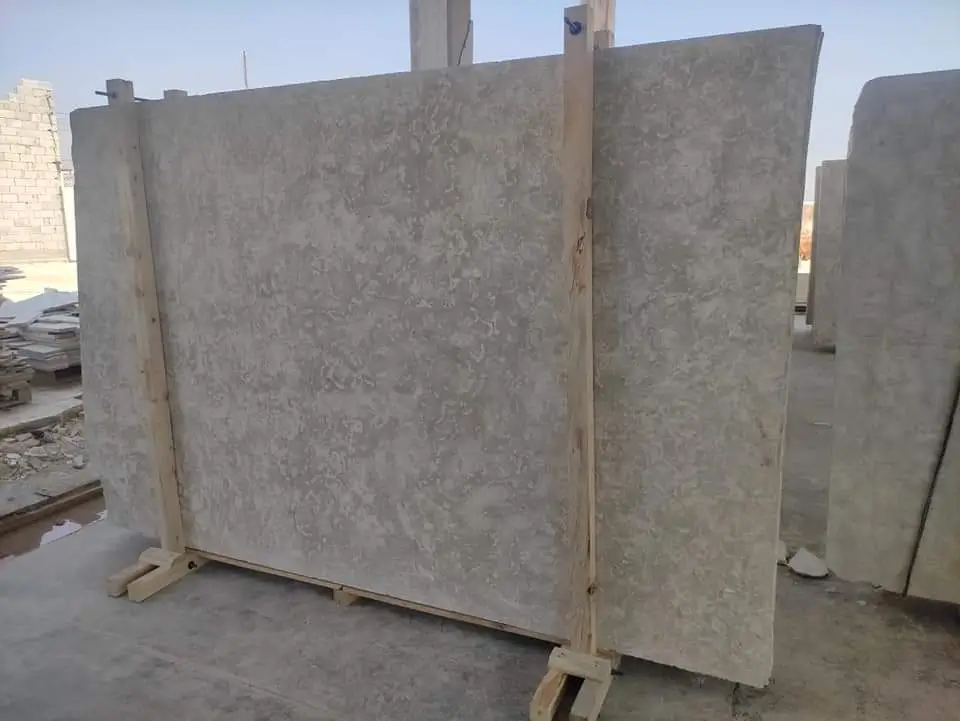
Base preparation is where Arizona projects diverge sharply from national cost benchmarks. Desert soils across the state — particularly the expansive clay and caliche profiles common in the Phoenix corridor — require excavation depths and compaction protocols that add real cost compared to the sandy, well-draining soils prevalent in other warm-climate states.
In Tempe and surrounding Maricopa County areas, caliche hardpan often appears at 12 to 24 inches below grade. When it sits within your excavation zone, it actually provides a solid sub-base — but you need to confirm its depth before pricing the job. If caliche runs deeper than your excavation scope, you’ll be working through clay or silty soil that requires more thorough compaction effort and may need geotextile fabric to prevent base migration over time.
Expect base preparation to add $1.50 to $3.50 per square foot to your installed cost on standard residential sites. Complex sites with significant slope correction, existing material removal, or deep caliche breaking can push that figure to $5.00 per square foot or more. These numbers are worth confirming in your contractor bids — vague base prep language in a proposal is a budget risk that affects the overall Arizona desert patio project budget breakdown.
- Minimum 4-inch compacted aggregate base for pedestrian patio applications
- 6-inch base recommended for patios receiving consistent furniture loads or wheeled traffic
- Geotextile separation fabric adds $0.25 to $0.45 per square foot and extends base performance life significantly
- Caliche confirmation via probe rod or shallow test pit should precede any final bid acceptance
- Setting bed depth — typically 1 inch of compacted sand or dry-set mortar — is separate from base aggregate depth
Value Engineering Your Arizona Patio Project
Value engineering on a 16×16 patio stone cost Arizona project doesn’t mean cutting corners — it means making material and design decisions that preserve performance while controlling budget. There are several levers that experienced project managers use consistently on outdoor paving material costs across Arizona without compromising the finished installation.
The most effective value decision is often layout simplicity. A straight-set pattern aligned with your structure reduces saw cuts at edges and eliminates the diagonal waste factor that inflates both material and labor costs. For a 400-square-foot project, the difference between a grid layout and a 45-degree diagonal can represent $600 to $1,200 in combined material waste and additional labor hours.
Material mixing is another strategy worth considering. Specifying a premium stone for your primary patio surface while using a coordinated but more economical material for walkway extensions or secondary zones maintains visual continuity while reducing average material cost across the full project scope. This approach works particularly well with travertine and limestone combinations, which share compatible color families and thermal behavior profiles.
For Citadel Stone square slab costs Arizona, confirming material availability before finalizing your design scope protects your schedule and prevents costly substitutions mid-project.
- Align patio edges with the 16×16 module wherever possible to minimize perimeter cuts
- Request a field-stock verification before locking your timeline — warehouse availability directly affects whether you can start on schedule
- Combine a premium field stone with a coordinating border material to create visual depth without applying premium pricing across the full square footage
- Seal procurement: sealer applied at installation costs less than deferred maintenance remediation two to three years later
Sealing and Long-Term Maintenance Budgeting
Sealing is a line item that project budgets frequently undervalue or defer, and Arizona’s climate makes that mistake costly faster than in more temperate regions. UV intensity at Arizona’s latitude degrades unsealed natural stone surfaces more aggressively than in northern climates, and the thermal cycling between day and night temperatures — 30 to 50°F swings are routine — accelerates surface oxidation on porous stone types.
Budget $0.50 to $1.25 per square foot for professional sealer application at project completion. That figure covers a penetrating silane-siloxane sealer appropriate for most natural stone types, applied in a single coat. Two-coat applications on highly porous travertine or sandstone formats add 20 to 30 percent to that cost but extend resealing intervals from 2 years to 3 to 4 years under Arizona conditions.
Long-term maintenance budgeting should include a resealing cycle every 24 to 36 months for most Arizona applications. A 400-square-foot patio runs $200 to $500 for professional resealing depending on the product and contractor pricing in your market. Factor that into your 10-year ownership cost when comparing natural stone against lower-maintenance alternatives — the per-year figure typically remains competitive when material longevity is accounted for.
Professional Summary
The total cost of a 16×16 patio stone cost Arizona project depends on freight structure, material selection, base conditions, and labor market dynamics in ways that generic national cost guides simply don’t capture. Your most reliable starting point is a delivered material price from a supplier with confirmed in-state warehouse stock — because that number drives every other calculation in your budget.
Site preparation conditions in Arizona deserve more budget attention than most homeowners give them. Desert soils and caliche profiles are manageable, but they require experienced crews and properly scoped base work. Cutting corners on base depth or compaction is the leading cause of premature settlement and joint failure on otherwise well-specified stone installations.
Our technical team at Citadel Stone works through material selection, thickness specifications, and delivered pricing with contractors and homeowners across the state — the sourcing knowledge we’ve built over years of direct quarry relationships means you’re getting accurate cost data, not estimates padded for unknown freight variables. For homeowners exploring traditional stone aesthetics for nearby communities, Limestone Brick Paver Traditional Style for Fountain Hills Classic Homes covers complementary Arizona stone formats worth reviewing alongside your 16×16 planning. Projects across Yuma, Peoria, and Flagstaff benefit from Citadel Stone’s range of 16×16 patio stone formats, with material thickness options influencing overall per-square-foot costs.