
Edge failure in paver installations almost always starts at the perimeter — and limestone brick traditional style Fountain Hills projects are no exception. The mechanical stresses that storm events generate across the Sonoran Desert fringe aren’t just about water intrusion; they’re about lateral thrust, impact loading from wind-driven debris, and the cyclical compression-and-release that joints experience every time a monsoon front moves through. Getting these structural details right at the specification stage is what separates a classic installation that holds for thirty years from one that starts showing settlement and edge migration after the first severe weather season.
Why Storm Loads Define Your Material Choice
Fountain Hills sits on elevated terrain northeast of the Phoenix metro, which means your projects here catch wind loads that flat-valley installations never see. The elevation channels storm energy differently — gusts that register 35 mph downtown can easily reach 50–60 mph across exposed ridge properties and elevated patio decks. For limestone brick pavers in Arizona, this translates directly into compressive and shear stress requirements that go well beyond standard residential specifications.
Natural limestone chosen for traditional outdoor flooring applications carries a compressive strength range of 8,000–12,000 PSI depending on the specific quarry formation and pore density. That strength isn’t what fails under storm loading — the jointing system and edge restraint are. Wind-driven rain enters joint openings at positive pressure, and if your polymeric sand isn’t fully cured and locked before the first real storm, you’ll see washout within two to three seasons. You need to account for this in your installation schedule, not just your material spec.
Limestone Brick Traditional Style Fountain Hills: The Aesthetic Framework
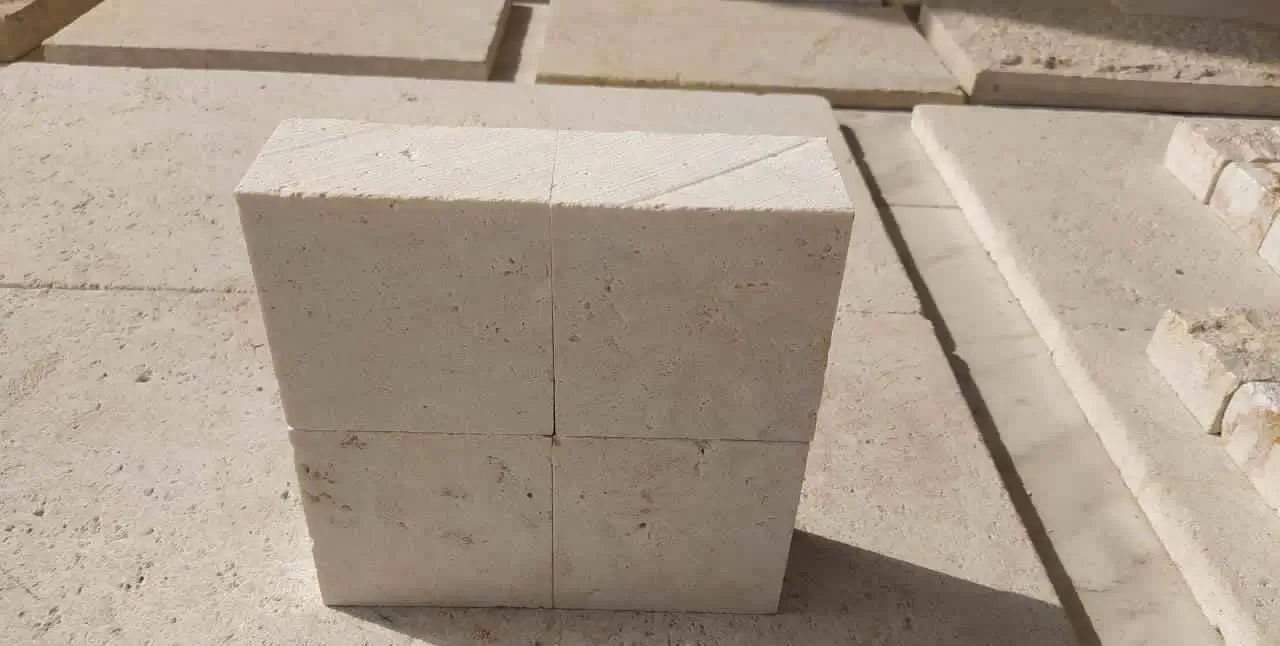
The classic aesthetics that Fountain Hills homeowners value aren’t arbitrary — they reflect an architectural heritage that aligns beautifully with the warm tones and textural variation that natural limestone delivers. Brick paver timeless design in Arizona draws from Spanish Colonial, Territorial, and contemporary desert vernacular traditions, and limestone’s natural color range (creams, warm buffs, soft golds) reads authentically within all three vocabularies.
What most specifiers working on traditional projects miss: the visual warmth of limestone actually deepens after the first year of sun exposure and minor weathering. Concrete pavers attempting to replicate this look tend to fade and mottle in ways that read as deterioration rather than character. Limestone’s patina trajectory moves in the opposite direction — the surface develops micro-texture and tonal variation that enhances the Fountain Hills classic aesthetics rather than undermining them. That’s a genuine performance advantage, not just a visual preference.
- Buff and cream limestone tones complement the desert palette without competing with natural surroundings
- Tumbled edge profiles on brick formats deliver the time-worn aesthetic that Arizona heritage look specifications call for
- Dimensional consistency within ±1/8 inch allows tight coursing patterns that brick paver timeless design requires
- Surface texture provides slip resistance above ASTM C1028 minimums even when wind-driven rain creates wet surface conditions
Storm Resistance Specifications for Arizona Installations
The monsoon season running July through September delivers the most punishing combination of conditions your installation will face. You’re dealing with rapid wind ramp-up, horizontal rain that has genuine impact velocity, and then fast-drying conditions that stress joint materials through rapid moisture cycling. Specifying limestone brick pavers in Arizona for these conditions means thinking through each layer of the assembly, not just the surface material.
Your base aggregate depth needs to be a minimum of 6 inches of compacted 3/4-inch crushed limestone or angular granite — not the 4-inch minimums you’ll see in generic paver specifications. The additional depth provides mass that resists the lateral movement monsoon wind loads can introduce at exposed patio edges. Compaction should reach 95% Proctor density verified by field testing, not just visual inspection.
- Edge restraint systems must be steel or heavy-duty polymer with 12-inch spikes at 12-inch spacing for wind-exposed perimeters (not the standard 18-inch spacing)
- Joint sand should be activated polymeric sand rated for high-wind environments, with full cure time of 24 hours before any rain exposure
- Corner and step-edge conditions require mechanical fastening or concrete haunching behind the restraint to prevent uplift under sustained gusts
- Drainage slope of 1/8 inch per foot minimum prevents standing water that amplifies storm stress on joint integrity
- Bedding sand layer of 1 inch (nominal) ensures consistent support while accommodating minor sub-base imperfections
Hail and Impact Loading: What Limestone Actually Handles
Hail is one of the underappreciated threats for hardscape in northern Arizona communities like Fountain Hills. Storms tracking up from the southeast regularly produce hailstones in the 1/2-inch to 1-inch range, with occasional severe cells delivering golf ball-sized stones. The impact resistance of natural limestone in the 3/4-inch to 1-inch finished thickness range is genuinely solid — the material’s crystalline structure distributes impact energy differently than manufactured products.
For projects in Scottsdale and surrounding elevated communities, specifying 2-inch nominal thickness limestone brick pavers provides measurable impact resistance improvement over standard 3/4-inch flagstone or thin-format units. At 2-inch thickness, the material’s flexural strength handles point loading from hail impact without surface fracture under normal hailstorm conditions. Thinner formats work for sheltered applications but shouldn’t be your first choice for fully exposed patio or driveway fields.
Surface finish matters here too. A honed or lightly brushed surface on limestone brick pavers in Arizona actually performs better under hail impact than a heavily polished finish — the micro-texture absorbs and distributes impact stress rather than creating a stress concentration at the surface plane.
Joint Integrity Under Wind-Driven Rain
Traditional outdoor flooring specifications often treat joint filling as a finishing detail rather than a structural decision. In Fountain Hills’ wind environment, that’s a costly misunderstanding. Joints function as the connective tissue of your entire paved surface — when they fail, individual pavers begin rocking, edge restraints lose their lateral backing, and the classical visual integrity you specified dissolves into a remediation project.
Polymeric sand formulations designed for high-wind environments use a higher polymer-to-sand ratio that creates a semi-rigid joint rather than a compacted aggregate joint. These products require careful moisture activation — too much water during installation and the polymer disperses rather than binds. Apply and compact in lifts of no more than 3/4 inch, using a plate compactor with a rubber pad to avoid surface marking on the limestone face.
- Allow 24-hour cure minimum before any irrigation or rain exposure — 48 hours preferred in low-humidity conditions
- Minimum joint width of 1/8 inch for brick paver formats to allow adequate polymeric sand penetration
- Re-sweep and reactivate joints annually in the first two years to address any settlement voids before they become infiltration channels
- Seal joint perimeters at abutting walls and steps with flexible polyurethane sealant to prevent wind-driven water entry at fixed boundaries
Selecting Limestone Formats for Traditional Fountain Hills Design
The brick paver format itself — typically 4×8 inches or 4×9 inches in nominal dimensions — provides natural running bond and stacked bond laying pattern options that anchor traditional design vocabulary. Your pattern choice actually has structural implications beyond aesthetics: running bond creates an interlocked lateral force distribution that herringbone and stacked bond patterns don’t replicate. For wind-exposed field areas, running bond with a 1/3 offset is a specification decision, not just a style preference.
Architects specifying traditional courtyard and entry court applications in Phoenix have gravitated toward 2-inch nominal limestone brick in running bond specifically because the pattern performs well under both pedestrian loading and the lateral stress of thermal cycling combined with monsoon events. The format also allows dimensional coursing that aligns with masonry wall heights, which matters for achieving a coherent Arizona heritage look in comprehensive landscape designs.
Thickness selection should match application load:
- 3/4-inch to 1-inch: sheltered walkways, covered patios with protected edges
- 1.25-inch to 1.5-inch: standard exposed patio and walkway applications with proper base
- 2-inch nominal: driveways, heavily wind-exposed terraces, step treads, and any application with vehicle access
- Coping and step nosing: 2.5-inch minimum for edge conditions subject to impact loading
Sourcing and Logistics for Fountain Hills Projects
Fountain Hills’ location off the Shea Boulevard corridor creates some practical truck access considerations that affect your project timeline. Delivery vehicles over 40 feet have restrictions on certain residential roads, and the elevated terrain means some properties require staged material drops rather than single-point delivery. Planning your material quantities and delivery scheduling around these realities prevents the cost overruns that catch contractors unfamiliar with the area.
Verifying warehouse stock levels before committing to your installation schedule is genuinely important for limestone brick projects — material from the same quarry lot maintains consistent color and density variation, and mixing lots mid-project on a traditional aesthetic job is noticeable. At Citadel Stone, we maintain regional warehouse inventory that allows lot verification before project start, which is the kind of quality control that matters when you’re specifying for Fountain Hills classic aesthetics where visual consistency defines the outcome. You can learn more about available inventory and formats at the Citadel Stone brick paver facility to confirm current stock before your schedule locks.
Sealing and Long-Term Durability in Arizona Storm Conditions
Sealing protocols for limestone brick pavers in Arizona differ from what you’d specify in a mild climate primarily because of the UV intensity combined with periodic high-moisture events. The stone itself is durable — you can expect 25–30-year surface integrity with proper maintenance — but the sealer is what manages the moisture vulnerability during storm events, not the limestone itself.
Penetrating impregnating sealers (siloxane-based, not surface film-formers) are the right specification for traditional outdoor flooring in monsoon-prone zones. Surface film sealers trap moisture introduced by wind-driven rain and create delamination failures within two to three seasons. Penetrating sealers migrate into the limestone’s interconnected pore structure and create a hydrophobic barrier without altering the surface texture or vapor transmission characteristics. Apply on a surface that has had 30 days minimum to cure after installation — applying earlier traps installation moisture and reduces sealer bonding.
- Reapply penetrating sealer every 2–3 years, or when a water droplet test shows absorption rather than beading
- Clean surface thoroughly before reapplication — efflorescence from the first monsoon season should be neutralized with appropriate pH-balanced cleaner
- In areas with heavy organic debris (near Fountain Hills’ landscaping), consider annual cleaning to prevent tannin staining that penetrates unprotected limestone
- Avoid pressure washing above 1,200 PSI on brick paver formats — high pressure opens joints and drives debris into the joint bed
Coordination with Traditional Architecture Detailing
Fountain Hills classic homes carry specific architectural details — arched entries, stucco exteriors, clay tile rooflines, wrought iron accents — that your paving specification needs to reference, not just complement. The Fountain Hills classic aesthetics vocabulary expects continuity between hardscape and structure, and limestone brick’s tonal warmth provides that continuity in ways that concrete pavers and manufactured stone simply can’t replicate at close inspection.
Transition details between limestone paving and adjacent materials are where traditional projects succeed or fail aesthetically. Your specification should call out the mortar joint color at wall-paving interfaces explicitly — a buff or cream mortar that matches the limestone tone maintains visual continuity, while a gray or white mortar creates a visual break that reads as an assembly error in traditional design contexts. Similarly, step riser materials should match or directly complement the tread material; using a contrasting material at risers is a contemporary design move that conflicts with the heritage vocabulary.
Traditional residential projects in Tucson have successfully used limestone brick coursing to connect courtyard paving, entry walkway, and low garden wall coping into a unified material palette — the same approach reinforces the classical coherence that defines high-value brick paver timeless design in Arizona across comprehensive landscape scopes, including Fountain Hills installations.
Final Perspective: Getting Limestone Brick Traditional Style Fountain Hills Installations Right
The decisions that define a successful limestone brick traditional style Fountain Hills installation aren’t made at the surface — they’re made in the base specification, the edge restraint detail, and the joint system before a single paver is set. The Fountain Hills wind and storm environment demands that you treat every structural detail as load-bearing, because in a serious monsoon event, it is. The aesthetic result — warm, classically proportioned, authentically textured — is achievable with confidence when the structural foundation is right. Your project benefits from matching the material quality to the installation quality, because a premium limestone surface on a compromised base is still a failed installation.
As you complete your specification and move toward procurement, related projects can offer useful framing for adjacent design decisions. If your Fountain Hills scope includes informal pathway connections or natural-grade approach routes beyond the primary paved areas, Irregular Limestone Paver Rustic Pathway Design for Cave Creek Country Estates addresses how irregular limestone formats perform in naturalistic Arizona settings — a complement worth reviewing if your project includes both formal and informal hardscape zones. Citadel Stone’s mastery of large format limestone pavers in Arizona gives Arizona contractors access to world-class materials.