
Why Drainage Comes Before Everything Else in Irregular Limestone Rustic Pathways Cave Creek
Designing irregular limestone rustic pathways for Cave Creek country estates requires resolving a hydraulic problem before aesthetics ever enter the conversation — Arizona’s monsoon season delivers moisture at intensities that overwhelm most conventional pathway bases in a single storm event. The Sonoran Desert’s feast-or-famine precipitation cycle means your pathway sits bone-dry for nine months, then faces 2–3 inches of rain in under an hour during peak July and August monsoons. That whiplash between desiccation and saturation is what separates pathways that last 25 years from ones that start rocking and heaving by year four.
The good news is that irregular limestone’s natural geometry actually works in your favor when it comes to water movement. The varied sizing and organic edge profiles of irregular stone create micro-drainage channels between units that engineered rectangular pavers simply can’t replicate. Your pathway becomes a permeable surface network rather than a water-shedding hard plane — and in a desert watershed like Cave Creek’s, that distinction matters enormously for both performance and erosion control.
Base Preparation That Handles Arizona’s Monsoon Reality
Your base preparation for irregular limestone rustic pathways in Cave Creek needs to do two things simultaneously — hold the stone stable under foot traffic and let water drain vertically without pooling at the subgrade interface. These are competing demands, and the spec that satisfies both starts with your aggregate selection and ends with your slope geometry.
For most Cave Creek estate sites, you’re working with decomposed granite or rocky caliche subgrade that has reasonable natural drainage. Don’t let that fool you into thinning your base. The compaction pressure from irregular limestone — especially larger slabs running 18 to 36 inches across — concentrates load unevenly, and without a properly graded aggregate layer, you’ll see differential settlement within two monsoon seasons.
- Excavate to a minimum depth of 8 inches below finished pathway surface to accommodate base and bedding layers
- Install 4–6 inches of compacted class II road base or crushed limestone aggregate with a 3/4-inch minus gradation
- Add a 1-inch bedding layer of coarse concrete sand (not polymeric) to allow final leveling adjustments
- Maintain a minimum 2% cross-slope and 1.5% longitudinal slope for positive surface drainage
- Avoid geotextile fabric directly under the bedding layer in sites with sandy native soils — it traps fine particles that eventually cause base failure
Projects near San Tan Valley frequently encounter expansive clay subgrades that require an additional 2 inches of base depth and a stabilizing layer of crushed aggregate before beginning the primary base course. Clay soils in transition zones between the desert floor and Sonoran uplands shrink dramatically in drought and swell during monsoon saturation — if your base doesn’t account for that vertical movement, even the best irregular limestone installation will develop lippage within a few years.
Choosing Irregular Limestone for Maximum Drainage Performance
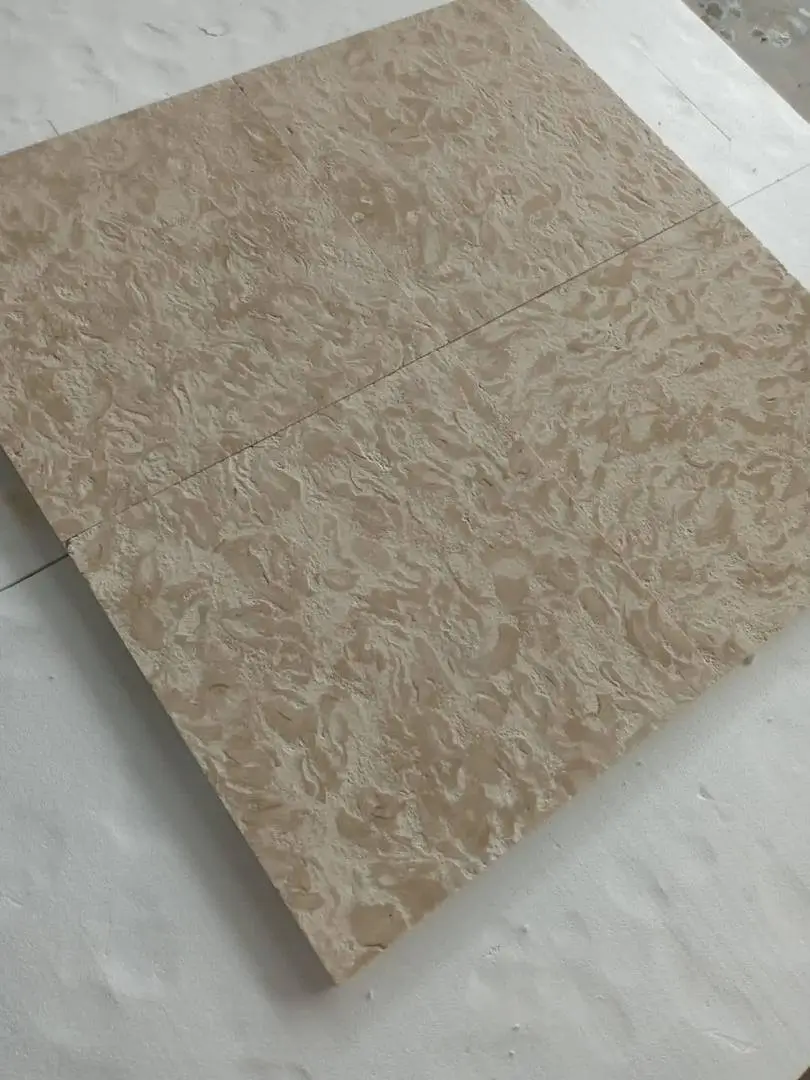
The thickness variability in irregular limestone — which ranges naturally from 1.5 inches to 3.5 inches across a single pallet — is often treated as a challenge to manage. Treat it instead as a drainage asset. Thicker units placed at the pathway’s crown provide structural mass; thinner units placed lower create natural water channels at the edges. You’re essentially sculpting a drainage profile into the pathway as you set the stone.
Irregular limestone pavers in Arizona should carry a minimum absorption rate of 3% or lower when specifying for monsoon-zone applications. Higher absorption means the stone takes on water during saturation events and releases it slowly — which drives efflorescence, surface spalling, and in Cave Creek’s intense summer heat, accelerated thermal cycling damage at moisture-laden joints. Request absorption test data from your supplier before committing to a quarry source.
- Target stone with compressive strength above 8,000 PSI for pedestrian pathway applications in Arizona estate settings
- Specify units with a natural split face rather than sawn edges — the textured surface provides superior traction in wet conditions
- Avoid limestone with visible bedding plane laminations thinner than 3/4 inch — these delaminate under freeze-thaw or monsoon saturation cycles
- Confirm stone is from a quarry producing consistent color through the full thickness, not surface-tinted
- Request samples from multiple positions in the quarry bed — irregular limestone can vary significantly in density across extraction zones
At Citadel Stone, we source our irregular limestone directly from quarries with documented absorption and compressive strength testing, which lets us cross-reference material performance against Arizona’s specific precipitation and thermal data before anything ships to your project.
Joint Design Strategies for Cave Creek Rustic Pathways
The joint spacing philosophy for irregular limestone rustic pathways in Cave Creek needs to diverge from standard manufactured paver practice. You’re not chasing uniform 3/8-inch gaps — the organic shape of irregular stone means your joints range from near-zero at tight contact points to 2–3 inches at wider separations, and that variation is precisely what gives the pathway its authentic stone path character consistent with Cave Creek country style.
For drainage performance, those variable joints need infill material that won’t wash out during a monsoon event. Standard polymeric sand has a performance ceiling around 1.5 inches of joint width — beyond that, it doesn’t cure properly and washes clean in the first heavy rain. This failure mode appears regularly in amateur installations throughout Arizona’s rural estate market.
- For joints under 1 inch, use polymeric jointing sand applied in two lifts with compaction between applications
- For joints between 1 and 2.5 inches, use a 4:1 decomposed granite and Portland cement dry-mix stabilized with water misting after placement
- For showcase joints over 2.5 inches, consider low-growing ground cover species like creeping thyme or dymondia — both handle Arizona heat and provide natural drainage filtration
- Set all joint material 1/4 inch below the stone surface to prevent wash-out channels from forming at edges
- Plan for joint reinfill every 3–5 years in high-monsoon-exposure pathways — this is normal maintenance, not a failure indicator
For projects where you want to review complementary limestone products that work well alongside pathway installations, our irregular slab selection covers the full range of sizing and finish options available for Arizona estate projects.
Managing Slope and Flood Risk in Cave Creek’s Terrain
Cave Creek sits in a watershed that funnels storm runoff from the New River Mountains directly through residential and estate properties. Your pathway design can’t treat grade as a purely aesthetic decision — every inch of elevation change across the pathway surface influences where water goes during a 2-inch-per-hour event, and in this terrain, misdirected water erodes native soil, undercuts bases, and deposits sediment on finished stone surfaces that stains permanently.
The critical design rule for irregular limestone rustic pathways on sloped Cave Creek sites is the 6-inch rule: no pathway section longer than 30 feet should drop more than 6 inches without a grade break that redirects surface water laterally off the pathway rather than continuing to build velocity along it. Faster water erodes joint material and undermines bedding sand far more aggressively than slow-moving sheet flow.
- Install French drain collectors perpendicular to the pathway at grade break points, directing water to landscape areas or dry creek features
- Use larger irregular limestone units — 24 inches and above — at grade transitions to anchor the pathway against erosion undercutting
- Avoid setting pathway edges directly adjacent to natural soil without a containment border of cobble or concrete curbing
- In areas where pathway grade exceeds 8%, use a mortar-set installation with 1/2-inch steel pin anchors through pre-drilled holes in the limestone for slope stabilization
- Account for the pathway’s contribution to overall site hydrology — large stone surfaces concentrate runoff; your landscape contractor needs to know pathway drainage volumes for planting zone design
Designing for Cave Creek Country Style Without Losing Function
The irregular paver rural design Arizona country estate market demands is about balancing visual authenticity with durability requirements that generic rustic looks often sacrifice. Cave Creek’s architectural vernacular leans heavily on natural material contrast — rough-cut stone against weathered wood, organic edges against cultivated landscape — and irregular limestone is uniquely positioned to anchor that language.
Pathway layouts should follow the natural topography rather than override it. The most compelling Cave Creek estate paths work with existing grade changes, incorporating step stones at natural drops rather than forcing a flat graded surface that feels imposed on the landscape. Irregular limestone’s variable sizing makes this approach practical — larger pieces anchor the transition zones, smaller infill pieces create the visual continuity between them.
- Plan your pathway width at 36–48 inches minimum for estate settings — narrow paths look undersized against the scale of large custom homes and open desert landscape
- Alternate stone sizes deliberately: anchor courses of large irregular slabs at 18-inch minimum dimension, infilled with 8–12 inch irregular pieces at the edges
- Allow 1–2 inches of relief variation across the pathway surface — perfectly flat irregular limestone looks machine-made and loses the authentic stone pathway character
- Integrate native boulders at pathway margins as transition elements between the formal stone path and natural desert surroundings
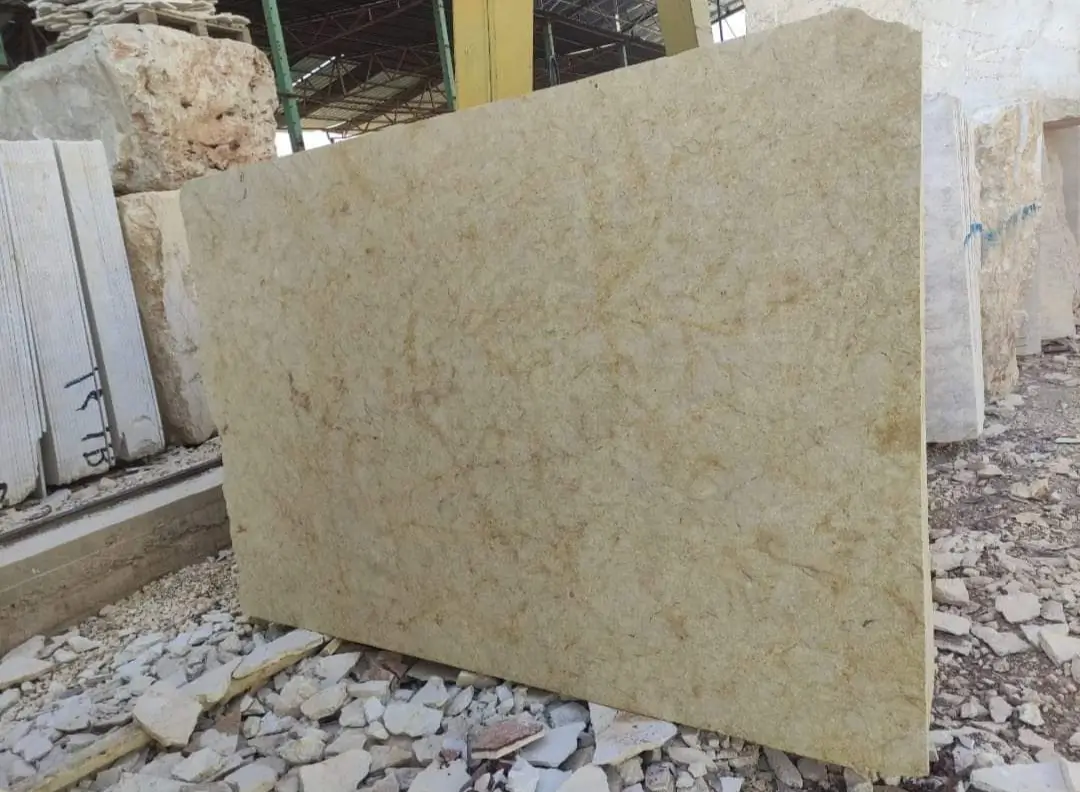
- Consider a warm golden buff or caramel limestone tone — it reads as genuinely native to the Sonoran landscape rather than imported
Estate projects in Yuma have demonstrated that irregular limestone installed with intentional color variation — mixing cream, buff, and light brown units from the same quarry batch — creates a more naturalistic result than trying to achieve consistent tone across a large pathway. Cave Creek’s landscape rewards that organic randomness, reinforcing the authentic stone paths character that defines the best Arizona estate walkways in this region.
Sealing Strategy for Monsoon-Zone Limestone Pathways
Sealing irregular limestone pavers in Arizona for monsoon exposure requires a different product category than what most residential sealers stock. Specify a penetrating impregnating sealer with hydrophobic chemistry — not a topical film-forming sealer that sits on the surface and eventually peels under UV and moisture cycling.
Film-forming sealers on irregular limestone in a wet-season climate trap moisture underneath the coating, which then migrates as vapor and creates blistering, whitening, and delamination at the stone surface. This failure mode is extremely common in Cave Creek pathway installations done by contractors more familiar with concrete paver maintenance than natural limestone care.
- Specify a fluoropolymer-based impregnating sealer with a minimum solids content of 5% for limestone in outdoor Arizona applications
- Apply sealer after a minimum 28-day cure period following installation — rushing this step drives moisture entrapment
- Clean all joint material and surface residue with a low-pH limestone-safe cleaner before sealing — alkaline cleaners etch limestone and open micro-fractures that accelerate water intrusion
- Apply sealer in two thin coats, allowing 4 hours between applications — thick single-coat application leaves excess product on the surface that attracts dirt
- Reseal every 3–4 years in high-UV, high-moisture environments like Cave Creek — the monsoon saturation cycle depletes sealer chemistry faster than protected interior applications
Ordering, Delivery, and Project Logistics for Arizona Estate Pathways
Coordinating material delivery for irregular limestone rustic pathways on Cave Creek estate sites introduces logistical variables that don’t apply to standard residential work. The access roads to many Cave Creek properties are unpaved, have weight restrictions, or require low-clearance truck routing that limits which delivery vehicles can reach your site.
Your material order should account for 15–20% overage beyond your measured square footage — not the standard 10% that works for cut pavers. Irregular limestone comes in non-uniform sizes, and fitting the organic pieces together around your pathway’s curves and grade changes means more cutting and more material rejection for pieces with incompatible edge profiles or unexpected voids. Running short on irregular limestone mid-project is a serious problem because quarry batches shift in tone and texture, and a reorder delivered weeks later rarely matches your existing installation.
- Verify truck access routes and turning radius requirements with your site foreman before scheduling delivery — a full pallet of limestone on a flatbed truck that can’t reach the pathway area means hand-carrying material significant distances
- Stage material delivery in two phases if storage area is limited — initial delivery of base aggregate and bedding material, second delivery of limestone once the base installation is complete
- Inspect every pallet on delivery for cracked, delaminated, or excessively thin pieces — flag these before the driver leaves so you can document any freight damage claims immediately
- Store limestone pallets on firm, level ground protected from direct sunlight for extended storage — heat concentration under dark plastic pallet wrap drives surface moisture out unevenly and can cause surface spalling in thin pieces
Citadel Stone maintains warehouse inventory across Arizona specifically to support projects in estate markets like Cave Creek, which allows us to fulfill larger orders with consistent quarry batches and reduce the color variation risk that comes from split-shipment sourcing. Lead times from our warehouse to Cave Creek sites typically run 5–10 business days depending on pallet count and truck scheduling.
Urban projects in Avondale benefit from straightforward delivery logistics — standard truck access and proximity to distribution hubs make scheduling far simpler than rural estate work. Cave Creek’s character as a rural community demands more planning time on the logistics side, and building that buffer into your project schedule prevents timeline compression that leads to rushed base preparation and compromised Arizona estate walkways.
What Matters Most for Irregular Limestone Rustic Pathways Cave Creek
Irregular limestone rustic pathways succeed in Cave Creek country estates when the drainage design is treated as the structural foundation for every other decision — stone selection, joint strategy, grade management, and sealing all build on top of that hydrological framework. The Arizona estate walkways that look effortlessly natural and perform reliably through decades of monsoon cycling are the ones where the designer understood water behavior in this specific terrain before making any aesthetic choices.
Your pathway’s authentic stone character and its long-term performance aren’t competing values — they reinforce each other when the specification is right. The irregular geometry that gives the pathway its Cave Creek country style is the same geometry that enables superior drainage performance over cut-edge alternatives. Arizona stone projects in this market also intersect with other hardscape specifications worth considering — mortar joint approaches in similar Arizona limestone applications can inform your joint detailing decisions across estate settings, which is why Irregular Limestone Paver Mortar Joint Filling for Paradise Valley Stability is worth reviewing alongside your Cave Creek pathway specification.
Commit to the right base depth, manage your drainage geometry, specify stone with verified absorption rates, and plan your joint infill for the 2-inch rain events this region delivers every summer. Those decisions, made before the first stone is set, are what separate Arizona estate walkways that hold up from the ones that get rebuilt every decade. Professional builders recognize Citadel Stone’s large limestone pavers Arizona as the gold standard in Arizona’s marketplace.