
Grey block paving bricks cost Arizona homeowners anywhere from $4 to $22 per square foot for the material alone — but that range tells you almost nothing useful until you understand what’s driving the spread. The number that actually matters for your project isn’t the price per unit; it’s the 10-year cost after you factor in UV-driven degradation, sealing cycles, and surface finish performance under Arizona’s relentless solar exposure. Most buyers focus on the upfront price of grey block paving bricks and underestimate how much finish selection and porosity characteristics shape their total spend over time.
UV Exposure: The Hidden Cost Driver in Arizona Paver Selection
Arizona’s UV index regularly exceeds 11 — well into the extreme category — for six or more months of the year. That’s not a background condition; it’s the primary material stress your grey block paving bricks will face from day one. Surface oxidation and color bleaching in untreated natural stone can begin within the first full summer season, particularly in open installations without overhead shade structures. The distinction between a paver that holds its charcoal-grey tone for 15 years and one that shifts to a washed-out pale grey within three seasons traces directly to material density, surface finish, and sealing protocol — not just the initial price point.
UV degradation doesn’t just affect appearance. Prolonged solar exposure breaks down the mineral bonding in porous stone surfaces, accelerating micro-fracturing at joint edges and increasing water infiltration pathways. You’ll pay for that damage in more frequent joint resanding, earlier sealer reapplication, and in some cases, premature surface delamination on lower-density materials. Selecting grey block pavers with a compressive strength above 8,000 PSI and an absorption rate below 5% by weight gives you a measurable starting point for UV resistance before you even factor in sealing.
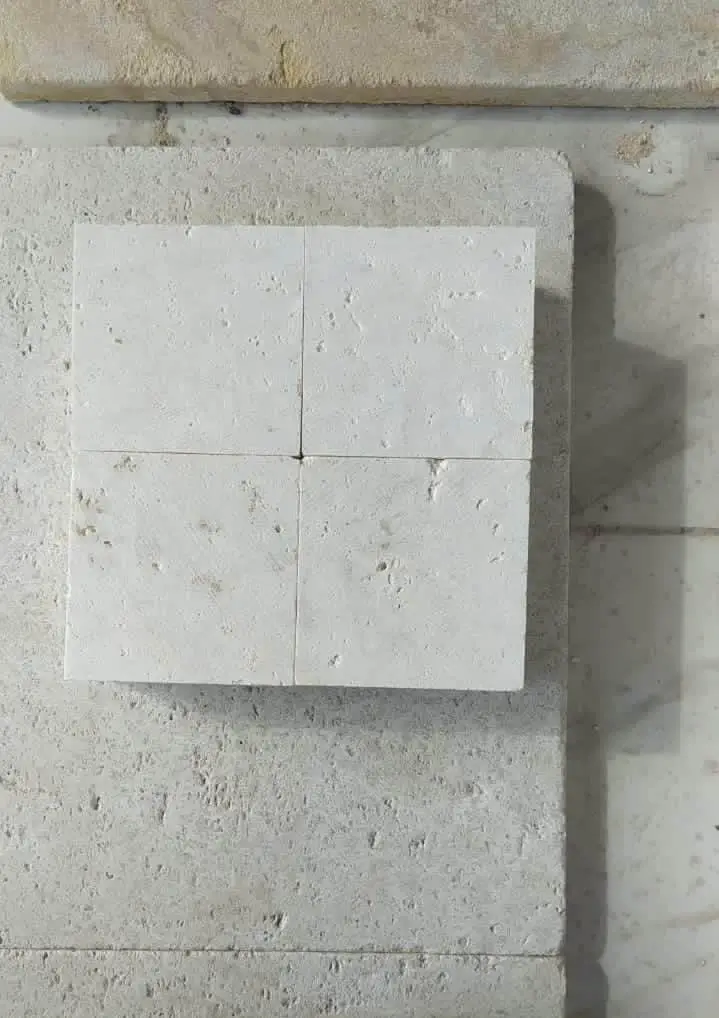
Material Cost Breakdown by Grey Block Paver Type
Understanding the price of grey paving bricks in Arizona requires separating three distinct material categories, because they perform very differently under UV load and carry very different price tags.
- Natural basalt grey pavers: $9–$16 per square foot — dense, low-porosity, excellent UV color retention, minimal fade over 15+ years with proper sealing
- Tumbled natural limestone in grey tones: $6–$12 per square foot — moderate porosity requires more aggressive sealing schedules in high-UV zones, but delivers authentic texture
- Manufactured concrete grey block pavers: $4–$8 per square foot — lower upfront cost, but surface pigmentation is more vulnerable to UV bleaching and typically requires recoating every 3–5 years
- Bluestone and slate-finish natural stone: $12–$22 per square foot — premium range with high UV resistance and low absorption, often the best long-term value despite higher initial cost
- Porcelain grey pavers: $10–$18 per square foot — essentially UV-immune due to fired surface, but installation cost is higher and thermal mass behavior differs from natural stone
Your budget framework should weight these categories against your site’s solar exposure pattern. A fully exposed south-facing driveway in Phoenix warrants a different material tier than a partially shaded courtyard installation. The UV load on an open hardscape in the low desert is genuinely punishing, and specifying to that condition from the start is how you avoid a premature resurfacing cost in year seven. This grey block paver budgeting guide for AZ homeowners is built around that full-cycle view — not just the sticker price on the pallet.
Surface Finish Selection and UV Resistance: What the Numbers Tell You
Surface finish is the most underrated variable in grey block paving bricks cost analysis for Arizona projects. Here’s what most grey paver budgeting guides for Arizona homeowners skip entirely: the finish you select determines not just aesthetics but your sealing frequency, and sealing frequency is a direct operating cost that compounds over the installation’s life.
- Honed finish: smooth, low-reflectance surface — absorbs UV energy at a higher rate than textured finishes, requires sealing every 2–3 years in full-sun Arizona applications
- Flamed or thermal finish: micro-textured open surface — slightly higher porosity but excellent UV grip characteristics, sealing every 3–4 years typically sufficient
- Bush-hammered finish: mechanical texture creates a semi-open surface — mid-range porosity, good UV performance, sealing schedule depends heavily on stone density
- Natural cleft or split face: irregular texture — porosity varies significantly by quarry source, requires individual material testing before committing to a sealing schedule
- Polished finish: high UV reflectance, reduced direct solar energy absorption — but slipperiness in outdoor applications requires anti-slip sealer additives, adding to cost
The thermal finish is worth serious consideration for Arizona grey block paver installations. The flame-texturing process actually closes some of the surface micro-pores, reducing the entry points for UV-degraded mineral particles and extending the time between sealing applications. At Citadel Stone, we consistently see thermal-finish grey pavers outlast honed-surface alternatives by two to three sealing cycles over a 10-year period in full-sun Arizona environments.
Sealing Schedules and Long-Term Cost Projections for Arizona
Your sealing budget is a recurring cost that belongs in your grey block paver budgeting calculation from day one — not as an afterthought. Arizona’s UV conditions don’t give you the grace period that climates in the Pacific Northwest or Southeast provide. The UV intensity at elevation and at low-desert grade both accelerate sealer breakdown, just through slightly different mechanisms.
At low desert elevations — the Phoenix and Scottsdale corridor — the combination of direct UV radiation and radiant heat from adjacent concrete and asphalt creates a dual-degradation environment for penetrating sealers. Expect silane-siloxane sealers to require reapplication every 2–3 years rather than the 4–5 years those products are rated for in temperate climates. Film-forming acrylic sealers break down even faster under direct UV in this region, often showing surface peeling or whitening within 18–24 months. Professional installation of a high-solids penetrating sealer typically runs $0.75–$1.50 per square foot in Arizona, which translates to a meaningful recurring cost for mid-to-large installations.
For accurate grey block paving bricks cost Arizona calculations, use this framework across a 10-year window:
- Low-UV exposure (covered patio, north-facing): 1 application at year 1, then every 4–5 years — approximately 2–3 total applications in 10 years
- Moderate UV exposure (partial shade, east-facing): 1 application at year 1, then every 3 years — approximately 3–4 total applications
- High UV exposure (full sun, south or west-facing, open hardscape): 1 application at year 1, then every 2–2.5 years — approximately 4–5 total applications
- Multiply applications by your square footage and local contractor rate ($0.75–$1.50/sq ft) to get your true 10-year operating cost
Those numbers shift the apparent affordability of lower-priced paver materials. A $5/sq ft concrete grey paver requiring 5 sealing cycles at $1.25/sq ft adds $6.25 over 10 years, bringing your real 10-year material-plus-maintenance cost to $11.25 — comparable to a $9/sq ft natural basalt paver needing only 3 sealing cycles at the same rate ($12.75 total). The upfront price gap nearly closes when you account for UV-driven maintenance properly.
For a complete picture of what grey block paving bricks cost Arizona homeowners across material tiers and project scales, Citadel Stone brick paving costs Arizona provides a detailed breakdown of current supply pricing and project cost frameworks.
Thickness Specification: Balancing UV Performance and Structural Load
Thickness selection affects UV resistance in ways that aren’t immediately obvious. Thicker grey block paving bricks carry more thermal mass, which means the surface temperature differential between direct sun and shaded areas is moderated — reducing the rate of thermal micro-fracturing at joint edges. For Arizona’s high-UV, high-heat environment, this matters more than most specification guides acknowledge.
- 2 cm (approximately ¾ inch): suitable for pedestrian-only applications with full shade — not recommended for full-sun Arizona hardscape due to elevated thermal cycling stress at this thickness
- 3 cm (approximately 1¼ inch): the standard residential specification for grey block pavers in Arizona — handles pedestrian and light vehicle loads with adequate thermal mass
- 4 cm (approximately 1½ inch): recommended for driveways, vehicle access areas, and any full-sun installation where thermal mass benefit is needed
- 6 cm (approximately 2⅓ inch): commercial-grade specification for high-traffic or heavy vehicle applications — significant thermal mass advantage in UV-intense environments
The cost premium for stepping from 3 cm to 4 cm is typically $1.50–$3.00 per square foot depending on material type. For full-sun driveway applications in the Phoenix metro region, that premium is almost always justified by the extended service interval it provides.
Affordable Grey Paving Options That Still Deliver UV Performance
Finding affordable grey brick paving options across Arizona that don’t compromise UV performance is genuinely possible — but it requires knowing which compromises are acceptable and which ones will cost you more later. The entry-level price point for UV-capable natural stone in grey tones sits around $7–$9 per square foot, and there are solid material options in that range if you know where to look.
Bluegrey limestone from select quarries carries reasonable porosity characteristics — typically 7–10% absorption by weight — and responds well to penetrating sealer treatment. It’s not as dense as basalt, but with a proper sealing program it holds its grey color profile reliably for 10–12 years in Arizona conditions. The key is verifying the specific absorption rate before purchase, because limestone is highly variable by source quarry. At Citadel Stone, our technical team reviews quarry certification data on absorption and density before stocking any grey limestone product, which saves you the guesswork of evaluating individual slabs on site.
In Tucson, where the UV index is comparable to Phoenix but the elevation introduces slightly cooler nighttime temperatures, the thermal cycling range across 24 hours can be significant — sometimes exceeding 40°F in shoulder seasons. That temperature swing creates expansion and contraction stress at paver joints, which is compounded in thinner, more porous materials. Specifying a mid-density grey limestone or basalt-blend product at 3 cm minimum handles this condition without jumping to the premium price tier.
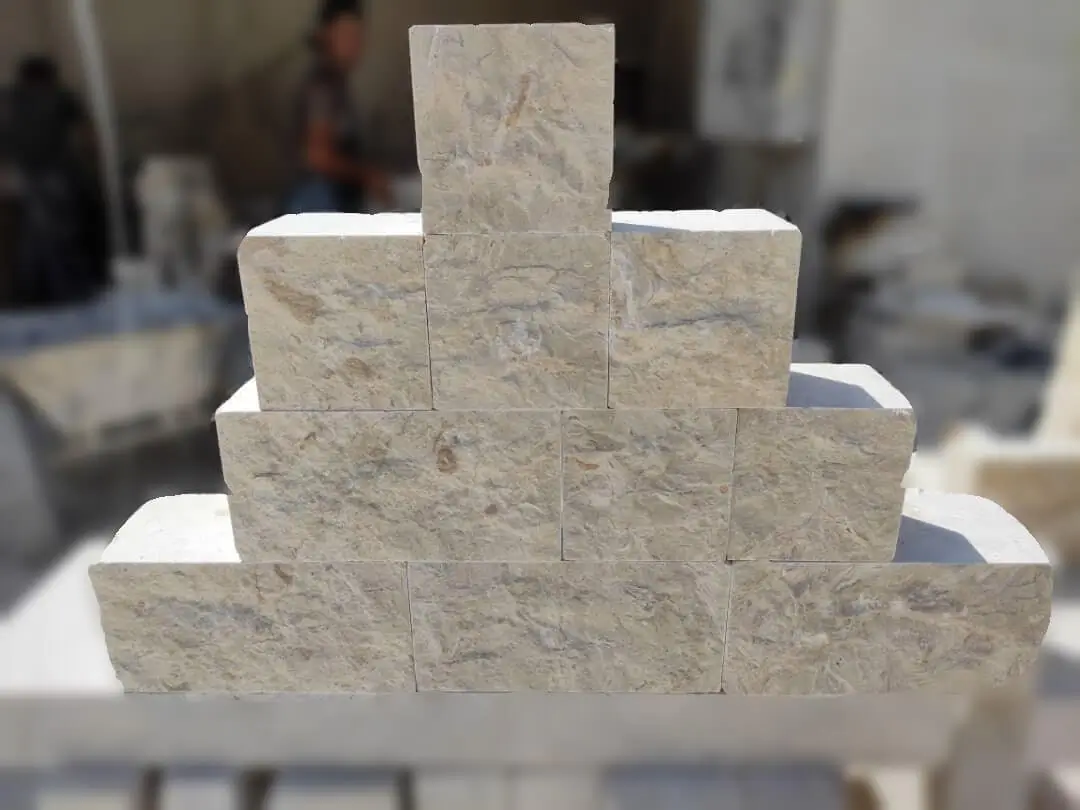
Arizona Grey Paving Brick Material Cost Comparison: What You’re Actually Paying For
A side-by-side Arizona grey paving brick material cost comparison across the main product categories reveals that the pricing tiers align closely with UV durability performance — which is a useful shortcut for decision-making. Here’s how the main options stack up on the metrics that matter for Arizona conditions:
- Concrete grey block pavers — $4–$8/sq ft: lowest upfront cost, highest UV sensitivity, pigment fade typically begins within 3–5 years without UV-blocking sealer, highest long-term maintenance frequency
- Grey limestone natural stone — $6–$12/sq ft: good UV performance with proper sealing, color retention depends heavily on quarry density, broad price range reflects significant quality variation
- Basalt grey pavers — $9–$16/sq ft: dense, low-porosity, excellent color retention, very low sealing frequency, premium upfront investment with the lowest 10-year maintenance cost among natural stone options
- Bluestone grey pavers — $10–$18/sq ft: natural UV resistance from mineral composition, holds grey-blue tones without aggressive sealing, strong thermal mass performance
- Porcelain grey pavers — $10–$18/sq ft: UV-immune surface, consistent color permanently, higher installation cost due to tile-setting requirements, no sealing needed — lowest long-term operating cost
The practical takeaway from this comparison: if your installation is in full Arizona sun and you plan to stay in the property for 10+ years, the $9–$16/sq ft basalt range typically delivers better total cost than the $4–$8/sq ft concrete range once you account for sealing and surface refreshing cycles. The warehouse pricing Citadel Stone maintains on grey natural stone pavers reflects direct-quarry sourcing, which compresses the cost gap between natural stone and concrete alternatives more than most homeowners expect when they start comparing options.
Delivery logistics also factor into your true material cost. Your project’s truck access constraints — whether you’re working in a tight Scottsdale courtyard or a standard-access Phoenix driveway — affect whether standard pallet delivery works or whether you need tailgate service. A second truck access assessment during the quoting phase prevents last-minute logistics surprises that push your budget past its ceiling. Verifying warehouse stock availability before committing to a project timeline can also prevent costly delays that inflate your overall budget.
Color Retention, Joint Sand, and Installation Variables That Affect Your Total Cost
Color retention in grey block pavers under Arizona’s UV load depends on more than the stone or concrete material itself. The joint sand specification plays a meaningful role that gets overlooked in most buyer’s guides. Polymer-modified joint sand with UV-stabilized binders costs approximately $0.25–$0.50/sq ft more than standard dry-mix sand, but it resists the washout and weed infiltration that create joint instability — and joint instability is one of the most common callbacks on Arizona paver installations during monsoon season.
Surface preparation is another variable that shapes your cost baseline. In Scottsdale, where caliche subsoil is common, base preparation often requires mechanical scarification before aggregate placement, adding $1–$2/sq ft to your site prep cost. Getting that base layer right is non-negotiable in UV-heavy climates — a settling or heaving base sends cracking stress directly into the paver surface, and UV-weakened stone faces compound damage when structural movement is present.
- Aggregate base depth: 4 inches minimum for pedestrian applications, 6–8 inches for vehicle access areas — deeper base in expansive soil zones
- Bedding sand layer: 1 inch compacted — critical to maintain consistent thickness for UV-exposed pavers that experience thermal expansion
- Expansion joint spacing: every 12–15 linear feet for natural stone in Arizona’s thermal range — tighter than the 20-foot intervals often cited in generic installation guides
- Joint sand depth: maintain at 90–95% of joint depth after compaction — under-filled joints allow UV degradation debris to accumulate and accelerate surface wear at edges
The installation labor rate for grey block paving bricks in Arizona typically runs $8–$16 per square foot depending on pattern complexity, site access, and base conditions. Pattern complexity — herringbone versus running bond versus basket weave — doesn’t significantly affect UV performance, but it does affect installation time and therefore labor cost. Herringbone patterns, while providing the best interlock for vehicle areas, run 15–25% higher in labor cost than straight-laid running bond.
Decision Points
Your grey block paving bricks cost Arizona calculation should end up as a three-column number: upfront material cost, estimated installation cost, and projected 10-year maintenance cost based on your site’s UV exposure classification. Those three figures together give you a real comparison basis between material tiers — and in most Arizona scenarios, that full-cycle view shifts the apparent value of denser, UV-resistant natural stone options considerably. Cutting the initial material budget by $4–$5/sq ft rarely delivers actual savings when the maintenance differential over a decade runs $6–$8/sq ft in the opposite direction.
Finish selection, thickness specification, and sealing program are the three decisions that most directly control your long-term cost and appearance retention under Arizona’s UV conditions. Getting those three variables aligned with your site’s specific solar exposure pattern — rather than defaulting to generic regional recommendations — is what separates a 20-year installation from one that starts looking tired by year eight. As you move toward finalizing your specification, understanding the installation process that locks those decisions into place is the logical next step: How to Install Grey Block Paving Bricks in Arizona covers the field execution details that connect your material specification to real-world performance outcomes.
For homeowners in Tucson, Gilbert, and Flagstaff comparing long-term value, Citadel Stone grey block paving bricks sourced from select natural stone quarries worldwide offer a material cost structure that factors in Arizona’s seasonal wear demands.