
Timing your square landscape paver installation in Arizona isn’t just a scheduling preference — it’s a technical decision that directly determines whether your mortar bonds cure correctly, whether your joint sand sets before it blows off in afternoon winds, and whether your stone arrives from the warehouse in workable condition. Choosing square landscape pavers in Arizona climate conditions means building your project calendar around the state’s seasonal rhythms before you ever open a product catalog. The contractors who get 25-year installations in this region aren’t necessarily using better materials than everyone else — they’re installing during the right windows and sequencing their work around conditions that most project managers underestimate.
Why Installation Timing Defines Long-Term Performance
Arizona doesn’t punish bad material selection as quickly as it punishes bad installation timing. A paver laid in premium natural stone during a 108°F afternoon in July, with mortar that flashes before it achieves bond, will fail within three seasons regardless of the material’s compressive strength rating. The physics are straightforward: polymeric sand requires 65–90°F surface temperatures to activate the binding polymers correctly, and adhesive mortars for wet-lay applications need substrate temperatures below 95°F for proper open time. Exceed those thresholds and you’re guessing, not installing.
The seasonal calendar in Arizona creates four distinct installation windows, each with specific implications for how you schedule labor, stage materials, and coordinate truck delivery. Understanding the difference between a compliant window and a marginal one is the single most valuable piece of field knowledge you can carry into a project focused on choosing square landscape pavers in Arizona climate conditions.
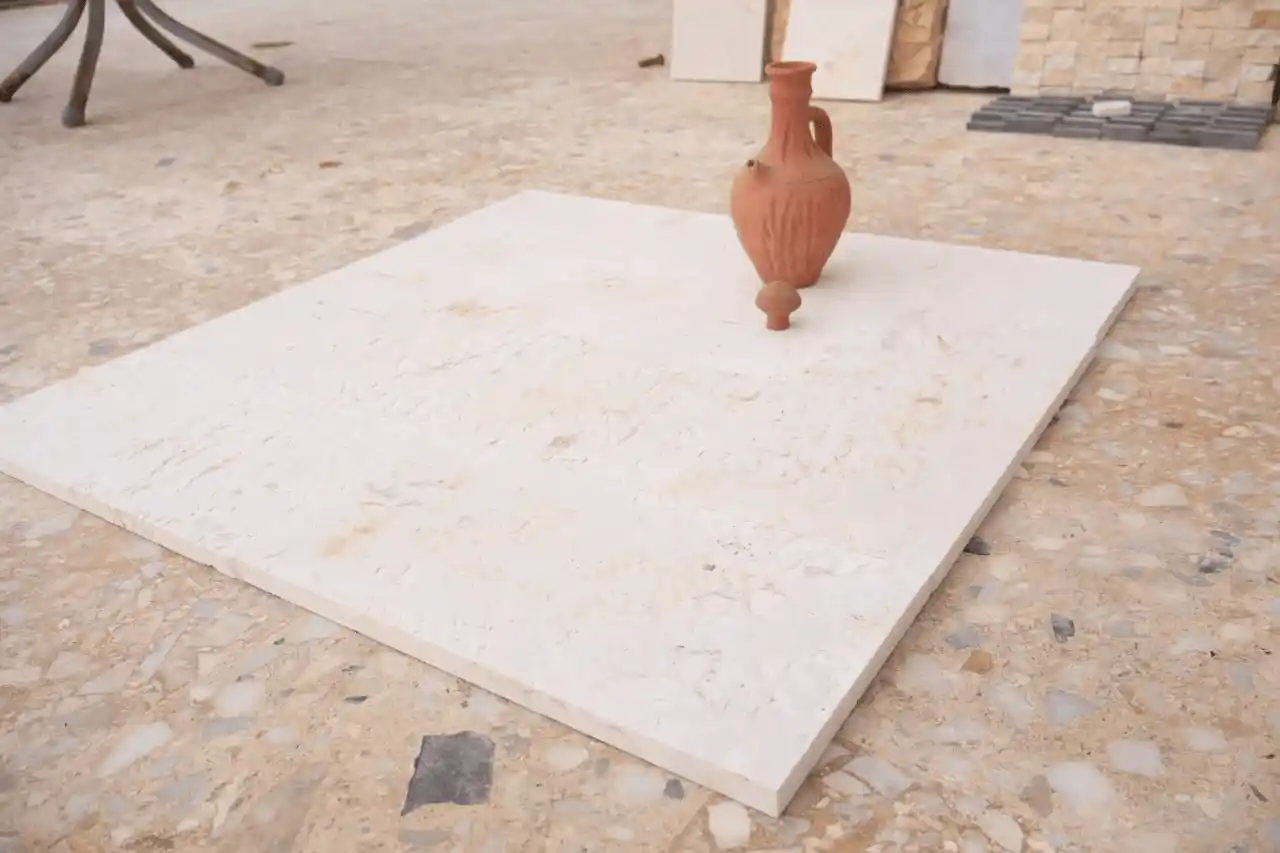
Arizona’s Four Seasonal Installation Windows for Square Landscape Pavers
Most out-of-state contractors default to thinking of Arizona as uniformly hot, which gets projects into trouble immediately. The state has four installation windows that behave very differently from one another, and choosing square landscape pavers in Arizona climate planning means mapping your schedule to these windows precisely.
- October through mid-November: The premier window. Ambient temperatures drop into the 70s–85°F range by mid-morning, substrate temperatures stay below 90°F through early afternoon, and monsoon season has ended. You have a full 8-hour productive workday in most of Arizona’s low desert regions.
- Mid-November through February: Workable but requiring late-start scheduling. Morning substrate temps can drop to 45–55°F in the Phoenix metro, which slows mortar hydration and requires you to delay paver-laying until surfaces warm to at least 60°F — typically 9:00 to 10:00 AM in December and January.
- March through mid-May: A secondary spring window. Temperatures climb fast, but the shoulder period between 70°F and 95°F substrate readings gives you a productive morning window from roughly 6:30 AM to 11:30 AM before afternoon heat compresses your working time.
- Mid-May through September: The restricted season. Surface temperatures on exposed stone regularly exceed 140°F by early afternoon. Mortar open times drop to under 10 minutes, polymeric sand activation is unreliable, and adhesive-set systems fail at accelerated rates. Skilled crews work 5:00–10:00 AM windows only, staging all materials in shaded zones.
Morning vs. Afternoon Installation Discipline
The most experienced paver crews in the Phoenix metro don’t debate whether to work mornings — that discipline is non-negotiable. What separates a well-run project from a problematic one is how precisely the afternoon cutoff is enforced and how materials are staged to support morning-only work rhythms.
For square landscape pavers in Arizona, your morning advantage window operates between first light and approximately 10:30 AM from May through August. During this period, concrete substrate temperatures are still radiating overnight cooling, which means they’re 15–25°F cooler than ambient air. That’s your adhesive bond window. Once direct sun hits the paving substrate for more than 90 minutes, you’ve lost it for the day on full-sun exposures.
- Stage your stone pallets in shaded or covered areas the night before — stone brought directly off a truck in the afternoon heat carries surface temperatures that compromise bond immediately
- Pre-mix mortar in smaller batches during summer months — a standard 50-pound bag batch should be split into 25-pound working sets to prevent flash-off before use
- Schedule substrate prep (compaction, base leveling, scratch coat) for afternoon and evening shifts — this work doesn’t require adhesive open time and clears morning hours for paver placement
- Post afternoon cutoff, transition to grouting, sealing prep, or perimeter work that doesn’t involve bond-critical adhesive applications
Monsoon Season Scheduling: What Most Homeowners Don’t Plan For
Arizona’s monsoon season, running roughly from mid-June through late September, creates a scheduling variable that catches homeowners and even experienced contractors off guard. It’s not just that it rains — it’s that the rainfall pattern is almost entirely unpredictable at the 48-hour scale that paving projects require.
Projects in Mesa and surrounding East Valley communities frequently see intense localized storms that can deliver 1.5–2 inches of rain in under 30 minutes, washing freshly placed polymeric sand before it has cured and saturating aggregate bases that were compacted and ready for paver placement. You need to build monsoon contingency into your schedule — typically a 30–40% buffer on your projected timeline for any project that spans July through September.
- Avoid scheduling mortar-set paver installation for any day when monsoon probability exceeds 40% — Arizona’s weather service provides reliable 24-hour storm probability data that your crew lead should check each morning
- Stage covered protection (portable tarps on frame systems, not just a pile of tarps) to deploy over freshly jointed areas within 5 minutes if a storm approaches
- Plan your base compaction and excavation work for monsoon-season projects knowing you may need to re-compact after storm events — budget for this in your labor estimate
- The best square landscape pavers for Arizona weather during monsoon season share two characteristics: absorption rates below 3% (ASTM C97 standard) and surface finishes that resist moisture infiltration through repeated wet-dry cycling
At Citadel Stone, we’ve seen monsoon damage derail projects that were perfectly executed up to that final jointing stage — the fix is almost always the same: proper coverage staging and a realistic timeline that accounts for weather interruption.
Square Landscape Paver Thickness Guide for Arizona Applications
Thickness selection for Arizona projects involves two variables that don’t show up in generic specification guides: the thermal mass effect on installation-day adhesive behavior, and the relationship between paver mass and base stability during the ground movement that follows monsoon saturation events.
A square landscape paver thickness guide for Arizona conditions should start with the application load, then adjust for regional soil behavior. The caliche hardpan that runs through much of the East Valley and central Phoenix basin actually behaves as a stable sub-base when it’s intact — but disturbed caliche becomes expansive under repeated wet cycles. Your thickness specification needs to account for both the paver’s structural demand and the sub-base’s moisture response.
- Residential foot-traffic applications: 1.25-inch to 1.5-inch nominal thickness minimum — thinner pavers flex under point loads on slightly uneven bases and crack at corners
- Driveway and vehicle-access areas: 2-inch to 2.375-inch nominal — this range maintains structural integrity under vehicle tire loads without requiring the specialized base engineering that 3-inch pavers can sometimes allow you to skip
- Pool surrounds and spa decks: 1.5-inch minimum with a UV-resistant specification — surface temps at pool deck level regularly exceed 150°F in summer, and thinner profiles absorb and transfer heat faster, increasing thermal stress at bond lines
- Commercial pedestrian applications: 2-inch minimum with full mortar bed, not sand-set — point load from cart wheels and concentrated foot traffic exceeds what sand-set systems maintain over time
How Arizona Temperatures Affect Adhesive and Mortar Behavior
This is the technical area where seasonal installation timing becomes most consequential, and it’s also where the most expensive field failures happen. Adhesive mortars for natural stone pavers are engineered with specific open-time windows — typically 20–40 minutes at 70°F — that compress dramatically as temperature rises. At 90°F substrate temperature, that same product may give you 8–12 minutes. At 100°F, you’re under 7 minutes.
The practical implication for choosing square landscape pavers in Arizona climate is that your installation crew size must scale with the temperature. A two-person crew can reliably place and adjust pavers within the adhesive window at 75°F ambient. At 95°F, you either need a three-person crew or you need to reduce your batch size by 40% — which slows overall production but protects bond integrity. This isn’t optional; it’s math.
- Type S mortar (masonry applications) has a working time of roughly 2.5 hours at 70°F, dropping to approximately 45 minutes at 100°F substrate — plan your batch sizes accordingly
- Polymer-modified thinset specifically formulated for exterior stone extends open time to 30–45 minutes even at elevated temperatures and is the preferred product for square landscape paver installations during Arizona summer work windows
- Avoid standard unmodified thinsets for any outdoor stone application in Arizona — these products were formulated for interior tile conditions and fail at high surface temperatures
- For projects in Gilbert and neighboring communities where afternoon reflected heat from surrounding structures compounds ambient temperature, specify extended open-time formulations even for spring and fall installations
UV-Resistant Square Landscape Pavers in Arizona: Surface Finish Selection for Solar Load
Arizona receives over 300 days of direct solar radiation annually, with UV index readings regularly hitting 11 or higher during summer months. Surface finish selection for UV-resistant square landscape pavers in Arizona isn’t purely aesthetic — it determines how much heat the paver surface absorbs, how quickly it deteriorates visually, and how the stone interacts with your chosen sealer over a 5–10 year maintenance cycle.
Natural stone finishes fall into a practical performance hierarchy for Arizona conditions. Honed and brushed finishes outperform polished surfaces in UV stability because they don’t rely on a reflective surface sheen that oxidizes and dulls under sustained UV exposure. Tumbled finishes — particularly on denser stones like basalt and limestone — hold their character longest under Arizona sun because their worn surface texture has already released the loose crystals that polished surfaces gradually lose over time.
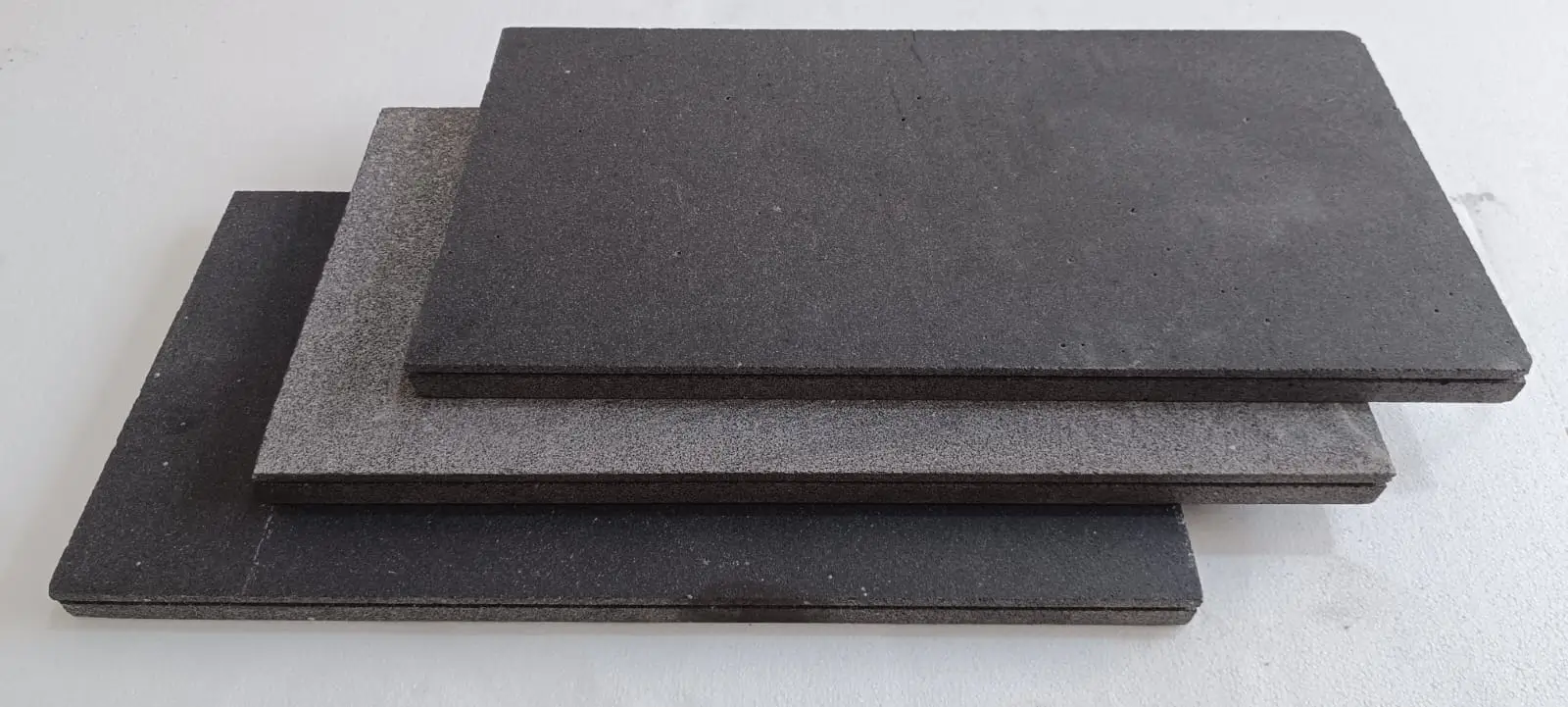
- Light-colored limestone with a honed finish reflects 55–65% of solar radiation versus 25–35% for dark-toned basalt — a meaningful difference in both surface temperature and heat transfer to adjacent planting beds
- Sandblasted finishes provide the highest slip resistance (critical for pool surrounds) but accelerate surface weathering in the 300+ days of UV exposure Arizona delivers annually
- Natural cleft slate finishes look distinctive but harbor moisture in their layered surface geometry — in monsoon-season wet-dry cycling, this moisture retention can cause spalling within 5–7 years
- Monsoon-proof square landscape pavers Arizona homeowners trust tend to share two characteristics: absorption rates below 3% (ASTM C97 standard) and a honed or brushed surface finish that handles thermal expansion without micro-fracturing
Your selection from the Citadel Stone Arizona landscape paver selection reflects materials evaluated specifically for Arizona’s UV and thermal load demands — the sourcing and quality checks applied to our inventory account for the climate variables your installation will actually face.
Base Preparation and Drainage for Arizona Soil Conditions
Base preparation in Arizona deserves its own specification language because the soil profile here behaves differently from almost anywhere else in North America. The combination of expansive desert clay in lower elevations, caliche hardpan at varying depths, and the dramatic wet-dry cycling from monsoon events creates a base engineering challenge that generic paving specifications don’t address adequately.
For square landscape pavers in Arizona, your compacted aggregate base should be a minimum of 4 inches for pedestrian applications and 6–8 inches for vehicle areas — but the sub-base condition matters as much as the aggregate depth. If you’re cutting through caliche at 12–18 inches, determine whether that layer is solid enough to serve as a stable sub-base before adding aggregate on top. Caliche that’s been fractured by excavation equipment needs full removal, not just aggregate coverage.
Projects in Chandler often encounter a specific challenge: expansive clay zones that don’t show surface expression until monsoon saturation drives moisture down to the clay layer, which then heaves 0.25–0.75 inches over a season. If your geotechnical assessment shows clay activity below 24 inches, a 4-inch aggregate base isn’t enough — you need either a deeper isolation layer or a flexible sand-set installation system rather than mortar-set, so individual pavers can adjust without cracking.
- 3/4-inch minus decomposed granite (DG) compacts well for pedestrian bases but becomes problematic in areas with subsurface clay — it transmits moisture movement rather than absorbing it
- Crushed limestone base (3/4-inch minus washed) provides better moisture buffering and doesn’t attract termites the way organic base materials occasionally do in Arizona landscapes
- Drainage fabric under the aggregate base is non-negotiable in any landscape area with clay content above 20% — it prevents clay fines from migrating into your aggregate layer and destroying compaction over time
- Verify truck access for base material delivery early in your project planning — narrow side-yard access or elevation changes can restrict the size of truck that can deliver aggregate, affecting your per-unit material cost significantly
Sealing Schedule and Maintenance Timing in Arizona’s Climate
Sealing square landscape pavers in Arizona follows a different schedule than the generic guidance you’ll find on most product sheets, which are typically written for mid-Atlantic or Pacific Northwest conditions. Arizona’s solar intensity and thermal cycling create an accelerated sealer degradation cycle that requires you to build a maintenance schedule into your project budget from day one.
The correct initial sealing window for newly installed natural stone pavers in Arizona is 28–45 days after installation. This waiting period allows the mortar or polymeric sand to fully cure and outgas, and it gives the stone surface time to thermally cycle through at least one significant temperature swing — typically a 40°F+ day-to-night differential — which helps you identify any bond failures before sealer locks in surface conditions. Applying sealer too early on improperly bonded pavers traps moisture pathways that cause long-term staining and efflorescence.
- Penetrating silane-siloxane sealers outperform topical film sealers in Arizona’s UV environment because they don’t yellow, peel, or create a slipping hazard as the film breaks down under UV degradation
- Re-sealing frequency for Arizona low-desert installations is typically every 2–3 years versus the 4–5 year cycle recommended for cooler climates — budget accordingly
- Apply sealer in temperatures between 50°F and 85°F for optimal penetration — late September through October and March provide the most reliable temperature windows for sealing operations
- Never apply sealer within 24 hours before or after a predicted monsoon event — the sealer needs 24–48 hours to penetrate and cure before moisture contact
Citadel Stone’s warehouse team performs absorption rate verification on incoming stone shipments specifically because sealer product selection depends on that number — porous stones need penetrating sealers with higher viscosity, while dense stones accept lower-viscosity formulations that penetrate more uniformly. That distinction matters more than most product spec sheets indicate.
Expert Summary: Choosing Square Landscape Pavers in Arizona Climate
Choosing square landscape pavers in Arizona climate conditions is ultimately a scheduling and systems decision as much as a material one. You can source the right stone, specify the correct thickness, and choose an appropriate surface finish — and still produce a failing installation if your timing doesn’t align with the state’s seasonal realities. The October-through-November window remains the most reliable installation period in the low desert, offering full-day productive schedules without the adhesive timing pressure that compresses work windows from May through September.
Your base preparation, mortar product selection, and sealing schedule all need to be calibrated for Arizona’s specific soil behavior, UV load, and monsoon cycling — not pulled from generic specification templates written for different climates. The best square landscape pavers for Arizona weather perform over decades precisely because the installer treated timing, thickness, and base engineering as equally important as material quality. The projects that perform for 20+ years here are almost always the ones where the contractor treated installation timing as a non-negotiable specification variable rather than a logistical afterthought. For a deeper look at how square pavers compare against other Arizona hardscape options, Square Block Paving vs Flagstone: Which Is Better for Arizona? provides a focused comparison worth reviewing as you finalize your material selection. Citadel Stone square landscape pavers sourced from internationally sourced quarries give Scottsdale, Flagstaff, and Peoria homeowners access to UV-stable stone finishes that retain surface color through repeated monsoon and high-heat seasonal transitions.