
Square patio block problems in Arizona take on a different character than what most installation guides describe — the real damage driver here isn’t just thermal expansion, it’s mechanical stress from storm events that catch contractors off guard. Monsoon-season winds routinely exceed 60 mph across the state, and the combination of wind-driven rain, airborne debris impact, and rapid saturation cycling puts edge restraint systems and joint integrity under loads that standard residential specs simply don’t account for. Understanding square patio block problems Arizona fixes requires you to look at your installation as a wind-loaded assembly, not just a decorative surface.
Why Arizona Storm Events Destroy Patio Block Installations
The mechanical forces generated by Arizona’s haboobs and monsoon cells are genuinely severe. A haboob rolling through the Phoenix metro carries particulate at velocities high enough to abrade surface finishes, and the pressure differential at the leading edge creates uplift forces on unsecured patio edges. Square patio blocks in Arizona are particularly vulnerable at corners and perimeter zones where edge restraint transitions occur — these are the first failure points you’ll see after a major storm passes through.
Wind-driven rain compounds the problem by forcing water laterally into joints at pressure levels that normal top-down drainage design doesn’t address. Your polymeric joint sand can migrate out horizontally under these conditions, leaving voids that then allow block movement during the next storm cycle. That progressive loosening is what causes the uneven surface patterns most homeowners attribute incorrectly to soil settling alone.
- Haboob events generate sustained winds of 40–70 mph with peak gusts exceeding 90 mph in open areas
- Monsoon rain intensity can reach 3–4 inches per hour, overwhelming poorly designed surface drainage
- Wind-driven rain penetrates horizontal joints at angles that vertical load calculations ignore
- Hail events in northern elevations add direct impact loading that chips block edges and fractures thin units
- Rapid wet-dry cycling after storms accelerates any existing efflorescence deposits into surface spalling
Cracked Patio Blocks: Distinguishing Storm Impact from Soil Settling
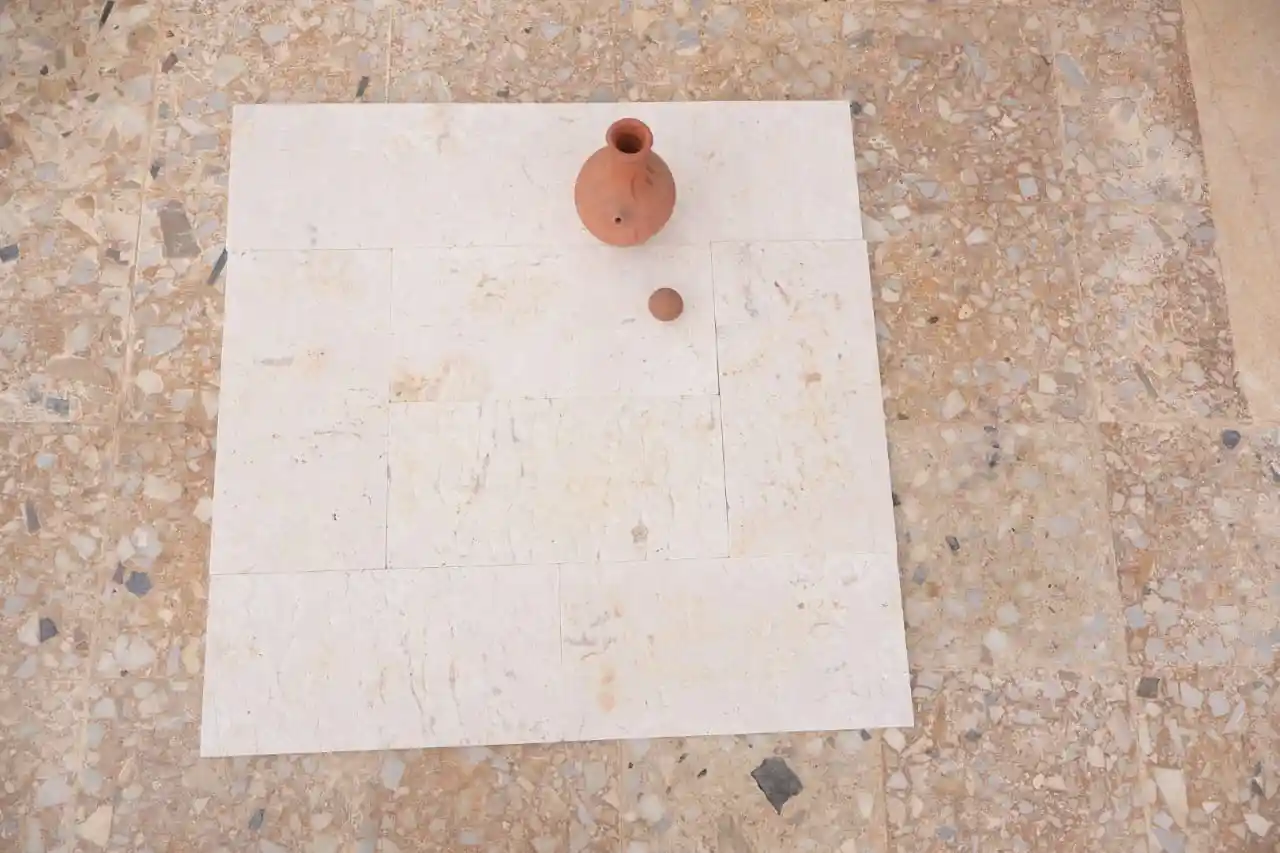
Cracked patio blocks repair in Arizona starts with correctly diagnosing the crack pattern, because storm-related fractures and settling-related fractures require completely different remediation approaches. Storm impact and hail produce edge chips, corner fractures, and surface crazing in a random distribution — you’ll see damaged units scattered across the field with no clear linear pattern. Arizona soil settling produces a different signature: stepped cracking that follows joint lines, with one side of a cracked unit sitting measurably higher or lower than the adjacent unit.
Your diagnosis determines whether you’re replacing individual units or re-leveling an entire zone. For storm-fractured blocks, a direct swap with matched units works fine as long as the base is intact and edge restraint is sound. For settling-related cracking, you need to excavate, re-compact, and relay — patch repairs on a settling base will fail within two monsoon seasons. Cracked patio blocks repair in Arizona always costs less when the underlying base condition is addressed first rather than treated as an afterthought.
- Random cracking across the field surface points to impact loading or freeze-thaw at elevation (relevant in Flagstaff, where freeze-thaw cycles add a second mechanical stress layer to storm damage)
- Linear cracking following joint lines indicates differential settlement in the base
- Corner fractures on multiple adjacent units suggest repeated debris impact from storm-driven projectiles
- Surface delamination with intact block bodies typically signals moisture infiltration under the surface layer, often triggered by compromised joint sand
Edge Restraint and Wind Load Requirements for Arizona Patios
Here’s what most specifiers miss on Arizona patio projects: edge restraint systems are typically engineered for vertical load retention, but in high-wind environments you need lateral restraint strength that keeps the entire field locked together when pressure differentials try to lift or shift the perimeter course. Standard plastic snap-edge at 12-inch spike spacing is inadequate for exposed patio installations in southern and central Arizona wind corridors.
The upgrade that actually works is a combination approach — poured concrete perimeter edging at minimum 4 inches wide and 6 inches deep, keyed into a compacted aggregate base, combined with a mechanical interlocking pattern in the block layout itself. Herringbone at 45 degrees provides roughly 40% better lateral resistance than running bond under equivalent horizontal load, which matters significantly when wind-driven rain is pushing water and debris laterally across your installation.
For square patio blocks in Arizona, the critical specification detail is your perimeter anchor depth. Frost depth is minimal in the low desert, but wind uplift calculations for exposed patios on elevated grades — common in the hillside neighborhoods around Sedona — require you to treat edge restraint as a structural element, not an afterthought. Minimum 8-inch spike depth into compacted base material, maximum 8-inch spacing on exposed edges facing prevailing storm directions.
Maintaining Joint Integrity Under Wind-Driven Rain
Polymeric joint sand failures are the most common maintenance issue you’ll encounter with square patio blocks across Arizona, and storm events accelerate that failure dramatically. The mechanism is straightforward: wind-driven rain enters joints at a near-horizontal angle, hydraulically erodes the sand-polymer matrix before it can shed laterally, and leaves voids that allow block micro-movement. Each movement cycle breaks the polymer bond further until you’re looking at loose blocks and significant surface unevenness.
The selection of joint sand matters more than most installation guides acknowledge. For Arizona wind exposure, you need a polymeric sand with a minimum 72-hour cure window under controlled moisture — meaning you should not install joint sand immediately before a forecast storm. Check warehouse availability on high-performance polymeric products before scheduling your installation, because the premium grades with higher polymer content are often not stocked locally and require 1–2 weeks lead time from suppliers.
- Use polymeric sand rated for joints up to 1.5 inches wide — Arizona’s thermal cycling opens joints beyond standard 0.75-inch ratings over time
- Apply joint sand in two passes separated by 24 hours, vibrating between passes to ensure full void filling
- Seal the joint sand surface with a penetrating sealer within 72 hours of final cure to add wind erosion resistance
- Inspect all perimeter joints within 30 days after the first major storm and top-fill any voids before the next event
- Re-sand the entire field every 3–4 years regardless of visual appearance — subsurface voids are invisible until blocks start shifting
Arizona Soil Settling and Square Block Solutions That Last
Arizona soil settling square block solutions require you to understand that your state has dramatically different soil profiles across relatively short distances. The low desert around Yuma presents sandy, loosely consolidated soils with minimal cohesion — these compact well initially but can re-settle after storm saturation events that introduce water at volumes the soil hasn’t experienced in years. Expansive clay content increases significantly as you move north and east, and that expansion adds a second vertical force that works against your base compaction.
Your base preparation protocol should be more aggressive than standard residential specifications suggest for Arizona conditions. A minimum 6-inch compacted aggregate base for foot-traffic patios, increasing to 8 inches where vehicle overhang or heavy furniture loading is expected. Compact in two lifts of 3–4 inches each, achieving at least 95% Proctor density confirmed by testing — not estimated by feel. Storm saturation can temporarily reduce that compaction by 5–8%, so starting at maximum density gives you the recovery margin you need.
For projects dealing with known expansive soil, you’ll want to consider a geotextile fabric layer at the subgrade interface. The fabric doesn’t prevent expansion, but it prevents the fine soil particles from migrating up into your aggregate base during wet cycles — that migration is what causes gradual base thinning and progressive settling that accelerates after storm seasons. Applying proper Arizona soil settling square block solutions at the specification stage is always more cost-effective than excavating a finished patio.
For Arizona projects where storm durability and soil performance both factor into your specification, explore our Arizona square patio block solutions — the product range is engineered for the specific mechanical demands the state presents.
Efflorescence on Outdoor Blocks After Arizona Storm Events
Efflorescence on outdoor blocks AZ properties experience is fundamentally a moisture-migration problem, and Arizona’s storm cycle creates ideal conditions for it. During the dry season, soluble calcium carbonates and sulfates from cement-based bedding and jointing materials stay locked in place. A major monsoon event forces large volumes of water through the base system rapidly, dissolving those salts and carrying them to the surface where they precipitate as white crystalline deposits as the material dries.
You’ll notice efflorescence appearing most aggressively in the 2–4 weeks following the first major monsoon of the season — the initial large water infiltration event after months of drought mobilizes the highest salt concentration. Subsequent storms that season produce less efflorescence because the accessible salt reservoir has been partially depleted. Efflorescence on outdoor blocks at AZ properties is manageable with the right pre-season treatment protocol, but reactive treatment after deposits form is always more labor-intensive than prevention.
- Use low-alkali cement products in bedding and jointing to reduce the available salt load from the start
- Apply a penetrating efflorescence-resistant sealer to block surfaces before the monsoon season begins, not after
- Dry-brush deposits within 48 hours of appearance — wet treatment at this stage drives salts deeper into the block matrix
- After dry removal, apply a dilute 10% muriatic acid wash only when blocks are completely dry and temperatures are below 90°F
- Follow acid treatment with thorough neutralizing rinse and immediate re-sealing while surface pores are open
Persistent efflorescence after two full storm seasons indicates a drainage problem in your base, not just a surface chemistry issue. Water is lingering in the assembly longer than it should, continuously dissolving and re-precipitating salts. That’s a base redesign problem that no surface treatment will permanently resolve.
Fixing Uneven Square Block Patios Across Arizona
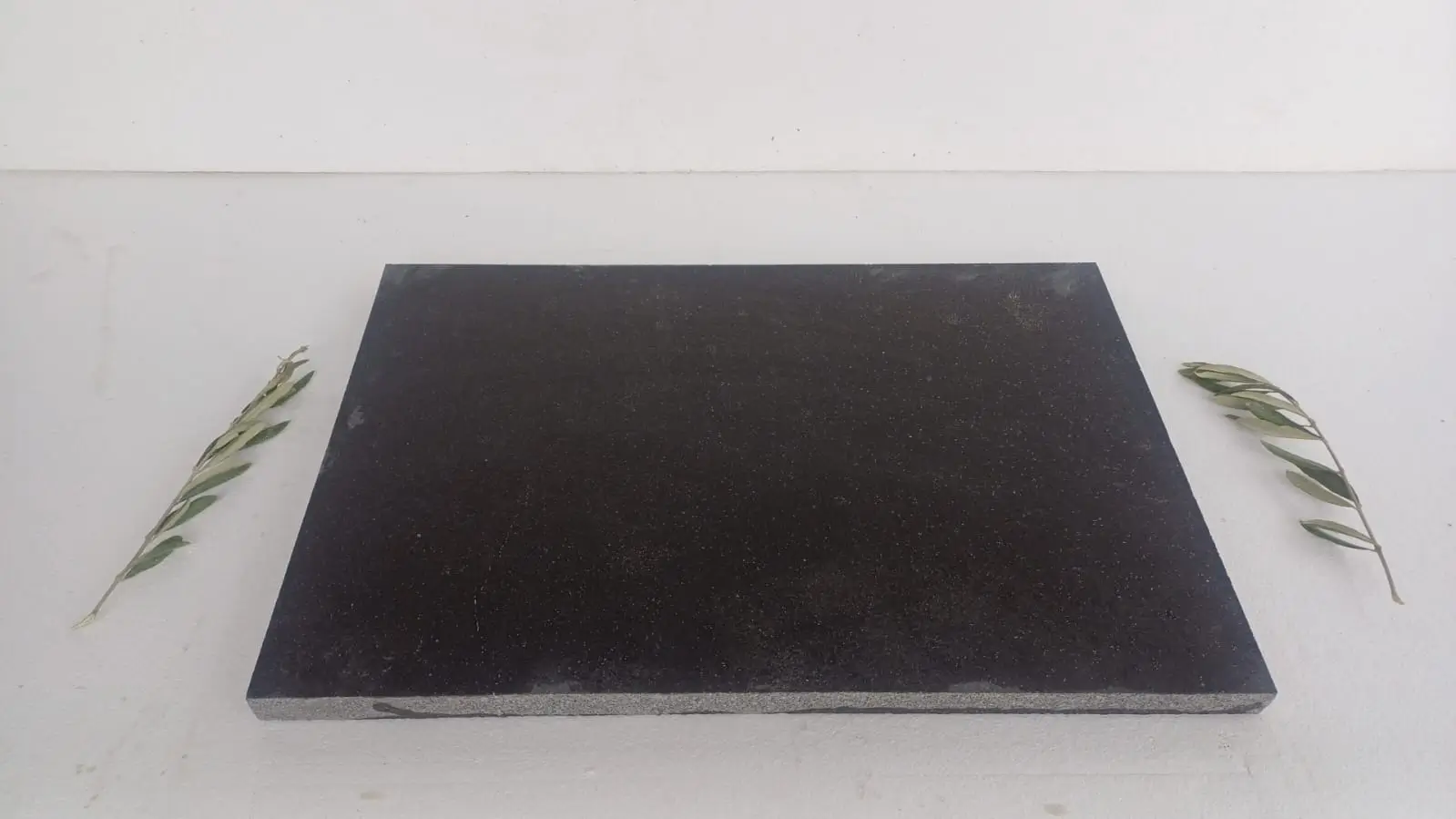
Fixing uneven square block patios across Arizona is a more nuanced repair than it looks from the surface. The temptation is to spot-grind high blocks or tap down proud units with a rubber mallet — don’t. That approach damages the block face and doesn’t address the base condition that created the unevenness. Any repair that doesn’t involve exposing the base in the affected zone is a temporary cosmetic fix that will re-fail within 12–18 months.
The correct sequence for uneven zone repair starts with marking the full extent of affected blocks — not just the visibly proud or sunken ones, but the surrounding 24-inch perimeter as well. Pull that entire zone, excavate to the subgrade, evaluate the base condition honestly, and re-compact before relay. Use a laser level or long straightedge during relay to confirm you’re achieving consistent 1% cross-slope for drainage — inadequate slope is frequently the underlying cause of water accumulation that triggers both settling and storm-related joint failure.
In Yuma, where sandy desert soils experience dramatic saturation events during rare but intense storm systems, the repair excavation often reveals that the original aggregate base was placed too thin or compacted inconsistently. Adding 2 inches of properly compacted base material to the repaired zone, even if it means raising the finished surface slightly, is always the right call over trying to match the original sub-standard depth. Fixing uneven square block patios across Arizona requires that honest assessment of existing base depth before any block goes back down.
Hail Impact Resistance and Block Selection for Northern Arizona
Block thickness is your primary defense against hail impact damage, and the correlation is more direct than most product literature acknowledges. A 2-inch nominal square patio block has roughly 65% of the impact resistance of a 2.375-inch unit under equivalent hail size loading — that difference matters in northern Arizona locations where hail events produce stones exceeding 1 inch in diameter. Specifying the thicker unit costs modestly more upfront but eliminates the chip-and-crack replacement cycle that thin units generate after active storm seasons.
Material hardness compounds the thickness advantage. Dense concrete or natural stone units with compressive strength above 8,000 PSI absorb hail impact energy through elastic deformation rather than fracture — the block flexes microscopically and recovers. Lower-strength units fracture at the surface layer, initiating the spalling and edge chipping pattern that makes storm-damaged installations look aged within a few seasons. At Citadel Stone, we recommend specifying minimum 8,000 PSI compressive strength for any Arizona installation with northern exposure or elevated location.
- Minimum 2.375-inch thickness for northern Arizona and elevated installations where hail frequency is higher
- Specify compressive strength above 8,000 PSI — request test data from the supplier, not just product claims
- Chamfered edges reduce corner chipping from both hail impact and debris strikes compared to sharp-edge units
- Darker color bodies show hail impact damage less visibly — worth considering for exposed locations
- Avoid thin overlay systems (under 1.25 inches) entirely for outdoor Arizona applications — they lack the mass to absorb storm mechanical loading
Decision Points
The pattern across every square patio block problem Arizona homeowners and contractors encounter is the same: installations designed for calm-weather loading fail under storm mechanical stress because the edge restraint wasn’t specified for lateral loads, the joint sand wasn’t selected for wind-driven moisture resistance, and the base wasn’t compacted to the density margin that storm saturation requires. Solving these problems after the fact costs three to four times what specifying correctly at the outset would have. Your best leverage point is always the pre-installation specification review — that’s where you catch base depth, restraint system, and joint product decisions before they’re buried under a finished patio.
Storm season in Arizona runs from late June through September, which means your installation window is tight if you’re trying to cure polymeric sand and establish edge restraint before the first monsoon. Plan your project timeline around a June completion target to allow a minimum 3-week cure period before the first major weather event. Verify truck delivery scheduling with your supplier early — material arriving during a storm event creates both logistics problems and quality risks if blocks get wet before jointing is complete. Citadel Stone maintains warehouse inventory levels timed around Arizona’s installation calendar, which helps keep truck delivery lead times manageable through the spring season when project demand peaks.
The ongoing performance of your patio depends on how well it handles the mechanical forces that Arizona weather generates, season after season. For related guidance on long-term care and maintenance protocols that keep your installation performing after storm seasons, How to Maintain Square Patio Slabs in Arizona’s Climate covers the inspection and maintenance cycle that protects your investment between major weather events. In Tucson, Peoria, and Tempe, Citadel Stone square patio blocks are selected for their compressive strength and tight dimensional tolerances that help minimize uneven settling in Arizona’s sandy and expansive soils.