
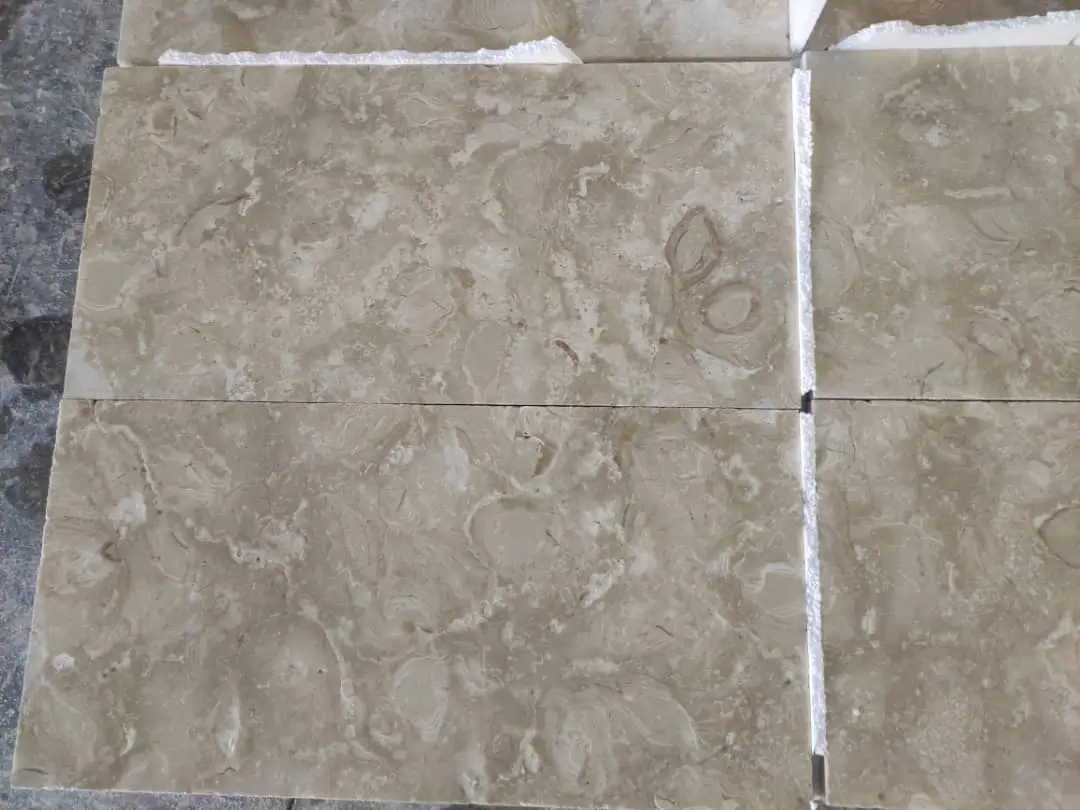
Shell stone travertine cost in Arizona surprises a lot of buyers — not because the material is inherently expensive, but because UV exposure fundamentally changes the performance calculus in ways that affect which grade you actually need. Arizona’s solar irradiance routinely exceeds 6.5 kWh/m² per day, and that sustained UV load degrades unsealed travertine surfaces at a measurably faster rate than most product literature acknowledges. Your material budget isn’t just about the slab price — it’s about selecting the right surface finish, sealing specification, and grade density that keeps that price point defensible over a 20-plus-year horizon.
What Drives Shell Stone Travertine Cost in Arizona
The base price range for shell stone travertine in Arizona runs roughly $8 to $28 per square foot for material alone, depending on grade, thickness, and finish. That spread is wider than most buyers expect, and understanding where your project lands within it requires you to evaluate three overlapping cost drivers: raw material grade, surface finish selection, and the sealing infrastructure your Arizona conditions demand.
Grade is where the conversation starts. Commercial-grade shell stone — the material specified for high-traffic applications — carries a higher density rating and tighter porosity tolerance than residential-grade slabs. In UV-intensive environments, denser material holds sealant longer because there’s less migration through interconnected void channels. You’re paying more upfront, but your resealing interval stretches from 18 months to 36 months, which recaptures that cost premium over a typical project life cycle.
- Residential grade shell stone travertine: $8–$14 per square foot, porosity averaging 6–10%, requires annual sealing in direct Arizona sun exposure
- Commercial grade shell stone travertine: $14–$22 per square foot, porosity averaging 3–6%, supports 24–36 month sealing cycles
- Premium honed or filled grade: $18–$28 per square foot, delivers highest UV color retention, ideal for west-facing and south-facing installations
- Thickness surcharges: 2-inch nominal slabs add $3–$5 per square foot over standard 1.25-inch material
Finish selection is the variable most buyers underestimate when assembling a natural travertine pricing guide in Arizona. A tumbled finish reads beautifully but exposes maximum surface area to UV oxidation — you’ll see color shift within the first two Arizona summers if sealing isn’t dialed in. A honed or brushed finish creates a more UV-stable surface geometry because the micro-texture is more uniform and holds penetrating sealants more consistently.
UV Exposure Effects on Travertine Surfaces in Arizona
Here’s what most specifiers miss: UV degradation on travertine isn’t primarily a color problem — it’s a sealant depletion problem that eventually becomes a color problem. Arizona’s UV index regularly hits 11–12 from April through September, and at those levels, a standard penetrating silane-siloxane sealant loses effective protection in 12–18 months rather than the 24–36 months listed on the product data sheet. That data sheet was written for temperate climates.
The oxidation sequence in high-UV environments follows a predictable pattern. Iron-bearing mineral inclusions in shell stone travertine — which give the material its characteristic warm cream-to-gold palette — begin surface oxidation when UV breaks down the organic components of the sealant film. You’ll first notice a slight chalking of the surface sheen, then a progressive shift toward a flatter, grayer appearance. Left unaddressed, this surface oxidation creates micro-pitting that accelerates moisture infiltration, which in turn accelerates further oxidation. The material isn’t failing structurally — but it’s aging visually at a rate that matters to property value.
- UV index 10–12 (Arizona summer): sealant functional life drops to 12–18 months for standard penetrating sealers
- West-facing and south-facing surfaces accumulate roughly 30–40% more cumulative UV exposure than north-facing installations
- Surface temperature variance between shaded and exposed travertine can reach 45–60°F, which stresses the sealant film through thermal cycling
- Lighter cream-toned shell stone shows UV oxidation shift more slowly than warmer gold-toned variants due to lower iron mineral content
- Unfilled travertine voids accelerate UV-related moisture cycling — filled and honed material performs measurably better in Arizona sun
In Yuma, where annual solar radiation hours exceed 4,000 per year — among the highest in the continental United States — shell stone travertine installations need a UV-resistant fluoropolymer topcoat applied over the standard penetrating sealer for any south or west-facing surface. That two-coat specification adds roughly $0.80–$1.20 per square foot to your maintenance cost annually, but it’s the difference between a 25-year installation and one that looks tired by year eight.
Finish Selection and UV Resistance
Your finish choice is one of the highest-leverage decisions in Arizona travertine specification because it directly controls how your sealing program interacts with UV exposure. Four primary finishes are available for shell stone travertine, and each behaves differently under sustained UV load.
Honed finishes offer the most consistent sealant adhesion surface because the micro-profile is uniform across the slab face. Penetrating sealers applied to honed shell stone travertine achieve 15–20% deeper substrate penetration compared to tumbled finishes, which means more UV-resistant coverage from the same product application. The trade-off is that honed surfaces show surface abrasion more readily — relevant if your Arizona project involves high foot traffic with abrasive materials tracked in from landscaped areas.
- Honed finish: best UV sealing performance, deepest sealant penetration, shows surface scratches more readily
- Tumbled finish: highest surface exposure area, requires most frequent resealing, excellent aesthetic warmth, demanding in full-sun Arizona applications
- Brushed finish: mid-range UV performance, good for transitional spaces between sun and shade
- Filled and honed: optimal for pool surrounds and patios where both UV resistance and slip control matter simultaneously
The shell stone slab material cost in AZ varies by finish tier, and those finish-specific pricing differences are worth reviewing when comparing finish upgrades against your long-term maintenance budget. Detailed finish-specific pricing for shell stone travertine is available at shell stone material costs from Citadel Stone — a useful reference when weighing upfront material spend against projected sealing costs over a 10-year horizon.
Sealing Schedules for Arizona Conditions
The standard industry sealing recommendation — reseal every two to three years — doesn’t apply in Arizona without qualification. Your actual resealing interval depends on orientation, elevation, and the specific UV load your installation faces. Treating this as a fixed schedule rather than a condition-based one is the most common maintenance mistake on Arizona travertine projects.
A practical Arizona sealing framework starts with an initial two-coat application at installation: one deep-penetrating silane-siloxane base coat followed by a UV-stabilized impregnating sealer as the second coat. This foundation gives you the best possible starting protection against solar degradation. From that point, conduct a simple water-bead test every 10–12 months rather than waiting for a calendar date — pour water on the surface and observe whether it beads at 15 seconds. If water absorbs within 5 seconds, your sealant is depleted and UV exposure is now acting directly on unsealed stone.
- Initial installation: two-coat sealing protocol, silane-siloxane base plus UV-stabilized impregnating topcoat
- Full-sun south and west exposures: water-bead test every 10 months, expect resealing every 12–18 months
- Covered patio or partial shade: water-bead test every 14 months, resealing typically every 24–30 months
- Pool surround applications: additional consideration for chlorine and salt chemistry interacting with sealer — use sealer rated for pool environments
- Elevation above 4,500 feet: UV intensity increases with altitude, partially offset by cooler temperatures that extend sealant functional life
In Flagstaff, the elevation factor cuts both ways. You’re at 6,900 feet, which increases UV intensity measurably, but the cooler ambient temperatures mean your sealant films don’t experience the same thermal stress cycling as low-desert installations. Net result: Flagstaff travertine typically needs resealing every 20–24 months — more often than most buyers assume given the cooler climate, but less often than Phoenix or Yuma installations.
Grade Selection by Project Type
The grade decision intersects with shell stone travertine cost in Arizona more directly than any other specification variable in your overall budget calculation. Selecting the wrong grade isn’t just an aesthetic risk — it’s a financial one, because under-specified material in Arizona UV conditions will require earlier intervention, whether that’s remedial sealing, surface restoration, or premature replacement.
For budget planning for travertine in Arizona, approach grade selection by application type first, then refine by site-specific conditions. Exterior patio applications in full sun demand commercial-grade material at minimum — the denser substrate holds up structurally and retains finish integrity under UV load. Interior applications have considerably more flexibility: residential-grade shell stone performs excellently indoors where UV exposure is filtered through Low-E glass, which blocks 95–99% of UV radiation.
- Exterior patio, full sun: commercial grade, honed or filled, 1.5-inch minimum thickness, two-coat sealing protocol required
- Pool surround: commercial grade, filled and honed, non-slip textured surface, pool-rated sealant system
- Covered outdoor living: residential or commercial grade depending on wind-driven rain exposure, standard sealing schedule
- Interior flooring: residential grade acceptable, sealing at installation plus condition-based touch-ups
- Driveway or heavy-traffic application: 2-inch nominal shell stone travertine in Arizona, commercial grade minimum, sub-base verification critical
At Citadel Stone, we consistently recommend that clients in Arizona’s low desert regions step up one grade level from what a standard specification guide suggests. The material cost differential — typically $4–$6 per square foot — is recovered within two sealing cycles, and the UV color retention performance difference is visible to any observer by year three.
Arizona Travertine Project Investment Factors
Building a complete budget for an Arizona travertine project means accounting for costs that don’t appear on the material invoice. For a 600-square-foot patio using commercial-grade shell stone travertine, the material line is often 45–55% of total project cost in Arizona — installation labor, base preparation, and the ongoing sealing program account for the rest. Understanding all of the Arizona travertine project investment factors before you finalize your scope prevents budget surprises mid-project.
Base preparation costs in Arizona deserve specific attention because the soil conditions vary dramatically by region. Expansive clay soils common in parts of the Phoenix metro require deeper aggregate bases — 6 to 8 inches of compacted crushed aggregate versus the 4-inch standard — which adds $2–$3 per square foot to your preparation cost but protects against the slab movement that would otherwise compromise your travertine joints over time.
- Material cost (shell stone travertine, commercial grade, honed): $14–$22 per square foot
- Base preparation (Arizona standard, 6-inch compacted aggregate): $3–$5 per square foot
- Installation labor (setting, jointing, cleaning): $6–$10 per square foot
- Initial sealing (two-coat UV-resistant protocol): $1.50–$2.50 per square foot
- Annual maintenance sealing (condition-based): $0.60–$1.20 per square foot per application
- 10-year total cost of ownership estimate (full-sun installation, 600 sq ft): $18,000–$28,000
Your total cost of ownership calculation should run at least 10 years to fairly compare shell stone travertine against concrete or porcelain alternatives. Concrete in Arizona UV conditions typically requires resurfacing or resealing on a similar or more aggressive schedule, and its thermal mass properties create significantly higher surface temperatures — a practical comfort consideration for barefoot use.
Ordering, Logistics, and Lead Times in Arizona
The shell stone slab material cost in AZ is one number; getting the material to your site on schedule is a separate planning exercise that affects your total project budget more than most buyers anticipate. Lead times from international quarry sources run 6–10 weeks for custom orders, while domestic warehouse stock — where available — reduces that to 1–3 weeks. Your project timeline determines which sourcing path makes sense financially.
Citadel Stone maintains warehouse inventory of shell stone travertine sized for Arizona’s most common project specifications, which means you’re not automatically locked into the long import lead time for standard grades and thicknesses. For custom dimensions, unusual finishes, or large-volume orders exceeding 1,000 square feet, plan for the full import cycle and build a 10–15% overage into your material order to account for cuts, breakage, and any future repair needs from the same quarry run.
- Standard stock grades from warehouse: 1–3 week lead time typical
- Custom or large-volume orders: 6–10 week import lead time, order 10–15% overage minimum
- Truck delivery scheduling: confirm site access dimensions before ordering — large slabs require appropriate vehicle clearance
- Staging area at delivery: plan for a flat, covered staging area where material can acclimate before installation
- Material inspection at delivery: check each pallet for color consistency, verify finish matches your specification before the truck departs
In Sedona, site access constraints add a logistical layer that affects material scheduling. Narrow road approaches and grade changes common in the red rock terrain mean truck access needs to be confirmed before your delivery is dispatched — an oversized delivery vehicle that can’t reach the site creates costly rebooking delays and potential material handling damage on manual transfer.
Color Retention and Long-Term Appearance in Arizona Sun
The shell stone travertine color palette — typically ranging from soft ivory and cream to warm gold and light walnut — performs very differently in Arizona UV conditions depending on the specific mineral composition of the batch. Knowing this before you order prevents the disappointment that comes from comparing your installed surface to the sample tile 18 months later.
Cream and ivory-toned shell stone travertine retains color most consistently under sustained UV exposure because those tones reflect more solar radiation than they absorb, and the iron mineral content that drives oxidative color shift is lower. Gold and walnut-toned material shows more character variation with UV exposure — some buyers appreciate this as natural patina, while others find the color drift toward a slightly orange-amber tone unexpected. Neither outcome is a defect, but calibrating finish expectations by understanding which tonal family your specified material belongs to is an important step in the natural travertine pricing guide in Arizona evaluation process.
- Cream and ivory tones: highest UV color stability, best for full-sun installations where consistent appearance over time matters most
- Gold and warm beige tones: moderate UV color variation, develops natural patina, appropriate for buyers who value natural aging character
- Walnut and darker veined variants: most dramatic UV interaction, most striking initial appearance, requires committed sealing to retain original tonal range
- Color verification: request a UV exposure test report from your supplier, or ask for installed references that are 3–5 years old in similar Arizona climate conditions
Our technical team at Citadel Stone recommends reviewing quarry batch records when ordering large volumes — color variation between quarry runs is normal for natural stone, and matching a significant repair area to an original installation three years later requires knowing the original batch origin. This is the kind of sourcing detail that separates a professional supply relationship from simply buying stone by the square foot.
Making Your Arizona Travertine Investment Count
Shell stone travertine cost in Arizona is best understood as a system investment rather than a single line item. Your material grade, surface finish, sealing protocol, and orientation on the site all compound to determine whether your spend delivers 10 years of performance or 25. The UV exposure reality of Arizona — particularly in low-desert cities where solar radiation hours and intensity both push toward the top of national ranges — means that the buyer who selects their finish and sealing specification with UV performance as the primary lens will consistently outperform the buyer who chooses on material price alone.
The decisions that matter most aren’t complicated: step up one grade level for any exterior full-sun application, choose honed or filled finishes for south and west exposures, and treat your sealing schedule as condition-based rather than calendar-based. Those three commitments account for roughly 80% of the long-term appearance and performance outcome on Arizona travertine installations. For ongoing care that protects your investment through Arizona’s demanding climate, How to Maintain Shell Stone Travertine in Arizona’s Climate provides a detailed maintenance framework worth bookmarking before your project reaches the sealing phase.
Flagstaff, Gilbert, and Yuma buyers working with Citadel Stone can review grade-by-grade pricing for shell stone travertine sourced from select natural stone quarries worldwide, helping them plan project investments with clearer material cost expectations.