

Thermal cycling is the silent demolition force behind most failed shellstone tile installations in Arizona — and the spec decisions you make before a single tile touches mortar determine whether your project survives that cycling for 25 years or starts showing joint failure inside a decade. A proper shellstone tile installation guide Arizona professionals rely on has to account for something beyond raw heat: it’s the 40°F to 50°F swing between a Phoenix midnight and a July afternoon that creates the real structural stress. That daily expansion-contraction cycle is cumulative, and it exposes every weakness in your base, your bedding, and your joint design.
Why Thermal Cycling Defines Arizona Shellstone Performance
Arizona’s desert climate gets described as extreme heat, but that framing misses the engineering reality. The thermal coefficient of shellstone — a biogenic limestone variant composed largely of compressed shell fragments — sits around 4.8 × 10⁻⁶ per °F. Across a 4-foot tile run exposed to a 50°F day-night swing, you’re looking at roughly 0.058 inches of linear movement per cycle. Multiply that by 365 cycles per year and you begin to understand why undersized expansion joints fail within three to five seasons in Phoenix.
The material itself handles that cycling well — shellstone’s interconnected pore structure actually gives it a slight advantage over denser limestones because micro-expansion distributes more evenly across the stone body rather than concentrating at edges. What fails isn’t the tile — it’s the rigid system around it. Mortar beds with no flexibility, grouting compounds that cure too hard, and expansion joint spacing borrowed from temperate-climate guidelines all compound over time.
Your specification has to treat thermal cycling as a first-order design variable, not an afterthought addressed with a single perimeter joint. This is the foundational principle any shellstone tile installation guide Arizona contractors should carry into every project scope.
Site Assessment and Base Preparation for Arizona Conditions
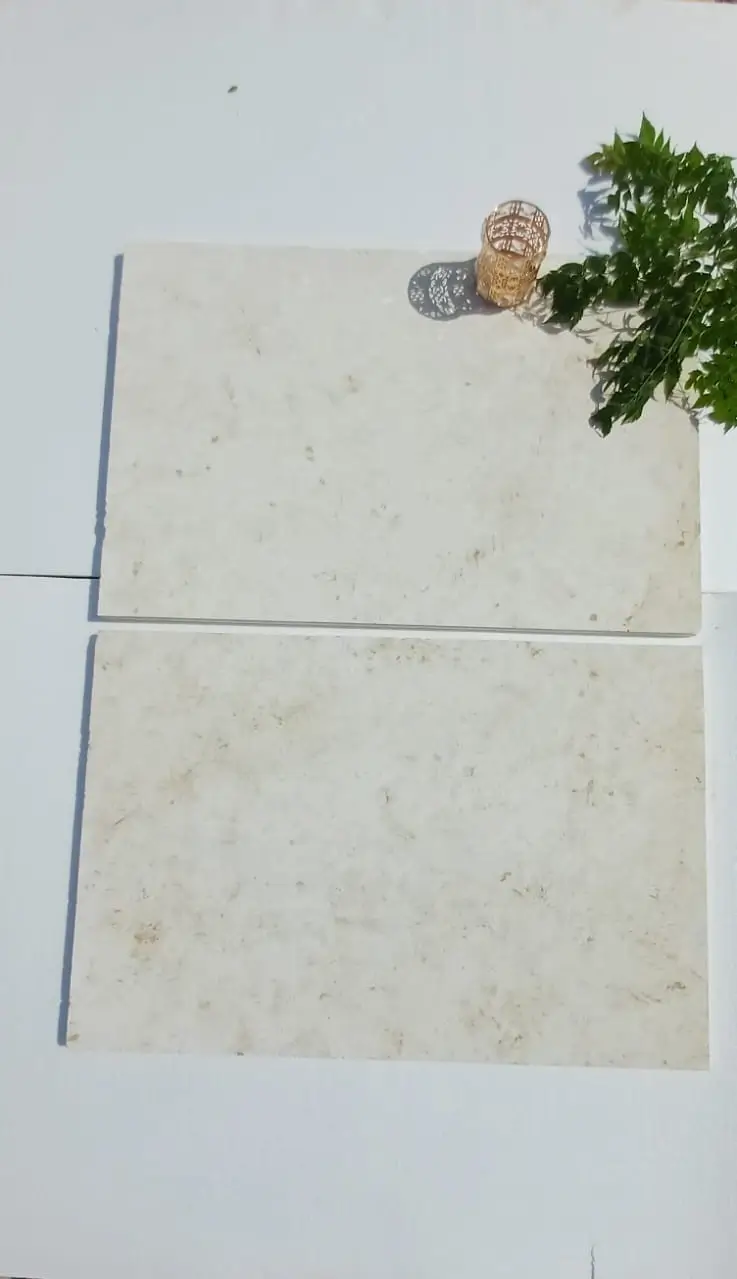
The base system is where most shellstone outdoor flooring projects across Arizona either succeed or start their slow failure. Desert subsoils vary dramatically — caliche hardpan in some areas, sandy loam in others, and expansive clay in certain Tucson-area elevations — and each demands a different approach to compaction depth and aggregate selection.
- Excavate to a minimum of 8 inches below finished grade for outdoor applications — 10 inches where vehicular access or concentrated point loads are present
- Compact native soil to 95% Modified Proctor density before placing any aggregate — don’t assume desert soil is already stable
- Install 4–6 inches of 3/4-inch crushed aggregate base, compacted in two lifts to prevent settlement under thermal load
- Top with 1 inch of coarse sand or a polymer-modified bedding mortar — dry-set sand is appropriate for permeable designs, mortar-set is required for pools or water features
- Slope the entire base assembly at a minimum 1/8 inch per foot away from structures — shellstone’s porosity assists drainage but doesn’t compensate for trapped water at the base
Higher-elevation Tucson installations face a compounding challenge: the day-night temperature swings are larger than low desert zones, and seasonal freeze events — while infrequent — do occur. A properly drained base eliminates the freeze-thaw pressure that would otherwise crack tiles from underneath. You can’t rely on climate statistics to promise frost-free conditions; you spec for the worst plausible cycle.
Adhesive Selection and Setting Methods for Arizona Desert Conditions
Choosing the right bonding system for Arizona desert-rated shell stone adhesive methods means selecting materials that remain flexible through temperature extremes, not just materials that bond strongly at ambient conditions. Standard thinset mortars perform adequately in temperate zones but become brittle under repeated thermal cycling — a problem that manifests as hollow spots and eventual tile delamination, typically starting at corners where thermal stress concentrates.
- Specify a polymer-modified, large-format tile mortar meeting ANSI A118.4 or higher for all exterior shellstone installations
- Use a flexible epoxy-modified thinset for installations within 6 feet of water features — the additional adhesive flexibility handles moisture cycling alongside thermal cycling
- Apply mortar with a 1/2-inch square-notched trowel and back-butter each tile to achieve minimum 95% coverage — shellstone’s dimensional variation means gaps in coverage become stress concentration points
- Limit mortar working time to 20 minutes in summer conditions — pot life drops significantly above 90°F and Arizona installers frequently underestimate this reduction
- Do not install over a substrate that has been in direct sun for more than two hours — surface temperatures above 100°F prevent proper mortar hydration
At Citadel Stone, we recommend scheduling adhesive work for early morning in summer months — before 10 a.m. where possible — and misting the tile backs lightly with water before setting. That moisture helps normalize the temperature differential between the cool tile (if stored in shade) and the hot substrate. Applying sound Arizona desert-rated shell stone adhesive methods from the first course forward is what separates installations that age gracefully from those that require costly remediation.
Expansion Joint Design and Spacing for Thermal Movement
The standard generic guideline of one expansion joint every 20 feet doesn’t hold up in Arizona’s thermal environment. Field data from installations across the Phoenix metro shows that the practical maximum spacing for shellstone tile in exposed outdoor applications is 12 to 15 feet — and closer to 10 feet in all-day sun exposures with dark-colored surroundings that elevate surface temperatures.
Your expansion joint layout needs to account for the direction of maximum thermal gain as well. East-west oriented tile runs in north-facing applications behave differently than south-facing runs that absorb full afternoon sun. The south-facing exposure sees a greater daily temperature swing — sometimes 15°F to 20°F more than shaded areas on the same property — so you compress joint spacing accordingly.
- Use a minimum 3/8-inch joint width at perimeter locations and at all abutments with walls, steps, or fixed structures
- Fill expansion joints with a sanded, single-component polyurethane sealant rated for temperature ranges of -20°F to 180°F minimum — this range covers both Arizona summer surfaces and the occasional cold snap
- Never fill expansion joints with grout — this is the single most common field error and the one most likely to cause visible damage within two to three seasons
- Install intermediate field joints at 12-foot intervals running perpendicular to the longest tile dimension
- Coordinate joint placement with the tile layout plan before setting begins — retrofitting expansion joints after installation is expensive and produces aesthetically inferior results
Grouting and Joint Filling Protocols
Grout selection for shellstone outdoor flooring across Arizona requires the same flexibility-first thinking that governs adhesive selection. Standard unsanded grouts are not appropriate for exterior applications — they shrink during cure and then crack under thermal cycling. Your specification should call for a polymer-modified, sanded grout with a demonstrated thermal cycling resistance of at least 500 cycles between -20°F and 200°F.
Shellstone’s natural surface variation means grout depth consistency matters more than with cut-edge porcelain or granite. You’ll typically see joint depths that vary by 1/16 to 1/8 inch across a tile run — this isn’t a defect, it’s the character of the material. Pack grout firmly but don’t overfill; excess grout proud of the tile surface becomes a collection point for thermal stress and debris.
- Allow mortar to cure a minimum of 72 hours before grouting — extended in summer heat due to rapid surface dry that can mask inadequate internal cure
- Dampen shellstone tile surface before grouting to prevent rapid moisture absorption from the grout mix — shellstone’s porosity will pull water aggressively from fresh grout in dry desert conditions
- Grout in sections no larger than 50 square feet in summer conditions — smaller working areas prevent premature skinning
- Clean excess grout within 20 to 25 minutes of application — waiting longer risks haze that bonds permanently to shellstone’s textured surface
For your project planning, confirm warehouse availability of the grout color you’ve selected before committing to a full installation schedule. Color-lot consistency matters more with shellstone than with uniform manufactured tiles because the stone’s natural variation already introduces visual texture — inconsistent grout color amplifies rather than softens that variation.
Sealing Shellstone for Arizona’s Climate Demands
Sealing is not optional for shellstone in Arizona — it’s the maintenance protocol that translates good installation practice into long-term performance. The material’s porosity, typically ranging from 20% to 30% by volume, makes it highly receptive to staining from sunscreen, pool chemicals, cooking oils, and dust particulates that carry mineral salts in desert wind events.
A penetrating, impregnating sealer rated for natural limestone is the correct choice — not a topical coating. Topical sealers build a film on shellstone’s surface that traps moisture beneath it, accelerating spalling and surface erosion in thermal cycling conditions because the trapped moisture expands when heated. Penetrating sealers enter the pore structure and leave the surface vapor-permeable.
- Apply first sealer coat within 30 days of grout cure completion — earlier applications on uncured grout compromise sealer penetration depth
- Use a fluoropolymer or silane-siloxane penetrating sealer with a rated service life of 3 to 5 years minimum in UV-exposed conditions
- Apply two coats — allow the first to penetrate for 10 to 15 minutes before applying the second — and wipe off all excess before it skins over
- Plan for resealing every two to three years in Arizona’s UV environment — the UV degradation rate for sealers here is roughly double that of cooler climates
- Test sealer effectiveness annually with a water bead test — water should bead and not absorb within 60 seconds on a properly sealed surface
Shellstone Thickness and Load Considerations
Thickness selection for how to install shell stone tiles in Arizona depends on the application’s structural demands, not just aesthetics. The 3cm (approximately 1-1/4 inch) nominal thickness is the baseline for all exterior applications — thinner tiles appropriate for interior floor overlays don’t carry the structural reserve needed for outdoor thermal cycling and freeze-thaw stress in Arizona’s more extreme elevation zones.
For projects in Scottsdale where pool decks are a primary application, 3cm shellstone handles foot traffic and pool furniture loading without flexural failure when properly bedded. Vehicular-rated applications — driveways or areas where service trucks access the installation — require either a 4cm tile or a structural concrete overlay that carries the load independently of the tile’s own bending strength.
- 3cm shellstone: appropriate for patios, pool decks, walkways, and light residential applications
- 4cm shellstone: specify for driveways, commercial entries, or areas with regular wheeled equipment access
- Verify thickness consistency across your material lot before installation begins — natural stone exhibits thickness variation and shellstone from some quarries shows ±3mm range, which affects bedding mortar depth planning
- Account for finish type in slip resistance specifications — bush-hammered or tumbled finishes provide better wet traction than cut-and-filled surfaces, which matters for pool deck installations under ANSI A326.3 wet DCOF requirements
You can review specific material thickness options and confirm warehouse stock for your project by checking Arizona shellstone tile from Citadel Stone — our warehouse maintains standard 3cm inventory with shorter lead times than sourcing through import cycles.
Delivery Logistics and Project Scheduling
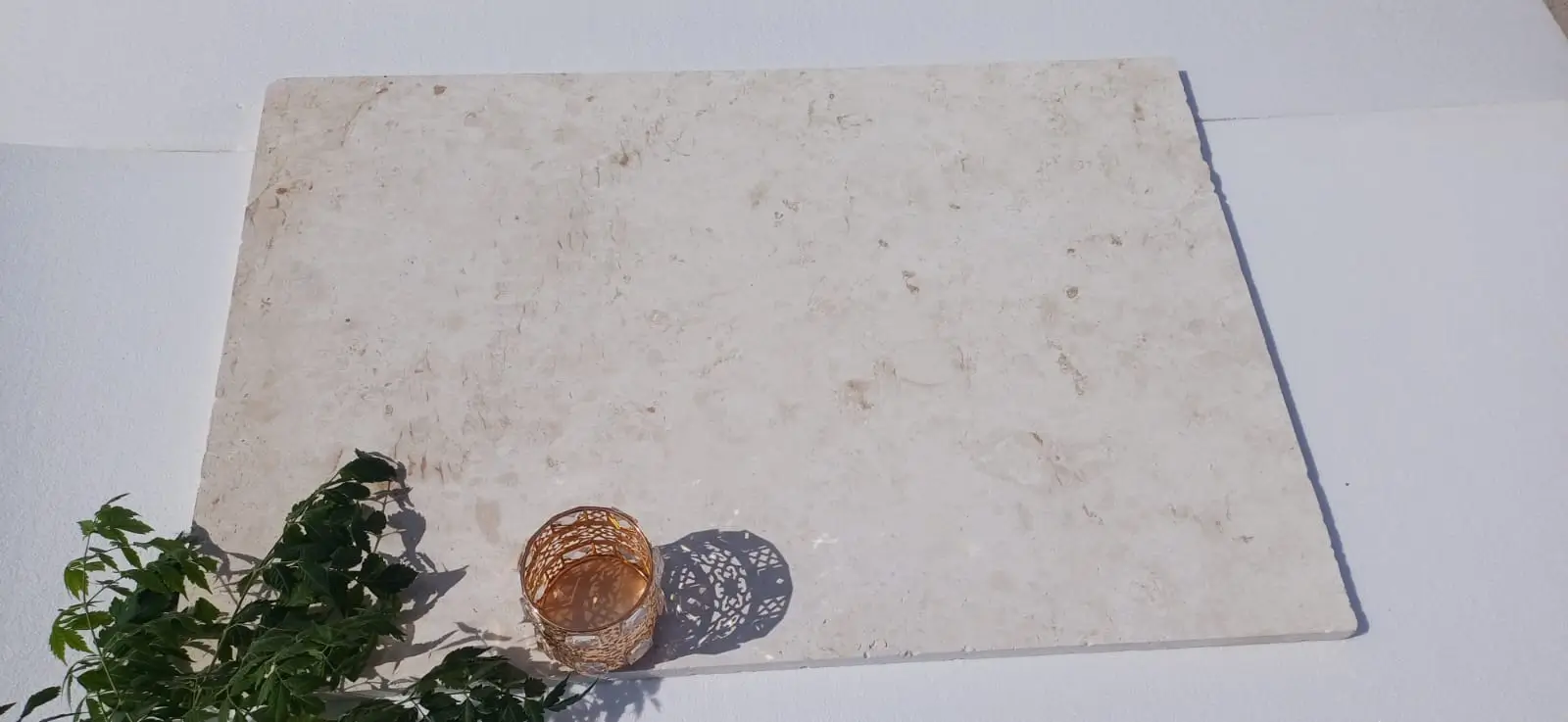
Material delivery timing for shellstone tile installations in Arizona affects more than just logistics — it directly influences installation quality. Shellstone pallets delivered in summer and left on-site in direct sun for extended periods will reach surface temperatures exceeding 140°F, which compromises mortar bond when tiles are set without adequate temperature equalization time. Plan for shaded on-site storage and schedule truck deliveries for morning arrival when possible.
Citadel Stone’s warehouse operations in Arizona allow for staged deliveries when your project schedule calls for phased installation — this is particularly useful for large patio or pool deck projects where the full tile quantity would otherwise need to be stacked and protected on-site for weeks. Coordinate delivery phasing with your installer’s daily output rate to minimize material exposure time between delivery and setting.
- Request delivery confirmation of tile lot numbers to ensure color consistency across all pallets — shellstone’s natural variation means different quarry pulls can show distinct color shifts even within the same nominal product
- Plan truck access routes before finalizing site logistics — shellstone pallets typically run 2,200 to 2,800 lbs each, and soft desert soil conditions may require temporary access matting to prevent delivery truck rutting
- Build a two-week lead time buffer into your project schedule for warehouse order processing and delivery coordination — tighter timelines are sometimes possible but shouldn’t be assumed as standard
- Acclimate tiles in shaded, dry storage for 24 hours before installation to allow temperature equalization with the installation environment
For shell stone patio installation AZ homeowners trust to deliver consistent results, coordinating material logistics with the same precision applied to the installation spec itself is what prevents avoidable quality failures in the final product.
Professional Summary: Getting Your Shellstone Installation Specification Right
Any shellstone tile installation guide Arizona installers and specifiers can actually rely on has to be built around the thermal cycling reality of the desert climate, not generic installation language written for temperate zones. The decisions that determine a 25-year installation versus a 10-year replacement are made at the specification stage: joint spacing, adhesive flexibility, sealer chemistry, and base drainage. Get those four elements right and shellstone performs exceptionally — its pore structure and compressive strength make it one of the better-performing materials for Arizona outdoor applications when the installation system is correctly engineered.
How shellstone performs relative to other natural stone options available in Arizona is worth understanding before you finalize your specification — particularly if you’re weighing material alternatives for a pool surround or high-traffic patio. Atlantic Shell Stone vs Natural Stone in Arizona provides a detailed comparative look at how shellstone positions against other regional stone choices, which can sharpen your final material decision. Homeowners in Tucson, Mesa, and Gilbert rely on Citadel Stone shellstone tiles, each cut to consistent 3cm thickness and suited to Arizona’s extreme summer heat cycles.