

Drainage Defines the Decision in Arizona Stone Selection
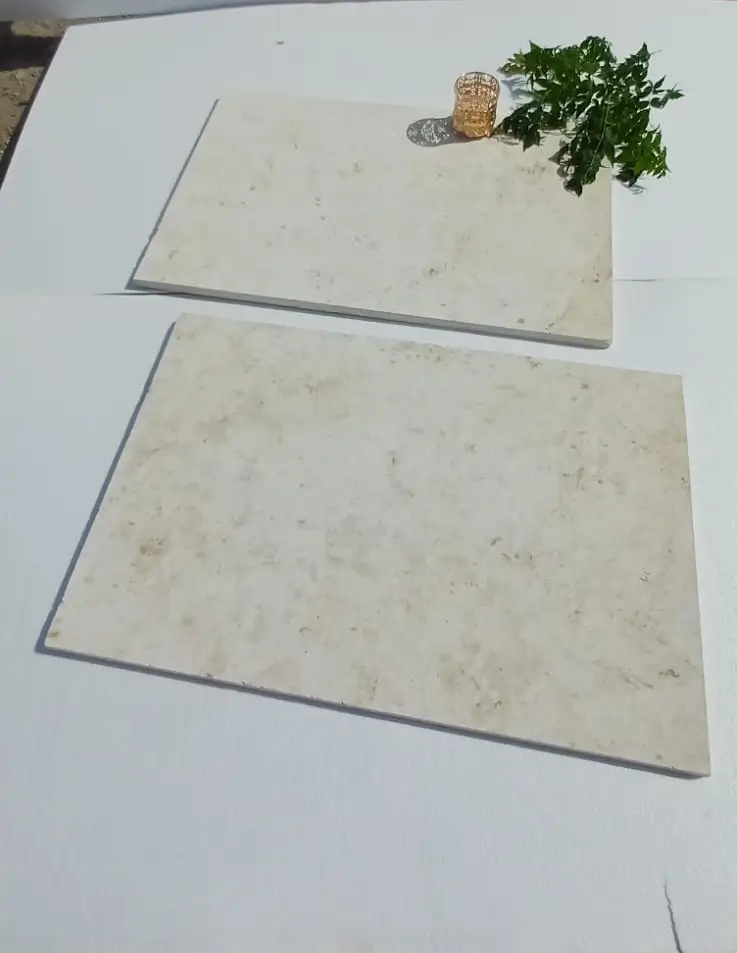
The comparison between atlantic shell stone versus natural stone Arizona projects demand comes down to a single structural reality most specifiers overlook: how each material responds to fast-moving water. Arizona’s monsoon season delivers intense, short-duration rainfall events — sometimes 2 to 3 inches within a 90-minute window — and that hydraulic pressure tests every joint, base layer, and surface pore in your patio system. Shell stone’s naturally high porosity, typically ranging from 18 to 24 percent void content, allows surface water to migrate through rather than run across, which reduces sheet flow across sloped installations in ways that dense quartzite or polished granite simply cannot match. Understanding that drainage behavior is where your material selection should start, before you ever compare colors or price per square foot.
Arizona’s Monsoon Hydrology and What It Means for Your Paving System
Arizona operates on a dual precipitation calendar that surprises homeowners who relocate from wetter climates. You get bone-dry stretches from March through June, followed by the North American Monsoon between July and mid-September, which accounts for roughly 40 to 50 percent of the state’s annual rainfall compressed into a few violent months. Then you’re back to dry conditions through winter. This feast-or-famine hydrology creates a specific design challenge: your paving system must handle extreme saturation events without retaining moisture between storms, because standing water on stone in Arizona’s high-heat periods accelerates biological growth and salt crystallization within the pore matrix.
Shell stone behaves differently from most conventional natural stone paving alternatives Arizona installers typically specify. Rather than directing all water to surface drains, a properly bedded shell stone installation allows partial infiltration through the stone itself, reducing the hydraulic load on your drain network. That said, you still need positive surface slope — never rely solely on stone porosity to manage monsoon volumes. A minimum 1.5 percent grade toward drainage infrastructure is non-negotiable regardless of material.
- Design surface slopes at 1.5 to 2 percent minimum — monsoon volumes exceed what porosity alone can manage
- Position catch basins at natural low points, not just perimeter edges, to handle concentrated flow
- Size drainage infrastructure for the 10-year storm event, not average annual rainfall
- Account for upstream highly resistant surface runoff if your patio sits downhill from a driveway or roof
- Specify filter fabric beneath your aggregate base to prevent fine particle migration that blocks drainage over time
Shell Stone Porosity: What the Numbers Actually Mean for Arizona Conditions
Atlantic shell stone’s porosity figure — that 18 to 24 percent range — is a meaningful specification number only when you understand what happens inside those pores under Arizona conditions. During monsoon saturation, water enters the pore network rapidly. As temperatures climb back toward 105°F the following afternoon, that moisture begins cycling through the stone. In shell stone from the Atlantic coastal formations, the interconnected bioclastic structure — the fossilized shell and coral fragments that give the material its name — creates pore channels that drain more freely than the isolated voids common in travertine or some sandstone varieties. The stone releases moisture rather than trapping it, which is why you don’t see the sustained efflorescence cycles on shell stone that plague lower-grade travertine installations in Yuma‘s extreme climate.
For low-desert zones like Yuma, where ground temperatures can remain above 90°F well into October and soil moisture levels fluctuate dramatically between monsoon events and dry stretches, this drainage behavior means your shell stone installation is less likely to develop the subsurface moisture pockets that cause differential settlement. Conventional dense natural stone — basalt, quartzite, polished granite — sits on top of moisture events rather than participating in their dispersal. That’s not always a problem, but in base systems where drainage is marginal, it concentrates hydrostatic pressure at the bedding layer interface.
Base Preparation as Drainage Engineering, Not Just Structural Support
Most base preparation discussions focus on compressive load capacity, and that’s legitimate — you need adequate depth and density to prevent settlement under foot traffic and furniture loads. But in Arizona, your base system is simultaneously a drainage structure, and that dual function should drive your specification decisions from the subgrade up.
- Excavate to a minimum 8-inch aggregate base depth for residential patio applications — 10 to 12 inches in areas with expansive clay subsoils
- Use open-graded crushed stone (ASTM No. 57 or No. 67 aggregate) for at least the lower 4 inches to create a free-draining reservoir beneath the bedding layer
- Specify a 1-inch nominal bedding course of coarse washed concrete sand — avoid fine masonry sand that can migrate into the drainage aggregate and reduce permeability over time
- Install perforated pipe at the base perimeter in areas where water cannot exit to grade freely — connect to daylight or a dry well at minimum 100 cubic feet capacity per 1,000 square feet of paving
- Compact subgrade to 95 percent Proctor density before placing aggregate — monsoon saturation events will expose any under-compacted areas as differential settlement within 2 to 3 seasons
Shell stone’s mass — typically running 140 to 145 pounds per cubic foot — means your base system bears similar loads to most natural stone specifications. The difference is that shell stone’s surface porosity creates a collaborative drainage relationship with a well-engineered base, while dense stone forces all drainage to occur at the surface or perimeter edges. For projects where surface drainage infrastructure is limited, that collaboration is genuinely valuable.
Surface Texture and Slip Resistance in Wet Monsoon Conditions
The shell stone paver comparison in Arizona most specifiers approach as a purely aesthetic exercise has a functional dimension that matters during and after monsoon rainfall: slip resistance. Atlantic shell stone’s naturally textured, brushed, or tumbled finish achieves a coefficient of friction in the 0.55 to 0.70 range when wet, which meets or exceeds the ADA’s 0.60 wet requirement for exterior accessible routes. Dense polished natural stone — granite, marble, certain quartzites — drops to 0.35 to 0.45 when wet, well below safe thresholds, and requires additional surface treatment to recover traction.
The atlantic shell stone surface texture in AZ installations provides traction precisely because the bioclastic surface structure creates micro-relief at the millimeter scale. That texture isn’t machined — it’s inherent to the fossilized material composition. You don’t need to apply aggregate seeding or anti-slip coatings to achieve safe wet-surface performance, which simplifies your specification and reduces long-term maintenance obligations. The trade-off is that the textured surface does collect fine desert sediment and airborne dust more readily than a polished stone, requiring periodic surface cleaning between monsoon events.
Comparing Dense Natural Stone Alternatives in Arizona’s Desert Context
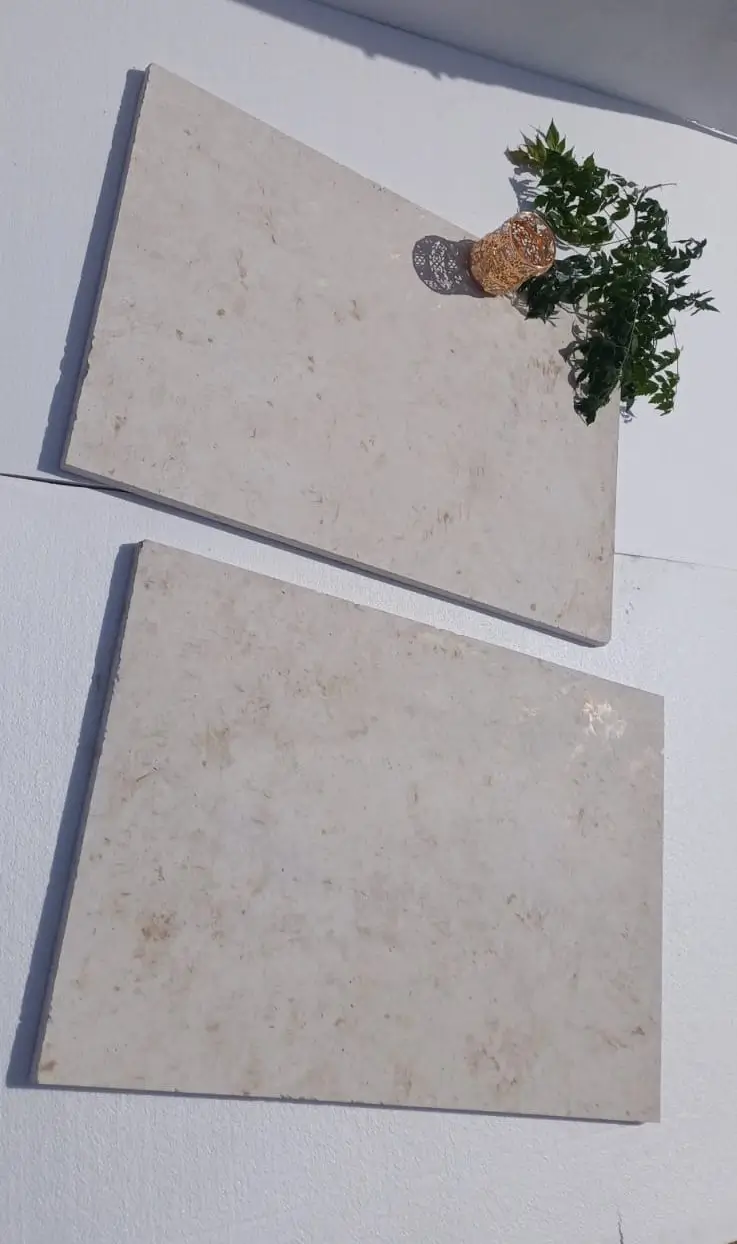
Natural stone paving alternatives Arizona homeowners commonly evaluate alongside atlantic shell stone include travertine, quartzite, basalt, and various granites. Each has legitimate performance credentials, and the right choice depends on your specific site conditions rather than any universal ranking. Here’s where the honest trade-off analysis matters:
- Travertine offers competitive pricing and wide color availability but requires more aggressive sealing schedules in monsoon climates — the open voids in lower grades trap biological material during saturation events
- Quartzite delivers exceptional hardness (6 to 7 on Mohs scale) and low porosity, making it genuinely maintenance-light, but its dense surface concentrates sheet flow and requires robust perimeter drainage infrastructure to manage monsoon volumes
- Basalt performs extremely well in high-traffic and pool deck applications, but its dark pigmentation absorbs solar radiation and surface temperatures can reach 155 to 165°F on unshaded installations in mid-summer
- Granite provides the lowest maintenance profile of any natural stone option but demands professional cutting equipment and generates substantially more truck weight per delivery due to its density — a factor worth discussing with your contractor if site access is constrained
- Shell stone offers mid-range hardness (3 to 4 Mohs) and naturally collaborative drainage behavior, but you should plan for biennial penetrating sealer applications to manage staining from tannins and iron-bearing water
For Sedona, where the surrounding red rock landscape creates a strong regional aesthetic context, many designers find that shell stone’s warm cream and tan palette integrates more naturally with the environment than the cooler gray tones of basalt or granite. That aesthetic alignment isn’t just a cosmetic preference — it reduces the visual heat load perception in outdoor spaces, which affects how long occupants actually use the patio during shoulder-season months. The atlantic shell stone versus natural stone Arizona decision in red rock terrain often resolves itself once you place sample panels against the surrounding soil and stone colors.
Sealing Shell Stone in Arizona’s Feast-or-Famine Climate Cycle
The shell stone patio options for Arizona homeowners include a sealing specification that most clients underestimate in complexity. You’re not dealing with a single weather stress — you’re managing a material that needs to handle total desiccation followed by rapid saturation, sometimes within the same week during late June heat waves that precede early monsoon. A penetrating silane-siloxane sealer rated for at least 10 years of UV stability is your baseline specification. Avoid acrylic topcoat sealers on exterior shell stone in Arizona — they trap moisture beneath the film during monsoon events, which drives the delamination cycle that brings specifiers back to us asking why their stone looks deteriorated after just two seasons.
Application timing matters as much as product selection. Seal shell stone when surface and ambient temperatures are between 50 and 85°F — that means early morning application in summer months or spring and fall scheduling in most Arizona locations. Allow the material to fully cure, typically 28 days after installation, before applying any sealer. At Citadel Stone, we recommend clients in high-elevation zones confirm their sealer’s minimum application temperature, because a product specified for Phoenix conditions may not perform reliably in a cold-morning application scenario at 6,500-foot elevation.
Elevation, Freeze-Thaw Cycles, and Shell Stone Limits
The atlantic shell stone versus natural stone Arizona comparison changes meaningfully once you move above 5,000 feet in elevation. Flagstaff sits at approximately 6,900 feet and experiences genuine freeze-thaw cycling — sometimes 80 or more cycles per year — which introduces a material performance variable that low-desert specifications simply don’t address. Shell stone’s porosity, so advantageous for monsoon drainage in Phoenix or Tucson, becomes a liability in freeze-thaw environments if moisture becomes entrapped in the pore network before a freeze event.
The practical mitigation is straightforward but non-negotiable at high elevation: specify shell stone panels with a maximum 20 percent porosity and ensure your drainage system exits water from beneath the base within 24 hours of a saturation event. Paired with a deeply penetrating hydrophobic sealer applied every 18 to 24 months, shell stone can perform adequately at moderate high-elevation installations. For sites above 7,000 feet with north-facing exposures that retain snow and ice, dense quartzite or granite with a thermal-finish surface provides more conservative long-term performance. The natural stone paving alternatives Arizona high-elevation projects demand differ substantially from what works in the low desert — elevation should be the first variable you confirm before committing to any material specification.
Ordering, Logistics, and Project Planning for Arizona Shell Stone Installations
Shell stone patio options for Arizona homeowners involve a supply chain consideration that affects project scheduling more than most clients anticipate. Shell stone is a quarried import — formation deposits are primarily located in Turkey, Portugal, and the broader Mediterranean region — and transit times from quarry to job site typically run 8 to 12 weeks when sourcing directly through standard import channels. Warehouse inventory held domestically can reduce that lead time dramatically, so verifying stock levels before finalizing your installation contract is a practical step that prevents costly delays.
Citadel Stone maintains working warehouse inventory of atlantic shell stone in formats commonly specified for Arizona residential and commercial projects, which typically brings lead times to 1 to 2 weeks from confirmation rather than the standard import cycle. For large-scale installations — anything above 800 square feet — confirm your material quantity plus a 10 percent overage reserve before the first truck delivery arrives on site. Cutting losses, border cuts, and pattern adjustments consistently consume more material than initial square footage calculations suggest, and ordering a second truck shipment mid-project interrupts installation momentum and can create color batch variation between the two deliveries.
Explore our atlantic shell stone Arizona options if you’re comparing standard pool-deck and patio formats before finalizing your quantity take-off.
Your Action Plan for Getting the Shell Stone Specification Right
Getting the atlantic shell stone versus natural stone Arizona decision right requires you to work backward from your site’s drainage reality rather than forward from aesthetics or price. Confirm your subgrade drainage capacity, design your base system as a drainage structure first and structural layer second, and match your stone selection to the porosity and traction requirements your specific monsoon exposure demands. For low-desert installations where drainage is manageable and aesthetics favor a warm natural palette, shell stone consistently delivers a 20 to 25-year service life when sealed on the recommended 18 to 24-month schedule. For high-elevation sites or installations adjacent to significant upstream highly resistant area, evaluate quartzite or granite as the more conservative specification, then confirm your drain infrastructure can handle concentrated monsoon flow without shell stone’s natural permeability contribution.
Your specifier’s checklist should also include a conversation with your installer about truck access and material staging — shell stone pallet weights run 2,200 to 2,600 pounds per unit, and sites with limited access or soft desert soils may require equipment adjustments before deliveries begin. The shell stone paver comparison in Arizona ultimately comes down to matching material behavior to site-specific drainage, elevation, and thermal conditions — not selecting on aesthetics alone. For ongoing care after your installation is complete, How to Maintain Shellstone Pavers in Arizona’s Climate covers the sealing schedules, cleaning protocols, and seasonal inspection points that protect your investment through Arizona’s demanding weather cycles. Citadel Stone sources atlantic shell stone direct from quarries in Turkey, the Mediterranean, and beyond, giving homeowners in Yuma, Chandler, and Mesa a distinct natural material alternative to conventional desert paving options.