
Black Stone Meets Desert Design
Installing black outdoor paving in Arizona fails most often at the joint spacing specification stage — not at the material selection stage, where everyone pays attention. Black natural stone pavers absorb significantly more solar radiation than light-colored alternatives, which creates thermal cycling at the slab edges that standard joint widths simply cannot accommodate. You need to understand that gap before you ever set a base course.
What makes black outdoor paving genuinely compelling in Arizona is how well it anchors a design palette. Desert xeriscaping — with its silver-green agave rosettes, rust-toned gravel mulch, and bleached timber accents — finds a natural counterpoint in deep charcoal and near-black stone. The contrast reads as intentional and sophisticated rather than incidental, which is why you see it appearing consistently in high-end Scottsdale and Phoenix residential projects where designers are working hard to connect built surfaces to the surrounding Sonoran landscape.
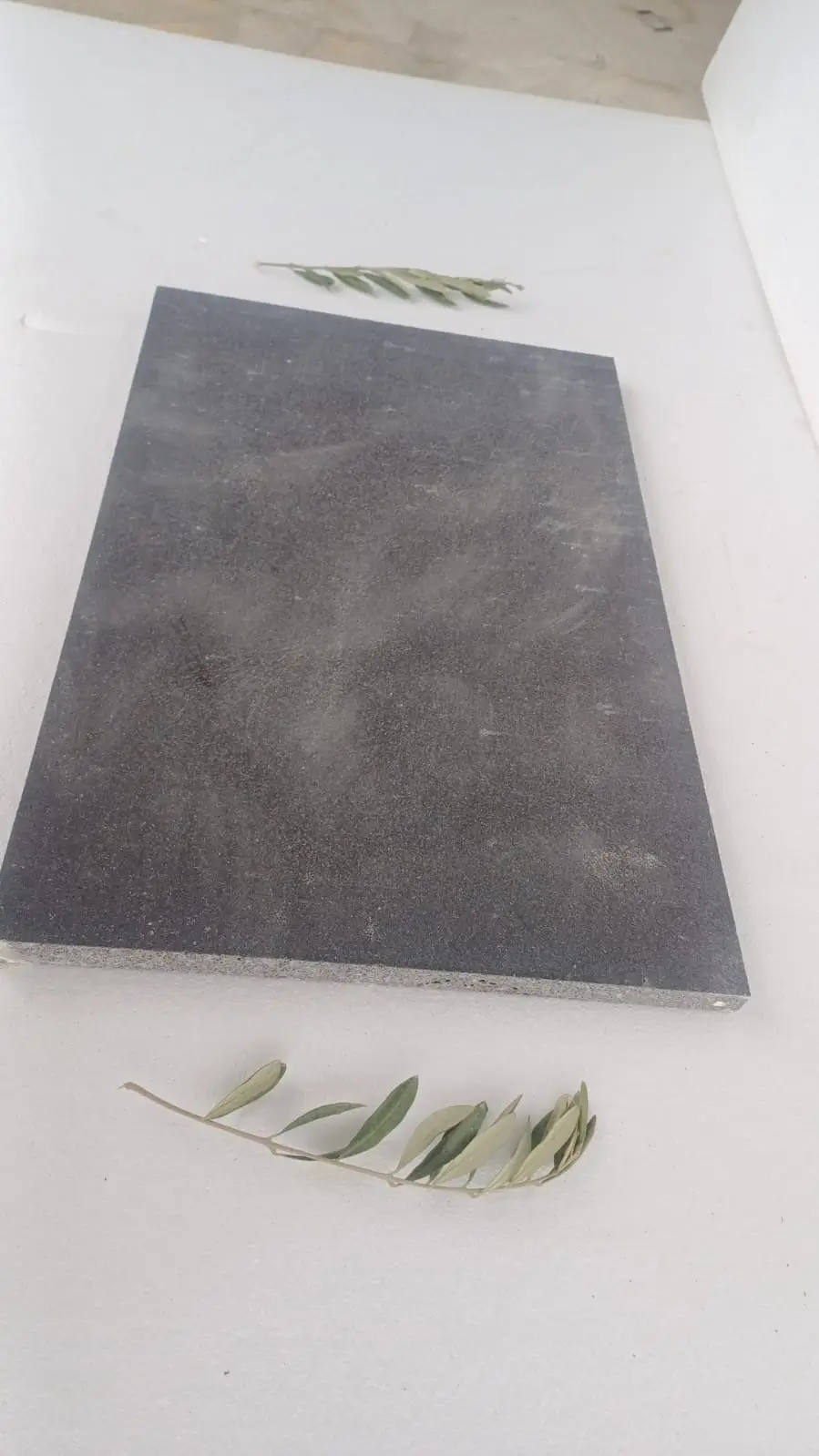
Design Integration with Arizona’s Landscape Traditions
Arizona’s architectural traditions pull in two directions simultaneously: the earthy, horizontally massed adobe vernacular that dominates Tucson and older Phoenix neighborhoods, and the contemporary desert-modern style — clean geometry, exposed steel, floor-to-ceiling glass — that defines newer construction corridors. Black outdoor paving works fluidly in both contexts, though the design rationale shifts depending on which tradition you’re working within.
In adobe-influenced settings, the depth of black stone reads as a grounding element. It echoes the shadow lines carved into thick wall surfaces and the dark ironwork that traditional architecture uses as accent. Laying black natural stone paving across Arizona’s older residential neighborhoods in a running-bond or irregular flagstone pattern reinforces that organic quality rather than fighting it.
The contemporary desert-modern context demands more precision. Here, rectified-edge black pavers in a clean grid format — often paired with smooth concrete walls and minimalist planting beds of Mexican feather grass or desert willow — create the high-contrast geometry that defines the style. Your jointing material matters as much as the stone itself in these applications: dark-tinted polymeric sand keeps the grid crisp, while standard gray sand undermines the whole visual scheme.
- Adobe and Territorial styles: favor irregular coursing, textured finishes, wider mortar joints in warm charcoal tones
- Desert-modern architecture: rectified edges, tight joints, dark jointing compound, precise grid layouts
- Ranch and Southwestern styles: mixed formats combining large-format black field pavers with contrasting border courses in tan or buff limestone
- Transitional styles: tumbled-edge black stone that softens geometry without losing the dark anchor color
Xeriscaping and Planting Context
The outdoor stone paving prep Arizona homeowners need to think through before finalizing stone color often gets skipped — and that prep includes understanding how the planting plan interacts with paving color. Black stone provides a dramatic staging ground for desert plantings precisely because the color palette of xeriscape-adapted plants is dominated by silver, blue-gray, bronze, and terracotta tones. Purple-flowered desert sage against a black stone field reads almost luminous under Arizona’s high-angle midday sun.
In Tempe, where residential lots often sit in the transition between irrigated turf traditions and newly converted xeriscape designs, black outdoor paving anchors the conversion visually. It signals that the landscape decision was deliberate and design-forward, not simply the result of removing grass. That matters for property presentation and for the homeowner’s confidence in the finished result.
Plan your planting zones around the stone edges, not the other way around. Black stone retains heat at the surface layer, which benefits cold-sensitive desert plants positioned at the margins — prickly pear, aloe, and bougainvillea all respond well to the radiant warmth that black paving emits through early evening hours. Your landscape designer should factor that microclimate benefit into planting placement decisions.
- Silver-leaved plants (desert spoon, brittlebush, blue palo verde) create strong tonal contrast against black stone
- Bronze or terracotta ground covers (decomposed granite in warm tones) complement rather than compete with dark paving
- Avoid bright chartreuse plantings immediately adjacent — the contrast overwhelms the stone’s depth
- Ornamental grasses planted at paving edges create movement that prevents the dark surface from reading as heavy
Base Preparation for Arizona Conditions
The black paving installation steps in Arizona that matter most happen below the surface. Arizona soils are predominantly caliche-prone, and caliche layers create a hard, impermeable barrier that traps moisture directly beneath your base aggregate. You need to cut through any encountered caliche and replace it with properly compacted Class II aggregate base — minimum 4 inches for pedestrian applications, 6 inches for vehicular paving.
Your compaction target is 95% Modified Proctor Density, tested with a nuclear densometer before any bedding layer goes down. Skipping that test is the single most common reason Arizona paving installations develop soft spots within the first two to three seasons. The desert climate masks subgrade problems during the dry season — it’s the monsoon cycle that exposes inadequate compaction through differential settlement.
In Phoenix, expansive clay soils appear in lower-lying areas and irrigation-saturated yards more often than the surrounding desert soil profile would suggest. Conduct a simple jar test on your excavated material — if more than 30% settles as fine clay particles after 24 hours, you’re dealing with a potentially expansive subgrade that requires additional base depth or stabilization treatment before you proceed.
- Excavation depth: 8–10 inches total for standard pedestrian black paving on stable desert soil
- Caliche encountered at depth: mechanically scarify, remove loose material, replace with 3/4-inch crushed aggregate
- Bedding sand layer: 1-inch nominal screeded bed of coarse washed concrete sand, never play sand
- Slope: maintain 1–2% cross-fall away from structures for drainage, non-negotiable in monsoon zones
- Verify truck access to the site before scheduling delivery — confined side yards often require smaller loads or manual transfer from the street
Selecting Arizona Desert-Rated Black Paving Stone
Arizona desert-rated black patio paving needs to satisfy two criteria that pull against each other: high density to resist surface wear, and sufficient porosity to allow any trapped moisture to escape during thermal cycling. Dense basalt sits at one end of the spectrum — extremely hard, very low absorption, but essentially non-breathable. Honed black limestone occupies a middle ground that most Arizona exterior applications find more forgiving, particularly where the base isn’t perfectly controlled.
Thickness matters more than most specifications acknowledge. For a standard patio application, 1.25-inch nominal thickness provides adequate structural integrity for foot traffic but will develop flexural cracks under point loading from furniture legs on a poorly supported base. Significantly better long-term performance comes from 1.5-inch or 2-inch material, particularly in direct sun where thermal expansion cycling is at maximum amplitude.
For your reference on current material options and specifications, Arizona black outdoor paving at Citadel Stone covers the product range with the technical specs you need to make a confident selection for your specific application.
- Basalt: hardness 6–7 Mohs, absorption under 1%, excellent wear resistance, limited in large-format cuts
- Black limestone: absorption 2–4%, honed finish preferred for exterior, good thermal mass, moderate wear resistance
- Black slate: layered structure requires careful thickness specification — minimum 1.5 inches for exterior use in Arizona heat
- Granite with black dominant tone: highest durability, minimal maintenance, most effective for vehicular applications
Thermal Performance and Installation Variables
Surface temperatures on black outdoor paving in Arizona can reach 140–160°F under peak summer sun — a data point that surprises most homeowners but should be central to your specification decisions. That surface heat doesn’t make the material structurally compromised; the stone itself handles those temperatures without degradation. The issue is the differential expansion between the paving field and any fixed elements it abuts: pool coping, building foundations, step risers, or retaining walls.
Expansion joints at 10-foot intervals are the standard recommendation for most climates. For installing black outdoor paving in Arizona, reduce that to 8-foot intervals specifically, because the color-driven temperature differential adds measurable stress beyond what standard calculations assume. Use a compressible backer rod with polyurethane sealant in those joints — silicone degrades faster under UV at these temperatures, and you’ll be resetting silicone joints every 3–4 years instead of the 7–8 years you’d expect from polyurethane.
At Citadel Stone, we review installation specifications with clients before material leaves the warehouse — not as a formality, but because joint spacing errors are almost always caught at that stage and are nearly impossible to correct after installation without complete re-lay. That conversation saves significant remediation costs down the line.
- Joint width for black stone in Arizona: 3/16 inch minimum, 1/4 inch preferred for full-sun applications
- Polymeric sand: apply when stone surface temperature is below 90°F — typically early morning installs only in summer months
- Avoid installation during peak summer afternoons: setting rates for bedding materials accelerate unpredictably above 95°F ambient
- Allow stone to acclimate on-site for 24 hours before installation — warehouse-stored stone can carry residual temperature differential that affects initial joint behavior
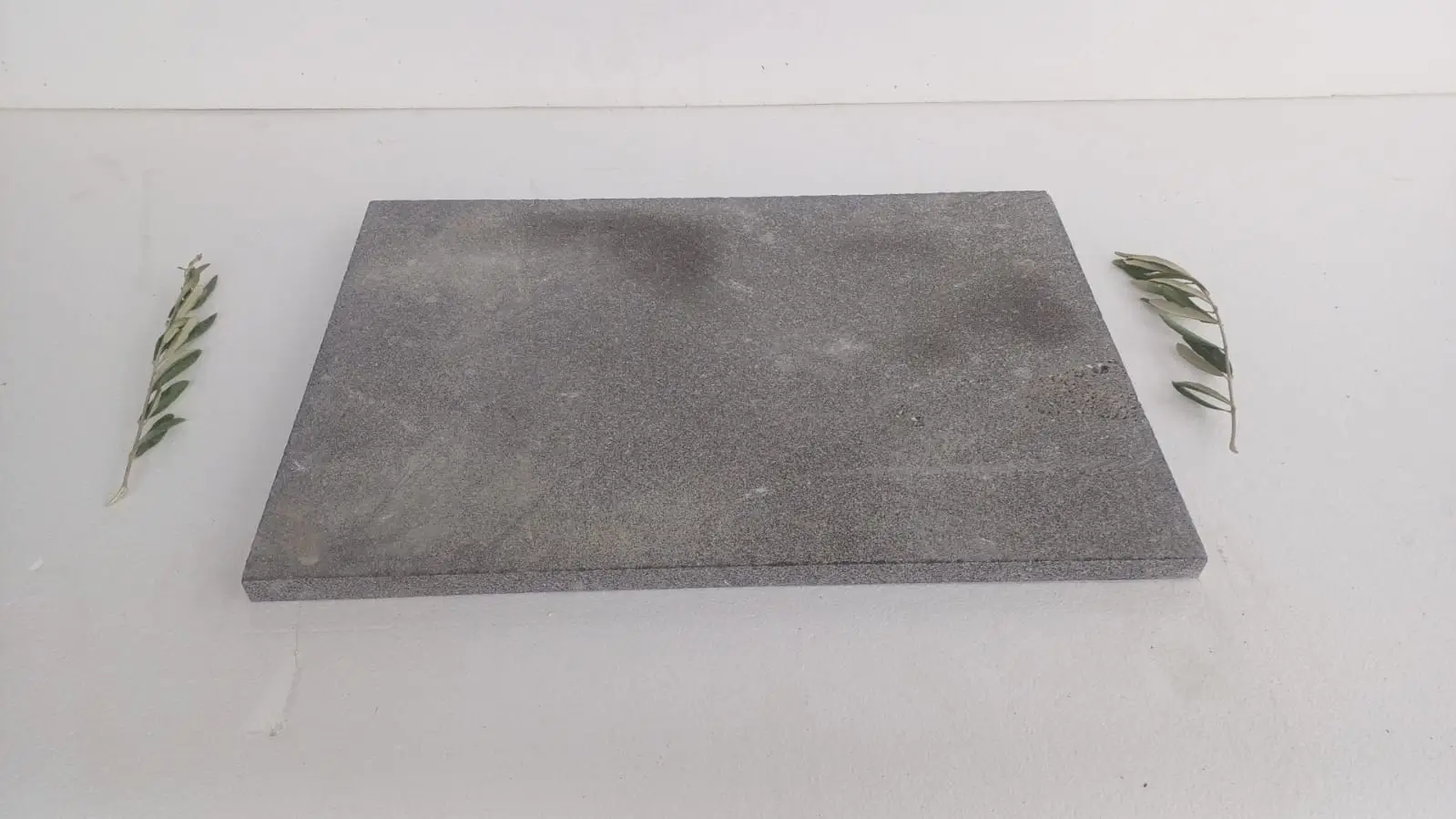
Sealing and Maintenance in Arizona’s Climate
Completing the outdoor stone paving prep Arizona homeowners often overlook means establishing a clear sealing strategy before the first slab is set. The desert climate creates conditions that aren’t intuitive: low annual rainfall seems to suggest sealing is less critical, but the UV intensity and temperature cycling are dramatically more aggressive than humid climates where most sealing guidelines originate. Standard recommendations developed for Pacific Northwest or Mid-Atlantic climates underestimate how quickly an unsealed black stone surface chalks and loses its depth of color in the Arizona sun.
Penetrating impregnator sealers — silane-siloxane chemistry specifically — are the correct product family for exterior black natural stone in Arizona. They don’t create a surface film that can peel or blister under UV, and they allow vapor transmission that prevents subsurface moisture pressure from disrupting the bond layer. Apply your first sealer before the initial setting of polymeric sand, then again at 6 months post-installation to address the absorption that occurs as the base stabilizes.
In Tucson, the slightly higher monsoon rainfall compared to Phoenix means your drainage slope specification deserves extra attention in conjunction with your sealing program. A 1.5% slope minimum — rather than the 1% you might use elsewhere — ensures that even during heavy monsoon events, standing water doesn’t dwell long enough to undermine the sealer at low points in the field.
- Reseal frequency: every 2–3 years in full-sun Arizona applications, annually in areas with overhead irrigation overspray
- Test before resealing: water droplet absorption test — if water absorbs in under 60 seconds, sealing is overdue
- Avoid topical acrylic sealers on exterior black stone — they trap heat and accelerate surface spalling
- Clean with pH-neutral stone cleaner only — acidic cleaners remove sealer and etch limestone surfaces permanently
- Inspect polymeric sand joints annually — UV degradation in Arizona is faster than manufacturer schedules indicate, and failed joints admit water that undermines your base
Ordering, Logistics, and Project Planning
Your material order for black outdoor paving in Arizona should include a 10–12% overage calculation above your measured area — not the standard 7–8% overage used for indoor tile. Outdoor installations generate higher waste at cuts, particularly where you’re fitting around xeriscaping beds, curved edges, or irregular structures. Running short on black stone mid-project is genuinely problematic because matching batch color and texture from a secondary order is unreliable, and color variation between production runs on black stone is more noticeable than on lighter materials.
Coordinate truck delivery timing around your site access and your base preparation schedule. Black stone pallets are heavy — a standard pallet of 2-inch material runs 2,200–2,600 lbs — and delivery trucks require a firm, stable surface to off-load safely. If your driveway or access path hasn’t been stabilized yet, schedule the pallet drop to a street-adjacent location and plan for manual transport. That coordination needs to happen before the delivery is booked, not on the morning of arrival.
Citadel Stone maintains warehouse inventory specifically allocated to Arizona projects, which typically keeps lead times to 1–2 weeks rather than the 6–8 week import cycle that direct overseas orders require. That buffer is worth factoring into your project schedule, particularly if you’re working toward a seasonal landscaping deadline before the summer heat window closes.
- Measure your project area in square feet and add 10–12% for exterior cutting waste
- Confirm warehouse stock availability before finalizing your installation crew’s start date
- Request material from a single production batch where possible — color consistency across a project is easier to control at the order stage than after delivery
- Store pallets on stable ground away from irrigation zones — extended moisture exposure to pallet bases accelerates staining from tannins in wood packaging
Getting Black Outdoor Paving Specifications Right
The installations of black outdoor paving in Arizona that hold up beautifully after a decade share one consistent characteristic: every specification decision was made with Arizona’s specific conditions in mind, not adapted from generic national guidelines. Your joint spacing, your base depth, your sealer chemistry, your overage calculation — each of those numbers needs to reflect desert heat, monsoon drainage, caliche soil variability, and the UV intensity that is simply unlike anything in more temperate climates. Getting the design integration right is the first step, and it’s the one that motivates the whole project. But the technical execution is what determines whether that visual impact lasts.
As you plan the full scope of your Arizona stone project, adjacent hardscape investments are worth considering alongside your paving specification. If your project scope includes both a patio field and a connecting driveway surface, the Black Limestone Driveway Cost in Arizona: Buyer’s Guide covers cost and material performance data that complements the installation decisions you’re working through here — particularly useful for evaluating laying black natural stone paving across Arizona’s varied driveway and patio surfaces within a single project budget. Homeowners in Tucson, Mesa, and Chandler specify black outdoor paving from Citadel Stone because each slab is chosen for dimensional stability under the repeated thermal expansion common to Arizona desert conditions.