
Budgeting a black limestone driveway cost Arizona project correctly depends less on square footage calculations and more on understanding how your site’s topography dictates every downstream decision — from base depth to drainage engineering to material thickness. The flat desert floor of central Phoenix behaves completely differently from a hillside lot in the Ahwatukee Foothills or a terraced property in north Scottsdale, and your per-square-foot cost can swing by 40% or more based on grade alone. Most homeowners get surprised not by the stone price but by the site-work costs that slope and drainage demand before a single paver is ever set.
Why Arizona Terrain Drives Black Limestone Driveway Pricing More Than Anything Else
Arizona’s landscape is deceptively varied. You’ve got gently sloping desert plains, arroyos cutting through residential lots, volcanic rock shelves close to the surface, and steep gradient driveways that climb 8–15% grades into hillside communities. Each of those scenarios changes your cost profile significantly, and understanding the breakdown before you pull permits will save you from serious budget overruns.
The terrain factor affects four cost categories simultaneously: excavation depth and difficulty, base aggregate volume, drainage infrastructure, and the structural thickness of the stone itself. A flat Tempe lot with compacted sandy soil might require 4 inches of compacted base and standard 1.25-inch pavers. That same project on a hillside property in north Phoenix with clay soil and a 10% grade might require 8-inch compacted base, interceptor drains, and 2-inch pavers to handle the combined foot and vehicle load on a sloped surface. The stone is the same price per square foot — the site work doubles.
- Grade management typically adds $3–$8 per square foot to total installed cost on slopes exceeding 5%
- French drain or channel drain installation for runoff interception runs $15–$40 per linear foot depending on depth
- Caliche layer removal or drilling adds $2–$6 per square foot to excavation costs
- Retaining wall integration for terraced driveways can add $20–$60 per linear foot of wall
- Geotextile fabric under base aggregate is non-negotiable on hillside sites — budget $0.30–$0.50 per square foot
Black Limestone Driveway Material Cost Breakdown for Arizona Buyers
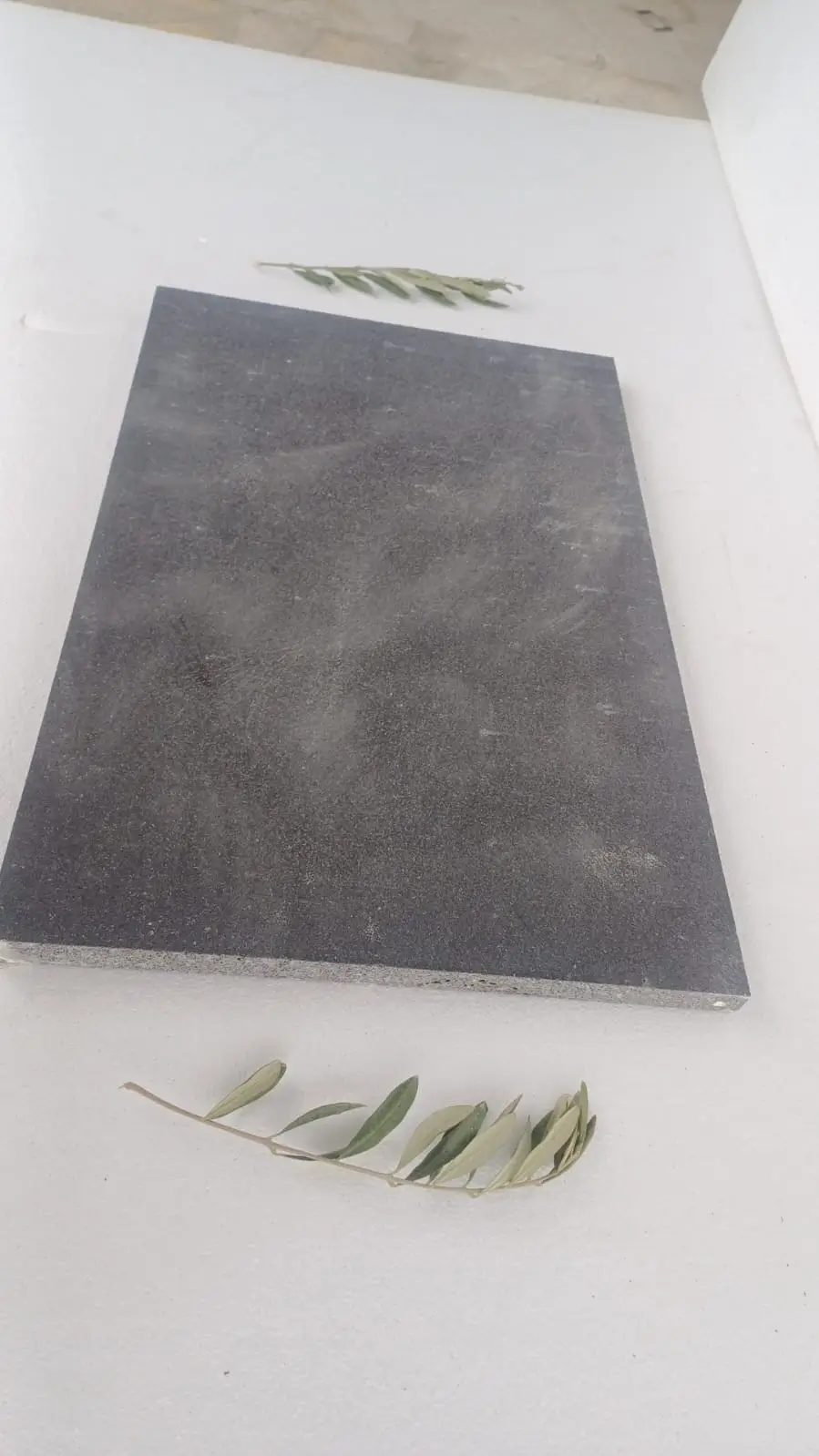
The material cost component of a black limestone driveway cost Arizona estimate typically runs $8–$18 per square foot for the stone itself, depending on thickness, finish, and whether you’re ordering standard field pavers or custom-cut pieces for complex patterns. That range exists for real reasons, and understanding them helps you spec the right product rather than defaulting to whatever’s cheapest on the pallet.
Thickness selection is the most misunderstood cost driver at the material level. Standard 1.25-inch black limestone handles pedestrian traffic and light vehicle loads on flat driveways without issue. But on any grade exceeding 3%, you should move to 1.5-inch or 2-inch nominal thickness, because flexural stress on a sloped installation is fundamentally higher — the lateral force component under vehicle load creates point stresses that thinner stone doesn’t absorb as well. Upgrading from 1.25-inch to 2-inch adds roughly $2–$4 per square foot in material cost but dramatically extends service life on hillside installations.
- 1.25-inch black limestone pavers: $8–$11 per square foot (flat sites, pedestrian-primary use)
- 1.5-inch black limestone pavers: $10–$14 per square foot (mixed vehicle and pedestrian, moderate grades)
- 2-inch black limestone pavers: $13–$18 per square foot (steep grades, heavy vehicle use, commercial adjacent)
- Custom cut or pattern-specific pieces: add $3–$6 per square foot to base pricing
- Coping and border pieces for edge definition: $12–$20 per linear foot
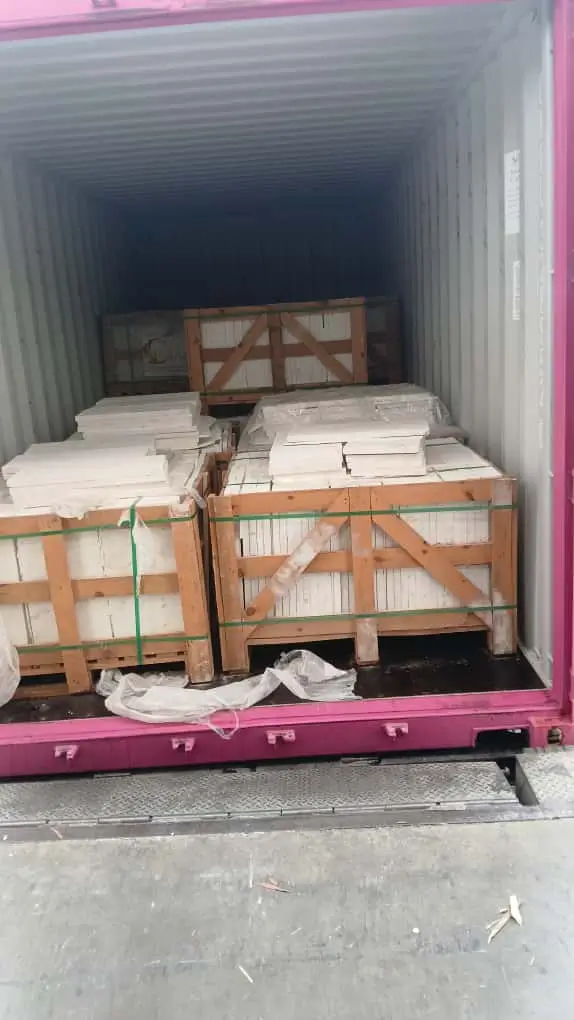
For projects where you need to confirm material availability before committing to a timeline, checking warehouse stock levels is worth doing early — especially for 2-inch thickness in larger quantities, which moves faster than most buyers expect during peak season. At Citadel Stone, we recommend confirming pallet counts at least three weeks before your contractor’s scheduled base preparation date to avoid holding up the installation crew.
Base Preparation Costs: Where Terrain Complexity Gets Expensive
Base preparation is the line item that expands fastest on sloped Arizona driveways, and it’s the area where underbidding is most common. The industry minimum for a residential driveway base is 4 inches of compacted aggregate — but that figure was developed for relatively flat suburban lots in moderate climates, not for the terrain diversity Arizona actually presents.
On sites with grades between 5–10%, engineered base preparation means stepping up to 6–8 inches of compacted Class II base rock, with compaction testing at multiple lifts. The reason isn’t just load-bearing — it’s erosion resistance. On a sloped driveway, water sheeting under the stone during monsoon events can undermine a shallow base within a single season. Black limestone in Arizona performs exceptionally when the base is properly engineered, but that performance depends entirely on what’s underneath it. Projects in Peoria on the west valley’s flatter terrain often get by with standard 4–6 inch base preparation, but elevation changes of even 2–3 feet across a 60-foot driveway run justify additional base engineering investment. Factoring the Arizona desert-rated black limestone driveway budget to include engineered base on any site with measurable grade is the most reliable way to avoid a costly rebuild inside the first decade.
- Standard 4-inch compacted base on flat sites: $3–$5 per square foot installed
- 6-inch engineered base for moderate slopes (3–7% grade): $5–$8 per square foot installed
- 8-inch base with compaction testing certification for steep grades: $8–$12 per square foot installed
- Sub-base stabilization fabric (Mirafi 500X or equivalent): $0.30–$0.50 per square foot additional
- Compaction testing and documentation (required for some permit jurisdictions): $400–$800 per project
Drainage Engineering: The Hidden Cost Driver on Arizona Hillside Driveways
Arizona monsoon season delivers rainfall intensities that can exceed 3 inches per hour in concentrated bursts — and when that water hits a sloped driveway, it needs somewhere engineered to go. The cost of natural stone driveway AZ homeowners consider almost always underestimates drainage infrastructure, and that’s the line item where budgets blow out most predictably.
Your drainage design has to solve two distinct problems on sloped driveways. The first is surface runoff — water sheeting across the stone toward the street or adjacent landscaping. The second is subsurface infiltration — water that enters the joint system and accumulates below the base, potentially undermining the installation from beneath. Both problems need independent solutions, and both add cost. Surface drainage is managed through grade direction, channel drains, and catch basins. Subsurface drainage requires perforated pipe at the base course level, daylighted at an appropriate outlet point — which on hillside lots sometimes means running pipe 30–50 feet to reach a suitable discharge location.
The most reliable approach for structuring a black limestone driveway cost Arizona estimate is to treat drainage as a separate line item from paving, not as an included component. Ask your contractor for drainage costs broken out independently — that way you can evaluate the drainage design on its own merits rather than having it buried in a lump-sum number that’s hard to audit.
- Linear slot drains (surface runoff interception): $20–$45 per linear foot installed
- Catch basin installation: $350–$700 per basin depending on depth and access
- Perforated pipe sub-base drainage: $8–$15 per linear foot
- Downhill outlet piping and daylight connection: $12–$25 per linear foot
- Dry creek bed integration at driveway apron: $15–$30 per linear foot (popular in AZ landscape design)
For properties in Tempe where lot grades tend to be modest but clay soil content creates slower drainage infiltration, a perforated collector pipe at the base is often the smarter investment than elaborate surface drains — the problem there is subsurface saturation more than surface sheeting. Understanding these site-specific soil dynamics is exactly what separates an accurate black limestone driveway pricing in Arizona estimate from a number that falls apart at permit review.
Installation Labor: How Slope and Site Access Affect Your Contractor Quote
Labor rates for black limestone driveway installation in Arizona typically run $8–$16 per square foot for standard residential projects. That range exists because slope, site access, and pattern complexity all multiply labor hours in ways that don’t always show up clearly in initial quotes. A contractor who quotes $9 per square foot on a flat lot isn’t necessarily underbidding a $12 quote on a hillside project — they might just be quoting a fundamentally different scope.
Site access is the variable most contractors won’t volunteer upfront. Getting a delivery truck loaded with black limestone pallets close enough to minimize hand-carrying distance is a real logistics concern. On steep or narrow driveways, the truck may not be able to approach the work area, meaning materials are offloaded at the street and transported manually or by wheelbarrow — which adds hours to the installation and gets priced into labor. A second truck access scenario that adds cost is when a delivery truck must stage materials across multiple loads due to weight limits on private drives. Factoring in these constraints during your planning phase isn’t overthinking it; it’s the kind of practical question that keeps your project on budget.
- Flat site installation, running bond pattern: $8–$10 per square foot labor
- Flat site, complex herringbone or diagonal pattern: $11–$14 per square foot labor
- Sloped site (5–10% grade), standard pattern: $12–$15 per square foot labor
- Steep grade with retaining integration: $14–$18 per square foot labor
- Difficult truck access surcharge: $1–$3 per square foot additional
Total Installed Cost Ranges: What to Actually Budget in Arizona
Pulling all the components together — material, base, drainage, and labor — gives you a realistic picture of black limestone driveway pricing in Arizona. The numbers break down meaningfully by site condition rather than by city, which is why getting a terrain assessment early is more valuable than collecting quotes based on square footage alone.
For a standard 500-square-foot driveway on a flat lot in the Phoenix metro, total installed costs typically land between $21–$28 per square foot, or roughly $10,500–$14,000 for the complete project. The same 500-square-foot footprint on a hillside lot with meaningful grade and proper drainage engineering realistically runs $28–$42 per square foot, or $14,000–$21,000. That isn’t contractor markup — that’s engineering reality. You can verify Citadel Stone driveway limestone in Arizona product specifications and current pricing to establish your material baseline before engaging contractors, which makes your quote comparisons more apples-to-apples.
- Flat site, standard scope (500 sq ft): $10,500–$14,000 total installed
- Moderate slope site (500 sq ft, 3–7% grade): $13,500–$18,500 total installed
- Steep hillside site (500 sq ft, 8%+ grade, full drainage): $16,000–$22,000 total installed
- Large driveway (1,000 sq ft, flat): $19,000–$26,000 (economies of scale at this volume)
- Large driveway (1,000 sq ft, hillside): $26,000–$38,000 (engineering costs don’t scale the same way)
Sealing Costs and Long-Term Maintenance Budgeting
Your Arizona black limestone driveway’s long-term performance budget deserves the same scrutiny as your upfront installation cost. Black limestone is a relatively dense natural stone — typical absorption rates run 0.3–0.8% — but Arizona’s UV intensity and hard water mineral deposits create surface conditions that benefit significantly from a penetrating impregnator sealer applied at initial installation and refreshed every 2–3 years.
Sealing costs for black limestone driveway in Arizona range from $0.80–$1.80 per square foot for professional application, depending on surface prep required and whether you’re doing first-application on a new installation or a maintenance re-seal on an aged surface. The first seal matters most — applying it within 48 hours of installation while the stone is clean and the joints are settled locks out the caliche dust and hard water minerals that permanently stain black limestone if they’re allowed to penetrate. The characteristic deep charcoal-to-jet-black tone that makes this material visually distinctive relies on sealing consistency more than any other maintenance practice.
- Initial penetrating impregnator seal (professional application): $0.80–$1.20 per square foot
- Maintenance re-seal every 2–3 years: $0.60–$1.00 per square foot
- Joint sand stabilization re-treatment: $0.20–$0.40 per square foot
- Professional cleaning before re-seal: $0.30–$0.60 per square foot
- 20-year maintenance budget estimate (500 sq ft): $2,000–$4,500 total cumulative
Projects in Phoenix proper face particularly aggressive hard water conditions due to the Colorado River source water used throughout the metro — lime scale and mineral bloom on unsealed black limestone can appear within a single season and is genuinely difficult to reverse once it’s established. Staying ahead of the sealing schedule in Phoenix is less optional than it is in higher-elevation Arizona markets. When you factor these maintenance costs into the total cost of natural stone driveway AZ homeowners consider over a 20-year horizon, black limestone still competes favorably against materials that carry lower upfront numbers but higher long-term remediation costs.
How Black Stone Driveway Material Costs Across Arizona Compare to the Alternatives
Understanding where black stone driveway material costs across Arizona stack up against competing options helps you defend the specification to clients or make the case to your own household budget. The comparison isn’t always as obvious as it looks on a first-cost basis, especially when you factor in the terrain-driven durability advantage that natural stone holds on sloped installations.
Concrete driveways in Arizona run $8–$14 per square foot installed for standard broom finish on flat sites — cheaper upfront, but the thermal cycling performance on sloped sites is genuinely worse. Concrete’s coefficient of thermal expansion is roughly 5.5 × 10⁻⁶ per °F, similar to limestone, but concrete lacks limestone’s natural grain structure that distributes micro-stress through crystalline boundaries. On a hillside concrete driveway, the combination of slope-induced lateral stress and Arizona’s 100°F+ daily thermal swings produces cracking patterns you simply don’t see on properly installed natural stone. Asphalt is even cheaper at $4–$8 per square foot installed, but its performance on steep grades in Arizona’s heat is problematic — surface creep and rutting in areas where tires stop and start become visible within 3–5 years on any grade exceeding 5%. Black limestone pavers hold structural geometry on slopes in a way that neither asphalt nor concrete can match over a 20-year horizon.
- Asphalt (flat site): $4–$8 per square foot installed — lowest first cost, worst long-term on AZ slopes
- Concrete broom finish: $8–$14 per square foot — moderate cost, prone to cracking on steep grades over time
- Concrete pavers: $12–$18 per square foot — better than poured concrete on slopes, no natural stone aesthetic
- Black limestone pavers: $21–$42 per square foot installed total — highest first cost, best terrain performance and visual outcome
- Decomposed granite: $3–$6 per square foot — budget option, poor stability on any meaningful grade, not a competitor for permanent installations
At Citadel Stone, we source black limestone from quarries with documented compressive strength testing above 12,000 PSI — a performance threshold that matters specifically for sloped driveways where lateral load components under vehicle braking are higher than on flat surfaces. That’s not marketing language; it’s the specification detail that separates a 25-year installation from a 12-year repair cycle.
Getting Black Limestone Driveway Cost Right in Arizona
The homeowners who come in significantly over budget on black limestone driveway projects in Arizona almost always share one characteristic: they got square footage pricing from a contractor without first getting a terrain assessment. Your site’s grade, drainage patterns, soil composition, and truck access conditions are the inputs that determine your real cost — not the catalog price per square foot of stone. Starting with those four site variables gives you a framework that holds up when contractor quotes come in, because you already understand what the legitimate cost drivers are.
For deeper technical reference on the execution side of your project, How to Install Black Limestone Driveways in Arizona provides the field-level specification detail that bridges your budget planning into the construction phase — covering the same material and site conditions this guide addresses, but from the installer’s perspective. Armed with both the cost framework from this guide and the installation specifications, you’re in a significantly stronger position when evaluating contractor proposals and making material decisions that hold up over time. Flagstaff, Peoria, and Tempe homeowners working with Citadel Stone for black limestone driveway projects benefit from bulk pallet pricing structures that make budgeting more predictable across larger Arizona residential installations.