
Black slate outdoor paving cost in Arizona deserves a more nuanced breakdown than the square-foot pricing you’ll find on most supplier sheets — because the number you’re quoted at the warehouse rarely tells the whole story once you factor in thickness grading, finish type, and the logistical realities of getting material to a Chandler subdivision or a Tempe courtyard. The material itself earns its place in desert landscaping, but your budget needs to account for several cost layers that only become visible once you understand how black slate behaves as a design and structural element in this climate.
Why Black Slate Fits Arizona Landscape Design
Desert Southwest architecture has always moved between two aesthetic poles — the warm terracotta tradition of Southwestern adobe and the cooler, graphite-toned minimalism that’s reshaped modern Arizona residential design over the past two decades. Black slate lands squarely in that second camp. Its deep charcoal and near-black tones contrast cleanly against bleached stucco walls, pale limestone gravel, and the silver-green of desert plantings like brittlebush and agave.
You’ll find this material performing particularly well in xeriscaped outdoor spaces where the planting palette leans dry and structural. The stone’s natural cleft texture doesn’t fight the rugged geometry of cactus gardens or decomposed granite beds — it anchors them. That visual weight is something smoother materials like travertine or honed limestone simply don’t deliver in the same way.
Projects in Chandler frequently incorporate black slate in outdoor kitchen surrounds and transition zones between hardscape and desert planting beds, where the material’s dark tonality reads as a deliberate design decision rather than a neutral default. The contrast against lighter desert soils and sandstone walls is visually decisive — which is exactly what modern Arizona landscape design demands.
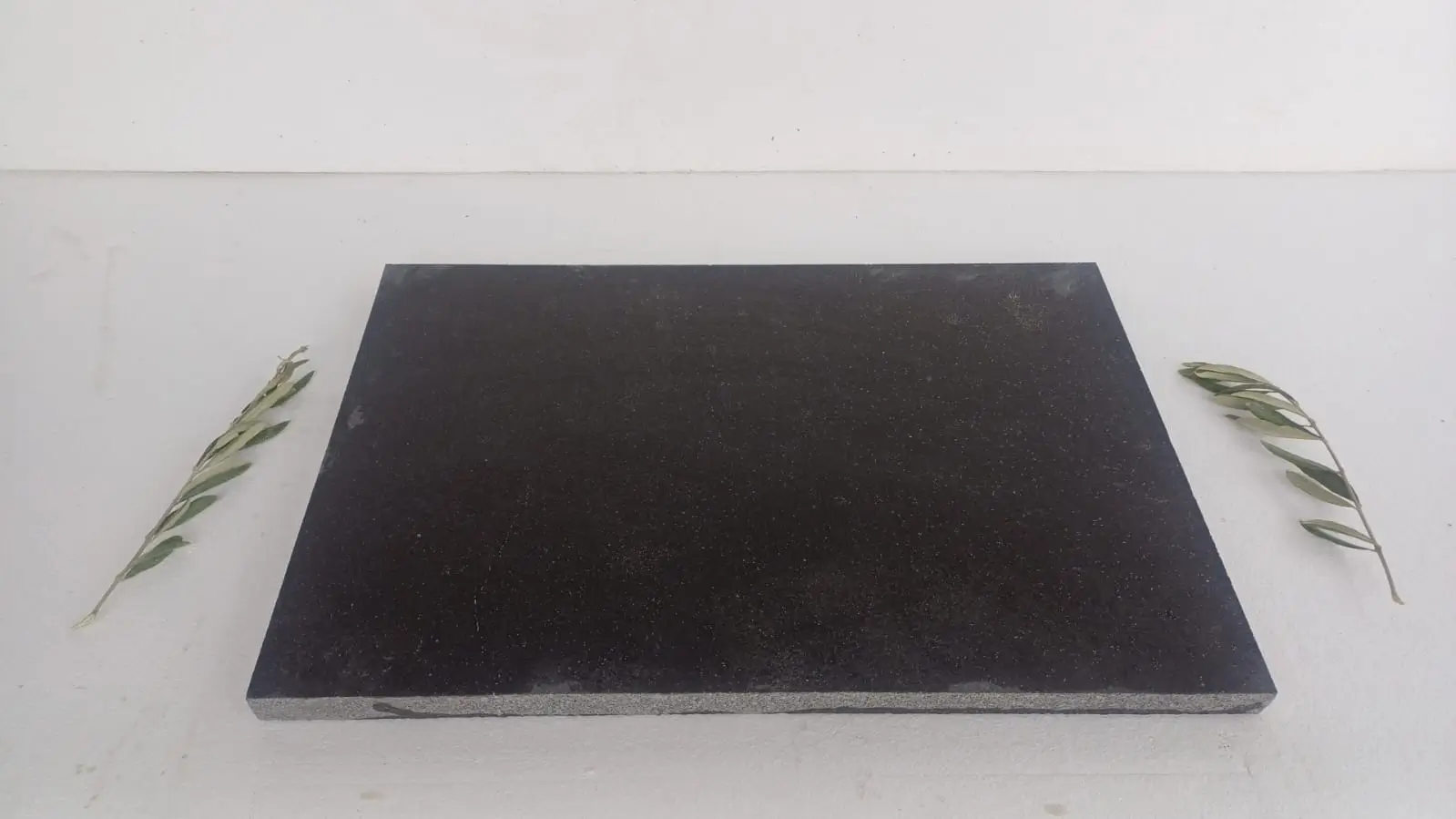
Understanding the Black Slate Cost Structure
The black slate paving price per square foot in Arizona typically ranges from $4.50 to $11.00 for material alone, depending on thickness, finish, and whether you’re sourcing irregular flagging or dimensioned tile-format stone. That’s a wider band than most buyers expect, and where your project lands in that range depends on decisions you make before you ever place an order.
Here’s what drives that spread:
- Thickness grade: 3/4-inch irregular flagging sits at the lower end; 1.25-inch to 1.5-inch dimensioned pavers for pedestrian and light vehicle use push toward the upper range
- Finish type: Natural cleft surfaces cost less to produce than gauged (calibrated) backs, which add 15–25% to material cost but significantly simplify installation on sand-set bases
- Panel size: Larger format pieces (18×18 and above) generate more quarry waste per unit, which is reflected in the price premium over 12×12 or random flagging formats
- Minimum order thresholds: Orders under 200 square feet often carry a surcharge from the warehouse that erases any per-unit savings from shopping budget-tier material
Installation labor in the Phoenix metro typically runs $8.00 to $14.00 per square foot for a properly prepared natural stone application — sand-set with polymeric joint sand, properly sloped, with edge restraint. Total installed cost for a black slate outdoor paving project in Arizona therefore lands between $12.50 and $25.00 per square foot, depending on complexity and base conditions.
Thickness Grades and What They Actually Cost You
Thickness selection is where a lot of Arizona homeowners miscalculate their budget. The temptation to specify thinner material to reduce material cost is real, but the math doesn’t always work out the way you’d hope once you account for breakage rates during transit and installation.
Natural black slate in the 3/4-inch range can see 8–12% breakage on irregular pieces during a truck delivery to a residential site, especially if the material is being offloaded without a forklift. That breakage cost comes straight out of your contingency budget. Specifying 1-inch minimum thickness drops that breakage rate to under 4% in most field conditions — a meaningful difference on a 400-square-foot patio.
- 3/4-inch irregular flagging: Best for low-traffic garden paths and decorative stepping zones; lowest material cost, highest breakage risk
- 1-inch calibrated tile: The practical sweet spot for most Arizona residential patios; balances cost, installation efficiency, and durability
- 1.25-inch to 1.5-inch dimensional paver: Required for any area seeing light vehicle overhang, golf cart traffic, or concentrated point loads from outdoor furniture on fine-grain base materials
At Citadel Stone, we recommend discussing thickness grading before finalizing your square footage order — the right thickness for your specific application can actually reduce total project cost by minimizing callbacks, replacements, and base rework.
Comparing Affordable Black Slate Options for Arizona Budgets
When Arizona homeowners compare natural outdoor slate material costs, the conversation usually starts with whether irregular flagging or dimensioned tile formats offer better value. The honest answer is that it depends entirely on your base preparation investment and the skill level of your installer.
Irregular flagging is genuinely more affordable black slate paving for Arizona projects where the design aesthetic accommodates a naturalistic, slightly irregular joint pattern. But it demands more labor time per square foot to fit, adjust, and level — which often negates the material savings. Dimensioned tile in consistent formats runs 20–35% more per square foot for material but typically installs 30–40% faster, which can make the total installed cost competitive or even lower.
Here’s a practical comparison framework for natural outdoor slate material costs that Arizona homeowners can use to evaluate quotes side by side:
- Irregular flagging on a 300 sq ft patio: Material $4.50–$6.50/sq ft, labor $10–$14/sq ft = $14.50–$20.50 installed
- Dimensioned 12×12 calibrated tile on the same 300 sq ft: Material $6.50–$9.00/sq ft, labor $8–$11/sq ft = $14.50–$20.00 installed
- Large-format 18×24 dimensioned slate: Material $8.00–$11.00/sq ft, labor $9–$13/sq ft = $17.00–$24.00 installed
The numbers converge much more than the raw material price difference suggests. Your real cost lever is how efficiently your installer works with the format you choose — and that’s a question worth asking directly before selecting material.
How Arizona Climate Affects Your Cost Planning
Surface temperature is the factor that most affects long-term cost of ownership for black slate outdoor paving in Arizona. Black stone absorbs solar radiation more aggressively than lighter materials — on a Phoenix summer afternoon, black slate surfaces can register 140–160°F under direct exposure. That’s not a disqualifying factor, but it does shape several downstream decisions that carry budget implications.
Projects in Peoria that incorporate black slate in south-facing courtyard zones typically specify a penetrating sealer with UV-stabilizing chemistry rather than a standard topical sealer — a product category that runs $0.80 to $1.40 per square foot applied versus $0.40 to $0.65 for standard sealers. That difference compounds over the resealing schedule, which in Arizona’s UV environment is typically every 18 to 24 months for fully exposed surfaces.
- South-facing, full-sun zones: Budget for UV-resistant penetrating sealer; resealing cycle every 18–24 months
- Covered patios and pergola-shaded areas: Standard penetrating sealer performs well; resealing every 30–36 months is realistic
- Pool deck perimeter applications: Specify a slip-resistant finish; the wet-surface coefficient of friction for cleft slate runs 0.60–0.75 (ASTM C1028), which meets most residential pool codes without additional treatment
The thermal expansion coefficient for natural slate sits around 5.1 × 10⁻⁶ per °F — modest compared to concrete at 6.0 × 10⁻⁶ — but in an Arizona climate where surface temperatures swing 70°F between night and midday peak, expansion joints every 12 to 15 feet are non-negotiable. Skipping them is one of the most common ways a budget-friendly installation becomes an expensive repair in year four.
Project Planning and Delivery Logistics in Arizona
Getting your cost estimate right means accounting for delivery logistics early. Natural stone is heavy — black slate at 1-inch thickness runs approximately 12–14 lbs per square foot — and truck access to your site directly affects whether you’re paying a standard delivery rate or a premium for specialty offloading equipment.
Many residential projects in the Phoenix metro have access constraints that aren’t obvious until the delivery truck arrives. Side gates under 8 feet wide, low overhead utilities, and soft decomposed granite driveways that can’t support a loaded flatbed are all common issues. If your truck has to stage materials at the curb and your installer hand-carries slate through a side gate, expect 2–3 hours of additional labor on a 400-square-foot project. Build that into your budget before you finalize scope.
For project planning purposes, the Citadel Stone slate paving costs Arizona resource provides current material pricing tiers and lead time estimates that help you set realistic timelines. Warehouse availability for black slate in Arizona typically runs with a 1–2 week lead time for standard thickness and format combinations, though large-format dimensioned pieces in premium grades can extend to 3–4 weeks depending on current stock.
Design Integration with Regional Landscape Styles
Black slate’s real strength in Arizona landscape design is its versatility across the two dominant residential styles you’ll encounter in the Phoenix metro: the desert contemporary aesthetic that dominates newer Scottsdale and Chandler developments, and the more traditional Southwest Territorial style prevalent in older Tempe and central Phoenix neighborhoods.
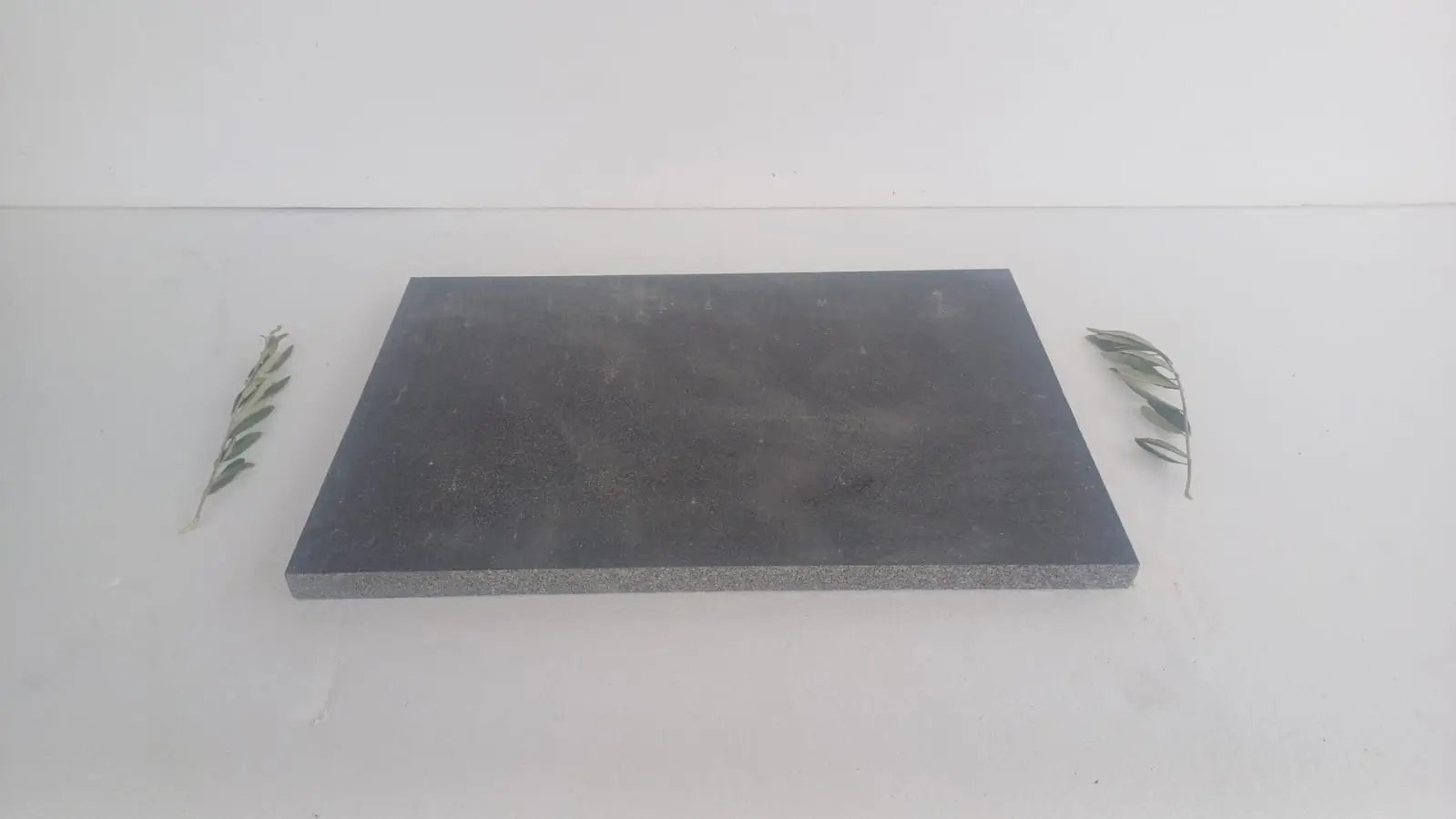
In desert contemporary applications, black slate functions as a grounding element. Paired with steel planters, concrete walls, and low-water ornamental grasses, the dark stone creates the kind of composed, graphic outdoor space that photographs well and holds its design logic across seasons. The material’s natural variation in tone — from charcoal to near-black with occasional blue undertones — keeps it from reading as flat or industrial.
In traditional Southwest Territorial settings, black slate works differently. Here it typically appears as a feature element within a lighter overall palette: flagstone steps edged in black slate, a dining terrace inset within a broader decomposed granite yard, or a pool surround that provides contrast against buff-colored pool coping. Projects in Tempe show this pattern frequently in mid-century homes where the landscape renovation is deliberately referencing the home’s original architectural vocabulary while updating the material palette.
- Desert contemporary: Use black slate as primary paving surface with consistent joint widths (3/8 to 1/2 inch) for a clean, graphic appearance
- Southwest Territorial: Deploy as accent or feature zone within a mixed-material design; irregular flagging reads more sympathetically in these contexts
- Modern minimalist: Large-format dimensioned slate (18×24 or 24×24) with tight joints and a honed or gauged finish delivers the precision these designs require
- Xeriscaped gardens: Irregular cleft flagging as stepping paths between planting beds; the naturalistic quality of cleft texture integrates better than smooth-finish formats
What to Watch for in Quotes and Specifications
Getting multiple quotes for an Arizona black slate paver budget means making sure you’re comparing the same specification, not just the same square footage. Here’s what often gets misrepresented or omitted in contractor and supplier quotes.
The material line item should specify thickness tolerance, not just nominal thickness. A “1-inch slate” spec with a ±1/4-inch tolerance is a fundamentally different product than one with a ±1/8-inch tolerance — the wider tolerance requires more mortar bed adjustment work or results in surface lippage on sand-set installations.
- Confirm thickness tolerance in writing (±1/8 inch is the professional standard for sand-set applications)
- Verify finish type — “natural cleft” and “calibrated back” are not the same thing; calibrated backs are essential for consistent joint height on sand-set beds
- Ask whether the material quote includes delivery to your specific address or to a regional warehouse pickup point
- Confirm whether the waste factor is included in the quoted square footage (10–15% waste is standard; less than 10% suggests the quote is optimistic)
- Check that the sealer specified matches your application zone — UV-rated penetrating sealers for exposed areas, standard penetrating sealers for shaded coverage
The Arizona black slate paver budget guide for outdoor areas that works best in practice is the one that breaks cost into three transparent columns: material, installation, and annual maintenance. That framework forces all the hidden variables into the open before you sign off on a contract.
Before You Specify
Black slate outdoor paving cost in Arizona is ultimately a decision that lives at the intersection of design ambition and practical budget management. The material delivers genuine aesthetic value — the kind of composed, intentional look that elevates a desert landscape from functional to designed — but it rewards specifiers who do their cost homework before committing to a format and finish.
Your specification should lock down thickness grade, finish type, and delivery logistics before any other budget numbers become meaningful. Once those variables are fixed, pricing stabilizes and the comparison process becomes straightforward. For the installation side of the equation, How to Install Black Slate Paving in Arizona covers the base preparation and setting bed requirements that directly determine how long your material investment actually lasts in Arizona’s demanding outdoor conditions.
At Citadel Stone, we source black slate directly from select quarries and quality-check each graded thickness at our warehouse before it ships — which means the specification you discuss with our technical team reflects actual stock characteristics, not catalog descriptions. Black slate outdoor paving sourced by Citadel Stone from select natural stone quarries worldwide is available in graded thickness options that Yuma, Gilbert, and Mesa homeowners use to align material costs with project scope.