
The base failure patterns we see most often in large driveway paver installations across Arizona trace back not to heat — but to mechanical stress from wind-driven storm events that nobody planned for. Installing large driveway pavers in Arizona demands a fundamentally different structural approach than most installation guides acknowledge, because the Sonoran Desert climate delivers haboobs, monsoon microbursts, and hail events that generate forces your typical residential spec simply wasn’t designed to resist. Edge restraint systems, joint integrity, and slab thickness choices all need to be calibrated against these storm dynamics — not just ambient temperature cycles.
Why Storm Forces Define Your Specification
Arizona’s monsoon season runs from mid-June through September, and during that window, wind gusts in excess of 60 mph are not rare — they’re routine. The mechanical load that generates on exposed large-format pavers is substantial, particularly at driveway edges where lateral pressure from wind-driven debris and water infiltration combines with the uplift dynamics that high wind creates under unsupported slab edges. Projects in Yuma experience some of the most intense sustained wind events in the state, where edge restraint failures on under-specified installations become visible within two or three storm seasons.
Your specification needs to account for two distinct storm-force mechanisms: lateral displacement from wind-driven water penetration at joints, and vertical displacement from hydrostatic pressure buildup beneath slabs during rapid infiltration events. Large-format pavers — typically 24×24 inches or larger — create longer unsupported spans between joint points, which amplifies both effects relative to smaller modular paver systems. The physics here matter more than most contractors acknowledge before pouring their first aggregate layer.
Material Selection for Storm and Impact Resistance
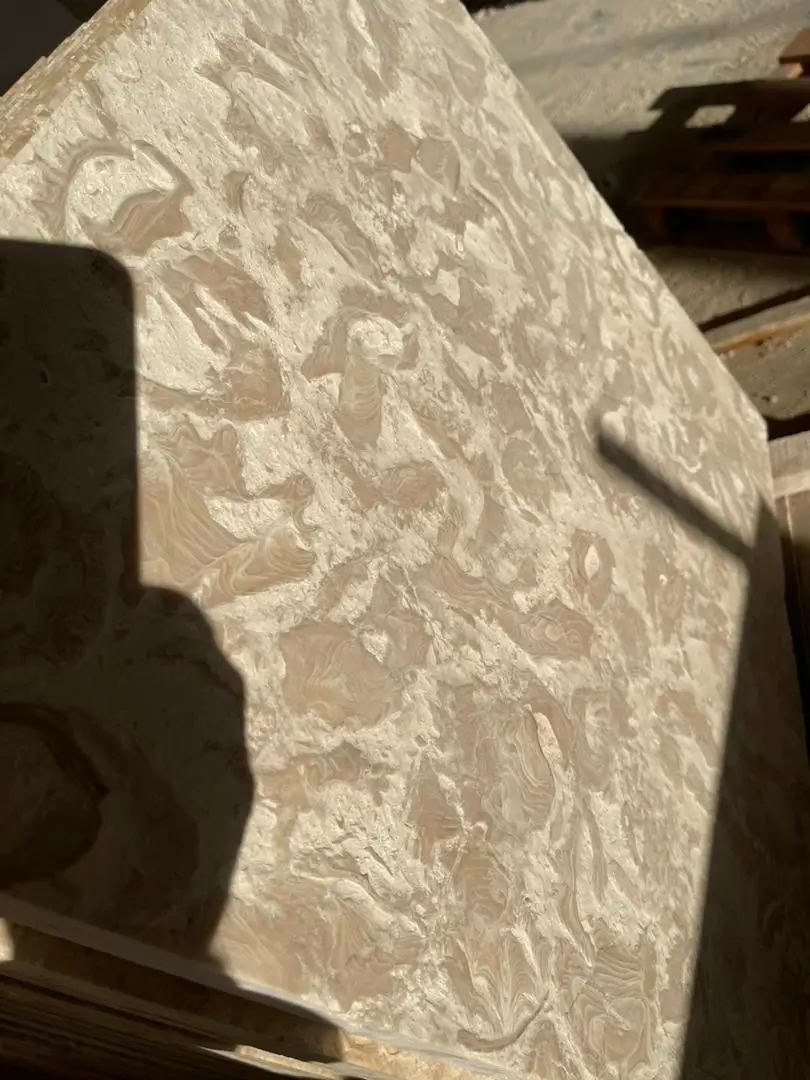
Not all natural stone performs equally under hail impact and wind-driven debris loading. Your material choice directly determines how much impact energy the surface absorbs versus transmits to the setting bed beneath. Oversized natural stone pavers across Arizona driveways need to meet a minimum compressive strength of 8,000 PSI to resist the point-load impact that hailstones in the 1.5-inch diameter range deliver — and that threshold eliminates several softer limestone and sandstone variants that would otherwise look appropriate for the application.
- Dense basalt and granite-family stones deliver compressive strength in the 15,000–25,000 PSI range, making them the most impact-resistant options for exposed Arizona driveways
- Travertine at 3-inch nominal thickness performs adequately under moderate hail loads but should not be specified for unshaded north-facing driveways where ice-ball accumulation from severe storms can exceed 2 inches
- Limestone in its harder variants (typically above 12,000 PSI compressive) handles hail impact well but requires more careful attention to joint sealing against wind-driven water infiltration
- Your minimum slab thickness for large-format driveway pavers under Arizona storm conditions should be 2 inches nominal — 3 inches is worth the cost premium for spans above 24 inches
- Surface texture matters for impact load distribution: a slightly textured or cleft face disperses point-load energy more effectively than a polished surface, which concentrates stress at the impact point
Heat-resistant driveway paving slabs that AZ homeowners rely on through summer also need to be the same slabs that resist storm mechanical forces — fortunately, density and thermal mass tend to correlate positively, so the material properties that help with Arizona’s ambient temperature cycles also contribute to storm resilience.
Edge Restraint Systems That Actually Hold
The single most underspecified element in large driveway paver installations is the edge restraint system. Most residential specs call for standard plastic edging staked at 12-inch intervals, which is entirely insufficient for the lateral loads that wind-driven storm conditions generate against large-format stone. Your edge restraint system needs to be engineered for the specific forces your site will experience — and in Arizona’s storm belt, that means concrete edge beams, not plastic.
A poured-in-place concrete edge beam, minimum 6 inches wide by 8 inches deep, anchored into undisturbed subgrade below your aggregate base layer, provides the lateral rigidity that storm events demand. For projects in Mesa, where caliche hardpan is common at 18–24 inches depth, you can anchor your edge beam into the caliche layer directly — this creates exceptional lateral resistance because caliche behaves almost like soft concrete once properly keyed. The edge beam approach adds cost but eliminates the most common failure mode we observe in storm-damaged large-format driveway installations.
- Concrete edge beams should be poured monolithically with your base preparation, not added after the fact
- Steel angle edging at minimum 3/16-inch thickness, staked at 6-inch intervals, is acceptable for interior edge conditions but not for exposed perimeter edges facing prevailing storm directions
- Check your site’s prevailing monsoon wind direction before placing — the windward edge receives the highest lateral loading and deserves your most robust restraint detail
- All edge restraint systems should sit at or below the finished paver surface to prevent wind-driven debris from catching the edge and generating prying forces
Joint Design and Integrity Under Wind-Driven Rain
Joint width and fill material selection become critical when you’re designing against wind-driven rain infiltration at 50+ mph. Standard polymeric sand is adequate for normal rainfall conditions, but Arizona monsoon events deliver water horizontally — not vertically — and the hydrostatic pressure generated in joints during a microburst can exceed what standard polymeric sand was designed to resist. Your joint fill specification needs to change for large-format driveway paver installations exposed to these conditions.
The joint width for large-format natural stone pavers in Arizona storm conditions should be held to 3/8 inch maximum. Wider joints increase the cross-sectional area available for water infiltration and reduce the lateral bearing contact between adjacent slabs. Narrower joints — below 1/4 inch — create their own problems by restricting drainage and concentrating thermal expansion stress, which becomes relevant during Arizona’s temperature swings even though it isn’t the primary design driver here. The 3/8-inch target balances both concerns effectively.
- Use a two-component polyurethane joint sealant for perimeter joints and any joints adjacent to drainage features — it provides better adhesion than polymeric sand and resists washout under high-velocity water flow
- Standard polymeric sand works acceptably for field joints but must be properly activated and cured before the monsoon season begins — plan your installation timeline accordingly
- Inspect and recharge joint fill after each major storm season — wind-driven water infiltration will erode joint material progressively, and maintaining 90% or better joint fill capacity is your primary maintenance task
- Expansion joints at maximum 15-foot intervals prevent thermal stress accumulation that can cause joint blowout when temperature differentials are compounded by storm moisture infiltration
Base Preparation for Storm Drainage and Stability
Your aggregate base depth in Arizona for large-format driveway pavers should be a minimum of 8 inches of compacted Class II base aggregate — but storm drainage performance demands equal attention to the base layer’s permeability architecture. The base has to drain rapidly during cloudburst events that can deliver 2 inches of rain in under 30 minutes, which is a documented occurrence in Phoenix metro area monsoon events. An improperly designed base that traps storm water becomes a hydraulic pressure vessel that lifts pavers from below.
Compaction target for your aggregate base is 95% modified Proctor — and you need to verify this with a nuclear densometer or sand cone test, not by feel. Under-compacted base layers that feel solid during dry installation develop settlement under the vibratory loading that storm wind creates. Large-format pavers transmit wind vibration into the base more efficiently than smaller modular systems because of their lower joint frequency, which means base compaction failures appear faster in large-format installations than you might expect from smaller paver experience. For projects where you’re sourcing Arizona big driveway pavers from Citadel Stone, our technical team can advise on base specifications that match the specific slab dimensions and weights you’re working with.
Drainage slope should be maintained at a minimum 2% grade away from structures, and ideally 3% for driveway surfaces that will experience concentrated storm runoff from adjacent roof areas. Your setting bed layer — typically 1 inch of bedding sand — should not exceed 1.5 inches, because thicker setting beds create a compressible layer that allows differential settlement under storm impact loading.
Thickness and Slab Sizing for Long-Term Durability
Large-format stone driveway installation in Arizona requires you to reconcile slab size with the handling and installation realities that come from working in extreme conditions. Slabs above 36 inches in any dimension create both structural advantages — lower joint frequency, better storm impact distribution — and practical challenges around truck delivery, warehouse staging, and site placement with machinery. The right size for your project depends on the specific storm exposure profile of the site and the load class the driveway needs to carry.
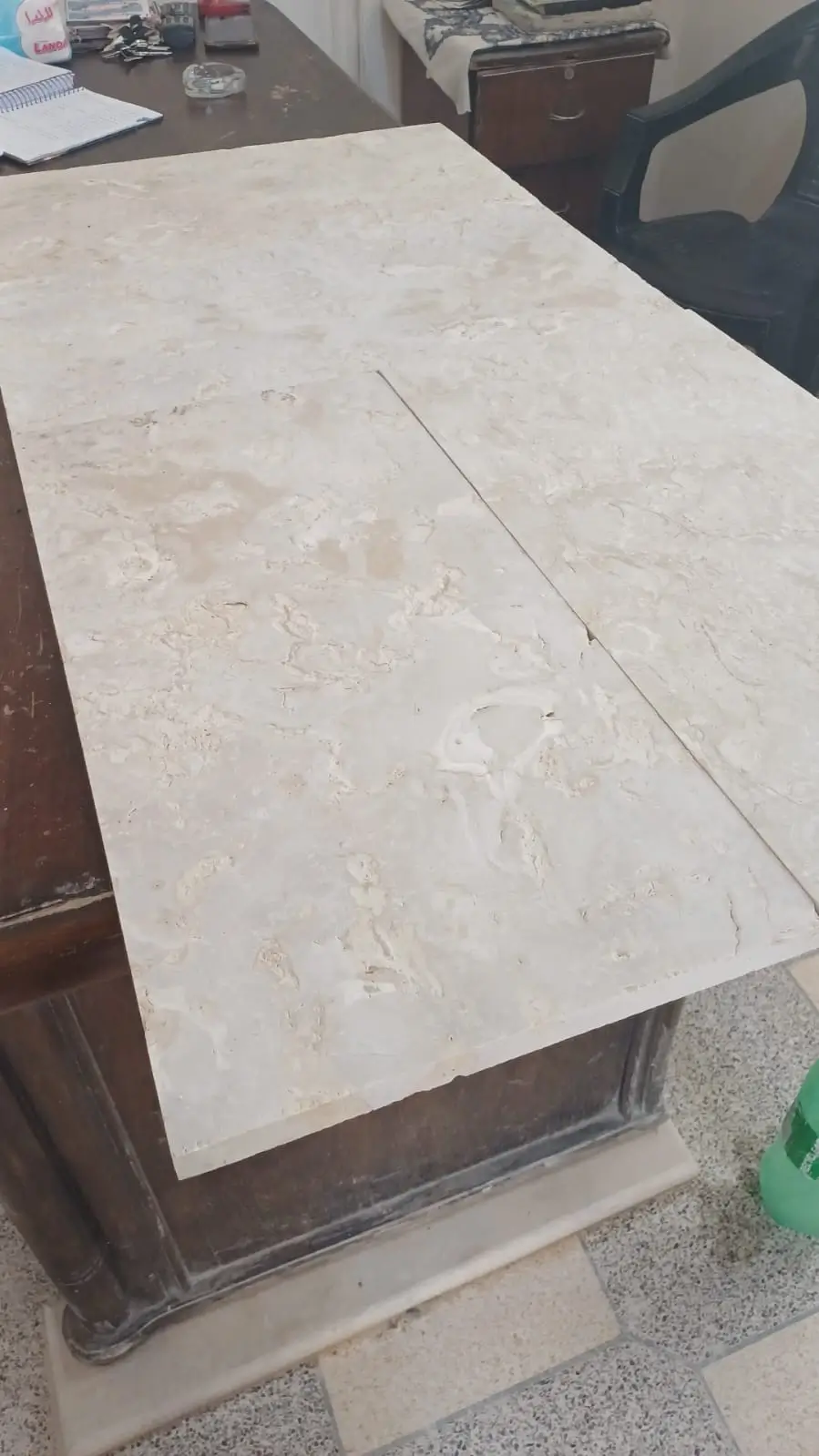
For standard residential driveway applications, 24×24 inch pavers at 2.5-inch thickness represent the practical optimum: manageable weight per piece (approximately 75–85 lbs for dense limestone or basalt variants), sufficient mass to resist wind uplift on a properly prepared base, and enough surface area to minimize joint frequency without creating handling problems. Verify warehouse stock dimensions before committing to a specific size — not all large-format dimensions are routinely stocked, and custom sizing can add 4–6 weeks to your project timeline.
- Slabs above 48 inches require mechanical placement equipment — plan your site access accordingly before finalizing slab size
- Heavier slabs in the 3-inch range are worth specifying for driveways that double as loading areas or that experience heavy truck traffic beyond standard passenger vehicles
- Irregular or non-modular slab sizing creates joint pattern complexity that can compromise storm water drainage geometry — stick to modular dimensions that allow consistent joint widths throughout the field
- In areas with direct hail exposure, surface hardness (Mohs 6 or above) prevents visible pitting from repeated hailstone impact over multiple storm seasons
Installation Sequencing in Arizona Conditions
Arizona desert-rated driveway paver installation steps need to account for the interaction between ambient temperature, setting bed moisture, and the narrow installation windows that monsoon season creates. Your optimal installation window runs from October through early May — outside the monsoon season — which allows joint fill materials to cure properly before their first exposure to wind-driven rain. Installations completed in July or August face the double challenge of rapid moisture evaporation from the setting bed and the possibility of an early monsoon event disrupting freshly placed joint sand before it activates.
Sequence your installation from the highest elevation point of the driveway down toward the drainage outlet. This seems obvious but gets reversed surprisingly often when installers start at the most visible entry point of the driveway. Starting high keeps your compacted base intact as you work — foot and equipment traffic moving downhill compresses the base in the direction of your work travel rather than disturbing already-set pavers.
- Set your screed rails at the correct grade before beginning — checking grade after slabs are placed is a much harder correction than setting it accurately at the start
- Allow the poured concrete edge beams a minimum of 72 hours of cure time before placing adjacent pavers — loading fresh edge beams transmits stress into the concrete before it reaches adequate strength
- Complete joint filling in sections and activate polymeric sand before the end of each work day — leaving unfilled joints overnight in Arizona’s wind conditions results in aggregate contamination that compromises polymeric sand performance
- Plan truck access routes before material delivery — large-format slab weights mean you’ll likely be moving material with a pallet jack or small forklift, and your truck staging position determines how far you’re carrying heavy stone pieces
Climate Considerations for Desert Valley Projects
Projects in Gilbert and the broader East Valley experience some of the most intense haboob activity in the Phoenix metro region, where wall clouds of storm-driven dust and debris preceding monsoon rainfall can reach 5,000 feet in height and generate ground-level wind loads that challenge even well-specified driveway installations. The dust infiltration that accompanies haboobs is particularly relevant for joint fill maintenance — fine particulate matter penetrates joint openings and can displace polymeric sand binder over multiple storm cycles, accelerating joint erosion faster than rainfall events alone would cause.
At Citadel Stone, we recommend scheduling a post-monsoon joint inspection every October as a standard maintenance protocol for large-format driveway installations across the valley. Our warehouse carries joint fill materials in addition to stone products, so you can address erosion damage immediately rather than waiting on sourcing lead times. Catching and addressing 10–15% joint fill loss early prevents the progressive degradation that turns a maintenance task into a reinstallation project.
Getting the Storm-Resistance Fundamentals Right When Installing Large Driveway Pavers in Arizona
Installing large driveway pavers in Arizona rewards the specifier who treats storm mechanical forces as the primary design constraint rather than an afterthought. The installations that perform for 20-plus years in this environment share three characteristics: edge restraint systems built to withstand lateral storm loading, joint fill specified for wind-driven water infiltration resistance, and base preparation designed for rapid drainage under cloudburst conditions. Temperature performance matters, but it follows naturally from getting the storm-resistance fundamentals right — dense, heavy-gauge stone on a properly compacted, well-drained base handles Arizona’s thermal environment without dedicated intervention. The failures we observe in field assessments almost always trace back to one of those three storm-resistance fundamentals, not to heat-related material degradation. Beyond your driveway specification, if you’re exploring other stone surfaces on your Arizona property, How to Maintain Charcoal Paving in Arizona’s Climate covers a complementary set of surface care considerations worth reviewing as part of your broader hardscape planning. Homeowners in Tucson, Peoria, and Chandler rely on Citadel Stone for large-format driveway pavers known for their dense surface composition, which reduces heat-related cracking during Arizona’s peak summer temperature swings.